Best Value Circular Saw for the Money
What's inside
As an Amazon Associate I earn from qualifying purchases. This post may contain affiliate links at no extra cost to you.
The best value circular saw for the money
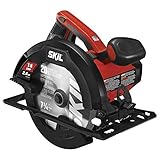
For most homeowners and DIYers, the best value circular saw for the money is a 7¼-inch corded saw with a roughly 15-amp motor: it cuts standard framing lumber and sheet goods without battery costs, and its blades are widely available. Choose a cordless 7¼-inch model instead if you already own compatible batteries or regularly work away from outlets. The right value is the saw that covers your actual cuts and use frequency—not simply the lowest sticker price or biggest motor number.
Compare the useful differences
These are representative specifications for common saw categories, not a ranking of particular models. Exact weight, cutting capacity, and included accessories vary by manufacturer and model; check the manual before buying.
As an Amazon Associate we earn from qualifying purchases at no extra cost to you.



| Saw type | Typical blade | Typical power | Cut depth at 90° | What usually comes with it | Best value when |
|---|---|---|---|---|---|
| Compact corded | 6½ in. | About 10–13 amps | About 2⅛ in. | Basic blade, sometimes a rip guide | You mostly cut thinner stock and want a lighter, lower-cost tool |
| Standard corded | 7¼ in. | About 13–15 amps | About 2⅜ in. | Basic blade, wrench, and often a rip guide | You need an all-rounder for framing lumber and sheet goods |
| Compact cordless | About 6½ in. | Battery-powered; voltage and output vary | About 2⅛ in. | May be tool-only; battery and charger can cost extra | You value portability and already own batteries in that system |
| Full-size cordless | 7¼ in. | Battery-powered; voltage and output vary | About 2½ in., model-dependent | Tool-only or a kit with battery and charger | You make frequent cuts away from outlets or need cordless convenience |
Cut depth matters more than blade diameter alone. A typical 7¼-inch saw cuts a 2-by-4 (actual thickness 1½ inches) in one pass at 90 degrees. A 6½-inch saw usually does too, but leaves less capacity for thicker stock and angled cuts. For a 45-degree bevel, depth drops substantially—often to around 1⅝ inches on a standard saw—so verify the specified bevel capacity if that cut is part of your work.
Which saw is best value for your situation?
| Your situation | Better fit | Why |
|---|---|---|
| Occasional home repairs, tight budget, outlet nearby | Basic 7¼-inch corded saw | Low purchase cost, full-size capacity, and no battery to replace |
| Small projects, lighter cuts, limited storage | Compact 6½-inch saw | Often lighter and easier to handle; capacity is sufficient for much common DIY stock |
| Already own batteries from a tool platform | Compatible cordless saw | A tool-only purchase avoids paying again for a battery and charger |
| Regular work across a large site or outdoors | Full-size cordless saw and suitable battery | Less setup around cords; the higher initial cost can buy convenience that gets used often |
| Mostly long, straight sheet cuts in a workshop | Corded saw with a guide rail or straightedge | Consistent power and a guide improve control; the guide may matter more than extra motor output |
Compare the real cost, not just the tool price
For a corded saw, the main extra expenses are blades, a safe extension cord if needed, and possibly a guide. A suitable cord should be rated for the saw and the job; a thin or excessively long cord can cause voltage drop and poor performance. For cordless, include the battery and charger unless you already have compatible ones. Batteries also age, and their runtime depends on capacity, material, blade sharpness, and how hard the saw is pushed.
Here is a simple ownership calculation using illustrative—not quoted—prices. Suppose a corded saw costs $100 and a cordless tool-only saw costs $180. If you already own a compatible battery and charger, the cordless premium is $80. Across 40 project days, that is $2 per day for cord-free use. If you need a $100 battery and charger as well, the cordless setup costs $280, or $180 more—$4.50 per project day over 40 days. For someone making only a few cuts each year, the corded option is usually better value; for frequent mobile work, the convenience may justify the difference.
Electricity is rarely the deciding factor for occasional cutting. A 15-amp saw on a 120-volt supply has a nominal input of about 1,800 watts while running at full current. Ten minutes at that draw is 0.3 kilowatt-hours, before accounting for actual load and local electricity rates. In practice, blade and battery replacement, not the electricity used for brief DIY sessions, tends to shape long-term cost.
Features worth paying for—and those you can skip
- Sturdy shoe and accurate bevel adjustment: A flat, rigid base and settings that hold their position help keep cuts on line. Check that the bevel scale is readable and the adjustment locks securely.
- Clear sightline and usable depth adjustment: A cut-line notch or window is helpful, but test whether it aligns with the blade on the intended side. Depth adjustment should lock without slipping.
- Electric brake: It stops the blade more quickly after releasing the trigger, reducing waiting between cuts. It is a convenience and control feature, not a substitute for safe handling.
- Dust port: Useful in a workshop when it connects to your extractor, but compatibility and dust capture vary. Do not assume a port makes cutting dust-free.
- Laser or extra electronics: A laser can help with rough alignment, but it does not correct for blade deflection or replace a straightedge. Pay for it only if you will use it.
- Included blade: The supplied blade may be a basic framing blade. Budget for a sharper, finer-tooth blade when cutting plywood or finish materials; the right blade often improves cut quality more than a small increase in motor power.
What wears out and how to get more from the saw
Blades are the most frequent consumable. Dull teeth make the motor work harder, increase splintering, and can encourage the operator to push too fast. Replace or sharpen a blade when cuts become rough or the saw struggles despite a clear path. Pitch and resin buildup also increase friction; clean the blade according to its care instructions and dry it before storage to reduce corrosion.
Keep the shoe free of packed sawdust, inspect the cord or battery contacts, and check that the blade is installed in the correct direction and securely fastened. Before each cut, support the offcut so it cannot pinch the blade, set depth so only a small amount of tooth extends below the material, and let the blade reach speed before entering the work. For long cuts, use a clamped straightedge rather than steering by eye. These habits help preserve cut quality and reduce stress on the motor.
Bottom line
A basic 7¼-inch corded circular saw is the strongest all-around value for occasional and moderate DIY work: it offers practical depth, steady power, and no battery-system expense. A compact 6½-inch saw is a sensible lower-cost or lighter-duty choice when its capacity covers your cuts. Go cordless when portability is a frequent need—especially if you already own compatible batteries—and compare the complete kit cost before deciding. Whichever type you choose, a sound shoe, reliable depth and bevel locks, and a suitable blade are more valuable than features you will rarely use.