Best Meat Tenderizers for Faster, Even Cooking
What's inside
As an Amazon Associate I earn from qualifying purchases. This post may contain affiliate links at no extra cost to you.
The best meat tenderizers for faster, even cooking are a flat-face stainless steel mallet for pounding chicken and pork to uniform thickness, a 48-blade stainless steel tenderizer like the Jaccard for tough beef cuts, and a rolling needle tenderizer for larger batches — the right choice depends on cut thickness and whether you need to flatten or deeply penetrate the muscle.
As an Amazon Associate we earn from qualifying purchases at no extra cost to you.



Our Top Picks
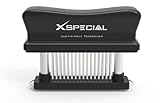
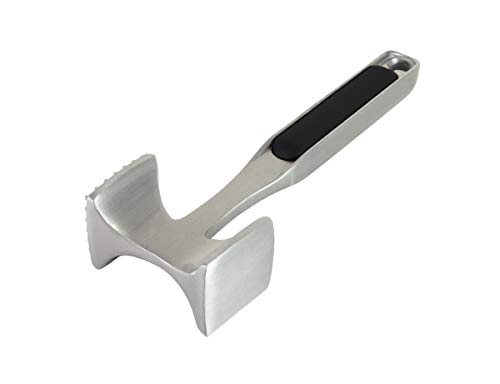 KitchenAid Gourmet Multi Sided Meat Tenderizer for PoundingOne Size1.97 x 3.35 x 9.45 inches0.66 PoundsCheck on Amazon

The 3 Types Compared: When Each Wins
All three types break down connective tissue and create more surface area for heat and marinade, but they do it differently. Choosing by cooking goal prevents over-tenderizing and texture damage.
- Mallet / Pounder: Uses blunt force to flatten. Best for even cooking speed. It does not pierce the interior, so moisture stays in if you don’t over-pound. Ideal when thickness uniformity matters more than internal tenderness.
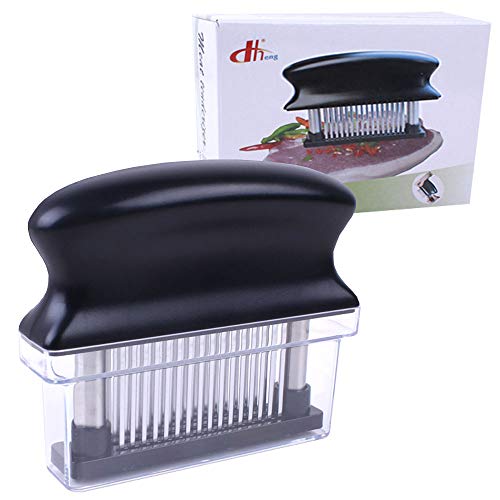
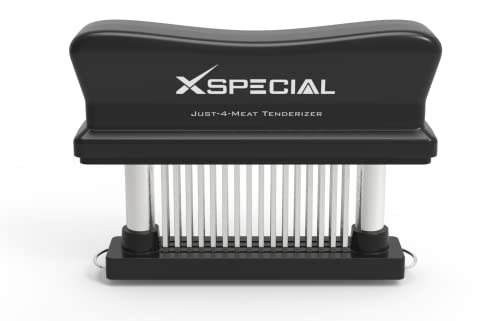
- Blade Tenderizer (hand-press): Uses 45-48 thin blades to cut through fascia and silver skin. Best for thick, collagen-heavy cuts where heat needs channels to penetrate. It shortens muscle fibers without flattening.
- Rolling / Roller Tenderizer: Uses a handled drum with needles or raised teeth rolled across the surface. Best for large, thin sheets of meat and batch prep. Faster than a mallet on big cuts, but less precise on small pieces.
Spec and Feature Comparison
Weight, face size, blade count, and puncture depth directly affect control, cleanup, and suitability. Below are representative specs for common 2026 models by type, not a single brand lineup.
| Type & Example Model | Weight | Working Face / Needle Area | Material | Puncture Depth | Grip Style | Cleaning Method |
|---|---|---|---|---|---|---|
| Stainless Mallet – OXO Good Grips Bladed Meat Tenderizer (mallet side) / Norpro Grip-EZ | 680-900g (1.5-2.0 lbs) | 3 x 3 in flat face + textured face | Solid 304 stainless steel or aluminum with steel faces | 0 mm (surface compression only) | Single-piece stainless or cushion non-slip handle | Dishwasher safe, hand wash recommended for aluminum |
| 48-Blade Press – Jaccard Supertendermatic | 170-200g (6-7 oz) | 48 blades, 2 x 2.25 in array | ABS housing, 420 stainless blades | 1.5-1.9 cm (0.6-0.75 in) | Top-press plunger, spring-loaded | Hand wash, blades retract; dishwasher degrades springs |
| Rolling Needle – KitchenAid Gourmet Rolling Tenderizer / Spring Chef Rolling Type | 140-180g (5-6.3 oz) | 56 needles across 2 in wide drum | Stainless needles, ABS + stainless handle | 0.8-1.2 cm (0.31-0.47 in) | Horizontal rolling handle | Hand wash, requires brush between needles |
| Lightweight Mallet – Stainless Dual-Sided Aluminum | 280-350g (10-12 oz) | 2.5 x 2.5 in faces | Cast aluminum, anodized | 0 mm | Wood or soft-touch handle | Hand wash only |
Puncture depth matters for food safety. Blade and needle types create channels that can move surface bacteria interior, so meat tenderized this way should be cooked to at least 160°F for pork and beef and 165°F for poultry, and never used for rare service unless you are following professional food safety guidance.
How to Choose by Material, Grip, and Durability
Material
Solid stainless steel mallets are the most durable and sanitary. They add momentum so you use less arm force, and they will not chip, crack, or absorb odors. Aluminum mallets are lighter and cheaper at $15-$30, but they dent and cannot go in the dishwasher if they have wood handles.
Blade tenderizers combine food-grade ABS plastic with stainless blades. The housing is what fails first. Look for models with stainless blade cartridges rather than all-plastic internals, and where the cartridge is replaceable. Blades should be thin, double-edged, and surgical-grade stainless to resist bending on semi-frozen meat.
Rolling tenderizers use more plastic to keep weight down. Needle retention is the durability test. Cheaper drums use press-fit needles that loosen after repeated hot-water washing.
Grip and Control
Mallets need a balanced, non-slip grip. A 1.5 lb+ stainless mallet tires wrists quickly if the handle is narrow and smooth. Textured silicone or overmolded handles from OXO or Kuhn Rikon reduce slip when hands are greasy. For blade presses, a wide palm-press top distributes force evenly and keeps blades vertical; narrow plungers cause angled cuts and uneven tenderizing. Rolling types benefit from an offset handle that keeps knuckles clear of the meat.
Cleaning and Maintenance
Mallets are simplest to clean — one solid piece with no crevices. Blade models require immediate rinsing with hot soapy water and a small brush from the blade side, then air drying with blades extended. Do not soak the spring assembly. Rolling models trap tissue between needle rows; run under hot water while rolling on a brush. None of the bladed types should be cleaned with steel wool, which dulls edges and creates burrs.
Which Tenderizer for Which Cut
- Chicken breast, pork loin, turkey cutlets (0.75-1.5 in thick): Mallet. Pound to 1/2 to 3/4 inch uniform thickness between plastic wrap or parchment. Avoid blade types here — chicken shreds and pork loin becomes mushy with deep piercing.
- Flank steak, skirt steak, hanger steak: Blade or rolling. These long-fiber cuts benefit from fiber-cutting to shorten chew. Use 1 pass with a 48-blade press, or 2 light passes with a roller, with the grain rotated 45 degrees on the second pass.
- Chuck roast, round steak, eye of round: 48-blade press. The 1.5 cm+ depth breaks internal connective tissue that pounding cannot reach. Marinate after tenderizing for 30-45 minutes to let salt and acid travel through channels.
- Veal, cube steak, pre-tenderized cutlets: No tool needed. Additional mechanical tenderizing makes them mealy. Use a light mallet tap only to even edges.
- Large batch jerky or schnitzel (2+ pounds): Rolling tenderizer. Covers surface 3x faster than a mallet and keeps thickness consistent without moving the meat repeatedly.
Decision Matrix: Match Your Situation to the Tool
| Your Situation | Best Pick | Why |
|---|---|---|
| Small kitchen, cook 1-2x per week, mostly chicken and pork chops | Lightweight dual-sided aluminum or stainless mallet (280-680g) | One tool flattens and tenderizes without extra storage or deep cleaning |
| Cook tough beef for stews, fajitas, or grill and want marinade to penetrate fast | 48-blade press (Jaccard type) | Cuts fibers and creates channels for salt/acid, reduces cooking time by 15-25% |
| Batch cooking, meal prep, or processing 3+ lbs at once | Rolling needle tenderizer | Rolling action is faster and less fatiguing than pounding repeatedly |
| Limited hand strength or wrist issues | 48-blade press | Uses palm pressure and springs, not swing force; heavy mallet will cause fatigue |
| Prioritize easy cleanup and longevity | Solid stainless steel mallet | No blades, springs, or crevices; lasts decades with only wash and dry |
| Need both flattening and deep tenderizing | Combo: OXO Good Grips Bladed Tenderizer or mallet + separate Jaccard | Combo tools include a fold-out blade array and a mallet face; separate tools perform better long-term |
Cost Per Use and Ownership Realities
General market ranges in 2026: mallets $18-$55, 48-blade presses $22-$40, rolling types $15-$28. Blade models have a consumable cost — replacement blade cartridges are $12-$18 and typically needed every 2-3 years with weekly use as tips dull and springs weaken.
Worked estimate: A $32 Jaccard used once weekly for 3 years = 156 uses = ~$0.21 per use. With one cartridge replacement at $15, total $47 / 156 = $0.30 per use. A $45 solid stainless mallet with no consumables used at the same frequency = $45 / 156 = $0.29 per use, and drops to $0.14 per use if kept for 6 years. If you tenderize less than twice a month, the cheapest aluminum mallet has the lowest lifetime cost because you avoid cartridge costs.
What wears first: On mallets, wood handles loosen and textured aluminum faces smooth out. On blade presses, springs lose tension and blades develop micro-burrs that tear instead of cut. On rollers, needle hubs crack where needles meet plastic after hot dishwasher cycles. Common mistake is pounding frozen or semi-frozen meat with a blade press — it bends blades and voids the cutting action. Thaw fully, pat dry, and tenderize on a stable cutting board, not on a plate.
Safe Use Tips for Faster, Even Cooking
- Always tenderize on a non-porous board. Place meat in a zip-top bag or between sheets of parchment to prevent splatter and keep juices contained.
- For mallets, start from the center and work outward with controlled, even strokes. Aim for no more than 1/4 inch variation across the cutlet. Over-pounding ruptures fibers and squeezes out moisture, causing dryness.
- For blade presses, press straight down, lift vertically, and overlap rows by 1/4 inch. Do not rock or drag — it widens holes and shreds the surface. One full coverage pass is enough for steaks under 1 inch; two passes maximum for roasts over 1.5 inches.
- For rollers, use light pressure and let the needles do the work. Two passes in a crosshatch pattern is the limit; more creates a pitted surface that browns unevenly.
- Sanitize immediately after use. Wash tools, board, and hands with hot soapy water, then sanitize the board. This is especially important for bladed tools. For general food safety questions, consult USDA guidance or a food safety professional.
FAQ
Does tenderizing actually make meat cook faster?
Yes, but in different ways. Pounding to uniform thickness reduces the distance heat must travel, so a 1-inch chicken breast pounded to 1/2 inch can cook 30-40% faster and more evenly. Blade cutting does not thin the meat much, but channels allow heat and salt to penetrate quicker, which can shave 5-10 minutes off braise time for chuck or round.
Can I use a meat tenderizer on fish or ground meat?
No. Fish flakes apart and ground meat is already broken down. Mechanical tenderizers are for whole-muscle beef, pork, poultry, and game.
Is a textured mallet face better than a flat face?
Textured (pyramid) faces grip and create small indentations that help with breading adhesion for schnitzel or chicken-fried steak. Flat faces give more control for even thickness and less surface damage. Most cooks use flat for everyday pounding and textured only for breaded cutlets.