Best Circular Saw Track Systems for Precise Panel Cuts
What's inside
As an Amazon Associate I earn from qualifying purchases. This post may contain affiliate links at no extra cost to you.
A circular saw track system turns an ordinary sidewinder into a near-track-saw for a fraction of the cost — the right choice for most DIYers is a 55–63 inch aluminum guide with a self-adhesive splinter guard, anti-slip underside, and a universal sled adapter that clamps to your saw’s base plate.
As an Amazon Associate we earn from qualifying purchases at no extra cost to you.
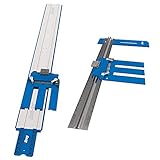

How a Circular Saw Track System Works
Every circular saw track guide system does the same basic job: it gives your saw’s shoe a straight edge to ride against, so the blade cuts exactly where the rubber splinter strip sits. The differences that matter are in length, how sections join, how the saw locks onto the rail, and how the track grips the workpiece.
There are two broad designs:
- Clamp-edge straightedges (Bora, older Kreg Accu-Cut style): the guide clamps to the panel and the saw runs alongside it. Cheaper, slightly slower to set up.
- True guide rails with a sled (Kreg Accu-Cut, Makita/Festool-style rails with adapters, Evolution, Powertec): a sled or adapter plate screws to your saw and rides a groove or lip in the rail. Repeatable zero-clearance cuts with less fuss.
Comparison: Common Track Systems in 2026
| System | Rail length(s) | Max cut (incl. connectors) | Splinter guard | Anti-slip | Saw compatibility | Typical price range |
|---|---|---|---|---|---|---|
| Kreg Accu-Cut | 2 × 26.5″ | ~50″ (53″ rail) | Yes, replaceable | Strip on underside | Universal sled, most 6.5–7.25″ saws | $80–110 |
| Bora NGX Clamp Edge | 50″ / 100″ | 50″–100″ | Optional | Rubber underside | Saw rides against edge; plate sold separately | $60–140 |
| Evolution track kit | 2 × 28″ | ~56″ | Yes | Yes | Universal sled included | $70–100 |
| Festool/Makita-style rail + adapter | 55″ (1400mm) | Unlimited with connectors | Yes, replaceable | Foam strip underside | Via adapter plates (Powertec, etc.) | $90–180 + adapter |
| Powertec / generic aluminum rails | 24″–55″ | Joinable in pairs | Varies | Varies | Check slot width vs. adapter | $40–80 |
Decision Matrix: Match the Track to Your Situation
| Your situation | Best choice | Why |
|---|---|---|
| Occasional plywood breakdown, tight budget | Clamp-edge straightedge, 50″ | Cheapest accurate option; no adapter needed |
| Weekend woodworker, mixed projects | Kreg Accu-Cut or similar sled system | Fast setup, zero-clearance splinter strip, wide saw support |
| Weekly sheet-goods work, want upgrade path | Festool-pattern rail + adapter plate | Same rail later accepts a true plunge track saw |
| Ripping 8-ft sheets lengthwise | 100″ clamp edge or two joined 55″ rails | A single 55″ rail only covers crosscuts |
| Small shop, storage-limited | Two-piece 26.5″ connecting rail | Breaks down to fit behind a cabinet |
What to Check Before Buying
Track length and connectors
For crosscutting a 48″ sheet of plywood you need at least a 50″ rail with a few inches of overhang — so a 55″ rail is the practical minimum. Rip cuts on full sheets need ~100″ via a long rail or two joined sections. Check connector quality: loose joiner bars introduce a visible kink at the seam. Look for steel joiner bars that lock the rails’ T-slots, and test joined rails against a known straight edge before cutting veneer.
Anti-slip strips and clamps
Good rails have a foam or rubber anti-slip strip on the underside so they stay put on melamine and veneered plywood without clamps. On rough construction lumber you’ll still want a clamp at each end — most brands sell matching low-profile track clamps that tuck under the rail.
Splinter guards
The rubber splinter strip is trimmed by your saw’s blade on the first cut, giving a zero-clearance edge. That first calibration cut matters: use the blade you’ll actually cut with, because different blade kerfs create a different trim line. The strip is a consumable — expect to replace it every 1–3 years of regular use, or sooner if you cut bevels (a 45° cut trims a new edge into it).
Saw adapters and compatibility
This is where most returns happen. Universal sleds fit most left-blade and right-blade sidewinders with flat shoes, but check three things:
- Shoe flatness: stamped or crowned base plates won’t sit true on a sled.
- Blade position: left-blade (worm-drive style) saws hang the motor over the rail on some adapters.
- Clearance: the rail’s raised lip must clear your saw’s shoe height.
For a track for DeWalt circular saw setups, the common 7-1/4″ DWE575 and the 20V/60V FlexVolt cordless saws work well on universal sleds like the Accu-Cut, and DeWalt-pattern adapter plates exist for Festool-style rails. If you specifically want a DeWalt track circular saw experience, DeWalt also sells its own TrackSaw rails — a DeWalt circular saw track in the DWS5022 style accepts third-party adapters, so a skill saw track system or a DeWalt sidewinder can both ride the same rail with the right plate.
Setup and Ownership Realities
Correct first-time setup takes about 15 minutes:
- Bolt the sled/adapter to your saw shoe with the saw fully retracted.
- Place the track on scrap, let the blade trim the splinter strip at full depth.
- Test-square a cut, adjust the sled’s play so it slides without wiggle.
- Mark your rail’s strip edge as “cut line” — from now on, align the strip, not a pencil mark.
What wears first: the splinter guard, then the anti-slip strip (it hardens and loses grip after a few years or after contact with solvents). Keep the rail’s top channel free of sawdust — packed chips in the T-slot are the most common cause of wandering cuts. Store rails flat or hanging; a bowed rail is permanently ruined.
Common mistakes: cutting with a dull blade against the splinter strip (chips the veneer anyway), assuming both joined sections are aligned without checking, and bevel-cutting without remembering the strip edge changes at an angle.
FAQ
Can any circular saw use a track system? Most 6.5″–7.25″ sidewinders yes, via a universal sled. Worm-drive saws need specific adapters, and saws with very curved shoes may not fit.
Track system vs. buying a dedicated track saw? A track system plus your existing saw reaches ~90% of track-saw accuracy for crosscuts. A plunge saw adds depth stops, riving knife, and plunge starts — worth it only if you cut sheets weekly.
Does a guide track work for bevel cuts? Yes, but the splinter strip gets re-trimmed at the bevel angle, degrading its 90° edge. Keep a second strip or a dedicated rail for bevels.