Best Drum Practice Pads for Quiet Practice
What's inside
As an Amazon Associate I earn from qualifying purchases. This post may contain affiliate links at no extra cost to you.
Best Drum Practice Pads for Quiet Practice: Choose by Feel, Noise, and Setup
The best drum practice pad for most players is a 12-inch, double-sided rubber pad: it offers a useful amount of playing space, lets you compare two rebound feels, and usually fits a standard snare stand. For quieter apartment practice, prioritize a low-volume surface over maximum rebound; for travel, a compact single-sided pad is easier to carry but less forgiving of imprecise strokes.
There is no single pad that suits every practice situation. Diameter affects how closely the target resembles a drum, the playing surface determines rebound and sound, and mounting options decide whether you can practice at a realistic height or only on a tabletop.
As an Amazon Associate we earn from qualifying purchases at no extra cost to you.

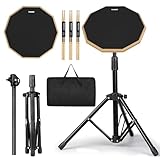


Quick comparison
| Pad | Diameter | Surface and feel | Mounting | Best suited to |
|---|---|---|---|---|
| Evans RealFeel 6-inch pad | 6 in (15.2 cm) | Natural gum-rubber playing surface; firm, responsive rebound | Tabletop; compatible with a suitable threaded stand or adapter | Travel, warm-ups, and limited space |
| Evans RealFeel 12-inch pad | 12 in (30.5 cm) | Natural gum-rubber surface; responsive practice feel | Tabletop or compatible stand setup | General practice and a larger target |
| Vic Firth Double-Sided Practice Pad | 12 in (30.5 cm) | Two surfaces with contrasting rebound and resistance | Tabletop or snare-stand setup, depending on version | Players who want both a lively and a more resistant surface |
| Remo Silentstroke practice pad | Varies by configuration; commonly around 8 in (20.3 cm) | Mesh-style surface; softer response and lower acoustic output than a typical rubber pad | Depends on the model and its base | Quiet practice where sound reduction matters most |
| 6-inch single-sided rubber pad, generic type | 6 in (15.2 cm) | Usually firm rubber; rebound varies by compound and thickness | Often tabletop; check for a threaded insert | Low-cost, portable basic practice |
Sizes and mounting details can vary between product versions. Check the exact model’s current specifications before buying, especially if you need a threaded mount or a particular stand connection. “Quiet” is relative: a pad can reduce the sound of stick contact, but it does not eliminate noise from stick movement, a vibrating table, or footwork.
Choose by situation
| Your situation | What to prioritize | Practical choice |
|---|---|---|
| Beginner with one practice spot | Large target, stable surface, moderate price | 12-inch single-sided rubber pad |
| Experienced player working on control | More than one rebound feel and repeatable setup | 12-inch double-sided pad |
| Apartment or shared room | Lower surface noise and a vibration-isolating base | Mesh-style or softer low-volume pad; add a mat or stable isolation layer |
| Frequent travel or a small desk | Compact size, light carry, no stand required | 6-inch pad that sits securely on a tabletop |
| Practice at realistic snare height | Stand compatibility and a secure connection | Pad with a compatible threaded insert or stand-ready base |
What matters when comparing pads
Diameter: target size versus portability
A 12-inch pad gives beginners more room to land strokes consistently and is closer to the playing area of a snare drum. It also accommodates rudiments that move around the head. A 6-inch pad takes up less desk and bag space, but its small target makes it easier to clip the edge during fast patterns. That can be useful for accuracy drills, but it may frustrate a new player using it as their only practice surface.
For most people buying one pad, 12 inches is the more versatile size. Choose 6 inches when portability or desk space is the overriding constraint, or when you already have a larger pad at home.
Rebound: lively is not always better
Rubber pads generally return the stick more readily than a real drumhead. That can make repeated strokes feel quick and help with warm-ups, but an especially bouncy surface can hide weak finger control. A double-sided model is useful because you can alternate between surfaces with different resistance. A more resistant side encourages the player to generate each stroke rather than relying on the pad to do the work.
Mesh-style surfaces tend to feel less like firm rubber and may offer a softer response. If possible, compare the feel in person: “realistic rebound” is subjective, and surface firmness differs among models. Also consider your goal. For speed and endurance, a lively pad may be comfortable; for evenness and control, spending time on a less-rebounding surface can expose inconsistent strokes.
Noise: manage the whole setup
Most rubber pads still make a distinct tapping sound. A softer or mesh-style surface can reduce that impact noise, but the surface beneath the pad matters too. A pad on a hollow desk can transmit vibration and sound louder in the room below. Put it on a stable, dense surface, and try a thin isolation mat if vibration is the main complaint. Avoid thick, squishy foam that lets the pad wobble and changes the feel under the sticks.
If you practice late or share thin walls, ask someone in the next room to listen before settling on a setup. What sounds quiet at the playing position can carry through a floor or desk.
Mounting: tabletop or stand?
A tabletop pad is the simplest option and keeps setup costs down. Its drawback is posture: a desk may put the pad too low, too high, or too far forward. A pad compatible with a snare stand makes it easier to set playing height and angle, which is useful for longer sessions and for transferring practice movements to a drum kit. Check the connection before purchase; not every pad has the same insert, thread, or included hardware.
For a travel setup, a pad that remains stable on a desk may be preferable to carrying a stand. If the pad slides, a non-slip layer can help, provided it does not make the surface unstable.
Ownership details: what wears and what to check
Rubber is usually the main wear surface. Over time, repeated stick contact can leave marks or polish areas, and the feel may become less uniform. Rotate the pad occasionally so one small zone does not receive every stroke. Wipe away dust with a slightly damp cloth and let the surface dry; avoid solvents or harsh cleaners unless the manufacturer specifically approves them.
On double-sided pads, inspect both faces and the edge bond. A loose or lifting surface can change the rebound and may worsen with continued use. For stand-mounted pads, check the threaded connection periodically and avoid overtightening it. A common mistake is choosing a tiny pad for every practice session: it saves space, but it also limits target area and can make basic learning less comfortable.
Pad prices vary by size, construction, and brand. Basic single-sided pads are generally the lower-cost option; larger, double-sided, or specialist low-volume models often cost more. Compare the complete setup, including any stand or mounting adapter you need, rather than the pad’s price alone.
Bottom line
Choose a 12-inch rubber pad for a first and only practice pad, a double-sided 12-inch model if you want contrasting rebound for technique work, and a 6-inch pad when carrying space matters most. If noise is the deciding factor, look at softer or mesh-style options and treat the desk, floor, and stand as part of the sound-control setup. The best drum practice pads are the ones that fit your room, target size, and practice goals without making setup a barrier to playing.