
What's inside
- Top Picks at a Glance
- Quick Comparison Table
- Primary, Backup and Utility Pumps: Which Job Are You Hiring For?
- 1. Wayne HALO50: Best Overall Smart Primary Pump
- 2. Basement Watchdog Special CONNECT: Best Battery Backup Pump
- 3. Wayne CDU790: Best Value Primary Pump
- 4. Zoeller M53 Mighty-mate: Best Trusted Basic Pump
- 5. Briidea Battery Backup Sump Pump System: Best Wifi Backup on a Budget
- 6. Cleartide 1/3 HP Utility Pump: Best for Shallow Flood Water
- 7. AQUASTRONG 1 HP 4500 GPH: Best High-Volume Transfer Pump
- Also Consider
- How We Chose
- Buying Guide
- Decision Guide: Which Setup Fits You?
- Common Mistakes to Avoid
- Frequently Asked Questions
- Which One Should You Buy?
- Sources
As an Amazon Associate I earn from qualifying purchases. This post may contain affiliate links at no extra cost to you.
The best basement sump pump setup for most homes is a reliable primary pump such as the Wayne HALO50 (Wi-Fi alerts built in) paired with a separate battery backup such as the Basement Watchdog Special CONNECT, while the Wayne CDU790 is the sensible pick if you only need a plain, affordable primary pump. This guide also covers flood-response utility pumps for the day the pit is not the problem, and it explains what “quiet” and “wifi” really mean on a sump pump. Nothing here promises a dry basement or code compliance: the pump is one part of a system that includes the pit, the discharge line, the check valve and the power supply, and a plumber should handle any permanent install.
This is a research-based guide. We did not personally use these products. Specs come from the product listings and manufacturer pages, and anything we could not confirm is marked “not listed”.
As an Amazon Associate we earn from qualifying purchases at no extra cost to you.
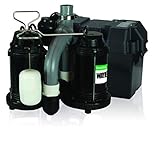


Our Top Picks
 Wayne Preassembled Primary & Battery Backup Sump PumpNo Size23.5 x 18.25 x 14 inches44 poundsCheck on Amazon

Top Picks at a Glance
- Best Overall (smart primary pump): Wayne HALO50 Smart Sump Pump, a 1/2 HP primary pump with built-in Wi-Fi monitoring.
- Best Battery Backup: Basement Watchdog Special CONNECT, a dedicated backup pump that runs from a separate battery when power fails.
- Best Value Primary Pump: Wayne CDU790 1/3 HP, a straightforward float-switch pump for a typical household pit.
- Best Trusted Basic Pump: Zoeller M53 Mighty-mate 1/3 HP, a long-established name in residential sump pumps.
- Best Wifi Backup System on a Budget: Briidea Battery Backup Sump Pump System, which pairs a pump with a dual-band Wi-Fi monitor and takes a 12V battery you supply.
- Best for Flooding Outside the Pit: Cleartide 1/3 HP Submersible Utility Pump with an auto water sensor, a portable pump for shallow standing water.
- Best High-Flow Utility Pump: AQUASTRONG 1 HP 4500 GPH, a thermoplastic transfer pump for moving a lot of clean water quickly.
Quick Comparison Table
| Product | Best for | Key specs (as listed) | Watch for | Price tier |
|---|---|---|---|---|
| Wayne HALO50 | Smart primary pump | 1/2 HP, up to 5,100 GPH, Wi-Fi, stainless steel housing | No built-in battery backup; check backup options with the maker | Premium |
| Basement Watchdog Special CONNECT | Battery backup | Backup-only pump, listing states 2,890 GPH, Wi-Fi capable | Battery not included; Wi-Fi may need a separate module | Mid-range |
| Wayne CDU790 | Basic primary pump | 1/3 HP, float switch, automatic operation | No smart features | Mid-range |
| Zoeller M53 Mighty-mate | Dependable basic pump | 1/3 HP; other specs not listed in the store title | Confirm pit size and discharge fit in the manual | Mid-range |
| Briidea Battery Backup System | Wi-Fi backup on a budget | 12V battery compatible, dual 2.4G/5G Wi-Fi monitor | Battery not included; pump flow not listed here | Mid-range |
| Cleartide 1/3 HP Utility Pump | Shallow flood water | 2,790 GPH, auto water sensor, portable | Utility pump, not a permanent pit pump | Budget to mid-range |
| AQUASTRONG 1 HP 4500 GPH | High-volume transfer | 1 HP, 4,500 GPH, thermoplastic | Not a substitute for a pit-fitted primary pump | Budget |
Primary, Backup and Utility Pumps: Which Job Are You Hiring For?
Most search results mix three different jobs under the phrase “sump pump”, which is why the best-reviewed options look so inconsistent. A primary sump pump sits in the pit and runs whenever groundwater rises enough to lift the float. A battery backup pump sits beside it and takes over when the primary fails, the power drops or the pit overfills. A utility or flood pump is portable: you lower it into standing water in a laundry room, crawl space or window well, and run the discharge hose outside. Buying a utility pump and expecting it to act as a pit pump is the most common mismatch.
If you searched for the best pumps for flooding or the best pumps for floods, the realistic answer is a two-layer plan: a pit pump that deals with routine groundwater, and a portable utility pump you can deploy when water arrives from somewhere else, such as a burst supply line, a washing machine hose or surface water. Pumps for construction dewatering belong in that second layer, and for sites with sand, mud or debris you should look for pumps that explicitly list solids handling instead of assuming a basement pump will cope.
A third distinction is where the pump gets its power. A plug-in AC pump is simplest and strongest, a DC battery pump keeps working in an outage but moves less water, and an inverter system lets a regular AC pump run from a battery. Each trade-off shows up in the picks below, and it is why a single product rarely covers every scenario.
1. Wayne HALO50: Best Overall Smart Primary Pump
- 1/2 HP primary sump pump, up to 5,100 GPH at zero lift per the maker
- Built-in Wi-Fi monitoring through the Basement Guardian app (no separate hub, according to the maker’s description)
- Stainless steel motor housing and cast iron volute per the maker
- 1-1/2 inch discharge and a plug-in 120V cord that needs a suitable circuit
- Backup battery: not built in
Best for: homeowners who want to know what the pump is doing without walking down the basement stairs. Skip if: you want a single product that also contains the battery backup, because the HALO50 is AC powered and does not include one.
The appeal of a Wi-Fi sump pump is the alert, not the flow rate. The app reports water level and pump activity and can notify you if something looks wrong, which matters most when you are away from home for a weekend. A pump you cannot hear running can also fail silently for weeks, so a status notification is a genuine ownership benefit. The listed maximum of 5,100 GPH is measured at zero lift; the real figure in your pit is lower once you add vertical height and pipe length, and the maker’s own curve shows it dropping at 10 feet of lift. Size the pump to your actual lift, not the headline number.
Because Wi-Fi alerts need a working router and power, they are not a substitute for a battery backup. Pair a smart primary with a separate backup, and ask the maker whether your chosen backup is compatible with the HALO50 before you buy. The two products use different apps, so expect two sets of notifications rather than one dashboard.
Pros:
- Wi-Fi alerts without extra hardware
- Metal housing construction
- Strong rated flow for a 1/2 HP model
- Suited to homes where the pit is checked rarely
Cons:
- Premium price tier
- No built-in battery backup
- Smart features depend on home Wi-Fi reaching the basement
2. Basement Watchdog Special CONNECT: Best Battery Backup Pump
- Backup pump designed to sit next to your primary pump in the pit
- Listing states 2,890 GPH; maker figures can differ by lift, so check the spec sheet for your discharge height
- Multi-stage charger that works with a separate deep-cycle battery (battery is not included)
- Wi-Fi capable: alerts typically use an add-on module; confirm what is included before ordering
- Works only as a backup; it does not replace the primary pump
Best for: basements where a power cut during a storm is the real risk. Skip if: you cannot fit a second pump and battery near the pit.
A battery backup pump is judged by runtime, not peak flow. A typical deep-cycle battery can run a small DC pump for a limited number of hours of continuous operation and for longer when the pump cycles intermittently, which is how most pits behave. The actual hours depend on the battery capacity, the lift and how much water arrives, so treat any runtime claim as an estimate and read the maker’s runtime chart. A battery also ages: plan to replace it on the maker’s schedule and test the system twice a year by pouring water into the pit until the float lifts.
The Special CONNECT adds notifications for events such as a low battery or a pump cycle. That is useful, because a dead backup battery looks identical to a healthy one until the night you need it. Remember too that a backup pump needs room: measure the pit width and depth and compare them with the dimensions in the manual before ordering.
Pros:
- Dedicated backup with its own charger
- Alert-capable for battery and pump status
- Pairs with most existing primary pumps (confirm pit width)
- Maintenance-friendly design
Cons:
- Battery sold separately
- Lower flow than a primary pump
- Needs periodic battery replacement
3. Wayne CDU790: Best Value Primary Pump
- 1/3 HP submersible pump with a float switch for automatic operation
- Intended as a basement sump pump per the listing
- Heavy duty construction described in the listing; material details not listed in the title
- Smart features: none
- Battery backup: not included
Best for: a standard residential pit with moderate groundwater. Skip if: you want remote alerts or need a high flow rate for a deep lift.
A 1/3 HP pump is the common residential size, and for many homes it is enough. The practical difference between a good and a mediocre installation here is the float switch: a vertical float that has room to move will cycle cleanly, while a float that snags on the pit wall can leave the pump running dry or not running at all. Spend time on pit clearance before spending money on horsepower.
If noise is a concern, remember that most of the sound in a basement comes from water falling back through the discharge line when the pump stops, not from the motor. A properly installed check valve, a sealed pit lid and rubber couplings reduce rattle more than any model change.
Pros:
- Simple and familiar design
- Automatic float operation
- Easy to replace like-for-like
- Lower cost than smart models
Cons:
- No alerts
- Moderate capacity for deep lifts
4. Zoeller M53 Mighty-mate: Best Trusted Basic Pump
- 1/3 HP submersible sump pump per the listing
- Brand with a long residential sump-pump history
- Other specs (flow, switch type, housing material): not listed in the store title, check the manual
- Smart features: none
Best for: owners replacing an older pump who prefer a known name. Skip if: you need a Wi-Fi alert or higher horsepower.
Because the store title gives little beyond horsepower, we will not invent figures. Before purchase, confirm the pit diameter, the discharge pipe size and whether your existing check valve can be reused. When a repair shop or plumber recommends a pump they know, ask them which model they stock, since fast replacement matters more than marginal spec differences.
This is also the pick for people who want to add monitoring separately. A plug-in monitor or a water-level alarm can sit alongside a simple pump, which gives you alerts without paying for a smart pump you may not need.
Pros:
- Familiar brand
- Straightforward replacement
- Suits a standard pit
Cons:
- Mid-range price for basic features
- No smart monitoring
5. Briidea Battery Backup Sump Pump System: Best Wifi Backup on a Budget
- Battery backup pump system for basements
- Works with a 12V battery that you supply (not included)
- Dual 2.4G/5G Wi-Fi monitoring module per the listing
- Pump flow rate and charger details: not listed here, check the manual
Best for: budget-minded owners who want alerts and a second pump. Skip if: you prefer a long-established backup brand with a public runtime chart.
The notable feature is the dual-band Wi-Fi module. Many basements have weak 5 GHz coverage, so the ability to join a 2.4 GHz network can be the difference between alerts that arrive and alerts that do not. Test the signal at the pit with a phone before installing. As with any backup, the battery is the part to budget for.
Pros:
- Wi-Fi monitoring included
- Dual-band support
- Lower entry cost than premium combos
Cons:
- Newer brand with less track record
- Battery sold separately
- Specs less detailed in the listing
6. Cleartide 1/3 HP Utility Pump: Best for Shallow Flood Water
- 1/3 HP submersible utility pump
- 2,790 GPH per the listing
- Automatic water sensor per the listing
- Portable, with a hose connection for discharge
Best for: a flooded laundry room, a window well or a crawl space. Skip if: you need a permanent pit pump with a float switch and check valve.
Portable pumps vary in how much water they leave behind. Some stop pumping an inch or more above the floor, while pumps designed for shallow removal can get closer. The listing refers to an auto water sensor, but the minimum water depth is not listed, so check the manual. For floods, also remember that electrical safety comes first: do not wade into water while a pump or any appliance is plugged in, and call an electrician if water has reached outlets.
Pros:
- Portable and fast to deploy
- Automatic sensor
- Useful for pool covers and window wells
Cons:
- Not a pit pump
- Plastic body suits clean water; solids handling not listed
7. AQUASTRONG 1 HP 4500 GPH: Best High-Volume Transfer Pump
- 1 HP thermoplastic submersible pump
- 4,500 GPH per the listing
- Marketed for water removal and general utility use
- Float or sensor type: check the manual
Best for: moving a large amount of clean water, such as a flooded cellar or a drained tank. Skip if: you want a pump for a narrow pit with a vertical float.
High flow ratings come with caveats. The number is measured at no lift, so a lift of ten feet reduces it. Hose diameter also matters: a narrow garden hose can choke a powerful pump. For construction or dewatering jobs with grit, look for a model that states it can pass solids, because gritty water wears impellers fast.
Pros:
- High listed flow
- Budget-friendly
- Lightweight plastic body
Cons:
- Not designed as a permanent pit pump
- Performance falls with lift and hose length
Also Consider
- PumpSpy WiFi Smart Outlet: a monitor that plugs between your existing pump and the wall, adding alerts without replacing the pump. Check that your pump’s plug and amperage are compatible.
- Moen Smart Sump Pump Monitor: a sensor-based water alarm that watches the pit level and sends Wi-Fi alerts, handy if you already have a good pump.
- VEVOR 1500W Battery Backup System: an inverter-style backup that lets your regular AC pump run from a battery. Confirm that your pump is compatible with the inverter output.
- Liberty Pumps 257 1/3 HP: a cast iron 1/3 HP primary pump, a solid alternative to the Wayne and Zoeller models.
How We Chose
We looked at manufacturer pages and spec sheets, retail listing details and independent buying guides on sump pumps. We prioritized pumps that fit one of three jobs (primary, backup, flood response), whose specs could be confirmed, and that offered at least one of the traits readers search for: quiet running, Wi-Fi monitoring or battery operation. We limited each brand to two picks. We did not personally use these products, and we have not measured noise, runtime or flow. Where a spec was not stated, we wrote “not listed”.
Buying Guide
Match horsepower and flow to your lift
Most homes use a 1/3 to 1/2 HP primary pump. Measure vertical height from the pit floor to where the discharge pipe exits, then add some allowance for horizontal run and elbows. Compare that against the maker’s flow chart at that height instead of the zero-lift headline. If the chart shows a very low flow at your lift, move up a size. As a worked example, a pit that sits 8 feet below the discharge point with a long horizontal run behaves more like a 10 to 12 foot lift once elbows are counted, so a pump that looks generous at zero lift may deliver well under its headline number there.
What “quiet” realistically means
Few listings publish decibel readings, so a claim of a quiet sump pump is hard to compare. Noise comes from the motor, the float clicking, water hammer after shutoff and vibration through the pipe. Choose a vertical float, add a quiet check valve, use flexible couplings and seal the pit lid. Those steps usually reduce noise more than choosing a different brand.
Wi-Fi monitoring: what to check
Confirm that the app supports 2.4 GHz networks, that alerts are free and that the monitor reports pump failure, high water and power loss. Wi-Fi depends on the router and household power, so use it alongside a battery backup. If your router sits two floors away, consider a mesh node near the basement.
Battery backup sizing
Look for the maker’s runtime chart rather than a single claim. A continuous-run chart shows the worst case; intermittent operation lasts longer. Use a deep-cycle battery of the type the maker specifies, keep the charger plugged in and replace the battery on schedule. Never assume a backup will empty a pit during a multi-day outage.
Discharge, check valve and permits
Local rules often control where a sump discharge may go and whether it may connect to a sewer line. Ask your municipality or a licensed plumber. Permanent installs, new pits and electrical work should be done by qualified professionals, and no pump should be sold as a guarantee against flooding.
Ownership routine
Twice a year, lift the float or pour in water until the pump starts, check that the discharge line runs freely, and clear debris from the pit. In cold climates, make sure the outside discharge cannot freeze solid. Replace the check valve if it clacks loudly or lets water drain back, and write the install date of the pump and battery on the lid so you know when to plan a replacement.
Decision Guide: Which Setup Fits You?
| Your situation | Start with | Add later |
|---|---|---|
| Frequent storms, away often | Wayne HALO50 | Basement Watchdog Special CONNECT |
| Small budget, standard pit | Wayne CDU790 | Plug-in or sensor monitor |
| Prefer a known brand | Zoeller M53 | Briidea or VEVOR backup |
| Occasional flooding from appliances | Cleartide utility pump | Water alarm |
| Large volume of clean water | AQUASTRONG 4500 GPH | Longer discharge hose |
Common Mistakes to Avoid
- Buying a utility pump as a permanent pit pump.
- Ignoring pit width when adding a second pump.
- Trusting the zero-lift flow number.
- Skipping the twice-yearly pour test.
- Relying on Wi-Fi alerts without a backup power source.
- Forgetting that the battery has a service life.
Frequently Asked Questions
What are the best quiet sump pumps?
Quiet depends more on installation than model, but a vertical float, a quiet check valve and a sealed lid help, and the smart Wayne HALO50 or a Zoeller M53 style pump is a sensible start. Decibel ratings are rarely listed, so we do not claim one pump is quieter than another.
What are the best quiet wifi sump pumps?
The Wayne HALO50 is the clearest example of a primary pump with Wi-Fi built in. Check owner feedback and the manual, because no verified decibel figure is listed in the sources we used.
What are the best reviewed basement backup sump pumps?
Dedicated backups such as the Basement Watchdog Special CONNECT are widely discussed, and the Briidea system is a lower-cost option. Read the runtime chart, battery requirements and warranty before choosing.
What are the best pumps for flooding or floods?
A portable submersible utility pump such as the Cleartide 1/3 HP or the AQUASTRONG 4500 GPH can remove standing water, while a sump pump in a pit handles routine groundwater. No pump guarantees flood protection, and electrical safety comes first.
Which pumps are best for moving water in bulk?
A high-flow transfer pump such as the AQUASTRONG 1 HP suits clean water, but flow drops with lift and hose length. For muddy water, pick a model that states solids handling.
Can a pump be used for construction dewatering?
Utility pumps are commonly used on job sites for clean or lightly dirty water, but gritty or debris-heavy water needs a pump rated for solids. Check the manual for the maximum particle size.
Do I need a plumber to install a sump pump?
A simple like-for-like replacement is a common DIY job, but a new pit, a battery backup wired into the home or any discharge changes should be handled by a licensed plumber or electrician, and local code may apply.
Which One Should You Buy?
Pick the Wayne HALO50 plus the Basement Watchdog Special CONNECT if you want alerts and protection against power loss and can afford both. Pick the Wayne CDU790 or Zoeller M53 for a plain primary pump. Pick the Briidea system if you want a budget Wi-Fi backup. Keep a Cleartide or AQUASTRONG utility pump on the shelf for floods that start outside the pit. Always check your pit size, lift and the maker’s manual first.
Sources
- Wayne Pumps HALO50 product sheet
- Basement Watchdog Special CONNECT product page
- Zoeller Pump Company residential sump pump documentation
- Retail listing details for each named model
- Independent sump pump buying guides and owner reviews
Last updated: October 2026
Related guides
More from Amazon
Programs that pair well with the guide above. Offers and eligibility are set by Amazon and may change.
A free business account with business pricing and bulk-buying tools for work, shop or home office.
Create a business accountFree shipping on eligible items, Prime Video and more. Eligible new members can start with a free trial.
Start a Prime free trialAudiobooks and podcasts to listen to on the go. Eligible new members can start with a free trial.
Try Audible freeAd-free music streaming. Eligible new subscribers can start with a free trial.
Try Music Unlimited freeAs an Amazon Associate we earn from qualifying purchases.


Write Your Review
No reviews yet. Be the first to share your experience!