San Giorgio Lasagna Recipe: Classic Layered Bake
What's inside
As an Amazon Associate I earn from qualifying purchases. This post may contain affiliate links at no extra cost to you.
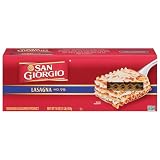
The most consistent San Giorgio lasagna recipe uses 12 San Giorgio lasagna noodles, briefly boiled until flexible but still firm, layered in a 9-by-13-inch baking dish with seasoned meat sauce, ricotta, mozzarella, and Parmesan, then covered and baked at 375°F for 25 minutes before a 10- to 15-minute uncovered finish.
As an Amazon Associate we earn from qualifying purchases at no extra cost to you.


Our Top Picks
San Giorgio Lasagna at a Glance
| Item | Recommended amount | Why it matters |
|---|---|---|
| San Giorgio lasagna noodles | 12 sheets | Provides three layers of four noodles in a standard 9-by-13-inch pan |
| Ground beef or meat mixture | 1 pound | Enough filling without making the layers too thick |
| Tomato sauce | About 48 ounces total | Supplies moisture for the noodles and prevents a dry bake |
| Ricotta | 15 ounces | Creates a soft, cohesive middle layer |
| Shredded mozzarella | 3 cups, about 12 ounces | Gives the top and interior layers stretch and browning |
| Grated Parmesan | 1/2 cup | Adds saltiness and a firmer toasted finish |
| Baking dish | 9 by 13 inches, at least 2 1/2 inches deep | Fits three noodle layers without overflow |
| Oven temperature | 375°F | Heats the center while allowing the cheese to brown |
Ingredients
- 12 San Giorgio lasagna noodles
- 1 pound ground beef, Italian sausage, or a combination
- 1 medium yellow onion, finely chopped
- 2 garlic cloves, minced
- Two 24-ounce jars or cans of marinara or tomato-basil sauce
- 15 ounces whole-milk ricotta
- 1 large egg
- 3 cups shredded low-moisture mozzarella
- 1/2 cup grated Parmesan
- 1 teaspoon dried Italian seasoning
- 1/2 teaspoon kosher salt, plus salt for the pasta water
- 1/4 teaspoon black pepper
- 1 tablespoon olive oil, if needed for browning
Prepare the San Giorgio Noodles Correctly
San Giorgio lasagna noodles are generally prepared by boiling before assembly, rather than treating them as no-boil sheets. Because package instructions can change between varieties and sizes, use the cooking time printed on your box as the final authority. For standard dried lasagna, the reliable method is:
- Bring a large pot of water to a full boil. Use roughly 4 quarts of water and 1 tablespoon of salt for a 12-noodle batch.
- Add the noodles gradually so the water keeps boiling. Stir carefully during the first 2 minutes to prevent sticking.
- Cook until the noodles are pliable but still noticeably firm, usually about 8 to 10 minutes for standard dried sheets. They will continue cooking in the oven.
- Drain immediately. Lay the noodles in a single layer on a lightly oiled baking sheet or rinse briefly with cool water if assembly will be delayed.
- Do not leave drained noodles in a pile. Their surfaces become tacky and can tear when separated.
Do not substitute an oven-ready preparation method unless the package specifically identifies the noodles as oven-ready. Regular boiled noodles need enough sauce in the dish, but they should not be submerged in a watery sauce.
Make the Filling and Sauce
Heat a large skillet over medium-high heat. Brown the meat with the onion until no pink remains, about 7 to 9 minutes. Drain excess grease, add the garlic for 30 seconds, then stir in the tomato sauce and Italian seasoning. Simmer uncovered for 10 minutes. The finished sauce should be spoonable and moist, not thin like soup.
In a separate bowl, combine the ricotta, egg, salt, pepper, and 1/4 cup of the Parmesan. The egg helps the ricotta set into a sliceable layer. If you prefer a looser, creamier filling, use only half the egg or omit it, but the finished lasagna will be softer.
Layer Order for a 9-by-13-Inch Pan
Lightly coat the baking dish with sauce before adding noodles. This prevents the bottom sheets from sticking and gives them immediate moisture. Divide the ingredients approximately as follows:
- 1 1/2 cups sauce on the bottom
- 4 noodles for the first pasta layer
- Half of the ricotta mixture
- About 1 1/2 cups sauce
- 1 cup mozzarella
- 4 noodles for the second pasta layer
- The remaining ricotta mixture
- About 1 1/2 cups sauce
- 1 cup mozzarella
- 4 noodles for the top pasta layer
- The remaining sauce, spread edge to edge
- The remaining 1 cup mozzarella and Parmesan
The layer sequence is therefore sauce, noodles, ricotta, sauce, mozzarella, repeated twice, followed by noodles, sauce, mozzarella, and Parmesan. Spread sauce to the corners and along the edges. Exposed noodles dry out and become hard before the center finishes heating.
Baking Times and Resting
- Heat the oven to 375°F.
- Cover the pan tightly with aluminum foil. If possible, keep the foil from touching the cheese by tenting it slightly or spraying the underside with nonstick spray.
- Bake covered for 25 minutes.
- Remove the foil and bake for another 10 to 15 minutes, until the cheese is melted and lightly browned and the edges are bubbling.
- Rest for 15 to 20 minutes before cutting.
For a lasagna assembled directly from refrigerated ingredients, allow 35 to 45 minutes covered and 10 to 15 minutes uncovered. A cold or frozen lasagna requires a different schedule: thaw it in the refrigerator first for more even heating, then bake until the center is fully hot rather than relying only on the clock.
Cheese Ratios That Hold the Layers Together
The 15 ounces of ricotta, 3 cups of mozzarella, and 1/2 cup of Parmesan ratio balances softness, melt, and structure. More ricotta can make the filling wet and cause sliding layers. More mozzarella increases stretch but can create a greasy surface, particularly when using whole-milk cheese. Low-moisture shredded mozzarella is the dependable choice for this format.
If using cottage cheese instead of ricotta, drain it first. Cottage cheese contains more free moisture, so skipping the draining step can produce a loose sauce and watery slices. Fresh mozzarella can also work, but it should be patted dry and used in smaller pieces rather than as the entire cheese layer.
Common Problems and Their Fixes
| Problem | Likely cause | Correction |
|---|---|---|
| Hard noodle edges | Too little sauce or uncovered baking | Cover tightly for the first 25 minutes and spread sauce to every edge |
| Watery slices | Thin sauce, undrained cheese, or cutting immediately | Simmer sauce to thicken, drain wet ingredients, and rest 15 to 20 minutes |
| Noodles stuck together | They cooled in a pile after boiling | Lay them separately on an oiled tray |
| Burned cheese | Foil was removed too early or the oven runs hot | Keep covered longer and uncover only for the final 10 to 15 minutes |
| Layers slide apart | Excess sauce, too much filling, or insufficient resting | Use measured layers and wait before slicing |
Portion and Pan Decisions
A 9-by-13-inch pan produces approximately 8 generous portions or 10 to 12 moderate portions. For a smaller 8-by-8-inch pan, halve the ingredients and use 6 noodles, arranging two noodles per layer. Begin checking the smaller dish after about 20 minutes covered and 10 minutes uncovered.
For frequent preparation, a sturdy glass or ceramic pan retains heat well but may need a few extra minutes if started cold. A metal pan responds faster and often browns the edges more strongly. Whichever pan you choose, leave at least 1/2 inch of headroom so bubbling sauce does not spill into the oven.
Storage and Reheating
Cool leftovers promptly, cover them, and refrigerate for up to 3 to 4 days. Reheat individual portions covered in the microwave, or reheat several portions covered in a 350°F oven until hot throughout. Add a spoonful of sauce before reheating if the edges look dry. Lasagna can be frozen in airtight portions; thawing overnight in the refrigerator gives the most even reheating and best texture.