Best Multi Port Simultaneous Battery Rapid Chargers
What's inside
- Top 3 Picks
- Quick Comparison
- How We Chose
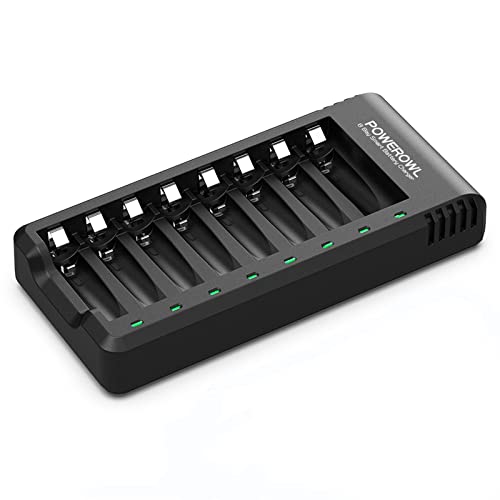
- 1. POWEROWL 8 Bay AA AAA Battery Charger – Best for Bulk AA/AAA Households
- 2. EBL Universal Smart Battery Charger with Discharge Function – Best for Reconditioning Mixed Cell Sizes
- 3. EBL LCD Battery Charger Smart Individual 907 – Best for Simple AA/AAA Top-Ups with a Readout
- 4. Ziwodiv 8-Port 60W/12A USB Charger Station – Best for Powering USB-Input Battery Chargers
- 5. Ledorr Smart Universal 4 Port Battery Charger – Best for 18650 and Other Lithium-Ion Cells
- 6. DMMNS 4-Port Rapid Charging Station for Tactacam Battery Packs – Best for Trail-Camera Battery Packs
- 7. ASOMETECH 100W 8 Port Multiple USB Charging Station – Best for High-Wattage USB Fleets
- 8. Tenergy Smart Battery Charger for NIMH/NICD AA/AAA/C/D/9V – Best Overall for Universal Cell Coverage
- 9. Tenergy TN486U 5-Bay Universal Battery Charger – Best for Portable Mixed-Size Charging
- 10. POWEROWL 12 Bay AA AAA Battery Charger – Best for Large Ni-MH Libraries
- 11. BatPower 12A 4-Port Rapid Charging Station for Makita 14.4V–18V – Best for Cordless Power-Tool Fleets
- 12. Battery Tender 5 Bank Multibank Charger – Best for 12V/6V Lead-Acid Banks and Seasonal Equipment
- Related Guides
As an Amazon Associate I earn from qualifying purchases. This post may contain affiliate links at no extra cost to you.
The best multi-port simultaneous battery rapid charger for most homes and small workshops is the Tenergy Smart Battery Charger for NiMH/NiCd AA/AAA/C/D/9V: it covers every common cylindrical size plus 9V, charges each bay independently, and adds a discharge/refresh cycle that budget chargers leave out. If your problem is sheer volume of AA and AAA cells, the POWEROWL 8 Bay is the budget pick that clears a drawer in one sitting. If your batteries live inside cordless tools, the premium answer is the BatPower 12A 4-Port Rapid Charging Station for Makita 14.4V–18V packs, which puts four packs on charge at once instead of one. Everything else in this roundup fills a narrower gap — 18650 cells, trail-camera packs, USB devices, or 12V lead-acid banks — and the sections below explain which of those gaps you actually have. The deciding factors are port count, whether the bays are genuinely independent, the total power budget feeding them, and how aggressively the charger pushes current, because speed and long-term battery health pull in opposite directions.
Our Top Picks
 EBL LCD Battery Charger Smart Individual 907 AA907 Charger Only5.58 x 4.04 x 1.18 inchesCheck on Amazon
 DMMNS 4-Port Rapid Charging Station for Tactacam Battery8.2 x 4.6 x 2.2 inches1 PoundsCheck on Amazon


Top 3 Picks
Best overall: Tenergy Smart Battery Charger for NiMH/NiCd AA/AAA/C/D/9V
It is the only charger here that handles AA, AAA, C, D and 9V NiMH/NiCd cells in one box with an LCD readout and a discharge function, so it covers household cells and larger lantern or radio batteries without a second purchase. Independent bays mean a single tired C cell does not hold up the other three. It suits anyone who wants one charger to end the category, rather than three chargers that each do a third of the job.
Best budget: POWEROWL 8 Bay AA AAA Battery Charger
Eight independent USB-powered bays for the price of a couple of disposable battery packs. It charges AA and AAA Ni-MH cells simultaneously, stops each slot individually, and runs from any USB source you already own. It is the right first charger for a household that has just switched to rechargeables and does not yet know what it needs.
Best premium: BatPower 12A 4-Port Rapid Charging Station for Makita 14.4V–18V
Four tool-battery bays on one dock, with a 12A total output shared across them, compatible with Makita 14.4V–18V packs and the DC18SF charging footprint. For a shop running drills, impact drivers, circular saws and shop lights on the same battery platform, this replaces the ritual of queuing packs one at a time. Charger only — packs are sold separately.
Quick Comparison
| Product | Best for | Key specs | Price tier |
|---|---|---|---|
| POWEROWL 8 Bay AA AAA Battery Charger | Bulk AA/AAA household rotation | 8 independent bays; AA/AAA Ni-MH & Ni-Cd; USB input | Budget |
| EBL Universal Smart Battery Charger with Discharge Function | Mixed cell sizes plus reconditioning | Multi-bay; AA/AAA/C/D/9V Ni-MH; discharge mode | Mid-range |
| EBL LCD Battery Charger Smart Individual 907 | Simple AA/AAA top-ups with a readout | Individual-slot charging; AA/AAA Ni-MH & Ni-Cd; LCD | Budget |
| Ziwodiv 8-Port 60W/12A USB Charger Station | Powering USB-input chargers and devices | 8 USB-A ports; 60W / 12A total; LED display | Mid-range |
| Ledorr Smart Universal 4 Port Battery Charger | 18650 and 3.6V/3.7V lithium cells | 4 bays; 3.6V/3.7V Li-ion; LCD display | Budget |
| DMMNS 4-Port Rapid Charging Station for Tactacam | Trail-camera battery packs | 4 dedicated bays; Tactacam pack footprint; rapid charge | Mid-range |
| ASOMETECH 100W 8 Port USB Charging Station | High-wattage USB fleet, fast phone/tablet charging | 8 ports (4× Quick Charge 3.0, 4× USB-C PD); 100W; wireless pad | Premium |
| Tenergy Smart Battery Charger for NIMH/NICD AA/AAA/C/D/9V | One charger for every common cell size | Universal bays; NiMH/NiCd; LCD; refresh/discharge | Premium |
| Tenergy TN486U 5-Bay Universal Battery Charger | Portable mixed-size charging | 5 bays; AA/AAA/C/D/9V; LCD; Micro-USB & Type-C input | Mid-range |
| POWEROWL 12 Bay AA AAA Battery Charger | Large Ni-MH libraries, club and classroom use | 12 independent bays; AA/AAA Ni-MH & Ni-Cd; USB input | Budget |
| BatPower 12A 4-Port Rapid Charging Station | Cordless power-tool battery fleets | 4 bays; Makita 14.4V–18V compatible; 12A total; DC18SF footprint | Premium |
| Battery Tender 5 Bank Multibank Charger | 12V/6V lead-acid banks and seasonal equipment | 5 banks; 20A total (4A per bank); 12V/6V selectable; smart & switchable | Premium |
How We Chose
The starting filter was simultaneity: a charger only belongs on this list if it can work more than one bay at the same time without the user babysitting it. From there, the criteria were port count and whether those ports are electrically independent, chemistry and size compatibility as stated in each product’s own listing, the total power budget the charger draws or distributes, and how the charger terminates a charge — timed, voltage-based, or temperature-aware. We weighted category fit heavily, because a 12-bay Ni-MH charger and a four-bay tool-battery dock solve completely different problems and should not be scored against each other.
We also looked at the upgrade path each product leaves open: whether it can be fed by a bigger USB supply later, whether it accepts the next cell size up, and whether the charger’s own power supply is the limiting factor. Pricing is expressed only as a tier — budget, mid-range, premium — because listing prices move constantly and a tier is what actually matters when you are deciding where to spend. Every specification below comes from the manufacturer’s published listing or from well-established facts about the battery category; nothing here is based on disassembly, benchmarking, or long-term ownership of the units themselves.
1. POWEROWL 8 Bay AA AAA Battery Charger – Best for Bulk AA/AAA Households
As an Amazon Associate we earn from qualifying purchases at no extra cost to you.
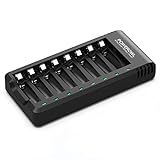
This is the charger for the person who owns forty AA cells and no plan. Eight bays, each wired independently, so you can drop in one cell or eight, mixed capacities and mixed brands, and every slot stops on its own when that cell is finished. It is the cheapest sensible way to keep a whole drawer of Ni-MH rechargeables in rotation, and it is small enough to live on the shelf next to the batteries it serves.
Who it suits: households with a steady AA/AAA drain — wireless mice, remotes, LED lanterns, kids’ toys, game controllers, label makers, weather stations, shop radios — plus anyone who has already standardised on Ni-MH cells and simply wants them all charged at once without paying for features they will never touch.
Key specs
- 8 charging bays, each operating independently, so single cells are welcome
- Accepts AA and AAA Ni-MH and Ni-Cd rechargeable cells
- USB-powered input — runs from a wall adapter, a power bank, a laptop port, or a multi-port USB station
- High-speed charging per the manufacturer’s listing; per-bay current is not published, and chargers in this class typically deliver roughly 300–500 mA per slot
- Individual slot status indication, so a dead slot is visible at a glance
Strengths
The value proposition is arithmetic rather than engineering. A four-bay charger forces you to run two sessions for eight cells; eight independent bays mean one session and no sorting. Independence matters more than people expect: in a paired-slot charger, one weak cell drags its partner into a slow, hot, never-quite-finished charge. Here, each cell gets its own channel and its own cutoff.
USB input is the other quiet advantage. It means the charger is not tied to a wall outlet with a proprietary barrel plug — it can hang off a 60W desktop USB station, a car adapter, or a power bank on a job site. If you already own a decent multi-port USB supply, this charger costs you nothing extra in infrastructure.
The trade-off is transparency. There is no LCD showing voltage, capacity or elapsed time, and the listing does not publish per-bay current. For a household charger that is fine; for someone trying to match cells into sets, it is a limitation.
Pros
- Eight bays at a budget-tier price — the lowest cost per charging slot in this roundup
- Fully independent slots; no pairing, no waiting for a partner cell
- USB-powered, so it works from any 5V supply you already own
- Compact footprint for the bay count
- Simple enough that nobody in the house needs instructions
Cons
- AA and AAA only — no C, D, 9V or lithium-ion support
- No display, no discharge or refresh mode, no capacity readout
- Per-bay charge current is not published, so charge times are estimates rather than promises
- USB input means charge speed depends on the adapter you plug it into
How it compares
Against the POWEROWL 12 Bay, this is the smaller, cheaper version of the same idea: same independent-slot philosophy, same USB input, four fewer bays. If you routinely charge more than eight cells in a session — a club, a classroom, a big family — the 12-bay model is the better buy. Against the EBL LCD 907, you trade the readout for two more bays and typically a lower price. If you want to see what the charger is doing, buy the EBL; if you just want cells back in the drawer, buy this.
2. EBL Universal Smart Battery Charger with Discharge Function – Best for Reconditioning Mixed Cell Sizes

EBL’s universal unit adds the one feature that separates a charger from a battery-maintenance tool: a discharge cycle. Being able to flatten a cell deliberately, then recharge it, is how you break up the voltage depression that builds in Ni-MH cells after months of shallow partial charges. Combined with multi-bay simultaneous charging across AA, AAA, C, D and 9V, it is the mid-range workhorse of this list.
Who it suits: people whose rechargeable cells have started underperforming — the drill’s old AA set, the lantern’s C cells, the 9V in the multimeter — and who want to attempt a refresh before replacing them. It also suits anyone with a genuinely mixed battery drawer, because one box covers five sizes.
Key specs
- Multi-bay rapid charging with simultaneous slots
- Compatible with AA, AAA, C, D and 9V Ni-MH rechargeable batteries
- Dedicated discharge function for refresh and reconditioning cycles
- Smart charge control with per-bay monitoring and automatic termination
- Mains-powered, so charge current does not depend on a USB adapter’s rating
Strengths
The discharge mode is the reason to buy this over a cheaper AA/AAA charger. Ni-MH cells that have lived on a trickle charger or been topped up repeatedly can develop a depressed voltage under load — the cell reads full but collapses under a camera flash or a power tool. A controlled discharge to a sensible cut-off, followed by a full charge, redistributes the active material and often restores usable capacity. It is not a miracle cure, and cells that have been reversed or over-discharged are gone for good, but it is a real, repeatable maintenance step.
Coverage is the second strength. C and D Ni-MH cells are expensive and awkward to replace, and a charger that handles them properly is worth more than its price the first time you rescue a set of D cells from a lantern or a portable radio. Nine-volt Ni-MH support is rarer still, and it is the difference between throwing away smoke-detector and multimeter batteries and reusing them.
Mains power also removes the USB bottleneck. Where a USB charger’s speed is capped by the adapter feeding it, this one has its own supply and can push higher current per bay without negotiating for watts.
Pros
- Discharge and refresh capability, which most budget chargers lack entirely
- Five battery sizes in one unit — AA, AAA, C, D and 9V
- Simultaneous multi-bay charging, so a mixed batch goes in together
- Mains powered; no dependence on an external USB supply
- EBL is a long-established rechargeable-battery brand with broad cell availability
Cons
- No lithium-ion support — 18650 and other 3.6V/3.7V cells need a different charger
- Larger and heavier than the AA/AAA-only units here
- Refresh cycles take many hours by design; it is not a fast-turnaround feature
- More expensive than budget AA/AAA chargers with a similar bay count
How it compares
Versus the Tenergy Smart Battery Charger, the feature sets rhyme — both cover AA through 9V NiMH/NiCd with a refresh capability — and the decision comes down to bay count, display detail and current pricing tier. Versus the EBL LCD 907, this is the broader, more capable sibling: the 907 handles AA and AAA only, while this unit adds C, D and 9V plus the discharge cycle. If your drawer contains only AA and AAA cells, the 907 is the cheaper way to stay in the same brand; the moment a C or D cell appears, this is the one you need.
3. EBL LCD Battery Charger Smart Individual 907 – Best for Simple AA/AAA Top-Ups with a Readout

Not every charging job needs a laboratory. The EBL 907 is a compact individual-slot charger for AA and AAA Ni-MH and Ni-Cd cells, with an LCD that tells you what is happening without demanding that you interpret it. It sits at the budget tier, but it is a step up from the cheapest chargers in feel and feedback.
Who it suits: the two-person household that runs eight or ten AA cells at a time and wants to see charging progress rather than guess at it. Also good as a second charger — one by the desk, one in the shop — so cells never migrate far from where they are needed.
Key specs
- Individual-slot charging, so cells can be loaded one at a time
- AA and AAA Ni-MH and Ni-Cd rechargeable batteries
- LCD display for charging status
- Smart charge control with automatic termination per slot
- Compact desktop footprint, suitable for a shelf or bench corner
Strengths
The display is the whole point. A charger with a per-slot readout turns an invisible process into a visible one: you can see which cells are still working, which finished early, and which slot is empty because you forgot to load it. Over a year of use, that feedback is what stops you from blaming the device when the real problem is one weak cell in a set of four.
Individual slots keep the process flexible. There is no need to find a partner for the odd cell sitting on the counter, and no penalty for charging one battery when you only need one. For AA and AAA Ni-MH — the two sizes that cover the overwhelming majority of household devices — this is the entire feature set you need, executed cleanly.
Because it targets only two cell sizes, the unit stays small and the price stays low. That makes it a sensible first rechargeable charger, and a sensible spare.
Pros
- LCD readout at a budget-tier price
- Independent slots — charge one cell or a full load
- Handles both Ni-MH and Ni-Cd chemistry
- Small footprint; easy to keep on a desk or bench
- Straightforward enough for a shared household to use without a manual
Cons
- AA and AAA only — no C, D, 9V or lithium-ion cells
- No discharge or refresh function
- Fewer bays than the POWEROWL units at a similar tier
- Not intended for high-drain tool packs or camera battery packs
How it compares
Against the POWEROWL 8 Bay, the trade is clear: fewer bays, but a display and typically a slightly more polished feel. If you charge eight cells at a time, the POWEROWL wins on throughput. If you charge two to four and want to know what is going on, the EBL 907 is the better daily driver. Against its bigger sibling, the EBL Universal with Discharge, it is the same brand’s narrow, cheaper option — buy the 907 for AA/AAA, step up only when a C, D or 9V cell enters your life.
4. Ziwodiv 8-Port 60W/12A USB Charger Station – Best for Powering USB-Input Battery Chargers

This one is not a battery charger. It is the thing you plug battery chargers into. Eight USB-A ports sharing a 60W / 12A budget, with an LED display and enough simultaneous output to feed several USB-input chargers at once — which is exactly what a workshop with a mix of USB-powered gadgets needs.
Who it suits: anyone whose charging life has outgrown a two-port wall adapter. If you own a USB-input AA/AAA charger, a headlamp, a laser distance meter, a Bluetooth speaker, a phone and a tablet, this replaces the daisy chain of adapters with one brick.
Key specs
- 8 USB-A output ports
- 60W / 12A total output shared across the ports
- LED display for status
- Multi-port simultaneous charging — no queueing devices
- Single compact hub replacing multiple wall adapters
Strengths
The value is consolidation. One hub on the bench edge, one cable run, eight ports. The LED display lets you confirm at a glance that the station is live rather than silently dead, which matters when a charger has been sitting there for three hours and you assumed it was working.
For USB-powered battery chargers specifically, this is the enabling accessory. An 8-bay USB charger draws a meaningful amount of power; a single 5W phone adapter will make it crawl or refuse to start. A 60W station with a 12A total budget can run a USB battery charger plus a phone plus a headlamp without any of them noticeably slowing down.
The honest caveat is that 60W is a total budget, not a per-port guarantee. Devices negotiate what they can take and the station distributes accordingly. Plug eight tablets in at once and every one of them will charge more slowly than it would alone. That is physics, not a defect — but it is the reason a 100W station exists, and why the ASOMETECH below sits at the premium tier.
Pros
- Eight simultaneous ports — no rotation of devices
- 60W / 12A total is enough for several small devices plus a USB battery charger
- LED display confirms live status
- Eliminates a pile of individual wall adapters
- Mid-range price for the port count
Cons
- USB-A only — no USB-C Power Delivery, so fast-charge rates for modern phones and laptops are limited
- Shared power budget means full-speed output on every port simultaneously is not possible
- Charges devices, not raw battery cells; you still need a separate charger
- No per-port wattage readout on the display in most configurations of this class
How it compares
Against the ASOMETECH 100W 8 Port, this is the same concept at roughly two-thirds the power budget and without USB-C PD or Quick Charge ports. If your devices are phones, headlamps and USB battery chargers, the Ziwodiv is sufficient and cheaper. If you need to charge a laptop or want fast charging on a modern phone, pay for the ASOMETECH. Against a dedicated mains battery charger like the EBL 907, they are not competitors at all — one charges cells, one supplies power — and a workshop often benefits from owning both.
5. Ledorr Smart Universal 4 Port Battery Charger – Best for 18650 and Other Lithium-Ion Cells

Lithium-ion cells are a different animal from Ni-MH, and they need a different charger. The Ledorr 4-port unit targets 3.6V and 3.7V rechargeable cells — the 18650 family — with an LCD and four independent bays. It is the budget entry point into charging loose lithium cells safely and properly.
Who it suits: flashlight owners, vapers, RC hobbyists, headlamp users, and anyone with a device that runs on removable 18650 cells. Also useful for workshop tools that take loose lithium cells — laser levels, inspection lights, thermal cameras and the growing number of small instruments that abandoned AA in favour of 18650.
Key specs
- 4 charging bays
- Designed for 3.6V / 3.7V rechargeable lithium-ion cells, including the 18650 form factor
- LCD display for charging status
- Smart universal charging with per-bay control
- Compact desktop footprint
Strengths
The chemistry match is the point. Ni-MH chargers will not charge a 3.7V lithium cell correctly, and forcing one in is how cells vent. A dedicated lithium charger uses the correct constant-current / constant-voltage profile, terminates at the right voltage, and does not attempt the voltage-depression tricks that suit Ni-MH. If you own loose 18650 cells, you need one of these; there is no substitute.
Four bays is a practical number for the use case. Most 18650 users run two or three devices and rotate a handful of cells; four bays means a full rotation can be restored in one session. The LCD keeps the process legible, which matters more with lithium than with Ni-MH because the consequences of getting it wrong are more serious.
The budget tier is the honest framing. This is not a analysing charger with capacity measurement and internal-resistance logging; it is a straightforward, correct charger for the cell size it supports. For most users, that is exactly enough.
Pros
- Correct charging profile for 3.6V / 3.7V lithium-ion cells
- Four independent bays
- LCD status display
- Budget-tier price for a dedicated lithium charger
- Compact and easy to store
Cons
- Not compatible with Ni-MH or Ni-Cd cells
- No capacity or internal-resistance analysis
- Four bays may be limiting for heavy 18650 users
- Lithium cells require more care in handling than Ni-MH — never charge damaged or mismatched cells together
How it compares
There is no direct alternative to this in the roundup, which is precisely why it earns a slot: every other product here is either a Ni-MH/NiCd charger or a USB power source. Against the EBL Universal with Discharge, the split is chemistry, not quality — EBL for Ni-MH sizes, Ledorr for lithium. Buy the wrong one and the charger will not work, or worse, will work badly. If you own both chemistries, you own both chargers, and that is normal rather than excessive.
6. DMMNS 4-Port Rapid Charging Station for Tactacam Battery Packs – Best for Trail-Camera Battery Packs

Trail cameras have a battery problem that AA chargers do not solve: many modern models use proprietary rechargeable packs, and those packs charge one at a time in the camera or in a single-pack dock. The DMMNS 4-port station puts four packs on charge simultaneously, in a footprint built specifically for the Tactacam pack format.
Who it suits: hunters, wildlife watchers, and property owners running multiple trail cameras. If you deploy four cameras and each takes a pack, this turns a two-day charging relay into a single overnight session. It also suits anyone who has standardised on a Tactacam-compatible pack ecosystem across cameras and accessories.
Key specs
- 4 dedicated charging bays for Tactacam battery packs
- Rapid charging across the ports
- Purpose-built pack footprint — no adapters or shims
- Compact station format for a bench or shelf
- Designed for simultaneous use rather than sequential charging
Strengths
Purpose-built beats universal when the pack is proprietary. A generic charger cannot grip a camera-specific pack properly, and a single-pack dock forces you to schedule charging around the season. Four bays means the whole camera array can be refreshed in one night, which is the difference between checking cameras on Saturday and checking them next weekend.
The format also reduces handling. Packs drop into a shaped bay and sit correctly, which matters when you are loading four of them in a dim garage at 5 a.m. before a hunt. There is no fiddling with contacts or figuring out orientation.
The honest limitation is ecosystem lock-in. This station is for Tactacam packs; it will not charge your AA cells, your 18650s or your drill batteries. If you run a mixed kit, it is an addition rather than a replacement, and it should be budgeted as such.
Pros
- Four packs on charge simultaneously — matches a multi-camera deployment
- Purpose-built bays, so packs seat correctly every time
- Rapid charging suited to overnight turnaround
- Compact enough to live permanently on a shelf
- Removes the single-pack bottleneck that defines most trail-camera setups
Cons
- Only charges Tactacam-compatible packs — no universal compatibility
- Not useful for AA, AAA, 18650 or tool batteries
- Adds a second charger to the shelf if you also run standard cells
- Proprietary-pack ecosystems tie you to one brand’s accessories
How it compares
Against the POWEROWL 8 Bay — the charger most trail-camera users start with — this is a different category entirely. The POWEROWL charges the AA cells that older cameras use; the DMMNS charges the packs that newer cameras use. If your cameras take AA Ni-MH cells, buy the POWEROWL. If they take proprietary packs, no AA charger will help you, and this is the only product here that addresses the problem directly.
7. ASOMETECH 100W 8 Port Multiple USB Charging Station – Best for High-Wattage USB Fleets

Eight ports, 100W, four of them Quick Charge 3.0 and four USB-C with Power Delivery, plus a wireless charging pad. This is the premium end of the USB-station category, and it exists because modern devices have outgrown the old assumption that 5V/2A is generous.
Who it suits: a bench or desk where a laptop, a tablet, two phones, a headlamp, a USB battery charger, a camera and a smartwatch all want power at the same time. Also suits anyone running USB-input battery chargers who wants the charger to run at full speed regardless of what else is plugged in.
Key specs
- 8 output ports total: 4× Quick Charge 3.0 and 4× USB-C Power Delivery
- 100W total output
- Wireless charging pad
- Simultaneous multi-device charging
- Desktop station format with cable management in mind
Strengths
Protocol support is what separates this from cheaper hubs. Quick Charge 3.0 and USB-C PD let compatible devices negotiate higher voltages, which means a modern phone or a small laptop can charge at a rate a plain 5V port cannot match. For a workshop, that is the difference between a laptop topping up over lunch and a laptop staying tethered all day.
The 100W budget also gives headroom. A USB-input 8-bay battery charger is a meaningful load; put it on a 60W station alongside three other devices and everything slows. On a 100W station there is room to run the battery charger at full rate and still fast-charge a phone on a PD port. That headroom is the premium you are paying for.
The wireless pad is a convenience rather than a headline. It is best understood as a parking spot for a phone, not a fast charger. Judged that way, it earns its place on the bench.
Pros
- 100W total output — enough headroom to run a USB battery charger at full rate alongside other devices
- Four USB-C PD ports and four Quick Charge 3.0 ports cover virtually every modern device
- Eight simultaneous ports end the adapter rotation
- Wireless pad adds a cable-free parking spot
- Consolidates an entire bench’s power needs into one unit
Cons
- Premium price tier — the most expensive USB station here
- 100W is still a shared budget, so eight heavy loads will divide it
- Charges devices, not bare battery cells
- Physically larger than a simple 5-port adapter, so it needs bench space
How it compares
Against the Ziwodiv 8-Port 60W/12A, the differences are wattage and protocol: 100W versus 60W, USB-C PD and Quick Charge versus USB-A only. If everything you own is USB-A and modest, the Ziwodiv is the sensible spend. If a laptop, a recent phone or a high-draw USB charger is in the mix, the ASOMETECH pays for itself in fewer charge cycles missed. Against the Battery Tender 5 Bank, they are different species — one is a 12V/6V lead-acid bank charger, the other a USB power hub — and no workshop should confuse the two.
8. Tenergy Smart Battery Charger for NIMH/NICD AA/AAA/C/D/9V – Best Overall for Universal Cell Coverage
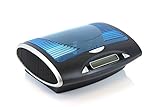
If you want one charger that handles every common household cell size and does it with a readable display and a refresh cycle, this is it. Tenergy’s universal unit takes AA, AAA, C, D and 9V NiMH and NiCd cells, charges bays simultaneously, and gives you the maintenance tools to keep a mixed collection alive rather than replacing it every eighteen months.
Who it suits: the household or workshop that has accumulated a genuinely mixed battery drawer — C cells in a lantern, D cells in a radio, 9V in a multimeter, AA and AAA everywhere else — and would rather own one competent charger than three specialised ones. It is also the right pick for anyone who wants to attempt refresh cycles on older cells before writing them off.
Key specs
- Universal compatibility: AA, AAA, C, D and 9V NiMH/NiCd rechargeable batteries
- Multi-bay simultaneous charging with independent slot monitoring
- LCD display showing charging status
- Refresh/discharge capability for reconditioning older cells
- Automatic charge termination with smart charge control
Strengths
Breadth without compromise is the core strength. Many universal chargers technically accept five sizes but charge the larger cells at a trickle that takes a full day. Tenergy has built its reputation on rechargeable battery systems, and this unit treats C and D cells as first-class citizens rather than an afterthought. For a workshop running a portable radio, a large lantern and a handful of meters, that matters.
The refresh function is the second pillar. Ni-MH cells that live in low-drain devices and get topped up constantly lose usable capacity over time. A controlled discharge and recharge cycle is the standard remedy, and having it built in means you can maintain a set of D cells — which are expensive to replace — instead of discarding them.
The LCD removes guesswork. With five sizes in play, knowing which bay is working and which has finished is not a luxury; it is how you avoid leaving a 9V cell in a slot for a week because you assumed it was still charging.
Pros
- Five cell sizes in one unit — AA, AAA, C, D and 9V
- Simultaneous multi-bay charging with independent monitoring
- Refresh/discharge mode for reconditioning tired cells
- LCD status display
- Established battery-specialist brand with wide cell availability
Cons
- Premium tier — the most expensive Ni-MH charger in this roundup
- No lithium-ion support; 18650 cells need a separate charger
- Larger than an AA/AAA-only unit
- Refresh cycles are slow by design
How it compares
Against the EBL Universal Smart Battery Charger with Discharge, the two are close cousins: same five-size coverage, same refresh capability, similar bay philosophy. The decision usually comes down to current price tier and which brand’s cells you already own — matching charger and cells from one maker is not required, but it does simplify support. Against the Tenergy TN486U, this unit is the fuller-featured sibling with more charging capacity; the TN486U wins on portability and input flexibility. If the charger stays on a bench, buy this. If it travels, buy the TN486U.
9. Tenergy TN486U 5-Bay Universal Battery Charger – Best for Portable Mixed-Size Charging

The TN486U takes the same five-size philosophy as its bigger sibling and packages it for travel: five bays, an LCD, and dual Micro-USB and Type-C input so it can run from a power bank, a car adapter or a laptop. It is the universal charger you take with you rather than the one bolted to the bench.
Who it suits: people who charge batteries away from home — photographers on location, campers, tradespeople working out of a van, anyone whose workshop is wherever they happen to be standing. Also a good choice for small apartments where the charger lives in a drawer and comes out when needed.
Key specs
- 5 charging bays
- AA, AAA, C, D and 9V rechargeable battery support
- LCD display for status
- Micro-USB and Type-C input — powered from a wall adapter, power bank, car charger or laptop
- Compact, travel-friendly body
Strengths
Input flexibility is the defining feature. Most universal chargers in this size class have a captive mains lead, which makes them useless in a tent, a van or a hotel room. The TN486U takes a USB-C or Micro-USB cable, so it runs from whatever power source is available. That single design decision changes where the charger can live and how often you actually use it.
Five bays covering five cell sizes is a sensible compromise. It will not clear a drawer of twelve AA cells in one session the way the POWEROWL 12 Bay will, but it will handle the mixed handful you actually carry — a pair of AAs for a flash, a 9V for a meter, a C cell for a lantern.
The LCD keeps the portable experience usable. In low light — a tent, a vehicle interior, a dim shed — a status readout is worth more than a row of coloured LEDs, because you can tell at a glance whether the unit is running or has finished.
Pros
- Micro-USB and Type-C input make it genuinely portable
- Five cell sizes including C, D and 9V
- LCD status display
- Compact body for travel and small storage spaces
- Tenergy’s battery-specialist pedigree at a mid-range tier
Cons
- Five bays — fewer than the POWEROWL units for high-volume AA/AAA work
- No lithium-ion support
- USB input means charge speed depends on the supply you connect
- No refresh or discharge function
How it compares
Against the Tenergy Smart Battery Charger, the split is station versus satchel: the bigger unit has more charging capacity and a refresh mode, the TN486U has USB input and travels. Against the EBL Universal with Discharge, you give up the discharge function in exchange for portability and dual USB input. If you never charge batteries away from a wall socket, the EBL is the better value; the moment you need to charge in a vehicle or from a power bank, the TN486U is the only one of the three that can.
10. POWEROWL 12 Bay AA AAA Battery Charger – Best for Large Ni-MH Libraries

Twelve independent bays for AA and AAA Ni-MH and Ni-Cd cells, USB-powered, at a budget tier. This is the highest-capacity household charger in the roundup and the correct answer for anyone whose battery problem is volume rather than variety.
Who it suits: large families, classrooms, clubs, community groups, and workshops where a dozen devices run on AA cells simultaneously — wireless microphones, LED work lights, label makers, test instruments, remote sensors. Also anyone who has bought a hundred-pack of Ni-MH cells and needs to cycle them all regularly.
Key specs
- 12 charging bays, each independent
- AA and AAA Ni-MH and Ni-Cd rechargeable batteries
- USB high-speed charging input
- Independent slot control — mix capacities and brands freely
- Compact arrangement of a high bay count for shelf storage
Strengths
Twelve bays changes the workflow. With eight bays you are still running a second session for a big batch; with twelve you clear the whole drawer at once, and you stop thinking about which cells to charge first. For a school, a club or a large household, that removes a recurring friction point rather than shaving a few minutes off a task.
Independence at this scale is important. A twelve-bay charger with paired slots would be a twelve-bay charger with six usable slots in practice, because every odd cell would need a partner. Full independence means you can load whatever is actually dead, in whatever mix of brands and capacities you own.
USB input keeps the cost down and the flexibility up. There is no proprietary power brick to lose, and the charger can run from a large USB station if you want to consolidate cables. Pairing it with a 60W or 100W multi-port USB station is the natural configuration.
Pros
- 12 independent bays — the highest simultaneous capacity here for AA/AAA cells
- Budget tier despite the bay count
- USB-powered from any suitable 5V supply
- Handles mixed brands and capacities without pairing
- Eliminates multi-session charging for large batches
Cons
- AA and AAA only — no C, D, 9V or lithium-ion support
- No LCD, no discharge or refresh mode
- Needs a reasonably strong USB supply to charge twelve bays at a useful rate
- Physically wide; needs shelf or bench space
How it compares
Against the POWEROWL 8 Bay, this is the same product concept scaled up by fifty percent in bays, at a higher but still budget-tier price. If you have never filled eight bays, the smaller unit is the smarter buy; if you routinely do, the twelve-bay version saves you a session every time. Against the Tenergy Smart Battery Charger, the trade is capacity for coverage: twelve AA/AAA bays versus five bays across five sizes with a display and refresh mode. Volume buyers take the POWEROWL; mixed-drawer owners take the Tenergy.
11. BatPower 12A 4-Port Rapid Charging Station for Makita 14.4V–18V – Best for Cordless Power-Tool Fleets

This is the one that matters most in a working shop. Four bays for Makita 14.4V–18V battery packs, a 12A total output shared across them, and compatibility with the DC18SF charging footprint. It is a charger only — packs are not included — and it exists to solve the single biggest inefficiency in cordless tool ownership: charging packs one at a time.
Who it suits: anyone running a Makita-platform shop with more than two packs. Drills, impact drivers, circular saws, reciprocating saws, grinders, shop lights, vacuums and blowers all draw from the same battery pool, and a one-pack charger turns that pool into a queue. Four bays turns the queue into a rotation.
Key specs
- 4 charging bays for Makita 14.4V–18V battery packs
- 12A total output across the station
- Compatible with the DC18SF charging footprint
- Rapid charging across simultaneous ports
- Charger only — battery packs sold separately
Strengths
The maths of a four-bay tool charger is straightforward. If a pack takes roughly an hour to charge and you own six packs, a single-bay charger takes six hours to restore the fleet. A four-bay station does it in about two, because four packs run at once and then the remaining two follow. In a production shop where two people are running tools all day, that difference decides whether you buy a seventh pack or stop working.
The 12A total budget is the specification that matters most and the one buyers overlook. It is shared, not per-bay. With four packs on the station, each bay gets roughly a quarter of the total; with one pack, that pack can take far more. In practice this means the station is fastest when lightly loaded and slower when full — a sensible design for battery health, since charging four packs at maximum rate simultaneously would generate considerable heat.
Platform compatibility keeps it simple. If you are already on the Makita 14.4V–18V system, this drops into the existing workflow without adapters. Charger-only packaging also means you are not paying for packs you already own.
Pros
- Four packs on charge simultaneously — the core fix for cordless-tool downtime
- 12A total output supports genuinely rapid charging on a lightly loaded station
- Compatible with the widely used DC18SF charging footprint
- Charger-only packaging avoids paying for redundant packs
- Premium build aimed at daily professional use
Cons
- Premium tier — the highest cost of entry in this roundup
- Locked to the Makita 14.4V–18V platform; useless for other brands
- Shared 12A budget means four simultaneous packs each charge more slowly than one alone
- Charger only — batteries are a separate purchase
How it compares
Against the Battery Tender 5 Bank Multibank Charger, the distinction is battery chemistry and use case. The Battery Tender charges 12V and 6V lead-acid banks — vehicle, marine and seasonal equipment batteries — at 4A per bank. The BatPower charges lithium tool packs. One maintains a tractor battery over winter; the other keeps a shop working through a Monday. Owning both is entirely normal in a rural or mixed workshop. Against every Ni-MH charger here, there is no comparison at all: tool packs need a tool-pack charger, and this is the only one in the roundup.
12. Battery Tender 5 Bank Multibank Charger – Best for 12V/6V Lead-Acid Banks and Seasonal Equipment

Five independent banks, 20A total output at 4A per bank, selectable between 12V and 6V, smart and switchable. This is not a household battery charger; it is a maintenance station for lead-acid batteries — the ones in cars, boats, tractors, mowers, motorcycles and RVs that sit unused for months and quietly sulphate themselves into early replacement.
Who it suits: anyone with more than one seasonal or stored lead-acid battery. A farm with a tractor, a mower and a truck; a household with a boat and a classic car; a workshop with a standby generator battery. Five banks means five batteries maintained at once instead of one at a time.
Key specs
- 5 independent charging banks
- 20A total output, approximately 4A per bank
- Selectable 12V / 6V operation