Best Premium All-Terrain Metal Detectors for Relics
What's inside
- Top 3 Picks
- Quick Comparison
- How We Chose
- 1. Bounty Hunter TK4 Tracker IV – Best for Entry-Level All-Terrain Relic Hunting
- 2. MINELAB X-Terra Voyager – Best for All-Terrain Hunting With Minimal Setup
- 3. Bounty Hunter Tracker IV – Best for a Cheap Second Rig or a Shared Family Detector
- 4. Bounty Hunter Time Ranger – Best for Budget Relic Hunters Who Want an LCD
- 5. Bounty Hunter Gold Digger – Best for Kids and Dry-Land Beginners
- 6. SUNPOW Professional Metal Detector – Best for a Rechargeable Mid-Range Starter With a Sealed Coil
- 7. MINELAB X-Terra PRO – Best Overall Premium All-Terrain Relic Detector
As an Amazon Associate I earn from qualifying purchases. This post may contain affiliate links at no extra cost to you.
Best overall for most relic hunters: the MINELAB X-Terra PRO. It is the one machine in this roundup that combines a fully waterproof, submersible build with a large 12-inch class search coil, selectable single frequencies and a fast mode toggle — the exact mix that matters when a single season takes you from plowed field to creek bed to an iron-choked homestead yard. If your budget is fixed at the entry level, the Bounty Hunter TK4 Tracker IV is the cheapest legitimate way onto wet ground, and if your soil is hot and mineralized, the Garrett ACE Apex is the premium pick because its multi-frequency platform copes with ground that punishes single-frequency machines. Whichever detector you choose, budget for the Garrett Pro-Pointer AT: recovery time, not detection depth, is what decides how much ground you actually cover in a day.
Our Top Picks
 MINELAB X-Terra Voyager All-Terrain Professional Pinpointing Metal Detector55 x 28.3 x 11 inches2.8 poundsCheck on Amazon
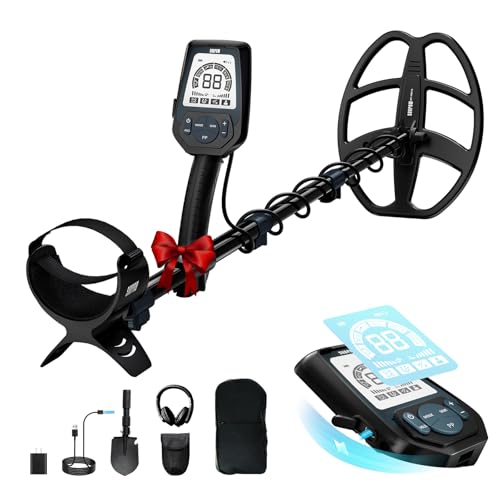 SUNPOW Professional Metal Detector for Adults Rechargeable13 inch search coil17 x 11 x 5.9 inches5.7 poundsCheck on Amazon


Top 3 Picks
Best overall: MINELAB X-Terra PRO
Fully waterproof to a 5 m (16 ft) class depth, supplied with a 12-inch class coil, and fitted with Pro-Switch so you can jump between a deep open-field setting and a trashy-site setting without walking through a menu. It is the machine that lets a relic hunter work a wet creek crossing in the morning and a nail-infested cabin site after lunch without swapping detectors.
Best budget: Bounty Hunter TK4 Tracker IV
An 8-inch waterproof coil, three detection modes and an analog meter for the price of a mid-range accessory. It has no manual ground balance, so it belongs on mild to moderate soil and shallow water rather than hot mineralized ground, but for a first relic rig or a spare in the truck it is hard to argue with.
Best premium for mineralized ground: Garrett ACE Apex
Garrett’s Multi-Flex multi-frequency platform runs simultaneous frequencies plus selectable single frequencies, which is the single most useful feature when the ground itself is the problem. It ships with a waterproof search coil, is wireless ready for Garrett’s Z-Lynk audio, and runs on an internal rechargeable battery so you stop buying cells by the handful.
Quick Comparison
| Product | Best for | Key specs (as listed / typical configuration) | Price tier |
|---|---|---|---|
| Bounty Hunter TK4 Tracker IV | Entry-level all-terrain relic hunting on a tight budget | 8″ waterproof coil; 3 detection modes; analog meter; single-frequency VLF; two-cell 9V battery class; roughly 2.5 lb (1.1 kg) class | Budget |
| MINELAB X-Terra Voyager | All-terrain hunting with preset modes and pinpointing, minimal tuning | 4 detect modes; all-terrain platform; dedicated pinpointing; X-Terra coil ecosystem; waterproofing depth to confirm on listing | Premium |
| Bounty Hunter Tracker IV | A cheap second rig or a shared family detector | 8″ waterproof coil; 3 detection modes; analog meter; single-frequency VLF; same core platform as the TK4 | Budget |
| Bounty Hunter Time Ranger | Budget-conscious relic hunters who want an LCD and notch | LCD display; 4 modes; pinpoint; target identification; notch discrimination; waterproof search coil | Mid-range |
| Bounty Hunter Gold Digger | Kids and absolute beginners on dry land | Lightweight beginner layout; simplified discrimination; coin and jewellery oriented; not sold as a submersible unit | Budget |
| SUNPOW Professional | Rechargeable mid-range starter with a sealed coil | 6 metal ID segments; IP68 waterproof coil; LCD display; 5 modes; rechargeable battery | Mid-range |
| MINELAB X-Terra PRO | Best overall premium all-terrain relic detector | Fully waterproof to 5 m (16 ft) class; Pro-Switch mode toggle; selectable single frequencies in the 5–15 kHz class; 12″ V12X-class coil; ~1.3 kg (2.9 lb) class | Premium |
| Garrett Pro-Pointer AT | Pinpointing in mud, sand, standing water and deep holes | 20 ft (6 m) submersible; high-visibility orange body; audio plus vibration; 9V cell; under 1 lb | Mid-range |
| Garrett ACE Apex | Mineralized ground and multi-frequency relic hunting | Multi-Flex simultaneous multi-frequency plus selectable single frequencies; wireless ready (Z-Lynk); waterproof search coil; internal rechargeable battery | Premium |
Manufacturers revise coil bundles, firmware and accessories without changing the model name, so treat every figure above as the typical current configuration for that model and confirm the exact coil and rating on the listing before you buy. The one number that never changes is the one that matters most in the field: how deep the control housing can go before water kills it.
How We Chose
This roundup is built from published manufacturer specifications, category knowledge and the practical constraints of relic hunting rather than from bench testing. Four filters did the work. First, terrain capability: a detector earns a place here only if its build and coil can survive wet grass, mud, creek margins or sand, and the waterproofing claim has to be specific enough to act on — a sealed coil is not the same as a submersible control housing, and the article treats them differently throughout. Second, ground handling: we looked at whether the machine offers manual, automatic or tracking ground balance, because that single control decides whether a site is huntable at all in mineralized soil. Third, target separation potential: recovery speed, iron audio and notch or discrimination controls, plus whether the coil ecosystem lets a hunter move to a smaller coil for trashy ground. Fourth, upgrade path and ownership cost: coil availability, battery type and the consumables that wear out first. Where an exact figure was not verifiable, we describe the spec class rather than guess at a number.
1. Bounty Hunter TK4 Tracker IV – Best for Entry-Level All-Terrain Relic Hunting
As an Amazon Associate we earn from qualifying purchases at no extra cost to you.
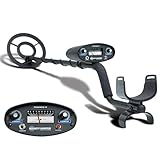
The TK4 Tracker IV is the detector to buy when the honest answer to “what is my budget” is “as little as possible, but I still want to hunt wet ground”. It suits the first-season relic hunter, the casual weekend hunter who works a couple of permissions a year, and anyone who wants a machine that a child or a visiting friend can pick up without a briefing. The listing frames it as an all-terrain finder for gold, silver, coins and relics, and the 8-inch waterproof coil is what makes that framing more than marketing: you can push the coil through wet grass, along a muddy field edge or into a shallow creek without destroying it.
Key specs
- 8-inch waterproof search coil (per the listing)
- 3 detection modes: all-metal, tone discrimination and full discrimination
- Analog meter rather than a numeric target ID display
- Single-frequency VLF design, the standard architecture at this tier
- Two-knob plus toggle control layout — sensitivity, discrimination, mode
- Two-cell 9V battery class, the long-standing arrangement across Bounty Hunter’s analog line
- Roughly 2.5 lb (1.1 kg) class with an adjustable shaft, light enough for a long afternoon
The real strength of this machine is that it teaches the two skills that separate a detectorist from a person with a detector: how discrimination behaves as you turn it up, and how a target signal changes with sweep speed and coil height. Because the controls are analog and continuous, you feel the trade-off between rejecting nails and losing small, deep targets. That lesson transfers to every machine you will ever own. The waterproof coil also means rain, dew and wet clay are not a reason to go home, which in a relic-hunting context is a bigger deal than it sounds — the best sites are often the ones nobody else wants to walk in bad weather.
What it does not have is a ground balance control. In mild and moderately mineralized soil that is fine, and most pasture, woodland and plowed field in temperate regions will behave. In genuinely hot ground — iron-rich red clay, some volcanic soils, wet salt sand — the machine will chatter, lose depth and give inconsistent responses, and no amount of knob-turning fixes a circuit that has no reference to the ground it is sitting on. If your permissions include that kind of soil, budget for the step up to a machine with manual or tracking ground balance.
Battery life is the other running cost. Two 9V alkalines in a VLF detector typically deliver somewhere in the 20-to-25-hour range depending on settings, and in a later section we work through what that costs across a full season. It is not a reason to avoid the machine, but it is a reason to buy rechargeable cells on day one rather than day fifty.
Pros
- Waterproof 8-inch coil at a genuinely entry-level price tier
- Analog controls teach discrimination and sweep discipline quickly
- Light enough for long sessions and simple enough to hand to a beginner
- No menus, no firmware, nothing to update
- Three modes cover all-metal relic searching and coin-shooting in one machine
Cons
- No ground balance control, which rules out hot mineralized ground
- No numeric target ID, so bottle caps and buttons require judgement rather than a number
- Analog meter is less informative than an LCD in low light
- Alkaline batteries are an ongoing cost if you do not switch to rechargeables
- Waterproof coil only — the control housing must stay out of the water
How it compares with the nearest alternative: the other Bounty Hunter Tracker IV listing in this roundup describes the same core platform with different accessory wording. If you are choosing between the two, choose on the bundle rather than the badge — the TK4 phrasing leans toward the all-terrain relic framing, the other leans toward a shared adult-and-child machine, and the electronics underneath are the same family. The meaningful step up from either is the Bounty Hunter Time Ranger, which adds an LCD, a fourth mode, pinpointing and notch discrimination for a mid-range outlay. If you can stretch to the Time Ranger without pain, do it; if the budget is genuinely fixed, the Tracker IV will still find relics.
2. MINELAB X-Terra Voyager – Best for All-Terrain Hunting With Minimal Setup

The X-Terra Voyager is the pick for the hunter who wants premium all-terrain behaviour without a steep learning curve. The listing describes a professional pinpointing machine with four detect modes for adults, and that combination — presets you can trust plus a pinpoint function you can reach without a menu dive — is exactly what suits the detectorist who gets two hours in the field on a Saturday and does not want to spend forty minutes of it tuning. It also suits the returning hobbyist who owned a machine a decade ago and does not want to relearn a control panel from scratch.
Key specs as stated by the listing
- 4 detect modes, covering the usual spread from all-metal searching to discrimination
- Dedicated pinpointing function for narrowing down a target before you dig
- All-terrain configuration marketed for varied ground
- Part of Minelab’s X-Terra line, which is built around a swappable coil family
- Waterproofing depth should be confirmed on the current listing — “all-terrain” is a use description, not a depth rating
That last point is worth dwelling on, because it is the most common expensive misunderstanding in this hobby. “All-terrain” describes the kind of ground a detector is designed to cope with. It does not automatically mean the control housing is submersible, and it does not mean the coil can be dropped in a creek. A machine can be perfectly all-terrain for dry sand, wet sand, plowed soil and gravel while still requiring you to keep the electronics out of the water. Before buying any detector described this way, find the specific waterproofing statement: which part is sealed, to what depth, and for how long. If the listing does not say, assume the coil is weatherproof and the housing is not.
Where the Voyager earns its premium placement in this roundup is the coil ecosystem. The X-Terra platform is designed around interchangeable coils, which matters more for relic hunting than any single specification. A large coil covers open field and pasture efficiently; a smaller coil separates targets in a yard full of nails and pull tabs. Owning one control housing and two coils is cheaper and more effective than owning two detectors, and it is the upgrade path that keeps a premium machine relevant for years.
The four modes do the heavy lifting on day one. You pick the mode that matches the site, set sensitivity to a level where the machine runs quietly, ground balance if the platform offers it, and hunt. That is a genuinely different experience from the entry-tier analog machines, where the operator is continuously adjusting two knobs and interpreting a needle.
On the pinpointing function specifically: it is not a gimmick. A detector’s search field is broad, and a signal that is loud over a 10-inch area tells you very little about where the target actually sits. Pinpointing narrows that down to a few inches, which shortens every hole you dig. Across a hundred-target day, the difference is measured in hours — see the recovery-time calculation in the How to Choose section.
Pros
- Four modes plus pinpointing keep setup time short
- Premium all-terrain platform in Minelab’s X-Terra coil ecosystem
- Suited to hunters who want to hunt rather than tune
- Swappable coils give a clear upgrade path without replacing the detector
- Pinpointing reduces dig time on every single target
Cons
- Premium tier — a significant step up in outlay from the budget machines here
- Confirm the waterproofing depth on the listing rather than assuming from “all-terrain”
- Preset-driven operation gives less manual control than a fully adjustable machine, which advanced users may miss in unusual soil
- Coils and accessories are a separate ongoing spend if you build a set
How it compares with the nearest alternative: the MINELAB X-Terra PRO is the other premium Minelab here and the direct comparison most buyers will make. The X-Terra PRO is the machine to choose if you want an explicitly fully waterproof, submersible build and a large coil for deep open-field work; the Voyager is the machine to choose if you value a shorter path from unpacking to finding and you are hunting ground where you are not wading. Against the Garrett ACE Apex, the difference is philosophy: the Apex leans on multi-frequency for difficult soil, while the Voyager leans on presets and coil flexibility for varied terrain. If your soil is hot, read the Apex section before deciding.
3. Bounty Hunter Tracker IV – Best for a Cheap Second Rig or a Shared Family Detector

This listing describes the Tracker IV as a machine for adults and kids, with a waterproof 8-inch coil and three detection modes. It is, in practical terms, the same core platform as the TK4 above, and the honest reason to buy it is not that it is different — it is that owning two of them is genuinely useful. This is the detector for the household where two people want to hunt the same field at the same time, for the hunter who wants a permanently-in-the-truck backup, and for the parent who wants a machine a child can use alongside them without fighting over the good one.
Key specs as stated by the listing
- 8-inch waterproof search coil
- 3 detection modes
- Analog meter readout
- Single-frequency VLF architecture
- Adjustable shaft with a lightweight, roughly 2.5 lb (1.1 kg) class build
- Two-cell 9V battery class
- Sold as suitable for both adults and children
Two of the same detector in one household sounds redundant until you have hunted a field with a partner. Detection is a function of ground covered, and two people swinging simultaneously cover roughly twice the ground in the same session. On a large permission — say a hundred-acre farm with two known occupation sites — the difference between one detector and two is the difference between a season and half a season. It is also the cheapest way to find out whether a family member actually enjoys the hobby before committing premium money to their rig.
As a backup it makes a different kind of sense. Electronics fail, batteries die, coils get damaged on rocks, and a shaft can be bent in a car door. If your primary machine is a premium waterproof model and it goes down mid-season, having a working Tracker IV in the boot means you keep hunting instead of waiting on a repair. At a budget price tier, that insurance is cheap.
The limitations are identical to the TK4 and worth restating plainly: no ground balance, no numeric target ID, no notch discrimination and no pinpointing mode. You locate the target with the coil and a cross-sweep, then dig. Experienced hunters do this quickly and accurately. Beginners dig wider holes for a while, and that is fine — it is a skill, and this machine is a reasonable place to build it.
Because the two Tracker IV listings describe the same underlying design, the practical buying advice is to compare what is actually in the box: the coil supplied, whether a carry bag or headphones are included, and the wording of the warranty. Do not pay a premium for one listing over the other on the assumption that the electronics differ. They do not.
Pros
- Budget tier, which makes a second unit genuinely affordable
- Waterproof coil handles wet ground and rain
- Simple enough that a child can learn it in an afternoon
- Useful as a permanent backup so a failure never ends a season
- Doubles the ground coverage when two people hunt together
Cons
- Same no-ground-balance limitation as the TK4
- No target ID numbers, notch or pinpoint function
- Analog meter only
- Not a step up in capability from the TK4 — it is a duplicate, not an upgrade
- Control housing must stay out of the water
How it compares with the nearest alternative: against the TK4 listing, this one is the same machine with family-oriented framing, so the choice comes down to packaging and price rather than performance. If you already own one Tracker IV and want a genuine capability upgrade rather than a second identical unit, the Bounty Hunter Time Ranger is the nearest sensible step: it keeps the Bounty Hunter simplicity but adds the LCD, the fourth mode, pinpointing and notch that the Tracker IV lacks. If you are buying for a child specifically, the Gold Digger is lighter and simpler still.
4. Bounty Hunter Time Ranger – Best for Budget Relic Hunters Who Want an LCD

The Time Ranger is the machine for the relic hunter who has outgrown an analog needle but is not ready to spend premium money. It suits the detectorist who hunts plowed fields and woodland where the trash-to-relic ratio is moderate — enough nails and foil to be annoying, not so much that target separation becomes the dominant problem. It also suits the hunter who wants to see a target identification number and a depth indication before deciding whether to dig, which is the single biggest quality-of-life improvement you can buy at the mid-range tier.
Key specs as stated by the listing
- LCD display with target identification
- 4 detection modes
- Pinpoint function
- Notch discrimination, letting you reject specific target categories rather than entire ranges
- Waterproof search coil
- Adjustable shaft and a lightweight control housing
- Battery type as specified on the current listing — Bounty Hunter’s line has historically leaned on 9V cells
Notch discrimination is the feature that separates this machine from the Tracker IV in real hunting conditions. Standard discrimination rejects everything below a threshold: turn it up and you lose nails, foil and small iron, but you also lose small buttons, cufflinks and cut coins. Notch works differently — it lets you carve out specific segments of the target range while keeping the rest. On a site littered with modern pull tabs, that means you can reject the tab segment and still hear the small low-conductivity relics that a blunt discrimination setting would have silenced. For relic hunting specifically, where the best finds are often small and made of low-conductivity metals, that is not a minor convenience.
Pinpointing changes the digging economics too. Without it, you narrow a target by sweeping the coil in a cross pattern and watching where the signal peaks, then dig a hole wide enough to cover your uncertainty. With it, you get a tighter fix and dig a smaller hole. On a hundred-target day, the accumulated saving in effort and time is substantial, and smaller holes are also better practice on farmland where the landowner is watching.
The LCD adds a second layer: a target identification number and depth guidance let you make a fast dig-or-walk decision on each signal. That matters most on sites with high modern contamination, where the correct strategy is to dig selectively rather than dig everything. Experienced relic hunters on clean, remote sites often prefer to dig everything and let the machine’s discrimination stay wide open; on a modern-trash site, selective digging is the only way to cover ground.
The limitations are the ones inherent to the price tier. It is a single-frequency machine, so highly mineralized ground and wet salt sand will be challenging, and depth on small targets in hot soil will fall short of a premium multi-frequency unit. The waterproof search coil means wet grass, mud and shallow water are fine; the control housing still needs to stay dry unless the listing explicitly states otherwise. And while the LCD is useful, target identification numbers on any single-frequency machine are a probability, not a verdict — deep iron will occasionally read as something better, and that is true of machines costing several times as much.
Pros
- LCD target identification and depth guidance at a mid-range price tier
- Notch discrimination preserves small low-conductivity relics that blunt discrimination would reject
- Pinpoint function cuts dig time and hole size
- Four modes give useful flexibility between open all-metal searching and filtered hunting
- Waterproof search coil handles wet ground
Cons
- Single frequency, so hot mineralized soil remains a weak point
- No manual ground balance at the level a premium machine offers
- Target ID on deep iron can be misleading, as with any machine in this class
- Control housing is not sold as submersible
- Alkaline cells are an ongoing cost if you do not switch to rechargeables
How it compares with the nearest alternative: against the Tracker IV listings, the Time Ranger is a genuine upgrade rather than a duplicate — you gain the LCD, the fourth mode, pinpoint and notch, and those four features are worth the mid-range outlay if you hunt more than a handful of times a year. Against the SUNPOW Professional, the trade is different: the SUNPOW offers a rechargeable battery and an IP68-rated coil but a less established discrimination architecture, while the Time Ranger offers the more mature Bounty Hunter control logic with disposable batteries. If you hunt wet ground regularly, the SUNPOW’s sealed coil rating is the stronger argument; if you hunt trashy dry sites, the Time Ranger’s notch is.
5. Bounty Hunter Gold Digger – Best for Kids and Dry-Land Beginners

The Gold Digger is a child’s first detector and an adult’s zero-risk experiment. It suits the eight-to-twelve-year-old who wants to find something real in the back garden, the parent who wants a machine that will not be ruined when it is dropped, and the adult who wants to know whether they enjoy the hobby before spending real money. The listing describes a lightweight beginner machine for treasure hunting coins, and that is precisely what it is: light, simple, and oriented toward shallow targets in easy ground.
Key specs as stated by the listing
- Lightweight build designed for beginners and younger users
- Simplified discrimination controls
- Oriented toward coins and shallow hobby targets
- Adjustable shaft to fit a child’s reach
- Not sold as a submersible detector — treat it as dry-land and dry-grass only unless the listing states otherwise
The case for buying this machine is educational rather than archaeological. A child who spends an afternoon recovering bottle caps, foil and the occasional coin learns three things that matter: how to sweep slowly and keep the coil level, how to dig a plug and refill it, and how to accept that most signals are rubbish. Those lessons are the actual foundation of the hobby, and they are better learned on a cheap machine in a garden than on a premium unit in a scheduled archaeological field.
Adults should be clear-eyed about the ceiling. Simplified discrimination with no ground balance and no numeric target ID means the machine is at its best in mild, dry, relatively trash-free ground — a lawn, a dry sand beach, a garden bed. Take it to a wet salt beach and it will struggle. Take it to a hot mineralized field and it will struggle. Take it to a site full of modern trash and the lack of notch and pinpoint will slow every recovery. None of that is a defect; it is the definition of an entry-level machine, and it is why the price tier is what it is.
For parents, two practical notes. First, weight matters more than depth for a child: a detector that feels heavy after twenty minutes ends the outing, so the lightweight build here is the correct design choice. Second, teach the plug-and-refill method from the first hole, because permission to hunt a neighbour’s lawn or a local park depends on leaving no trace. That habit, learned young, is worth more than any specification.
Pros
- Lightweight enough for a child to swing for a full outing
- Budget tier — low risk if interest fades
- Simple controls build good sweeping and recovery habits
- Adjustable shaft grows with the user
- A safe way for an adult to test whether the hobby sticks
Cons
- Not sold as waterproof or submersible, so wet ground and creeks are out
- No ground balance, no target ID, no pinpoint, no notch
- Shallow depth capability compared with any machine higher in this list
- Limited usefulness on salt sand or mineralized soil
- An adult beginner will outgrow it within a season
How it compares with the nearest alternative: the Tracker IV listings are the natural next step up, and the jump is meaningful — you gain a waterproof coil, a third detection mode and better depth for a modest increase in outlay. If the buyer is an adult who intends to hunt seriously, skip the Gold Digger and start with the Tracker IV. If the buyer is a child under ten, or an adult who genuinely is not sure the hobby will stick, the Gold Digger is the right first purchase and the money saved can go toward a proper machine next season.
6. SUNPOW Professional Metal Detector – Best for a Rechargeable Mid-Range Starter With a Sealed Coil
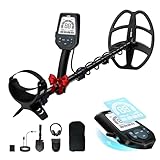
The SUNPOW Professional targets the hunter who wants modern conveniences — a rechargeable battery, a sealed coil and a clear LCD — without moving into the premium tier. It suits the adult beginner who hunts wet grass, pond margins, creek beds and beaches, and who does not want to think about battery purchases or worry about a splash. The listing advertises six metal ID categories, an IP68 waterproof coil, an LCD display and five modes.
Key specs as stated by the listing
- 6 metal ID segments for target categorisation
- IP68 waterproof search coil
- LCD display
- 5 detection modes
- Rechargeable battery — no disposable cells to buy
- Adjustable shaft, adult-sized control housing
The IP68 rating on the coil deserves a proper explanation, because it is the most misunderstood specification in the category. IP codes have two digits: the first covers solids and dust, the second covers water. A second digit of 8 means the enclosure is protected against continuous immersion — but the standard requires the manufacturer to specify the depth and duration, and consumer detector listings frequently quote “IP68” without either. What you can safely conclude is that the coil is sealed well enough for wet sand, mud, puddles and shallow submersion at the coil. What you cannot conclude is that the control housing is submersible, because the rating is stated for the coil. If the housing is not separately rated, keep it above the waterline.
Six metal ID segments is a modest amount of target information compared with the numeric displays on premium machines, but it is a real improvement over an analog meter: you get a category — iron, foil, coin-range, higher-conductivity — before you dig. Combined with five modes, that gives a beginner enough structure to make dig-or-walk decisions without drowning in numbers.
The rechargeable battery is the quiet win. In the battery economics worked through later in this article, a hunter doing 120 hours a season on a two-cell 9V machine can spend more on disposable cells in a year than the difference between tiers would suggest. A rechargeable platform removes that entirely, and it also removes the failure mode where a promising Sunday morning ends because the machine went flat and there are no spares in the bag.
The trade-offs are the ones that come with a newer brand in a category dominated by long-established manufacturers. The control logic and discrimination behaviour will feel less refined to an experienced user than a Minelab or Garrett, the coil ecosystem is smaller so the upgrade path is narrower, and long-term parts availability is less predictable. For a first serious machine that will be used for two or three seasons before an upgrade, none of that is disqualifying. For a hunter planning to keep one detector for a decade, it matters.
Pros
- Rechargeable battery removes an ongoing consumable cost
- IP68-rated search coil is well suited to wet grass, mud and shallow water
- LCD with six metal ID segments gives usable target information
- Five modes cover a broad range of ground and target types
- Mid-range price tier with features usually found higher up
Cons
- IP68 applies to the coil; do not assume the control housing is submersible
- Six ID segments is coarse compared with numeric target ID
- Smaller coil ecosystem and a narrower upgrade path
- Less established discrimination behaviour than the long-standing brands
- Long-term service and parts support is less predictable
How it compares with the nearest alternative: against the Bounty Hunter Time Ranger, the SUNPOW wins on the rechargeable battery and the sealed coil rating, and loses on the maturity of its discrimination logic and on notch capability. If wet ground is your primary terrain, the SUNPOW is the better mid-range buy; if you hunt dry, trashy sites where notch matters more than waterproofing, the Time Ranger is. Against the premium machines, the honest framing is that the SUNPOW is a strong first serious detector and not a substitute for a Garrett ACE Apex or a Minelab X-Terra PRO.
7. MINELAB X-Terra PRO – Best Overall Premium All-Terrain Relic Detector

The X-Terra PRO is the best overall pick in this roundup because it solves the problem that defines relic hunting across varied terrain: one machine, many ground conditions, no compromises on water. It suits the committed relic hunter who works creek beds, river margins, wet pasture, plowed field and woodland in the same season; the hunter who wants to wade; and the detectorist who wants a premium machine with a clear coil upgrade path rather than a single-purpose flagship.
Key specs (typical configuration)
- Fully waterproof to a 5 m (16 ft) class depth — submersible, not merely weatherproof
- 12-inch class V12X search coil as the standard bundle
- Selectable single frequencies in the 5–15 kHz class, commonly quoted as 5, 10 and 15 kHz
- Pro-Switch technology for fast toggling between two operating configurations
- Multiple preset search modes covering park, field and beach-style conditions
- Roughly 1.3 kg (2.9 lb) class — light for a full-size waterproof machine
- Part of the X-Terra coil ecosystem, so smaller and larger coils are available separately
The fully waterproof build is the headline, and it is worth being precise about why. A waterproof coil lets you hunt wet ground. A submersible detector lets