Best Red Light Therapy Devices for Pain Relief
What's inside
- Top 3 Picks
- Quick Comparison
- How We Chose
- 1. Holsn Red Light Therapy Infrared Light Therapy – Best for Whole-Body Pain Relief
- 2. Morfone Handheld Red Light Therapy Device – Best for Spot Treatments and Travel
- 3. LumaDoc FSA-HSA Handheld Red Light Therapy for Body – Best for Blue and NIR Multi-Wavelength Routines
- 4. ALLOLO 3-in-1 LEDs Red Light Therapy Belt – Best Budget Wrap for Back and Hips
- 5. YZYOE Infrared Light Therapy for Joint and Muscle Pain – Best Budget Option for Face and Joints
- 6. Lunix LX19 – Best Premium Device for Knee, Elbow and Shoulder
- 7. Viconor Red Light Therapy for Face and Body – Best for Hands-Free Full-Body Sessions
- 8. LTW 2 Pack Knee Massager with Heat & Red Light Therapy – Best for Treating Both Knees at Once
- 9. RICIAL Knee Massager – Best Budget Heated Knee Brace
- 10. Theralamp Infrared Heating Wand – Best for Targeted Heat with a Replaceable Bulb
- 11. BETISBE LLLT Cold Laser Therapy Device – Best for High-Density Laser Spot Treatment
- 12. Hieuuin NIR Infrared Light Therapy Device – Best for Adjustable-Dose Laser Therapy
As an Amazon Associate I earn from qualifying purchases. This post may contain affiliate links at no extra cost to you.
If you want one device that covers the widest range of everyday aches without buying a separate wrap for every joint, the Holsn Red Light Therapy Infrared Light Therapy device is the best overall pick in this roundup — it is positioned squarely at body, joint, muscle and tissue use, sits in the mid-range price tier, and needs no learning curve to operate. If budget drives the decision, the ALLOLO 3-in-1 LED belt is the best cheap option for back, hips and large-area coverage, while the Lunix LX19 is the best premium choice for people treating a specific knee, elbow or shoulder. The honest buying advice: format matters more than brand. A belt suits a back, a contoured wrap suits a knee, a wand suits a heel or wrist, and a lamp on a stand suits a whole-body routine. Wavelength, irradiance and session guidance matter more than the marketing language on the box — and clinical evidence for photobiomodulation in pain is real but narrower and more mixed than most product pages imply. This guide compares device type, treatment area, wavelength specifications, irradiance disclosures and session guidance, and it flags clearly where a product claim outruns the evidence. This is general information, not medical advice; for persistent pain, see a clinician.
Our Top Picks
 YZYOE Infrared Light Therapy for Joint and Muscle10.7 cm0.86 x 0.86 x 4.25 Inches0.2 poundsCheck on Amazon


Top 3 Picks
Best overall: Holsn Red Light Therapy Infrared Light Therapy. A do-everything mid-range body device for shoulders, back, knees and general muscle soreness. It wins on versatility rather than on published dosimetry, which is the right trade-off if you are not yet sure which area you will treat most.
Best budget: ALLOLO 3-in-1 LEDs Red Light Therapy Belt. A strap-mounted belt that covers a large area of the back or hips for the least money in this roundup. If your pain is diffuse and broad rather than a single small joint, this is the format that actually delivers light where you need it.
Best premium: Lunix LX19. Triple-chip LEDs at 850 nm and 660 nm in a contoured joint wrap built for knee, elbow and shoulder work. It costs the most of the wrap-style devices here and is the clearest upgrade path if a general-purpose device has already proved useful to you.
Quick Comparison
| Product | Best for | Key specs | Price tier |
|---|---|---|---|
| Holsn Red Light Therapy Infrared Light Therapy | All-round body, joint and muscle use | Body-oriented red + infrared emitter, multi-area hand-held format, no published discrete wavelength values on the listing | Mid-range |
| Morfone Handheld Red Light Therapy Device | Spot treatment, travel and one-handed use | Cordless rechargeable wand, single-hand grip, red + NIR class output, no strap or mains cable | Mid-range |
| LumaDoc FSA-HSA Handheld Red Light Therapy | Blue-light plus NIR multi-wavelength routines | Handheld unit with blue and near-infrared channels, HSA/FSA-eligible positioning, pocket-sized head | Mid-range |
| ALLOLO 3-in-1 LEDs Red Light Therapy Belt | Back, hips, abdomen and large flat areas | Strap-mounted belt with a 3-in-1 LED array, wrap-around fit, corded or rechargeable depending on configuration | Budget |
| YZYOE Infrared Light Therapy for Joint and Muscle Pain | Face and small joints at entry price | Compact red + infrared unit marketed for face and joint use, small footprint, simple on/off operation | Budget |
| Lunix LX19 | Knee, elbow and shoulder | Triple-chip LEDs at 850 nm and 660 nm, contoured joint wrap, higher emitter density per unit area | Premium |
| Viconor Red Light Therapy for Face and Body | Hands-free full-body sessions | Floor-standing adjustable lamp head, 660 nm and 850 nm LED arrays, no contact required | Mid-range |
| LTW 2 Pack Knee Massager with Heat & Red Light | Treating both knees in one session | Two matched knee units, heat plus red light, paired use, wrap fit | Mid-range |
| RICIAL Knee Massager | Budget heated knee brace with a timer | 660 nm and 850 nm, cordless rechargeable, 5000 mAh battery, heat and vibration, built-in timer | Budget |
| Theralamp Infrared Heating Wand | Targeted radiant heat with a replaceable bulb | Handheld heat lamp wand, replacement bulb included, consumable-based design | Budget |
| BETISBE LLLT Cold Laser Therapy Device | High-density laser spot treatment, human or vet use | 5000 mAh battery, 5 × 808 nm and 10 × 650 nm laser diodes, probe-style contact head | Premium |
| Hieuuin NIR Infrared Light Therapy Device | Adjustable-dose laser therapy | 5200 mAh battery, 8 × 808 nm and 16 × 650 nm laser diodes, 3 selectable power levels | Premium |
How We Chose
This list is built from published product information, not from bench testing or hands-on trials — we do not claim to have measured any device. Every entry had to clear four filters. First, format fit: does the physical shape of the device actually reach the body part named in the search query? A handheld spot emitter is the wrong tool for a lower back, and a belt is the wrong tool for a wrist. Second, wavelength disclosure: devices that state their emitters, such as 660 nm red paired with 850 nm near-infrared, score higher than devices that describe output only as “red light” or “infrared,” because wavelength determines how deep the light can plausibly reach. Third, dose transparency: we favour listings that publish irradiance, session length or a treatment protocol, and we flag the ones that do not, since dose is the single variable most likely to explain why two people get different results from similar hardware. Fourth, ownership reality: power source, battery capacity, replaceable parts, straps and consumables all decide whether a device is still in use twelve months later. Finally, we kept a deliberate spread of price tiers and use cases so there is a sensible upgrade path — budget belt, mid-range wand, premium joint wrap or laser probe — rather than twelve variations of the same product.
1. Holsn Red Light Therapy Infrared Light Therapy – Best for Whole-Body Pain Relief
As an Amazon Associate we earn from qualifying purchases at no extra cost to you.

The Holsn device is the generalist of this roundup, and that is exactly why it takes the top spot. The listing positions it for body, joint, muscle and tissue use, which means it is designed to be moved around the body rather than strapped to one joint. If you have not yet worked out whether your main problem is a shoulder, a lower back or a knee, a device that can be repositioned is worth more than a device that fits one area perfectly.
Who it suits: someone in the early stage of building a routine who wants one purchase to cover several complaints, and who would rather spend mid-range money once than budget money three times on single-purpose wraps. It also suits a household with more than one person using it, because nothing about the format ties it to one body size.
Key specs
- Format: body-oriented red plus infrared emitter, handheld and repositionable rather than a fixed wrap
- Wavelength class: marketed as red and infrared; the listing does not publish discrete nanometre values, so treat the exact figures as unconfirmed
- Treatment area: multi-area — shoulders, back, arms, legs, large muscle groups
- Power source: check the current configuration on the product page for corded versus rechargeable
- Consumables: none stated; no replacement bulbs or pads
- Session guidance: follow the manufacturer’s stated session length rather than copying a figure from another device
Strengths. The main advantage is flexibility. Most red light devices fail not because the emitter is weak but because the user stops using them — a wrap that only fits a knee gets abandoned the month the knee feels better, while a repositionable body device keeps earning its place. Because there are no consumables, the running cost is effectively electricity plus battery degradation. The mid-range price tier also means you are not paying premium money for a format you might outgrow, and if you later decide you want a dedicated knee wrap or a laser probe, the Holsn still has a job treating everything else.
How it compares. Against the Viconor lamp with stand, the trade-off is dose versus convenience. The Viconor covers a wider area hands-free, but you have to sit still in front of it, and irradiance falls off with distance from the lamp head. The Holsn is contact or near-contact, so more of the stated output reaches the tissue, and it works while you are doing something else. Against the Morfone wand, the Holsn is the broader tool and the Morfone is the more portable one; if you travel constantly, the wand wins, but for a fixed home routine the Holsn covers more ground per session.
- Pros
- One device covers multiple body areas, so it survives a change in symptoms
- No consumables and no replacement pads or bulbs
- Mid-range price with no premium markup for a single-joint shape
- Simple operation — no protocol library to learn
- Cons
- The listing does not publish discrete wavelength values, which makes cross-shopping harder
- No published irradiance figure, so you cannot calculate dose in J/cm² from the listing alone
- A handheld device demands your attention; it is not a lie-back-and-relax format
- Coverage per session is smaller than a full-size panel or lamp
2. Morfone Handheld Red Light Therapy Device – Best for Spot Treatments and Travel

The Morfone is a cordless wand, and its whole reason for existing is that it goes where a belt or a stand-mounted lamp cannot. Heels, wrists, thumbs, elbows, the base of the neck, a single painful spot on a calf — these are awkward shapes for a wrap and awkward angles for a lamp. A wand solves the geometry problem.
Who it suits: anyone treating one or two small, well-defined areas, and anyone whose routine happens away from a power outlet. It is also the most sensible second device if you already own a belt or panel, because it complements rather than duplicates what you have.
Key specs
- Format: cordless handheld wand with a single-hand grip
- Wavelength class: red plus near-infrared output; the listing describes the device as a handheld red light therapy unit without publishing discrete nanometre values
- Treatment area: small — spot treatment on joints, tendons and localised sore points
- Power source: rechargeable battery, no mains cable during use
- Portability: the highest in this roundup; no stand, strap or cable
- Session guidance: short per-area sessions, moving the head over the treatment zone
Strengths. The cordless format is the feature that matters. A device you can use sitting on a sofa, in a hotel room or at a desk gets used far more often than one that requires a power point and a flat surface. Because the head sits close to the skin, the distance penalty is small — the inverse-square relationship means a wand held at contact delivers a much higher fraction of its rated output to the target than a lamp standing a foot away. For small joints, that concentration is the point.
How it compares. Against the LumaDoc FSA-HSA handheld, the difference is channel count. The LumaDoc adds a blue-light channel alongside near-infrared, which appeals to buyers who want one device for both skin-focused and deeper-tissue routines. The Morfone is the more single-minded tool: it does red and near-infrared, it does it cordlessly, and it does not ask you to think about which channel to select. Against the Theralamp wand, the comparison is more interesting — the Theralamp produces radiant heat from a bulb rather than LED photobiomodulation, so it is a warmth device with a consumable, while the Morfone is a light device with no consumable. They feel similar in the hand and are conceptually different tools.
- Pros
- Cordless and genuinely portable — usable anywhere
- Contact-style use minimises the distance falloff that hurts lamp-style devices
- Best format in this list for awkward small joints like wrists, thumbs and heels
- No straps to wash, no bulbs to replace
- Cons
- Coverage per session is the smallest of any device here
- Battery runtime limits long sessions; a 15–20 minute routine is realistic, an hour is not
- Requires active use — you cannot read or work while treating a spot
- No published irradiance or wavelength values on the listing
3. LumaDoc FSA-HSA Handheld Red Light Therapy for Body – Best for Blue and NIR Multi-Wavelength Routines

LumaDoc’s handheld is the only device in this roundup whose listing name advertises a blue channel alongside near-infrared. That matters because blue light and near-infrared light are doing different jobs in the research literature: blue sits in the visible, surface-oriented end of the spectrum, while near-infrared penetrates further into soft tissue. One device with both channels appeals to a buyer who wants a single tool for skin-focused routines and deeper joint or muscle work.
Who it suits: someone who already understands that wavelength determines depth and wants to experiment with more than one channel, and buyers with an HSA or FSA account who need a device that fits eligible categories. It is also a reasonable choice for a household where one person is treating a shoulder and another wants a facial routine.
Key specs
- Format: handheld, pocket-sized treatment head with a body-oriented housing
- Channels: blue light plus near-infrared, selectable or combined depending on configuration
- Wavelength class: the listing names blue and NIR without publishing discrete nanometre values
- Treatment area: small to medium — face, neck, single joints, localised muscle areas
- Eligibility positioning: marketed as HSA/FSA-eligible
- Session guidance: short per-area sessions; check the manufacturer’s recommended duration per channel
Strengths. Multi-channel flexibility is the headline. Blue and near-infrared respond to different chromophores and reach different depths, so a device that offers both lets you adjust your routine without buying a second product. The handheld format keeps the head close to the skin, which is the single biggest determinant of how much of the rated output actually arrives at the tissue. The HSA/FSA positioning is a genuine practical advantage for buyers in the United States who would otherwise be paying out of pocket — it converts a discretionary purchase into a pre-tax one.
How it compares. Against the Morfone wand, the LumaDoc offers more channels and the Morfone offers fewer decisions. If you want a device that does one thing without menus, the Morfone is easier; if you want to run a blue-light routine on your face and a near-infrared routine on your shoulder with the same tool, the LumaDoc is the better buy. Against the YZYOE budget unit, the LumaDoc costs more but gives you a documented second channel and a clearer eligibility path — worth it if you intend to use the device regularly rather than occasionally.
- Pros
- Blue plus near-infrared channels in one handheld device
- HSA/FSA-eligible positioning reduces the effective cost for eligible buyers
- Contact-style head keeps distance falloff low
- Small enough to store in a drawer rather than on a shelf
- Cons
- Small head means long sessions if you are covering a large area like a back
- No published irradiance figure, so dose is guesswork unless the product page adds it
- Two channels mean two sets of session guidance to keep straight
- Mid-range price for a device with limited coverage per session
4. ALLOLO 3-in-1 LEDs Red Light Therapy Belt – Best Budget Wrap for Back and Hips

The ALLOLO belt is the cheapest way in this roundup to put light on a large, flat area of the body. That is not a small distinction. Back pain, hip discomfort and post-exercise soreness across the lumbar region are exactly the cases where a handheld wand fails — you would be waving it around for twenty minutes and covering a fraction of the area. A belt wraps, stays put, and treats the whole zone at once.
Who it suits: buyers whose main complaint is the lower back, hips, abdomen or another broad region, and anyone testing whether red light therapy is worth the money before committing to a premium device. It is also the best choice for someone who wants to lie down or sit still during a session rather than hold a device.
Key specs
- Format: strap-mounted belt with a 3-in-1 LED array
- Wavelength class: the listing describes a red light therapy belt; discrete nanometre values are not published in the product name
- Treatment area: large and flat — lumbar spine region, hips, abdomen, large muscle groups
- Fit: adjustable strap, so it accommodates a range of waist sizes
- Power source: confirm corded versus rechargeable on the current listing, since belt designs vary
- Session guidance: typically longer sessions than a spot device because the array covers more area
Strengths. Coverage per session is the belt’s advantage and the reason it belongs in a budget list at all. Three LED groups in one strap mean the light is distributed rather than concentrated, which suits diffuse discomfort better than a single intense point. Because it wraps, it stays in contact with the skin for the whole session — no distance falloff, no arm fatigue, no repositioning every two minutes. And at the budget tier it leaves money on the table for a second, more targeted device later if you find the belt useful.
How it compares. Against the Holsn body device, the belt wins on back and hip coverage and loses on flexibility. The Holsn can treat a shoulder, a calf and a knee; the belt treats a cylinder of the torso well and everything else badly. If your problem area is the lower back specifically, the belt is the more effective purchase even though it costs less. Against the LTW 2-pack knee massager, the belt is a torso tool and the LTW is a joint tool — they do not overlap, which is why a belt plus a knee wrap is a common combination.
- Pros
- Budget price for the largest treatment area in this roundup
- Hands-free — you can lie down or sit during a session
- Strap keeps the array in contact with the skin, minimising falloff
- Adjustable fit covers a range of body sizes
- Cons
- Useless for small joints like wrists, thumbs or ankles
- No published wavelength or irradiance values in the listing name
- Straps and hook-and-loop fasteners wear out faster than any electronics
- Budget LED arrays typically have lower emitter density than premium wraps
5. YZYOE Infrared Light Therapy for Joint and Muscle Pain – Best Budget Option for Face and Joints

The YZYOE unit is a compact, inexpensive red and infrared device marketed for both face and joints. That dual positioning is common in the budget tier and worth understanding: a small emitter with modest output is gentle enough for facial use and convenient enough for a knee or elbow, but it is not going to deliver the same energy per square centimetre as a premium joint wrap with triple-chip emitters.
Who it suits: a first-time buyer who wants to test the category with minimal spend, and someone whose pain points are small and specific — a knuckle, a wrist, a single sore spot — rather than broad. It also suits buyers who want something that doubles as a facial device so the purchase feels less single-purpose.
Key specs
- Format: compact handheld unit, small footprint
- Wavelength class: red plus infrared, described in the listing as suitable for joint, muscle and facial use
- Treatment area: small — face, single joints, localised muscle points
- Operation: simple on/off use with minimal controls
- Power source: confirm on the current listing; budget units in this class are often USB-rechargeable
- Consumables: none stated
Strengths. Price and simplicity. There is no protocol to configure, no channel to select, no app to pair. For a buyer who is sceptical about the whole category, that is the right way to start: spend little, use it consistently for a few weeks, and let your own experience decide whether to upgrade. The small form factor also makes it easy to keep on a bedside table, which is where devices that actually get used tend to live.
How it compares. Against the LumaDoc handheld, the YZYOE is cheaper and simpler but gives up the blue channel and the HSA/FSA positioning. Against the Morfone wand, the YZYOE is the budget alternative and the Morfone is the cordless mid-range option; the practical difference is build quality, battery convenience and how evenly the output is distributed across the head. If you already know you will use a device several times a week, the step up to the Morfone or LumaDoc is easier to justify than replacing a budget unit in six months.
- Pros
- Lowest-risk way to try red light therapy
- Doubles as a facial and small-joint device
- Simple operation with no menus or protocols
- Small enough to store anywhere
- Cons
- Smallest treatment area of any device here
- No published wavelength or irradiance figures
- Budget-tier emitter density is unlikely to match premium wraps
- Little resale or upgrade value if you outgrow it quickly
6. Lunix LX19 – Best Premium Device for Knee, Elbow and Shoulder

The Lunix LX19 is the most specialised device in this roundup and the clearest example of paying for geometry rather than wattage. It is built around a contoured wrap for knee, elbow and shoulder work, with triple-chip LEDs at 850 nm and 660 nm. Those two wavelengths are the standard pairing in the category: 660 nm red sits in the visible spectrum and is absorbed in the upper layers of skin and tissue, while 850 nm near-infrared penetrates further into muscle and joint structures.
Who it suits: someone with a specific, recurring joint problem who has already established that they will use a device consistently. It is not a first purchase for a curious buyer; it is the upgrade you make when a cheaper device has proved the habit.
Key specs
- Wavelengths: 660 nm red and 850 nm near-infrared, as stated in the listing
- Emitter type: triple-chip LEDs, which pack three diodes into each emitter position for higher output per unit area
- Format: contoured wrap for knee, elbow and shoulder
- Treatment area: a single joint, wrapped rather than held
- Fit: shaped to the joint, which keeps emitters close to the skin and reduces falloff
- Price tier: premium
Strengths. Wavelength disclosure and emitter density. Because the listing states 660 nm and 850 nm explicitly, you can compare it against published research protocols rather than guessing what “red light” means. Triple-chip emitters concentrate more output into a smaller area, and the contoured wrap keeps that output at contact distance — a combination that is difficult to achieve with a handheld wand, because your hand inevitably drifts a few centimetres away from the target. For a knee or an elbow, where the joint is small and awkwardly shaped, that contact geometry is the whole value proposition.
How it compares. Against the RICIAL knee massager, the Lunix costs considerably more and does less in one sense — no heat, no vibration, no timer-driven massage. The argument for the Lunix is that heat and vibration are comfort features while wavelength, emitter density and contact fit are the variables that relate to photobiomodulation. If you want a warm, pleasant sensation on a stiff knee, the RICIAL delivers that at a fraction of the price. If you want the closest thing here to a research-style protocol, the Lunix is the pick. Against the ALLOLO belt, the two are complementary: belt for the back, Lunix for the joint.
- Pros
- Explicit 660 nm and 850 nm wavelengths stated in the listing
- Triple-chip emitters deliver higher output per unit area
- Contoured wrap holds emitters at contact distance for the whole session
- Hands-free use on a knee, elbow or shoulder
- Cons
- Premium price for a device that treats one joint at a time
- No heat or vibration, so it lacks the immediate comfort feedback cheaper devices provide
- Contoured fit means it will not adapt well to areas it was not shaped for
- Irradiance is not published, so dose still requires the manufacturer’s session guidance
7. Viconor Red Light Therapy for Face and Body – Best for Hands-Free Full-Body Sessions

The Viconor is a lamp on a stand, and that changes the experience completely. Instead of holding a device or strapping one on, you position the head, sit or stand in front of it, and let it run. The listing names 660 nm and 850 nm LEDs on an adjustable stand, which puts it in the same wavelength class as the premium wraps at a mid-range price.
Who it suits: someone who wants to treat several areas in one session — shoulders, chest, thighs, back — without buying multiple wraps, and anyone who values not having to hold anything. It is also the best option for a household where different people want to use the same device on different body parts.
Key specs
- Wavelengths: 660 nm red and 850 nm near-infrared LEDs, as stated in the listing
- Format: lamp head on an adjustable floor stand
- Treatment area: large — any area you can expose to the lamp head
- Contact: non-contact, which means distance and angle both affect delivered dose
- Setup: requires floor space and a power outlet, unlike handheld or wearable devices
- Price tier: mid-range
Strengths. Coverage and convenience. A stand-mounted lamp can treat a whole region in one pass, and because you are not holding it, session compliance is higher — you can read, watch something or simply relax. The 660/850 nm pairing matches the most commonly studied wavelengths, so you can at least compare the device to published protocols on wavelength grounds. Adjustability means you can angle the head at a shoulder one day and a lower back the next.
The catch. Distance is the enemy of a lamp. Irradiance falls off sharply as you move away from the emitter array, so a lamp rated at high output at the surface delivers a fraction of that at 30 cm, and less again at 60 cm. Sitting further back to cover more area means lower dose per square centimetre; sitting closer means treating a smaller patch. This is the trade-off that contact devices like the Lunix or the ALLOLO belt avoid entirely. If you buy a lamp, treat the manufacturer’s recommended distance as a specification, not a suggestion.
How it compares. Against the Holsn body device, the Viconor wins on area per session and loses on delivered dose at the tissue, because it is not in contact with the skin. Against the LumaDoc handheld, the Viconor is the whole-body tool and the LumaDoc is the detail tool — a lamp for the torso and a handheld for the wrist is a sensible pairing, and neither replaces the other.
- Pros
- 660 nm and 850 nm wavelengths stated explicitly
- Treats large areas hands-free in a single session
- Adjustable stand lets you target different body parts
- No straps to clean, no contact with skin, nothing to wear out
- Cons
- Distance falloff means real-world dose is lower than the headline output
- Needs floor space and a nearby outlet
- You must be stationary and partly undressed to use it properly
- Irradiance at the recommended distance is often not published
8. LTW 2 Pack Knee Massager with Heat & Red Light Therapy – Best for Treating Both Knees at Once

The LTW set is sold as a pair, and that is the entire argument for it. People with knee trouble usually have it in both knees, and buying two single-knee devices costs more than buying one product that ships as a pair. If you have ever tried to run one knee wrap on the left leg, wait twenty minutes, then move it to the right leg, you already understand the value here.
Who it suits: anyone with bilateral knee discomfort, and anyone whose knees feel stiff and cold as much as sore — the heat function is a comfort feature that makes the device pleasant to use even on days when you would otherwise skip a session.
Key specs
- Format: two matched knee units with heat plus red light
- Treatment area: both knees simultaneously
- Features: heat and red light; the massage function is a comfort add-on rather than a light-therapy variable
- Fit: wrap-around, adjustable to knee circumference
- Power source: confirm corded versus rechargeable on the current listing
- Price tier: mid-range for the pair
Strengths. Symmetry and time. Treating both knees in one session halves the routine’s total duration, which matters more than it sounds: a twenty-minute bilateral session fits into an evening, while two sequential ten-minute sessions often get skipped. Heat adds an immediate sensory payoff that pure LED devices lack, and that immediate feedback is a genuine compliance advantage. The pair also suits a couple where two people each have one troublesome knee.
How it compares. Against the RICIAL knee massager, the LTW gives you two units for roughly the price of a budget-plus single unit, but the RICIAL states its wavelengths (660 nm and 850 nm) and its battery capacity, and it adds a timer. If wavelength transparency matters to you, the RICIAL is the better-documented device; if you need both knees covered in one session, the LTW is the more practical purchase. Against the Lunix LX19, the LTW is a comfort-first device and the Lunix is a specification-first device — different buyers, different priorities, and there is no dishonesty in choosing comfort if that is what keeps you consistent.
- Pros
- Two knee units in one purchase
- Bilateral treatment in a single session
- Heat adds comfort and encourages regular use
- Wrap fit holds the emitters close to the skin
- Cons
- No published wavelength values in the listing name
- Massage and heat can obscure whether the light itself is helping
- Two units means two batteries or two cables to manage
- Knee-only format; no use on shoulders or back
9. RICIAL Knee Massager – Best Budget Heated Knee Brace

The RICIAL knee massager is unusually forthcoming for a budget device: the listing names 660 nm and 850 nm wavelengths, a 5000 mAh cordless rechargeable battery and a built-in timer. That combination of disclosure and features at a budget price is why it earns a slot here rather than a generic knee brace.
Who it suits: someone who wants a cordless, wearable knee device with a defined session length and no cable trailing across the room. The timer is the underrated feature — it means a session ends without you having to remember, which is exactly the kind of small friction that determines whether a device is used daily or abandoned.
Key specs
- Wavelengths: 660 nm and 850 nm, as stated in the listing
- Battery: 5000 mAh rechargeable, cordless during use
- Features: heat, vibration and red light therapy in one brace
- Timer: built-in, so sessions end automatically
- Format: wrap-around knee brace
- Price tier: budget
Strengths. Specification disclosure at a low price. Most budget devices say “red light” and stop there; this one tells you the wavelengths and the battery capacity, which lets you compare it honestly against devices costing several times more. The 5000 mAh cell is large for a knee brace and translates to several sessions per charge — treat the exact runtime as something to verify on the product page, because draw varies enormously between LED arrays, heat elements and vibration motors, and running heat and vibration together shortens any battery’s life. Cordless operation plus a timer makes this the easiest device in the roundup to actually use on a sofa.
How it compares. Against the LTW 2-pack, the RICIAL is one knee, better documented, and cheaper per unit — but you cannot treat both knees at once. Against the Lunix LX19, the RICIAL gives up emitter density and premium build for heat, vibration, a timer and a much lower price. If you are unsure whether you will stick with a routine, the RICIAL is the lower-risk way to find out, and if it works you can justify the Lunix later.
- Pros
- 660 nm and 850 nm stated explicitly at a budget price
- Large 5000 mAh battery and full cordless operation
- Built-in timer removes the need to watch the clock
- Heat and vibration make sessions comfortable
- Cons
- Single-knee device; bilateral use needs two
- Heat and vibration drain the battery faster than light alone
- No published irradiance figure
- Knee-specific shape limits it to one joint
10. Theralamp Infrared Heating Wand – Best for Targeted Heat with a Replaceable Bulb
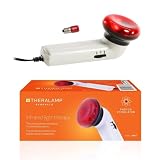
The Theralamp wand is the odd one out in this roundup and worth including precisely because it is different. It is a handheld heat lamp that produces infrared radiant warmth from a bulb, and it ships with a replacement bulb. It is not the same technology as an LED photobiomodulation device, and buyers frequently confuse the two.
Who it suits: someone who wants warmth on a specific area — a stiff neck, a tight lower back, an aching shoulder — and who values a device with a clearly replaceable wear part. It is also the cheapest entry point here by a wide margin.
Key specs
- Technology: infrared radiant heat from a bulb, not LED photobiomodulation
- Format: handheld wand-style heat lamp
- Consumable: a replacement bulb is included in the box
- Treatment area: small to medium, aimed at the target
- Power source: mains-powered, so it needs an outlet within cable reach
- Price tier: budget
Strengths. Radiant heat is one of the oldest and most universally appreciated comfort interventions for muscular stiffness, and a directed bulb delivers it efficiently. The replaceable bulb is a genuine ownership advantage: when the emitter dies, you swap a cheap part instead of replacing the device, which is not true of any sealed LED unit here. Typical halogen bulb life runs into the low thousands of hours, which for a few minutes a day is years of use, and the spare in the box means you are covered for the first failure.
The important distinction. Heat and light therapy are different mechanisms. A heat lamp warms tissue; it does not deliver the specific red and near-infrared wavelengths that photobiomodulation research examines. That does not make it useless — warmth reliably feels good on a stiff muscle, and feeling good is a legitimate outcome — but it should not be compared on wavelength grounds, because it does not publish a wavelength protocol at all. If you want the light-therapy category specifically, look at the LED devices above.
How it compares. Against the Morfone wand, the Theralamp is cheaper and warmer and has a replaceable bulb, while the Morfone is cordless, LED-based and has no consumable. Against the Holsn body device, the Theralamp is a comfort tool and the Holsn is a light tool. Some buyers end up owning both, using the lamp for warmth before activity and the LED device for a structured session afterwards.
- Pros
- Lowest price in this roundup
- Replacement bulb included, so the wear part is user-serviceable
- Immediate warmth gives instant feedback
- Simple, familiar technology with no protocol to learn
- Cons
- Not a photobiomodulation device; no red or NIR wavelength protocol
- Bulbs are a recurring consumable, however cheap
- Corded operation limits where you can use it
- Hot surface requires care with skin distance and with children or pets nearby
11. BETISBE LLLT Cold Laser Therapy Device – Best for High-Density Laser Spot Treatment

The BETISBE is a different class of device from everything above. Its listing specifies 5 × 808 nm and 10 × 650 nm laser diodes in a 5000 mAh handheld body, marketed for human and veterinary use. Those are laser diodes, not LEDs, and the distinction is the reason it sits in the premium tier.
Who it suits: buyers who want a probe-style device for precise, small-area work — a tendon, a specific point on a muscle, a joint line — and who are willing to accept a longer learning curve in exchange for higher output density at the tip. The veterinary positioning also makes it relevant for people treating animals, where a handheld probe is often easier to apply than a wrap.
Key specs
- Emitters: 5 × 808 nm and 10 × 650 nm laser diodes, as stated in the listing
- Battery: 5000 mAh rechargeable
- Format: handheld probe with a contact head
- Use case: marketed for human and veterinary applications
- Treatment area: very small — precise point treatment
- Price tier: premium
Strengths. Laser diodes can concentrate far more energy into a small spot than an LED emitter of the same physical size, and the 808 nm figure sits in the near-infrared window used in much of the laser therapy literature. Contact application eliminates distance falloff almost entirely. The 15 diodes in the array give a reasonably dense treatment field despite the small head, and the cordless format makes it practical for treating an animal that will not sit still for a wrap.
The safety reality. Laser devices require more care than LEDs. Near-infrared light is invisible, so you cannot judge brightness by looking, and you should not look into the emitter at any distance. Most devices in this class ship with protective eyewear; use it, and keep the beam away from eyes — your own and anyone else’s — throughout the session. Follow the manufacturer’s session protocol rather than inventing one, and if you are treating a chronic condition, discuss it with a clinician first, since laser therapy is one of the areas where professional guidance and consumer devices overlap most directly.
How it compares. Against the Hieuuin device, the BETISBE has fewer diodes but is the more general-purpose human and veterinary tool; the Hieuuin adds selectable power levels and a larger array. Against the Morfone wand, the BETISBE is far more concentrated and far less forgiving of sloppy technique — a wand spreads light over a wider area, which is friendlier for a beginner, while a laser probe rewards precision and punishes aimless waving.
- Pros
- 808 nm and 650 nm laser diodes stated explicitly
- High output density in a small contact spot
- 5000 mAh battery for cordless use
- Human and veterinary positioning broadens its usefulness
- Cons
- Premium price for a device that treats a very small area
- Laser safety requirements — eye protection is not optional
- Small spot means long sessions for a large region
- Steeper learning curve than an LED wrap or wand
12. Hieuuin NIR Infrared Light Therapy Device – Best for Adjustable-Dose Laser Therapy

The Hieuuin sits at the top of this list on emitter count: the listing specifies 8 × 808 nm and 16 × 650 nm laser diodes, a 5200 mAh battery and three selectable power levels. Twenty-four diodes in a handheld body is the densest array here, and the three-level control is the feature that distinguishes it from the BETISBE.
Who it suits: someone who wants to titrate dose — starting low and increasing as they learn how their tissue responds — and who wants the largest laser array they can get in a handheld format. It suits methodical buyers more than casual ones.
Key specs
- Emitters: 8 × 808 nm and 16 × 650 nm laser diodes, as stated in the listing
- Battery: 5200 mAh rechargeable, the largest capacity in this roundup
Affiliate disclosure. As an Amazon Associate we earn from qualifying purchases at no extra cost to you. Prices accurate as of the date shown.Best Red Light Therapy Devices for Pain ReliefCheck price on AmazonRelated guides