Best Stainless Steel Frying Pans for Everyday Cooking
What's inside
- Top 3 Picks
- Quick Comparison
- How We Chose
- 1. VocVoi 12 Inch Stainless Steel Pan with Lid – Best for Budget Family Cooking
- 2. EWFEN Tri-Ply Stainless Steel Frying Pans Set with Lid – Best for a Complete Set on a Budget
- 3. Cuisinart 8-Inch Open Skillet – Best for Small Portions and Eggs
- 4. All-Clad D3 Stainless Steel 12″ Fry Pan with Lid – Best Overall
- 5. MICHELANGELO Fully Clad Tri-Ply Stainless Steel Frying Pan Set – Best for Even Sizing Across Three Pans
- 6. Cuisinart 10-Inch Open Skillet – Best for a Mid-Size Everyday Pan
- 7. Calphalon 8-Inch and 10-Inch Fry Pan Set – Best for a Two-Pan Starter Pair
- 8. HexClad 5.5 Qt Hybrid Nonstick Deep Sauté Pan with Lid – Best for One-Pan Meals
- 9. EWFEN 12 Inch Tri-Ply Stainless Steel Frying Pan – Best for High-Heat Searing on a Budget
- 10. Made In 12-Inch 5-Ply Stainless Steel Frying Pan – Best for Even Heating
- 11. HexClad 10″ Hybrid Nonstick Frying Pan – Best for Easy Release
- 12. Farberware Classic Series Stainless Steel Frying Pan Set – Best for the Lowest-Cost Full Set
- How to Choose
- Frequently Asked Questions
- The Right Pan for Your Situation
As an Amazon Associate I earn from qualifying purchases. This post may contain affiliate links at no extra cost to you.
Our Top Picks
 EWFEN Tri-Ply Stainless Steel Frying Pans Set with8+10+12 Inch8.86 x 12.36 x 2.36 inches12.2 poundsCheck on Amazon
 Cuisinart Chef's Classic 8 In. Stainless Steel Open8-Inch15.6 x 9.25 x 1.65 inches1.85 PoundsCheck on Amazon
 All-Clad D3® Stainless Steel 12" Fry Pan with12" Fry Pan with Lid20.83 x 12.52 x 3.72 inches4.74 poundsCheck on Amazon
 HexClad 5.5 Qt Hybrid Nonstick Deep Sauté Frying5.5 Quarts11 x 11 x 3.5 Inches7.7 PoundsCheck on Amazon


Top 3 Picks
Best overall: All-Clad D3 12″ Fry Pan with Lid — a durable three-ply pan with a responsive aluminum core, comfortable stay-cool handle, and a lid that makes it more versatile than an open skillet. It suits cooks who want one pan to do most stovetop work for years.
Best budget: VocVoi 12 Inch Stainless Steel Pan with Lid — a large, inexpensive stainless skillet with a lid for everyday searing, sautéing, and simmering without a premium price. It is the pick for renters, students, and anyone building a first kitchen.
Best premium alternative to nonstick: HexClad 10″ Hybrid Nonstick Frying Pan — a hybrid pan with a stainless-steel lasered surface that gives some nonstick release while remaining induction-compatible and dishwasher-safe. It suits cooks who want easier cleanup than bare stainless but more durability than conventional coated pans.
Quick Comparison
| Product | Best For | Key Specs | Price Tier |
|---|---|---|---|
| VocVoi 12″ Stainless Steel Pan with Lid | Large, low-cost everyday skillet | 12″ diameter, stainless steel, includes lid, induction-compatible | Budget |
| EWFEN Tri-Ply Frying Pans Set with Lid (8″/10″/12″) | Three-size set with lids | Tri-ply construction, 8″, 10″, 12″ pans, PFOA/PTFE-free, induction-ready | Mid-range |
| Cuisinart 8-Inch Open Skillet | Small-portion cooking and eggs | 8″ diameter, stainless steel, dishwasher-safe, induction-compatible | Budget |
| All-Clad D3 12″ Fry Pan with Lid | Long-term primary skillet | 12″ diameter, tri-ply (D3) construction, made in USA, includes lid | Premium |
| MICHELANGELO Tri-Ply Frying Pan Set (8″/9.5″/11″) | Gap-free set sizes | Fully clad tri-ply, 8″, 9.5″, 11″ pans | Mid-range |
| Cuisinart 10-Inch Open Skillet | Mid-size all-rounder | 10″ diameter, stainless steel, dishwasher-safe, induction-compatible | Mid-range |
| Calphalon 8″ and 10″ Fry Pan Set | Two-pan starter pair | 8″ and 10″ stainless fry pans, induction-compatible | Mid-range |
| HexClad 5.5 Qt Hybrid Sauté Pan with Lid | Deep pan for one-pan meals | 5.5 qt capacity, hybrid nonstick surface, induction-ready, includes lid | Premium |
| EWFEN 12″ Tri-Ply Frying Pan | High-heat searing on a budget | 12″ diameter, tri-ply, all-cooktop compatible, rated to 600°F, includes lid | Budget |
| Made In 12″ 5-Ply Stainless Frying Pan | Even heating for serious cooks | 12″ diameter, 5-ply stainless clad, professional-style build | Premium |
| HexClad 10″ Hybrid Nonstick Frying Pan | Nonstick-style release, dishwasher-safe | 10″ diameter, hybrid nonstick, induction-safe, dishwasher-safe | Premium |
| Farberware Classic Series Frying Pan Set | Very low-cost multi-pan set | Stainless steel set, multiple pan sizes, everyday build | Budget |
How We Chose
We built this list around the specs that actually change how a stainless frying pan performs in daily cooking: diameter, layer construction, weight, handle comfort, and cooktop compatibility. Diameter determines whether a pan can sear two chicken breasts without crowding or flip a single egg without wasting heat, so we favored a spread of sizes from 8″ to 12″ rather than only large pans. Layer construction matters because a fully clad pan with an aluminum or copper core bonded between stainless layers heats far more evenly than a thin single-layer skillet, and the number of plies affects both responsiveness and weight.
Weight and handle comfort are closely linked. A heavier clad pan holds heat better but becomes tiring when you lift it one-handed, so we looked for pans whose handles balance the body rather than forcing a wrist strain. We also checked cooktop compatibility, since induction owners need a magnetic stainless base while gas and electric users have more flexibility.
Category fit drove the rest. We separated budget picks that prioritize price and basic function from mid-range sets that add clad construction or multiple sizes, and from premium pans built for decades of use. The upgrade path matters too: a cook who starts with a single 10″ skillet can add an 8″ for eggs and a 12″ for family meals, so we included both individual pans and sets. We did not test these pans in a kitchen, and we do not own or benchmark them. Everything here is based on listed specifications, established cookware construction principles, and the way each product is positioned for a specific cooking situation.
1. VocVoi 12 Inch Stainless Steel Pan with Lid – Best for Budget Family Cooking
As an Amazon Associate we earn from qualifying purchases at no extra cost to you.

The VocVoi 12-inch stainless steel pan is the largest pan on this list at a budget price, and the included lid is what pushes it ahead of other cheap skillets. A 12-inch pan is the size that fits four burgers, a pound of sliced mushrooms, or a whole cut-up chicken without stacking ingredients on top of each other. That surface area matters more than almost any other spec for family cooking, because crowding is the fastest way to steam food instead of browning it.
This pan is for the cook who wants maximum capacity for minimum money: a first apartment, a college kitchen, a rental with an induction or electric coil cooktop, or a household that cooks large one-pan dinners several nights a week. It is not for someone chasing restaurant-level searing or a pan they intend to hand down.
Key specs
- Diameter: 12 inches, the widest option in this roundup
- Material: stainless steel, induction-compatible
- Lid: included, useful for simmering, steaming, and finishing
- Price tier: budget, among the lowest-cost pans here
Strengths
Twelve inches of cooking surface is genuinely useful, and the lid turns a skillet into a shallow braiser for sauces and one-pan pasta. Stainless steel is fully metal-utensil friendly, oven-safe in most cases, and free of the flaking risk that eventually ends a nonstick pan’s life. Because it is inexpensive, you can treat it roughly — deglaze with wine, hit it with a metal spatula, scrub it with steel wool — without anxiety.
For induction owners on a tight budget, this is one of the few 12-inch options at the budget tier that advertises induction compatibility. That combination of size, lid, and price is the entire case for it.
Pros
- Large 12-inch surface for family-sized portions
- Lid included at a budget price
- Induction-compatible stainless steel
- Metal-utensil and high-heat tolerant
- Low replacement cost if it gets damaged
Cons
- Stainless steel requires fat and temperature control to prevent sticking
- Thin budget construction can heat unevenly compared with clad pans
- Large size and long handle may crowd a small sink or burner
- Not dishwasher-friendly in practice if you want it to stay looking new
How it compares
Against the EWFEN 12-inch tri-ply pan, the VocVoi trades even heating for a lower price and a simpler build. If your cooktop is gas and you mostly simmer and brown, the difference is small; if you need edge-to-edge consistency for searing, the clad EWFEN is worth the step up. Against the Cuisinart 10-inch skillet, the VocVoi gives you two more inches and a lid, which matters more for family cooking than the Cuisinart’s tighter build quality.
2. EWFEN Tri-Ply Stainless Steel Frying Pans Set with Lid – Best for a Complete Set on a Budget

The EWFEN tri-ply set bundles 8″, 10″, and 12″ pans with lids in a mid-range package. Buying three clad pans at once usually costs more than three budget pans separately, so the value proposition here is that you get genuine tri-ply construction — a stainless exterior, aluminum core, and stainless cooking surface — across the three sizes most cooks actually use.
This set suits someone outfitting a kitchen from scratch, or a cook who has been making do with one warped skillet and wants a coherent lineup. The size spread covers eggs and single servings in the 8″, everyday proteins in the 10″, and family portions in the 12″. The lids let all three pans move from searing to simmering without transferring food to another vessel.
Key specs
- Sizes: 8″, 10″, and 12″ pans
- Construction: tri-ply, fully clad
- Coating: PFOA- and PTFE-free, no nonstick layer
- Cooktop: induction and all standard cooktops
- Lids: included
- Price tier: mid-range for a three-pan set
Strengths
The core aluminum layer spreads heat much more evenly than a thin single-layer pan, which reduces the hot ring you get in the center of cheap skillets. That means more consistent browning and fewer burnt spots when you make pan sauces. Because the cooking surface is bare stainless rather than coated, you can use metal tongs and spatulas, take the pans to high heat, and finish under a broiler without worrying about a coating degrading.
Sets also remove decision fatigue. You do not have to match handle shapes, lid sizes, or storage stacks, because the pans are designed as a family. All three nest reasonably well and share the same lid diameters within their size classes.
Pros
- Three useful sizes in one purchase
- Tri-ply clad construction for even heating
- Lids included for each pan
- No PFOA or PTFE coatings to wear out
- Induction and standard cooktop compatible
Cons
- Buying a set costs more upfront than one skillet
- Sticking is normal with bare stainless and requires technique
- Three pans plus lids consume significant cabinet space
- Clad pans are heavier to lift than thin budget skillets
How it compares
Against the MICHELANGELO tri-ply set, the EWFEN offers slightly different sizes at a comparable tier; if you prefer an 11″ to a 12″ for weight reasons, MICHELANGELO’s sizing may suit you better. Against the Farberware Classic set, EWFEN’s tri-ply construction is the more meaningful upgrade — Farberware emphasizes low cost, while EWFEN emphasizes clad heating. For a first full kitchen, the EWFEN set is the more future-proof buy.
3. Cuisinart 8-Inch Open Skillet – Best for Small Portions and Eggs

The Cuisinart 8-inch open skillet is the smallest pan here and the classic choice for eggs, a single omelet, a small batch of garlic, or a quick pan sauce. Cuisinart has sold stainless cookware in this shape for decades, and the 8-inch skillet is the size that earns a permanent spot on the stove in most homes because it heats quickly and cleans easily.
It suits solo cooks, anyone who makes breakfast daily, and households that already own a large pan and want a small companion. It is also a low-risk way to try stainless cooking: if you dislike the technique, you have not invested much.
Key specs
- Diameter: 8 inches
- Material: stainless steel, induction-compatible
- Design: open skillet, no lid included
- Cleaning: dishwasher-safe per the listing
- Price tier: budget
Strengths
An 8-inch pan heats fast, which makes it ideal for eggs and quick reductions where a large pan takes too long to come up to temperature. The short body and moderate weight make it easy to toss vegetables and slide food onto a plate. Because it is stainless, it tolerates metal whisks and spatulas and can go from stovetop to oven for finishing frittatas.
Dishwasher safety is a convenience that matters more on a small pan you use daily than on a big one you use weekly. For a single person or a couple, this pan plus a 10- or 12-inch skillet covers nearly everything.
Pros
- Fast heating and quick cleanup
- Ideal size for eggs, omelets, and small sides
- Dishwasher-safe per the listing
- Induction-compatible
- Low budget price
Cons
- Too small for family portions or searing multiple pieces of protein
- No lid included for steaming or simmering
- Stainless surface needs fat to prevent sticking
- Nonstick is still easier for delicate eggs if that is your priority
How it compares
Against the Cuisinart 10-inch open skillet, this is simply the smaller sibling — same family, same style, different surface area. Choose the 8″ if you cook for one or two and want fast heat; move to the 10″ if you often cook two portions at once. Against the EWFEN 8″ pan in the tri-ply set, Cuisinart’s single pan lets you buy just the size you need without committing to a set.
4. All-Clad D3 Stainless Steel 12″ Fry Pan with Lid – Best Overall

All-Clad D3 is the reference point for American-made clad stainless cookware, and the 12-inch fry pan with lid is the single most versatile pan in this roundup. D3 means three plies: a stainless cooking surface, an aluminum core, and a magnetic stainless exterior that works on induction. The aluminum core is what separates D3 from budget stainless — it spreads heat across the base and up the sides, so the whole pan cooks, not just the center.
This is the pan for someone who wants to buy once. It suits serious home cooks, anyone replacing a worn-out nonstick collection, and cooks who want a pan that can go from a hard sear on the stovetop to a finish in the oven and then to the dishwasher. The lid adds braising and steaming capability that an open skillet lacks.
Key specs
- Diameter: 12 inches
- Construction: D3 tri-ply, fully clad, aluminum core
- Origin: made in the USA per the listing
- Cooktop: induction and all standard cooktops
- Lid: included
- Price tier: premium
Strengths
Even heating is the headline. A clad pan keeps the temperature consistent from edge to center, which is why pan sauces reduce predictably and proteins brown uniformly. The fully clad walls mean the sides also conduct heat, useful when you reduce a sauce or sauté against the pan’s curve. The handle is designed to stay cooler on the stovetop than a thin stamped handle, and the flared rim pours without dribbling.
Durability is the other argument. Bare stainless has no coating to flake, so the pan’s useful life is measured in decades, not years, provided you avoid thermal shock and aggressive scraping. A 12-inch pan also has enough surface to sear a steak properly, which is the single best demonstration of why clad construction matters.
Pros
- Excellent heat distribution from the aluminum core
- Made in the USA
- Lid included for braising and simmering
- Induction-compatible and oven-safe
- No coating to wear out; very long service life
Cons
- Highest price tier here
- Heavy, especially when full of food
- Stainless requires preheating and fat to avoid sticking
- Handles can still get hot during long oven sessions or high-heat searing
How it compares
Against the Made In 12-inch 5-ply pan, both are premium clad American-style pans; the D3 uses three plies while the Made In uses five, which can mean slightly more even heating and more weight. Against the EWFEN 12-inch tri-ply at a fraction of the price, the All-Clad is the better pan for heat consistency, handle ergonomics, and long-term durability, but the EWFEN does the same basic job for far less. If you cook daily and want one pan for the next twenty years, the All-Clad is the pick; if you cook occasionally, the EWFEN is enough.
5. MICHELANGELO Fully Clad Tri-Ply Stainless Steel Frying Pan Set – Best for Even Sizing Across Three Pans

The MICHELANGELO set offers fully clad tri-ply pans in 8″, 9.5″, and 11″ sizes. That middle size is the interesting one: many sets jump from 10″ to 12″, leaving a gap for cooks who find a 12″ pan too heavy. A 9.5″ pan hits a sweet spot for two-person meals and one-pan pasta, while the 11″ handles most family cooking without the bulk of a true 12″.
It suits cooks who want clad construction and a graduated set but dislike oversized pans, and anyone with limited burner space or a small dishwasher. The set also appeals to cooks who want each pan to feel distinctly different in the hand rather than owning three near-identical pans.
Key specs
- Sizes: 8″, 9.5″, and 11″ pans
- Construction: fully clad tri-ply
- Cooktop: induction and standard cooktops
- Price tier: mid-range for a three-pan set
Strengths
Fully clad construction spreads heat along the base and sides, giving more uniform browning than a disk-bottom pan. The three sizes cover a genuinely wide range of tasks: 8″ for eggs, 9.5″ for a two-portion stir-fry or a single steak, and 11″ for a whole chicken cut up or a large batch of vegetables. Because the largest pan is 11″ rather than 12″, it weighs less and fits more easily on smaller burners.
The graduated sizing is also a storage advantage. Pans that differ by 1.5 inches nest more compactly than pans that differ by 2 inches, and lids are less likely to be mismatched.
Pros
- Clad tri-ply construction for even heating
- Three graduated sizes with no large gap
- Lighter largest pan than a 12″ alternative
- Induction-compatible
- Mid-range price for a full clad set
Cons
- No lid mentioned in the listing name, so check before buying
- Stainless cooking surface still requires technique
- An 11″ pan may be small for feeding four or more
- Bare stainless shows discoloration and needs occasional polishing
How it compares
Against the EWFEN tri-ply set, MICHELANGELO substitutes an 11″ and 9.5″ for the 10″ and 12″, which suits smaller kitchens and lighter lifting. Against the Calphalon two-pan set, MICHELANGELO gives you a third size for not much more, making it the better choice for a cook starting from nothing. Choose MICHELANGELO if you value a lighter largest pan; choose EWFEN if you need a full 12″.
6. Cuisinart 10-Inch Open Skillet – Best for a Mid-Size Everyday Pan

The Cuisinart 10-inch open skillet is the middle child of the Cuisinart stainless line and arguably the most used size in a typical kitchen. Ten inches is enough for two chicken breasts, a family-sized omelet, or a pound of ground meat, yet it is light enough to move with one hand and small enough to store easily.
It suits nearly anyone: a first skillet for a new cook, a replacement for a scratched nonstick pan, or an addition to a set that lacks a mid-size. If you own only one frying pan, a 10-inch stainless skillet is the sensible default.
Key specs
- Diameter: 10 inches
- Material: stainless steel, induction-compatible
- Design: open skillet, no lid
- Cleaning: dishwasher-safe per the listing
- Price tier: mid-range as an individual pan
Strengths
The 10-inch size balances capacity and maneuverability better than any other diameter, which is why it is the standard starter skillet. The stainless surface takes hard use, tolerates metal utensils, and can move into the oven for finishing. Dishwasher safety reduces cleanup friction on a pan you may use several times a day.
Because it is an open skillet, it is lighter than a comparable pan with a lid and nests more easily. For cooks who already own a Dutch oven or a saucepan with a lid, an open skillet fills the gap without duplicating equipment.
Pros
- Versatile 10-inch size for most everyday tasks
- Light enough to handle one-handed
- Dishwasher-safe per the listing
- Induction-compatible
- No coating to wear out
Cons
- No lid included
- Crowded when cooking for three or more
- Sticking without proper preheat and fat
- Not the most even heating compared with premium clad pans
How it compares
Against the Cuisinart 8-inch skillet, this is the same pan scaled up; the 10″ is the better only-pan choice, while the 8″ is the better egg pan. Against the Calphalon 10-inch pan in its two-pan set, the two are close in purpose — Calphalon gives you an 8″ as well, Cuisinart lets you buy just the 10″. If you want a pair, the Calphalon set is more economical; if you want one pan, this is it.
7. Calphalon 8-Inch and 10-Inch Fry Pan Set – Best for a Two-Pan Starter Pair

The Calphalon two-pan set pairs an 8-inch and a 10-inch stainless fry pan. It is a compact, practical combination that covers the two most common cooking sizes without the storage burden of a three-pan set, and it is a sensible first purchase for a new kitchen or a small household.
It suits couples, singles who cook for two, and anyone downsizing a cluttered cabinet. The 8″ handles breakfast and small sides, the 10″ handles dinner proteins and vegetables, and nothing in the set is so large that it becomes awkward to wash or store.
Key specs
- Sizes: 8-inch and 10-inch fry pans
- Material: stainless steel
- Cooktop: induction-compatible
- Price tier: mid-range for a two-pan set
Strengths
Two sizes cover the majority of stovetop tasks, and the smaller footprint means the set fits in apartments and small kitchens where a 12-inch pan plus a 10-inch pan would not. Stainless construction means no nonstick coating to degrade, so the pans can handle high heat, metal utensils, and oven finishing.
As a matched pair, the pans share handle design and styling, which is a minor but real advantage when you are moving between them during a single meal. For a beginner, starting with a focused pair rather than a sprawling set encourages better technique — you learn each pan’s hot spots rather than juggling five unfamiliar shapes.
Pros
- Two most useful sizes in one purchase
- Compact storage footprint
- Induction-compatible
- No coating to flake or replace
- Matched design for consistent handling
Cons
- No lid included
- No large pan for family-sized batches
- Bare stainless requires temperature control to prevent sticking
- A three-pan set may offer better value per pan
How it compares
Against the Cuisinart 10-inch skillet, the Calphalon set adds an 8″ pan for a modest premium, which is usually the better deal if you need both sizes. Against the MICHELANGELO tri-ply set, Calphalon offers two pans instead of three and may use a different clad construction, so MICHELANGELO is the better pick if even heating across three sizes matters more than storage space. For a first kitchen where cabinet room is tight, the Calphalon pair wins.
8. HexClad 5.5 Qt Hybrid Nonstick Deep Sauté Pan with Lid – Best for One-Pan Meals

The HexClad 5.5-quart deep sauté pan is not a classic frying pan — it is a deeper vessel with a lid, closer to a sauteuse or a braising pan. That depth is the point: it holds enough volume to make a one-pan pasta, a curry, a shallow braise, or a large batch of risotto without switching vessels.
It suits cooks who want one pan to take a dish from sear to simmer to serve, and households feeding three or four from a single vessel. The hybrid surface — stainless steel with a lasered pattern that creates nonstick pockets — appeals to cooks who want easier release than bare stainless while keeping metal-utensil tolerance.
Key specs
- Capacity: 5.5 quarts, deep-sided sauté pan
- Surface: hybrid nonstick with lasered stainless pattern
- Cooktop: induction-ready
- Lid: included
- Price tier: premium
Strengths
Depth plus capacity plus lid equals fewer dishes. You can brown protein, add liquid, cover, and simmer in the same pan, which is exactly the workflow of a weeknight one-pot meal. The hybrid surface releases food more readily than bare stainless, so eggs, fish, and sticky sauces are less likely to tear or cement themselves to the pan.
HexClad’s design also survives metal utensils, unlike a pure PTFE coating, and is dishwasher-safe per the listing. For someone transitioning away from traditional nonstick because of coating wear, this is a middle path that keeps most of the convenience.
Pros
- Large 5.5 qt capacity for one-pan meals
- Lid included for braising and simmering
- Hybrid surface releases food more easily than bare stainless
- Induction-ready and dishwasher-safe
- Tolerates metal utensils better than conventional nonstick
Cons
- Premium price
- Deep, heavy pan is harder to toss food in than a skillet
- Hybrid surface still benefits from some fat and moderate heat
- Larger storage footprint than a flat skillet
How it compares
Against the HexClad 10-inch frying pan, the sauté is the better choice for wet, saucy, or covered cooking, while the 10″ skillet is better for searing and flipping. Against the All-Clad D3 12-inch fry pan, the HexClad offers easier release and more depth but less pure searing capability and evenness. If your cooking leans toward one-pan dinners, the HexClad sauté is the more useful pan; if you sear steaks and make pan sauces, the All-Clad is superior.
9. EWFEN 12 Inch Tri-Ply Stainless Steel Frying Pan – Best for High-Heat Searing on a Budget

The EWFEN 12-inch tri-ply pan is a single large clad skillet with a lid, rated for cooktop use up to 600°F and compatible with all cooktops. That temperature rating is unusually high for a budget pan and reflects a construction designed for oven and broiler work as well as stovetop searing.
It suits cooks who want a large, clad pan for hard searing — steak, chops, roasted vegetables finished under the broiler — without paying premium prices. It is also a good choice for induction owners who need a magnetic base and a big surface.
Key specs
- Diameter: 12 inches
- Construction: tri-ply, fully clad
- Heat rating: up to 600°F per the listing
- Cooktop: all cooktops including induction
- Lid: included
- Price tier: budget
Strengths
The combination of a 12-inch surface, clad construction, and a high temperature rating covers the two hardest tasks in a home kitchen: searing at high heat and finishing in the oven. A clad aluminum core spreads heat more evenly than a thin pan, so a large steak or several chops brown at roughly the same rate across the pan rather than burning in the middle.
The lid extends the pan’s range to covered cooking, and the induction-compatible base means it works on every common cooktop type. At a budget price, it is an easy entry point into clad cooking with a large format.
Pros
- Tri-ply clad construction at a budget price
- High 600°F heat rating for searing and broiler use
- 12-inch surface for large portions
- Lid included
- Works on induction and all standard cooktops
Cons
- Heavy when fully loaded
- Stainless surface requires preheating and fat
- Budget build may not match premium handle ergonomics
- Large size needs a big burner and a big sink
How it compares
Against the VocVoi 12-inch stainless pan, the EWFEN is the more capable pan: clad construction and a higher heat rating make it better for searing, though it costs more. Against the All-Clad D3 12-inch, the EWFEN delivers much of the same function for a fraction of the price, giving up handle refinement, edge-to-edge consistency, and long-term build quality. For most budget-conscious cooks, the EWFEN is the smarter buy.
10. Made In 12-Inch 5-Ply Stainless Steel Frying Pan – Best for Even Heating

The Made In 12-inch frying pan uses five-ply stainless clad construction, one step beyond the three-ply build common at this price tier. Additional layers add more conductive metal through the base and walls, which typically means slower, more even heat delivery and better retention when cold food hits the pan.
It suits cooks who care about heat consistency above all: anyone searing thick steaks, making delicate pan sauces, or cooking on an uneven electric or induction burner where a more conductive pan compensates. It is professional-style cookware aimed at people who cook often and seriously.
Key specs
- Diameter: 12 inches
- Construction: 5-ply stainless clad
- Positioning: professional cookware, crafted for serious home use
- Cooktop: standard and induction-compatible in this class
- Price tier: premium
Strengths
Five plies give the pan more thermal mass, which translates to fewer temperature swings when you add food. That stability is what lets you build a fond for a pan sauce without scorching it, and it helps thick proteins cook evenly from edge to center. The extra layers also mean the pan retains heat better when you add a second batch, so you spend less time waiting for recovery.
The 12-inch size is the standard for serious searing, with enough room to leave space between pieces so they brown rather than steam. Made In positions this pan as professional-grade cookware, so the build and finish are aimed at long service life.
Pros
- 5-ply clad construction for very even heating
- Excellent heat retention and recovery
- 12-inch surface for proper searing
- Professional-grade build and finish
- Induction-compatible
Cons
- Premium price
- Heavy, especially compared with 3-ply pans
- No lid mentioned in the listing name
- Extra thermal mass means slower preheating
How it compares
Against the All-Clad D3 12-inch, the Made In adds two more plies and typically more thermal mass, while the All-Clad includes a lid and carries the D3 name’s long track record. Both are premium and both heat well; choose Made In for maximum evenness and heat retention, and All-Clad if the included lid and made-in-USA sourcing matter more. Against the EWFEN 12-inch tri-ply, the Made In is the clearly better pan for heat stability, at several times the cost.
11. HexClad 10″ Hybrid Nonstick Frying Pan – Best for Easy Release

The HexClad 10-inch hybrid frying pan is the everyday-size version of the brand’s hybrid design, with a lasered stainless pattern over a nonstick layer. It is dishwasher-safe and induction-compatible, which makes it one of the more convenient pans here for daily use and cleanup.
It suits cooks who want nonstick-style release without the short lifespan of a traditional coated pan, and anyone who has grown tired of scrubbing bare stainless. The 10-inch size is the general-purpose sweet spot, so this pan can serve as a primary skillet for a small household.
Key specs
- Diameter: 10 inches
- Surface: hybrid nonstick with lasered stainless steel pattern
- Cooktop: induction-safe
- Cleaning: dishwasher-safe per the listing
- Price tier: premium
Strengths
The hybrid surface is the whole selling point: food releases more easily than from bare stainless, so eggs, fish, and sticky glazes come out intact. Unlike a pure nonstick coating, the stainless pattern allows metal utensils and higher heat without immediately damaging the surface. Induction compatibility and dishwasher safety round out the everyday convenience.
For a cook who wants one pan that handles eggs in the morning and a chicken breast at night with minimal cleanup, this covers a broad range. The 10-inch diameter keeps it light enough to handle comfortably.
Pros
- Easier food release than bare stainless
- Metal-utensil tolerant relative to conventional nonstick
- Dishwasher-safe and induction-safe
- Versatile 10-inch size
- Better durability outlook than a thin PTFE coating
Cons
- Premium price for a single 10-inch pan
- Does not brown as aggressively as bare stainless
- No lid included
- Surface texture makes some sauces and reductions less smooth
How it compares
Against the Cuisinart 10-inch stainless skillet, the HexClad gives easier release and dishwasher convenience at a much higher price, while the Cuisinart gives a purer sear and a lower entry cost. Against the HexClad 5.5 qt sauté, the 10-inch skillet is better for searing and flipping, the sauté better for saucy and covered dishes. If you want one hybrid pan for everyday frying, this is the one.
12. Farberware Classic Series Stainless Steel Frying Pan Set – Best for the Lowest-Cost Full Set
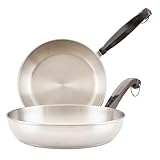
The Farberware Classic Series set is a multi-pan stainless cookware set at the lowest price tier in this roundup. Farberware has been a mainstream budget cookware name for generations, and this series is aimed at cooks who need several pans immediately without spending much.
It suits students, first apartments, rental kitchens, and anyone outfitting a kitchen that may not be permanent. It also works as a second set for a vacation home or a camper, where cost and replaceability matter more than heat precision.
Key specs
- Type: stainless steel frying pan set, cookware set
- Sizes: multiple pans per the set
- Build: everyday stainless, budget-oriented
- Price tier: budget
Strengths
The main advantage is coverage per dollar. You get several pans at once, which means you can cook a full meal using different vessels without improvising. Stainless steel is metal-utensil friendly and has no coating to flake, so the pans tolerate rough handling and high heat better than cheap nonstick.
For a household that is still figuring out how it cooks, a low-cost set like this lets you learn which sizes you actually reach for before investing in individual premium pans. Replacing a single pan later is cheap, and there is no anxiety about damaging an expensive piece.
Pros
- Lowest-cost way to get a full set of pans
- Stainless steel with no coating to wear out
- Multiple sizes for a complete kitchen
- Metal-utensil friendly
- Low replacement cost
Cons
- Thin construction can heat unevenly
- Less induction-friendly than clad pans depending on the base
- Handles and fit and finish are basic
- Sticking still requires technique despite the low price
How it compares
Against the EWFEN tri-ply set, Farberware wins on price and loses on heating performance — the EWFEN’s clad construction is the more meaningful upgrade if you can stretch. Against the VocVoi 12-inch pan, Farberware gives you more pans for similar money but likely a thinner build and no large clad pan. Choose Farberware if maximum pan count at minimum cost is the goal; choose EWFEN or VocVoi if you would rather have one or three better pans.
How to Choose
Stainless steel frying pans are sold on a handful of specs that determine whether you will love the pan or leave it in a cabinet. This section walks through the decisions in the order they matter most.
Diameter: match the pan to your portion size
Diameter is the first decision because it fixes how much food you can cook at once. As a rule of thumb, a pan holds comfortable single-layer portions at roughly 1 inch of food per 2 inches of diameter, so:
- 8 inches: one or two eggs, a single omelet, a small batch of garlic or aromatics, one small fillet, a side of vegetables for one. Best for solo cooks and breakfast.
- 9.5 to 10 inches: two chicken breasts, a pound of ground meat, a two-person stir-fry, a large omelet, a single large steak. The most useful size for one or two people.
- 11 inches: a small family portion, four chicken thighs, a full pan of roasted vegetables. A lighter alternative to 12 inches.
- 12 inches: four burgers, a whole cut-up chicken, a pound of mushrooms, a family-sized sauté, two large steaks side by side. Best for three or more people or batch cooking.
Bigger is not automatically better. A 12-inch pan on a small burner develops a hot center and cool edges, and it weighs more when full. If your cooktop has one large and three small burners, match your largest pan to the large burner’s diameter — a burner much smaller than the pan base wastes heat and creates uneven cooking.
Layer construction: what the plies actually do
Stainless steel alone is a poor heat conductor. It is durable, non-reactive, and easy to clean, but heat moves through it slowly and unevenly. That is why good stainless pans bond a conductive core — usually aluminum, sometimes copper — between stainless layers. The result is a clad pan.
Construction falls into rough classes:
- Single-layer stainless: thin, cheap, and prone to hot spots. Common in budget sets. Fine for boiling and simple browning, frustrating for searing.
- Disk-bottom: a conductive disk bonded to the base only. Heats the base evenly but leaves the walls cold. Lighter and cheaper than fully clad. Can warp or separate with thermal shock if cheaply made.
- Tri-ply (3-ply) fully clad: stainless-aluminum-stainless running up the sides. Even base heating plus conducting walls. The standard for quality everyday cookware.
- 5-ply and above: more conductive layers for greater thermal mass and stability. Heavier, slower to heat, and more expensive, but the most consistent under load.
For everyday cooking, tri-ply is the value sweet spot. Five-ply helps most when you sear thick proteins or cook on an uneven burner. If you are choosing between a thin single-layer 12-inch pan and a tri-ply 10-inch pan at the same price, take the clad 10-inch — even heating beats extra surface area.
Weight and handle comfort: the spec you feel every day
Weight is the spec shoppers underestimate most. A fully clad 12-inch pan can weigh several pounds empty and considerably more with food, and you lift it repeatedly during cooking. If a pan feels awkward in one hand, it will end up unused.
Handle design matters as much as total weight. Useful things to look for:
- Riveted handles with a secure, wobble-free attachment.
- A handle long enough that your hand stays clear of the stovetop and oven heat, but short enough that the pan balances at the grip point.
- A slight downward angle or ergonomic curve that keeps your wrist neutral when tilting to pour.
- An oven-safe rating matched to your cooking; many stainless pans handle high oven temperatures, but handles that are not fully metal may have lower limits.
If you have wrist or grip issues, favor an 8- to 10-inch pan, or choose a lighter tri-ply rather than a 5-ply. The best pan is the one you can move confidently.
Cooktop compatibility: induction is the dividing line
Gas and electric coil cooktops work with almost any stainless pan, though a flat, heavy base matters on electric for contact. Induction is the constraint: it requires a magnetic base, which means the pan must contain enough magnetic stainless steel to trigger the burner. Fully clad stainless pans are almost always induction-compatible because their exterior layer is magnetic. Thin single-layer pans and disk-bottom pans may or may not be, so check before buying if you own an induction range.
Glass and ceramic electric cooktops are gentler on the pan’s base but demand a flat bottom; a warped pan rocks and heats poorly. If your cooktop is induction, prioritize pans that explicitly state induction compatibility — every clad pan in this list qualifies, but the budget thin pans vary.
Lids, depth, and shape
A lid changes what a pan can do. With a lid, a skillet becomes a shallow braiser for one-pan pasta, a steamer, and a vessel for finishing a sauce. Without one, you need a separate pot for covered cooking. If you plan to own just one large pan, buy it with a lid; if you already own a Dutch oven, an open skillet is lighter and cheaper.
Depth matters for saucy dishes. A deep sauté pan or sauteuse with tall sides holds more liquid and reduces splatter, but it is harder to toss food and flip eggs. A shallow skillet gives better browning and easier flipping. Pick depth by your cooking style rather than by looks.
Coated or bare: choosing between durability and convenience
Bare stainless has no coating, so it cannot flake, and it tolerates metal utensils, high heat, and abrasive cleaning. The trade-off is sticking: stainless requires preheating, adequate fat, and patience before food releases naturally. Cooks who master it get excellent browning and fond for sauces.
Hybrid surfaces, like the lasered pattern used in HexClad pans, add some nonstick release while keeping metal-utensil tolerance and dishwasher safety. They cost more and brown slightly less aggressively. Traditional nonstick is easiest for eggs and fish but has the shortest lifespan and cannot take high heat or metal tools.
If you cook eggs daily and hate scrubbing, a hybrid or a dedicated small nonstick pan is worth it. If you sear and make pan sauces, bare stainless is the better tool.
A worked example: building a three-pan lineup
Suppose you cook for two, own an induction range, and want to spend as little as possible while covering everything. A sensible build:
- 8-inch pan for eggs and small sides — roughly 30% of your cooking.
- 10-inch pan for dinner proteins and vegetables — roughly 50% of your cooking.
- 12-inch pan with lid for batch cooking and covered one-pan meals — roughly 20% of your cooking.
If you buy individual mid-range pans, the total lands in the mid-range tier; if you buy a three-pan budget or mid-range set, you may spend less per pan but accept the sizes the set provides. Compare the set’s sizes to the percentages above: if a set gives you 8″, 9.5″, and 11″, your batch-cooking pan is slightly small, so weigh whether the savings justify it. If you cook for four, invert the priority and make the 12-inch pan the centerpiece, adding an 8″ only for eggs.
Sizing to your burner and storage
Before buying a large pan, measure three things: your largest burner’s diameter, your sink’s width, and your cabinet clearance. A pan base much wider than the burner heats unevenly. A 12-inch pan with a long handle can be awkward in a small sink, and stacking clad pans with lids consumes substantial cabinet height. Measuring first prevents the most common post-purchase regret: a great pan that does not fit your kitchen.
Ownership realities: what wears first and what to avoid
Bare stainless pans rarely fail in a dramatic way. What changes over time:
- Discoloration: heat tints and blue-gold marks on the base are cosmetic and removable with a stainless cleaner.
- Warping: usually caused by thermal shock — plunging a hot pan into cold water, or heating an empty pan on high. Warm water and gradual heating prevent it.
- Handle loosening: rivets can loosen with heavy impact; handwashing reduces wear on handles that are not fully metal.
- Coating wear (hybrid/nonstick only): coatings degrade with high heat, metal tools on soft nonstick, and abrasive scrubbing. Bare stainless has none of these failure modes.
Common mistakes to avoid: heating a bare stainless pan to screaming hot before adding fat (causes sticking and warping), using too little oil (stainless needs a film of fat), moving food too early (let it release on its own), and cleaning hot pans with cold water. Also avoid stacking clad pans unprotected — the bases scratch — and dry pans thoroughly to prevent water spots.
Frequently Asked Questions
Is stainless steel better than nonstick for everyday cooking?
They solve different problems. Stainless steel is more durable, tolerates high heat and metal utensils, and produces better browning and pan sauces, but it requires fat and proper preheating to prevent sticking. Nonstick is easier for eggs and delicate fish but has a shorter lifespan and cannot take high heat. Many kitchens benefit from both: a stainless skillet for searing and sauces, plus one nonstick or hybrid pan for eggs.
What size frying pan should I buy first?
A 10-inch pan is the best first purchase for one or two people because it handles most everyday tasks without being heavy or awkward. If you regularly cook for three or more, start with a 12-inch pan. If you mostly make eggs and small portions, an 8-inch pan is the more useful first buy. If you can afford only one pan, choose the 10-inch.
How do I stop food from sticking to stainless steel?
Preheat the pan over medium heat for a minute or two, add fat, and wait until the fat shimmers before adding food. Let the food sit undisturbed until it releases on its own — if it resists, it is not ready to flip. Use moderate heat rather than maximum, and avoid moving food too early. These steps form a natural release layer and prevent the cementing that frustrates new stainless users.
Do stainless steel pans work on induction cooktops?
Only if the pan’s base is magnetic. Fully clad stainless pans almost always are, because their exterior layer is magnetic stainless steel. Thin single-layer pans and some disk-bottom pans may not work. Every clad pan in this list is induction-compatible, but if you own an induction range, confirm the wording before buying any budget pan.
How many plies should a stainless frying pan have?
Three plies is the practical standard for everyday cooking, giving even heating without excessive weight or cost. Five plies adds thermal mass for more consistent heat retention and is worth it if you sear thick proteins or cook on an uneven burner. More plies also means more weight, so cooks with grip concerns may prefer a lighter 3-ply pan.
Are stainless steel frying pans dishwasher-safe?
Many are, and some listings explicitly state dishwasher safety. Even when safe, dishwasher detergent can dull the finish and leave water spots, and high heat over many cycles can affect handles that are not fully metal. Handwashing with warm water, mild soap, and a soft sponge keeps stainless pans looking better for longer.
Can I use metal utensils on stainless steel pans?
Yes. Bare stainless steel has no coating, so metal spatulas, tongs, and whisks will not damage the cooking surface. This is one of the main advantages over nonstick. The exception is hybrid pans with a lasered nonstick pattern, which are more tolerant than conventional nonstick but still benefit from care around the surface texture.
Why does my stainless pan turn brown or blue?
Heat tint is a normal oxidation film that forms when stainless steel reaches high temperatures, especially on the base and lower walls. It is cosmetic and does not affect cooking performance. A stainless steel cleaner or a paste of baking soda and water removes it. Avoid polishing with abrasive pads if you want to keep the brushed finish even.
The Right Pan for Your Situation
If you want one pan to last for years and can spend at the premium tier, the All-Clad D3 12-inch fry pan with lid is the most complete choice, and the Made In 12-inch 5-ply is the alternative if even heating and heat retention matter more than an included lid. If you are cooking on a tight budget but need a large pan now, the EWFEN 12-inch tri-ply pan gives you clad construction and a high heat rating for far less, while the VocVoi 12-inch with lid is the pick if the lowest possible price matters most. For a first full kitchen, the EWFEN tri-ply set or the MICHELANGELO set covers the sizes you will actually use, with MICHELANGELO better for smaller kitchens and lighter lifting. If you want easy release and dishwasher convenience, the HexClad 10-inch pan or the 5.5 qt sauté is the way to go, and if your priority is simply pan count at minimum cost, the Farberware Classic Series set gets you cooking today.