Best Tankless Water Heaters for Small Households
What's inside
- Top 3 Picks
- Quick Comparison
- How We Chose
- 1. Rheem RTEX-24 24kW 240V Electric Tankless Water Heater – Best for Two-Bathroom Households
- 2. ThermoMate 6kW Tankless Water Heater Electric – Best Budget Pick for Sink Washing
- 3. Rheem 11kW Multi Fixture Tankless Electric Water Heater 240V – Best Mid-Range for a One-Bathroom Home
- 4. 110V 3000W Tankless Electric Under Sink Heater – Best for Locations With Only Standard Outlets
- 5. CAMPLUX 4.5kW 120V Point of Use Tankless Water Heater – Best for Cabins, RVs, and Tight Installs
- 6. Mini Tankless Under Sink 3kW 120V Plug-In Heater – Best for Hand-Wash Sinks With Easy Controls
- 7. NOVIEEX 18kW 240V Tankless Electric Water Heater – Best Premium Pick When 24kW Is Too Much
- How to Choose
- Frequently Asked Questions
- The Bottom Line by Household
As an Amazon Associate I earn from qualifying purchases. This post may contain affiliate links at no extra cost to you.
Our Top Picks
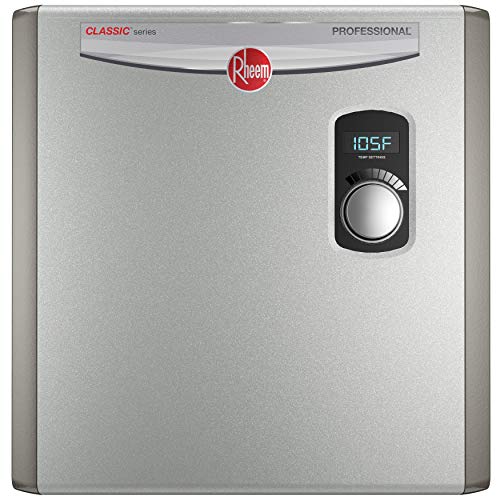 Rheem RTEX-24 24kW 240V Electric Tankless Water Heater18.25 x 14.5 x 3.5 inches17.8 PoundsCheck on Amazon
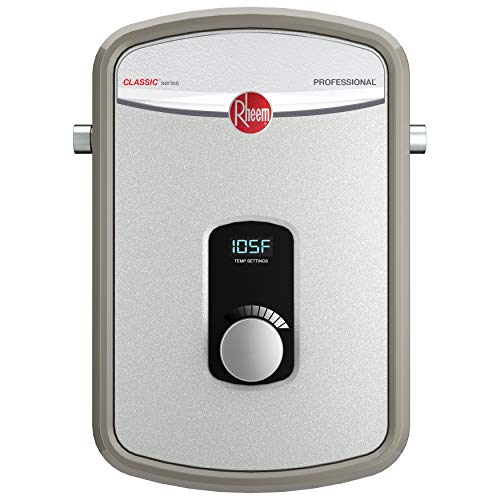 Rheem 11kW Multi Fixture Tankless Electric Water Heater12.63 x 8.25 x 3.63 inches7.1 PoundsCheck on Amazon

Top 3 Picks
The best tankless water heater for small households overall is the Rheem RTEX-24 24kW 240V Electric Tankless Water Heater, because its high kilowatt rating is the only one in this group that can realistically feed two showers at once while still running a kitchen tap, which matters in a one- to three-person home where everyone gets ready in the same 30-minute window. For a single bathroom or a single point of use, the ThermoMate 6kW Tankless Water Heater Electric is the budget pick: it is small, ETL listed, and sized for sink washing or one low-flow shower rather than a whole house. The premium alternative is the NOVIEEX 18kW 240V Tankless Water Heater, which the listing describes as reaching a maximum flow rate of about 4.9 GPM with a three-second startup, a useful middle path if 24kW is more power than your panel can carry but 11kW is not quite enough. If you want the cheapest possible whole-home answer and your panel can support it, the RTEX-24 is the one to buy first.
Quick Comparison
Every unit below is an electric, tankless, point-of-use or whole-home heater sized for one to three people. None of them use natural gas or propane, so none require venting, a gas line, or a flue — but all of them require adequate electrical service, which is the single most common reason a small-household install goes wrong.
| Product | Best for | Key specs | Price tier |
|---|---|---|---|
| Rheem RTEX-24 24kW 240V Electric Tankless | Two-bathroom homes, simultaneous use | 24kW, 240V, whole-home, requires dedicated high-amperage circuits | Premium |
| ThermoMate 6kW Tankless Electric (ETL Listed) | Sink washing, single low-flow point of use | 6kW, point-of-use, ETL listed, compact | Budget |
| Rheem 11kW Multi Fixture Tankless Electric 240V | One bathroom plus a kitchen, small whole-home | 11kW, 240V, multi-fixture, mid-size | Mid-range |
| 110V 3000W Tankless Electric Under Sink | Remote sink with no 240V available | 3kW, 110V/120V, under-sink, plug-in class | Budget |
| CAMPLUX 4.5kW 120V Point of Use | Cabins, RVs, single sink, space-limited installs | 4.5kW, 120V, point-of-use, space-saving body | Budget |
| Mini Tankless Under Sink 3kW 120V Plug-in | Hand-wash sinks where a knob-and-display unit is wanted | 3kW, 120V plug-in, LED display, large control knob, IPX4 | Mid-range |
| NOVIEEX 18kW 240V Tankless Electric | Whole-home where 24kW is too much for the panel | 18kW, 240V, ~3s startup, max flow rate ~4.9 GPM | Premium |
How We Chose
Selection here is based on published manufacturer specifications, listing-described features, and the electrical and plumbing realities that govern whether a tankless unit can actually serve a given household. We did not test, benchmark, or handle any of these units; everything below is drawn from the stated ratings and from well-established facts about how electric resistance tankless heating behaves in the field.
The criteria, in order of weight:
- Kilowatt rating matched to household size. A one- to three-person home has a predictable simultaneous demand profile, and the kW rating is the ceiling on how much of it can be served at once. This is the criterion that most often eliminates a product from consideration before anything else is discussed.
- Category fit. Point-of-use (single sink, single shower) and whole-home units are different products with different wiring. Mixing them up is the most expensive mistake a small-household buyer makes.
- Use case coverage. We included units that solve the awkward cases — 110V-only locations, cabins and RVs, a garage sink with no nearby panel capacity — because those are common in small households and are poorly served by generic “whole house” advice.
- Upgrade path. A unit that can be replaced later by a larger one on the same rough-in is worth more than one that traps you. Where the grouping supports that, we noted it.
- Brand support and compliance. ETL listing, established brand presence, and availability of replacement parts all count toward a recommendation.
Price tiers are broad market bands only — budget, mid-range, premium — because listing prices move constantly and any specific number would be stale by the time you read it.
1. Rheem RTEX-24 24kW 240V Electric Tankless Water Heater – Best for Two-Bathroom Households
As an Amazon Associate we earn from qualifying purchases at no extra cost to you.

This is the unit to buy if your small household has more than one shower and the people in it do not coordinate well. At 24kW on 240 volts, the RTEX-24 is the highest-capacity whole-home electric tankless unit in this roundup, and it is the only one here that the listing positions as capable of serving a whole house with more than one fixture running at a time.
Who it suits: A two- or three-person home with two full bathrooms, a dishwasher, and a washing machine, where a morning routine overlaps and a 11kW unit would visibly drop temperature whenever a second tap opens. It also suits anyone replacing a tank water heater in a house that already has the electrical service for a large 240V appliance, because the wiring work is the expensive part and it is already partly done.
Key specs:
- 24kW rated input at 240V — the largest capacity in this comparison
- Whole-home class rather than point-of-use
- Requires dedicated high-amperage 240V circuits; this is not a plug-in appliance
- Gray finish, wall-mounted, tankless (no stored water, no standby loss)
- Rheem is a long-established water heating brand with widely available parts and service documentation
Strengths. The headline strength is headroom. Because the heater only draws power when water is flowing, a 24kW unit at a modest single-shower flow is not running anywhere near its ceiling — it is modulating down to whatever the temperature rise demands. That means the same unit that handles two showers comfortably can also run a low-flow shower in a house with mediocre flow rates without short-cycling or temperature hunting. It is also future-proof in a way the smaller units are not: if you later add a bathroom, or a teenager who takes 20-minute showers, you are not re-buying a heater.
The second strength is category maturity. Rheem has been making electric tankless heaters for long enough that the installation requirements, clearance needs, and typical failure points are well documented by installers, which reduces the odds that your electrician runs into an unfamiliar product on install day.
The trade-off. Twenty-four kilowatts is a serious electrical load. It will typically require multiple dedicated circuits and may require a service upgrade in an older small home, which can easily cost more than the heater itself. If your panel is already near capacity, this is not the unit for you no matter how good the spec sheet looks. See the NOVIEEX 18kW below if you need whole-home capacity with a smaller electrical footprint.
Pros
- Highest capacity here — handles simultaneous fixtures in a two-bathroom home
- Modulates down for single-fixture use rather than cycling on and off
- Strong upgrade path; adding a fixture later does not require a new heater
- Well-established brand with widely documented installation requirements
- No tank means no standby heat loss and no 40-gallon cylinder taking up closet space
Cons
- High electrical demand; may force a panel or service upgrade
- Install cost can exceed the unit cost by a wide margin
- Oversized for a genuinely one-person, one-bathroom household
- Not a plug-in unit — dedicated wiring is mandatory
Compared with the nearest alternative: The NOVIEEX 18kW is the closest competitor. The NOVIEEX offers whole-home intent with less electrical draw and a stated three-second startup, but at 18kW it has less absolute capacity for simultaneous fixtures. The RTEX-24 wins on raw capability and loses on installation feasibility in homes with constrained service. Choose the RTEX-24 when your panel supports it and your household genuinely overlaps its hot water use.
2. ThermoMate 6kW Tankless Water Heater Electric – Best Budget Pick for Sink Washing
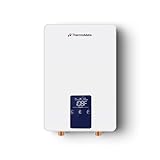
The ThermoMate 6kW is the honest budget answer, and the listing is unusually clear about what it is for: sink washing. That is not a limitation to work around — it is the specification that makes it useful. A 6kW point-of-use heater installed under or near a single sink gives you hot water at that sink without touching the rest of the house’s plumbing, and it costs a fraction of a whole-home install.
Who it suits: A small household with one problem location — a kitchen sink at the far end of the house from the water heater, a utility sink, a garage sink, or a bathroom that takes two minutes of running water to get warm. Also a good fit for a home where the main water heater is fine but one fixture needs its own hot water, and for anyone who wants to add hot water to a location without running a long hot line back to a central heater.
Key specs:
- 6kW rated input
- Point-of-use class — intended for a single fixture
- ETL listed, which means it has been evaluated to a recognized North American safety standard
- Compact, wall-mount body suited to under-sink or adjacent cabinet installation
- Electric resistance heating, no venting or gas line required
Strengths. The ETL listing is a real advantage at this price point. In the budget tier you will find a lot of units with no third-party safety evaluation at all, and an unlisted electrical appliance installed in a cabinet under a sink is not a place to save twenty dollars. The 6kW rating is also well matched to the task: for a sink you are not trying to fill a bathtub, you are trying to get dishwater hot in a few seconds, and 6kW is enough to do that at a modest flow with a meaningful temperature rise.
The other strength is installation simplicity relative to whole-home units. Because it serves one fixture, the plumbing run is short and the load is contained. That often means the existing circuit can be used or a single new circuit added, rather than a panel rebuild.
The trade-off. Understand the ceiling clearly: 6kW will not run a shower at full flow in a cold climate, and it definitely will not serve two fixtures. If you open a second tap, the temperature at the first one drops. Its limit is the limit of its function, not a defect.
Pros
- ETL listed — third-party safety evaluation at a budget price
- Genuinely compact; fits under-sink or in a nearby cabinet
- Single-fixture design keeps plumbing and wiring short and cheap
- No venting, no gas, no flue — works in interior spaces
- Ideal fix for one cold or slow fixture without touching the central system
Cons
- Cannot serve a shower and a sink at the same time
- Not a whole-home solution under any circumstances
- Temperature rise is limited at higher flow rates
- Budget-tier build and support network compared with Rheem
Compared with the nearest alternative: The 110V 3000W under-sink unit is cheaper in electrical terms and can run on a standard 120V circuit, but at 3kW it delivers roughly half the heating power. If you have 240V available at the location and want the sink to actually get hot fast, the ThermoMate 6kW is the better buy. If you have no 240V and a standard outlet is all you have, drop to the 3kW unit and accept slower, lower-volume hot water.
3. Rheem 11kW Multi Fixture Tankless Electric Water Heater 240V – Best Mid-Range for a One-Bathroom Home
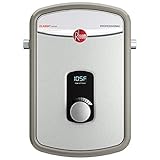
The 11kW Rheem is the sensible center of this whole category. It is described as a multi-fixture unit at 240V, which puts it precisely in the zone where a one- to three-person household with a single bathroom actually lives: enough capacity for a shower plus a kitchen sink, not enough to promise two showers at once.
Who it suits: A one-bathroom house or apartment with two or three occupants who mostly shower on a schedule. Also the right pick for a small home where the panel can support a mid-size 240V load but not a 24kW whole-home unit — which describes a very large share of older housing stock. If you are replacing a tank heater and want the space back without paying for an electrical service upgrade, this is the logical first candidate.
Key specs:
- 11kW rated input at 240V
- Multi-fixture class — designed to serve more than one fixture, within limits
- Requires dedicated 240V wiring; not a plug-in appliance
- Tankless, wall-mounted, no standby loss
- Rheem brand support and documentation
Strengths. This is the unit that most often gets the answer right in a small household, because it matches capacity to reality instead of to marketing. Eleven kilowatts is enough to run a shower at a normal flow rate with a solid temperature rise, and it is enough to run a kitchen sink or dishwasher at the same time without a dramatic temperature collapse in a temperate climate. In a cold-inlet climate, simultaneous use will be tighter, and that is worth planning for.
The second strength is that it sits on a comfortable part of the electrical curve. It is a real 240V appliance requiring real wiring, but it is far less likely than a 24kW unit to trigger a service upgrade. For a lot of small houses, that difference is the entire budget.
The trade-off. You give up simultaneity. Two showers running at once will not hold temperature on 11kW. If your household’s mornings overlap hard, this is a compromise you will feel every day.
Pros
- Well-matched to one-bathroom, two-to-three-person households
- Much lower chance of requiring an electrical service upgrade than a 24kW unit
- Handles a shower plus a light second fixture in temperate conditions
- Established brand with documented install requirements
- Frees the closet space a tank heater occupies
Cons
- Not enough for two showers at once
- Cold-inlet climates will see a reduced maximum shower flow
- Still requires dedicated 240V circuits and an electrician
- Less headroom for future household growth than the RTEX-24
Compared with the nearest alternative: The RTEX-24 is the same brand and the obvious step up — more than double the capacity, at the cost of far heavier electrical requirements. If your panel can carry it and your household overlaps, the RTEX-24 is the better long-term buy. If it cannot, the 11kW Rheem is the correct answer and the NOVIEEX 18kW is the middle option if you want more headroom without going all the way to 24kW.
4. 110V 3000W Tankless Electric Under Sink Heater – Best for Locations With Only Standard Outlets

This is the unit for the constraint case. At 3kW on 110V, it runs on the kind of circuit a small household already has in most rooms, which makes it the only option here for a location where running 240V is impractical — a finished basement, a rented space, a detached garage, or a bathroom on the far side of a house with no realistic path back to the panel.
Who it suits: Renters and homeowners who need hot water at a single sink and cannot justify a new 240V circuit. Also useful in outbuildings, workshops, and any spot where the alternative is a kettle or a cold tap. If you are comparing it against a 240V unit and you do have 240V available, buy the 240V unit — this one only wins when voltage is the binding constraint.
Key specs:
- 3kW rated input
- 110V/120V class — standard household circuit voltage
- Under-sink, point-of-use installation
- Instant-heating design, tankless
- Compact body intended for cabinet mounting
Strengths. The voltage class is the whole product. A 110V tankless heater opens up locations that are otherwise closed off, and it does so without an electrician running new cable through finished walls. For a small household with one annoying cold fixture and a limited budget for plumbing work, this solves the problem at the lowest total installed cost of anything in this roundup.
It is also genuinely simple: short plumbing run, existing-style circuit, small wall-mount body. There is no flue, no gas line, and no tank to drain.
The trade-off. Physics is not negotiable here. At 3kW on 110V, the temperature rise you can achieve drops steeply as flow increases. This is a hand-washing and light-task heater. It will not deliver a satisfying shower, and it will not fill a sink fast if the inlet water is very cold. Treat the flow rate as the variable you control: slower flow, hotter water.
Pros
- Runs on standard 110V/120V service — no 240V run required
- Lowest barrier to installation of anything in this comparison
- Genuinely compact and cabinet-friendly
- No venting, no gas, no tank
- Excellent fit for rentals, outbuildings, and retrofit locations
Cons
- Lowest heating capacity of the group
- Temperature rise falls off quickly at higher flow
- Single-fixture only, with no realistic second-tap support
- Not suitable as a primary shower heater in most climates
Compared with the nearest alternative: The CAMPLUX 4.5kW 120V is the step up — same voltage class, but 4.5kW instead of 3kW, which buys noticeably more temperature rise at the same flow. If you have 120V available and want more hot water from a standard circuit, the CAMPLUX is the better choice. The 3kW unit wins only on being the least demanding option available, and on being adequate for hand-washing and light sink duty.
5. CAMPLUX 4.5kW 120V Point of Use Tankless Water Heater – Best for Cabins, RVs, and Tight Installs

The CAMPLUX 4.5kW is the strongest 120V option in this roundup, and the listing states its intent plainly: point-of-use, space-saving, for a sink. CAMPLUX is an established name in outdoor and off-grid water heating, which is exactly the context where a 120V point-of-use unit makes the most sense — a cabin, an RV, a tiny house, a workshop, or a bathroom that needs its own supply.
Who it suits: Small households in unconventional housing, anyone with a 120V-only location who wants more hot water than a 3kW unit gives, and buyers who value a compact body because the install space is genuinely tight. Also a reasonable choice for a single bathroom in a small home where the shower is low-flow and the inlet water is not brutally cold.
Key specs:
- 4.5kW rated input
- 120V — standard North American household voltage
- Point-of-use, instant hot water design
- Space-saving body suited to compact installations
- CAMPLUX brand, established in outdoor and portable water heating
Strengths. The 4.5kW rating is the sweet spot for 120V. It is meaningfully more powerful than the 3kW units while remaining within the class of load a dedicated 120V circuit can carry, which means you get a better temperature rise without changing voltage classes. For a low-flow shower in a mild climate, or for a sink where you want genuinely fast hot water, that difference is noticeable.
The brand context matters too. CAMPLUX’s product line is built around installations where conventional plumbing does not reach — cabins, RVs, outdoor showers. That experience translates into compact form factors and straightforward hookups, which is exactly what a small or unconventional household needs.
The trade-off. Same ceiling as every 120V unit: one fixture, moderate flow, and a temperature rise that depends heavily on how cold the incoming water is. In a northern winter with 40°F inlet water, a 4.5kW heater at a full shower flow will produce a lukewarm result. Reduce the flow and it gets hot.
Pros
- Best capacity in the 120V class here
- Established brand in off-grid and outdoor water heating
- Compact, space-saving body for tight installs
- Runs on standard household voltage
- Good fit for cabins, RVs, tiny homes, and workshops
Cons
- Still single-fixture only
- Performance depends heavily on inlet water temperature
- Not a whole-home solution
- Fewer service options than a mainstream plumbing brand
Compared with the nearest alternative: The 110V 3000W under-sink unit is the cheaper, lower-capacity option in the same voltage class — pick it if cost or circuit capacity is the hard limit. The CAMPLUX 4.5kW is the better heater for roughly the same installation constraints, and it is the one to choose if you want a 120V location to actually produce hot water at a usable rate. Against the ThermoMate 6kW, the CAMPLUX gives up heating power in exchange for not requiring 240V, which in a cabin or RV is usually the right trade.
6. Mini Tankless Under Sink 3kW 120V Plug-In Heater – Best for Hand-Wash Sinks With Easy Controls

This unit occupies a specific and defensible niche: a 3kW, 120V, plug-in-class under-sink heater with an LED digital display, a large control knob, and an IPX4 rating. The feature set is aimed at a user who wants to see and set the temperature directly rather than accept whatever the unit decides.
Who it suits: A small household where the under-sink location is a hand-wash or light-duty sink — a powder room, a laundry sink, a workshop sink — and where the person using it wants a clear display and a physical knob rather than hidden controls. The IPX4 rating indicates protection against splashing water, which is a sensible attribute for a unit mounted in a cabinet beneath a sink.
Key specs:
- 3kW rated input
- 120V plug-in class
- LED digital display with a large control knob
- IPX4 water-splash protection rating
- Mini tankless, under-sink, multi-purpose design
Strengths. The interface is the differentiator. A digital display that shows setpoint or outlet temperature, combined with a large knob, makes a point-of-use heater much easier to live with than a unit with no feedback — you can see what you have set and adjust without guesswork. For a household where multiple people use the same sink and have different preferences, that is a practical advantage rather than a gimmick.
The IPX4 rating is also worth taking seriously. Under-sink cabinets are damp environments and plumbing leaks happen; a heater rated for splash exposure is a better fit for that location than an unrated unit. Combined with the 120V plug-in class, this becomes an easy retrofit for a sink that currently has no hot water.
The trade-off. Three kilowatts on 120V is the low end of usable, so this shares the fundamental limitation of every unit in this voltage class. It is a hand-washing and light-task heater. It is also priced at a mid-range tier despite its modest heating capacity, which is a premium you are paying for the controls, the display, and the IPX4 rating rather than for power.
Pros
- LED display and large control knob make temperature setting straightforward
- IPX4 splash protection suits a damp under-sink cabinet
- 120V plug-in class keeps installation simple
- Compact mini tankless body
- Good multi-user ergonomics for a shared sink
Cons
- Only 3kW — the lowest capacity tier here
- Mid-range pricing for budget-tier heating power
- Single fixture, moderate flow only
- Generic branding means less documented service support
Compared with the nearest alternative: The 110V 3000W under-sink heater has essentially the same heating capacity but without the display, knob, and IPX4 rating. If those features matter to you, this unit is worth the step up in price; if you just want hot water at a sink with the least fuss, the simpler 3kW unit does the same job. Against the CAMPLUX 4.5kW, this one loses on raw heating power and wins on controls and splash protection.
7. NOVIEEX 18kW 240V Tankless Electric Water Heater – Best Premium Pick When 24kW Is Too Much

The NOVIEEX 18kW is the considered premium choice. Its listing describes a three-second startup and a maximum flow rate of about 4.9 GPM, which is whole-home territory, but at 18kW rather than 24kW. That gap is the entire point: it delivers most of the capability of a full-size whole-home heater with a smaller electrical demand, which is exactly what a small household with an aging panel needs.
Who it suits: A one- to three-person home with two fixtures that sometimes overlap, where the panel can carry a substantial 240V load but not the heaviest one available. Also a good fit for someone replacing a tank heater who wants a real whole-home upgrade without committing to a service upgrade, and for buyers who want fast startup because they notice the delay in a point-of-use unit.
Key specs:
- 18kW rated input at 240V
- Stated maximum flow rate approximately 4.9 GPM
- Stated startup time of about three seconds
- Whole-home intent, tankless, wall-mounted
- Requires dedicated 240V circuits
Strengths. The 4.9 GPM flow figure is the number to focus on. It is in the range where a normal shower plus a kitchen tap is a realistic simultaneous load, and it is well above what any point-of-use unit in this roundup can deliver. If your household’s hot water demand is real but moderate — one bathroom plus a kitchen, with occasional overlap — 18kW covers it without the panel-busting draw of a 24kW unit.
The three-second startup claim addresses a common complaint about point-of-use electric heaters: the wait. Faster startup means less cold water down the drain at the beginning of every use, which over a year of daily showers is a small but genuine efficiency and convenience gain.
The trade-off. Eighteen kilowatts is still a significant electrical load requiring dedicated 240V circuits, so unlike the 120V units this is not a casual install. It also sits below the RTEX-24 on absolute capacity, so in a genuinely simultaneous two-shower household the RTEX-24 has more headroom. And at 18kW you are paying premium-tier pricing for a unit that is deliberately not the biggest, which is a rational choice only if your panel is the constraint.
Pros
- Whole-home capacity at a lower electrical draw than a 24kW unit
- Stated ~4.9 GPM maximum flow supports shower plus second fixture
- About three-second startup reduces initial cold-water waste
- Strong fit for small homes with limited panel capacity
- Substantial upgrade over any point-of-use unit here
Cons
- Premium-tier pricing without being the highest-capacity option
- Still requires dedicated 240V wiring and likely an electrician
- Less simultaneous-fixture headroom than the RTEX-24
- Newer brand with a shorter track record than Rheem
Compared with the nearest alternative: The Rheem RTEX-24 is the direct competitor and out-specs it on capacity — buy the Rheem if your service can carry 24kW. The NOVIEEX wins precisely when it cannot, offering whole-home performance at 18kW with a fast startup. Against the Rheem 11kW, the NOVIEEX is a clear step up in capacity for a modest step up in electrical demand, making it the better middle-ground premium pick for a household that is outgrowing 11kW.
How to Choose
The single most important decision is not the brand, the feature list, or the price. It is the split between point-of-use and whole-home, and it is determined almost entirely by what your household demands simultaneously. Get that wrong and no amount of shopping research will save the install.
Step one: count simultaneous fixtures, not total fixtures. A three-bedroom house with one bathroom has fewer simultaneous hot water demands than a one-bedroom apartment with two people who both shower at 7 a.m. Count the fixtures that run at the same time in your actual routine. One fixture at a time means point-of-use is viable. Two overlapping fixtures means you need a multi-fixture whole-home unit.
Step two: understand the temperature-rise relationship. Every electric tankless heater has a fixed kW rating, and the temperature rise it can deliver decreases as flow increases. The relationship is roughly proportional: double the flow, halve the temperature rise at a given power. This is why a 3kW unit gives satisfying hot water at a trickle and lukewarm water at full tap. When you read a kW rating, translate it in your head into “how much flow can I run while still getting hot enough water in my climate?” Cold-inlet winters demand more power for the same shower.
| Household situation | Voltage / class | Realistic simultaneous load | Typical price tier |
|---|---|---|---|
| One sink, 120V only available | 110–120V point-of-use, 3–4.5kW | One tap, hand-washing flow | Budget to mid-range |
| One sink or one low-flow shower, 240V available | 240V point-of-use, 6kW | One fixture at moderate flow | Budget |
| One bathroom plus kitchen, mild climate | 240V multi-fixture, 11kW | Shower plus light second fixture | Mid-range |
| Two fixtures overlapping, panel constrained | 240V whole-home, 18kW | Shower plus kitchen tap at ~4.9 GPM max | Premium |
| Two showers overlapping, full service available | 240V whole-home, 24kW | Two showers plus a tap | Premium |
Step three: audit your electrical service before you shop. This is where small households get surprised. A point-of-use 120V unit is roughly in the same electrical neighborhood as a small appliance and usually fits existing capacity. A 6kW 240V unit needs a dedicated circuit. An 11kW unit needs a substantial dedicated 240V circuit. An 18kW or 24kW whole-home unit typically needs multiple dedicated circuits and may require a service upgrade in an older home — which can cost more than the heater. Before you order anything above the point-of-use class, look at your panel: its amperage rating, how many breaker spaces are free, and whether the service entry can support the added load. If you are not comfortable making that judgment, have an electrician look at it. This is the step that decides whether your project costs one number or three.
Step four: match the unit to the location, not just the house. Small households often have one awkward location — a far sink, a basement bathroom, a garage. A point-of-use heater placed at the fixture is frequently a better answer than a bigger central unit, because it eliminates the long hot-water run and the wait for hot water at the tap. If your complaint is “it takes forever to get hot water here,” a point-of-use unit at that spot is the targeted fix. If your complaint is “there is not enough hot water overall,” you need a whole-home unit.
Step five: weigh tankless against a tank for a genuinely small household. Tankless advantages are real: no standby loss from keeping 40 or 50 gallons hot around the clock, no tank to leak or replace, and reclaimed closet space. But for a one-person household with low hot water use, a small tank heater has a lower installed cost because it does not demand the same electrical work. Tankless pays off most where hot water demand is high enough that standby loss matters, or where space is genuinely at a premium. Be honest about which situation you are in.
Step six: plan for maintenance and water quality. Electric tankless units have no tank to flush and no anode rod to replace, which is their main ownership advantage. What they do have is a heat exchanger and internal waterways that scale up in hard water areas. In a hard water region, expect to need periodic descaling — typically an annual or biennial flush depending on hardness — and consider a whole-house or point-of-use water softener if scale becomes a problem. Scale reduces flow and heat transfer, and on a tankless unit that means degraded performance long before outright failure.
Step seven: check the consumables and failure points. Electric tankless heaters have few moving parts, which is why they last. The components that wear are the heating elements, the flow sensor, and the control board. In hard water, scale on the elements is the most common cause of declining performance. Buying from a brand with available replacement parts and published service documentation — Rheem is the clearest example in this list — makes the difference between a repair and a replacement when something eventually fails.
Step eight: think about the upgrade path before you commit. If there is any chance your household will grow, or that you will add a bathroom, choose the unit that leaves room to grow rather than the one that just barely meets today’s demand. Going from a point-of-use unit to a whole-home unit means new plumbing scope and new wiring scope. Going from 11kW to a larger whole-home unit on the same rough-in is a much smaller job. The difference in upfront cost between adequate and adequate-with-headroom is often small compared with the cost of doing the work twice.
Step nine: read the listing’s own description of intent. Manufacturers are usually explicit about whether a unit is point-of-use or whole-home, and how many fixtures it targets. When a listing says “for sink washing,” believe it. When a listing gives a maximum flow rate in GPM, that is your best concrete guide to whether it can serve a shower. Use those stated figures rather than generic category claims, and size generously rather than exactly — a unit running below its ceiling gives steadier temperature than one running at it.
Put together, the decision comes down to this: pick the voltage class your wiring can support, pick the capacity your simultaneous demand requires, add headroom for the next few years, and prefer brands with documented installation requirements and available parts. Everything else — the display, the knob, the finish — is secondary.
Frequently Asked Questions
How many kW do I need for a one- to three-person household?
For a single point-of-use sink, 3kW to 6kW is the working range. For a whole-home unit serving one bathroom plus a kitchen, 11kW is the practical minimum in a temperate climate. If two showers can overlap, plan on 18kW or more. The determining factor is how many fixtures run at the same time and how cold your incoming water is in winter.
Can a 120V tankless heater run a shower?
It can run a low-flow shower in a mild climate, but the temperature rise at 3kW to 4.5kW is limited and drops quickly as flow increases. In cold-winter conditions with cold inlet water, a 120V unit at full shower flow will typically produce lukewarm water. Reducing the flow rate raises the outlet temperature, so the practical answer is: it works for a sink reliably, and for a shower only with a low-flow head and moderate expectations.
Do tankless water heaters save money on a small household’s energy bill?
They eliminate standby loss, which is the energy a tank heater uses continuously to keep stored water hot. That saving is proportional to how much standby loss your tank was wasting, so it is larger for a big tank in a mild climate and smaller for a well-insulated small tank. The bigger financial factor is usually the installation cost of the electrical work, which can offset years of operating savings in a small household. Run the numbers with your actual electrical rates before assuming the switch pays for itself quickly.
Will I need to upgrade my electrical panel?
Not necessarily, but it depends entirely on the kW rating. A 3kW to 4.5kW 120V point-of-use unit usually fits existing capacity. A 6kW 240V unit needs a dedicated circuit. An 11kW unit needs a substantial dedicated circuit. An 18kW or 24kW whole-home unit often needs multiple dedicated circuits and may require a service upgrade in older housing. Have an electrician assess your panel before you buy anything above the point-of-use class.
Can I install a tankless water heater myself?
Point-of-use electric units with simple plumbing and an existing suitable circuit are within reach of a confident DIYer, and the work is mostly mounting the unit and making two water connections plus the electrical hookup. Anything requiring new 240V circuits, panel work, or a whole-home installation should be done by a licensed electrician and often a plumber. Electrical work is not a place to learn by doing, and an improperly wired high-amperage appliance is a genuine hazard.
Do electric tankless water heaters need venting?
No. Because they heat with electric resistance elements rather than combustion, they produce no exhaust gases and require no flue, vent, or gas line. That is a significant advantage for a small household, because it means the unit can be mounted in an interior closet or under a sink without ductwork or clearance for a vent.
How do I maintain a tankless water heater in a hard water area?
Descale the unit periodically, typically annually or every other year depending on how hard your water is. In hard water, mineral scale builds up on the heating elements and in the internal waterways, which reduces both flow and heat transfer. The symptom is gradual: hot water that used to be fine becomes slightly less hot and slightly slower. If scale is a persistent issue, a water softener upstream of the heater is the more durable fix.
What wears out first on an electric tankless water heater?
The heating elements and the flow sensor. Scale accumulation on the elements is the leading cause of declining performance in hard water areas, and the flow sensor can eventually fail or become fouled. The control board is the other common replacement part. There is no tank to leak, no anode rod to replace, and no stored water to keep hot, which is why the overall service life tends to be longer than a tank heater’s.
Is a point-of-use unit or a whole-home unit better for a small house?
It depends on where the problem is. If one fixture is slow or cold while the rest of the house is fine, a point-of-use unit at that fixture is the cheapest and most effective fix, and it avoids new high-amperage wiring. If hot water is insufficient overall — running out during showers, dropping temperature when a second tap opens — you need a whole-home unit sized to your simultaneous demand.
The Bottom Line by Household
If your small household has two bathrooms and people who shower at overlapping times, buy the Rheem RTEX-24, provided your electrical service can carry it — it is the only unit here with real headroom for simultaneous fixtures.
If you have a single bathroom and want a whole-home unit without risking a panel upgrade, the Rheem 11kW is the safest middle choice, and the NOVIEEX 18kW is the step up if you want more flow with a stated maximum around 4.9 GPM while keeping the electrical draw below 24kW.
If your problem is one specific sink or one specific location, go point-of-use. The ThermoMate 6kW is the best value where 240V is available, and the CAMPLUX 4.5kW is the best choice where only standard 120V service reaches. The 3kW 110V under-sink unit is the last resort for locations with no 240V and no realistic path to adding it, and the 3kW 120V plug-in with the LED display is worth its premium only if you specifically want visible temperature control and IPX4 splash protection under the sink.