When Is the Best Time to Buy a Cordless Drill?
What's inside
As an Amazon Associate I earn from qualifying purchases. This post may contain affiliate links at no extra cost to you.
The best time to buy a cordless drill is usually during a major sale—especially Black Friday, Cyber Monday, and the weeks around Father’s Day. But the calendar matters less than the kit: a low-priced drill with a weak battery or the wrong chuck can cost more in frustration than a slightly pricier set that fits the work.
As an Amazon Associate we earn from qualifying purchases at no extra cost to you.


The best sale periods
Black Friday and Cyber Monday tend to bring the deepest discounts on drill-and-driver kits, particularly from large brands with broad battery platforms. Father’s Day is another strong window, as are spring home-improvement promotions. Amazon Prime Day can be worthwhile, but compare the price with the kit’s usual selling price; a crossed-out list price is not proof of a genuine bargain.
Sales often apply to bundles rather than bare tools. That can be excellent value if you need batteries and a charger, but a poor deal if you already own compatible batteries. Check the package contents before comparing prices: a drill, two batteries, charger, and case is not directly comparable to a bare tool.
| Buying window | What to expect | Best for |
|---|---|---|
| Black Friday and Cyber Monday | Frequent kit discounts and bundle offers | First-time buyers and shoppers who need batteries |
| Father’s Day and spring sales | Promotions on homeowner and midrange tool kits | People who can wait a few weeks for a planned project |
| Prime Day and other retailer events | Short-lived deals; prices vary widely | Buyers who have tracked a specific kit beforehand |
| Any time, clearance or refurb sale | Potentially low prices, but limited stock or warranty terms | Flexible buyers who verify condition and coverage |
Buy before the project, not in the middle of it
If you have a project coming up, buy a few weeks ahead rather than waiting until a bit breaks. That gives you time to compare kits, charge the battery, and confirm the drill has enough power and the right accessories. It also avoids paying full price for whatever is left at a local store on a Saturday afternoon.
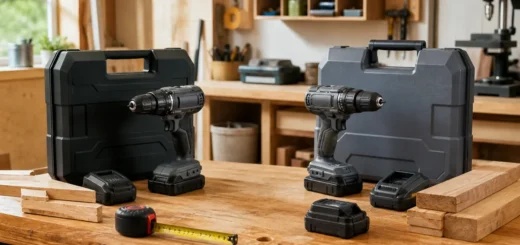
For occasional jobs—hanging shelves, assembling furniture, or drilling pilot holes in wood—a basic 12-volt drill is often enough. It is lighter and easier to control overhead than many 18- or 20-volt tools. A 12-volt cordless drill kit can be a sensible budget choice when the work is light and the kit includes a battery and charger.
For frequent work, long screws, larger holes, or drilling into masonry, look at a 18- or 20-volt drill. Voltage labels are not a direct measure of performance across brands, but these tools generally offer more capacity and a wider selection of batteries. If masonry drilling is part of the job, a hammer-drill setting can help with brick and block; it is not a replacement for a rotary hammer when drilling many large holes in concrete.
Compare the whole kit, not just the drill
A kit’s value depends on what comes with it. One small battery may be fine for a shelf installation, but it can interrupt a day of work if you are driving dozens of screws. Two batteries let one charge while the other is in use. A second battery and charger can be worth more than a large assortment of low-quality bits.
Before buying, check battery capacity, usually stated in amp-hours (Ah), the charger, the warranty, and whether the tool is sold bare or as a kit. Capacity affects runtime, not how long the drill can safely be pushed through every task. A bigger battery adds weight, which matters when working overhead. Also check whether the chuck is 3/8 inch or 1/2 inch: the larger chuck accepts bigger shanks, though a homeowner doing light work may never need that capacity.
Battery compatibility can make one brand a better deal than another. If you already own several tools on a platform, a bare drill may be the cheapest sensible purchase. If this is your first tool, compare the cost of a starter kit with what replacement batteries cost. A discounted drill is less attractive if its battery platform is expensive or difficult to find locally.
When a cheap drill is enough
A lower-cost drill is fine for infrequent household jobs, especially if it comes with a battery, charger, and a reasonable return policy. You do not need a premium brushless model to assemble flat-pack furniture or hang a few pictures each year. Spend more when the tool will see regular use, when you need longer runtime, or when a weak chuck or short battery life would slow down the work.
For everyday homeowner use, a 18- or 20-volt drill-driver kit is a practical middle ground. Compare kits from brands you can buy batteries for, rather than paying extra for a familiar badge without a useful warranty or battery advantage.
Watch for common bargain-kit limitations: a single low-capacity battery, a slow charger, a chuck that slips under load, or a drill sold without a battery despite looking like a complete kit in the listing photo. Reviews can flag recurring failures, but focus on specific complaints and verify that they refer to the same kit version.
How to judge whether a deal is real
Track the exact kit for a few weeks if the purchase is not urgent. Retailers may change the bundle or product number while keeping a similar-looking listing, so compare the battery count and capacity, charger, and included accessories—not just the headline price. A simple price history tool can help reveal whether a claimed sale is close to the normal price.
Set a target based on your needs. If you need a drill now for light repairs, a fair kit at today’s price is better than waiting months to save a small amount. If you are buying a platform starter kit, waiting for a major sale can make more sense because the discount applies to batteries and a charger you will use with future tools.
Make the purchase fit the work
Choose the drill first by task, then by battery platform and kit contents, and only then by sale price. For light, occasional work, a basic 12-volt kit is often enough. For regular DIY use, a midrange 18- or 20-volt kit with two batteries is a safer buy. Black Friday, Cyber Monday, Father’s Day, and spring promotions are good times to shop, but a well-matched kit at a reasonable price beats a badly matched tool at a supposed discount.