How to Compare Tool Prices After Rebates and Store Credits
What's inside
As an Amazon Associate I earn from qualifying purchases. This post may contain affiliate links at no extra cost to you.
Why the shelf price isn’t the price
A drill listed at $199 may cost less—or more—than a $179 alternative once rebates, store credits, required bundles, and tax are accounted for. The tricky part is that these offers don’t all reduce your bill in the same way. A rebate may arrive weeks later as cash or a prepaid card. Store credit can only be spent at one retailer, often before it expires. And a “free battery” bundle is useful only if you need that battery.
Compare the amount you’ll actually pay today, the value of benefits you can realistically use, and the risk of not receiving them. Keep those figures separate rather than treating every advertised dollar as equivalent.
Start with the out-of-pocket cost
First, calculate the checkout total: tool price plus shipping and sales tax, minus discounts applied at checkout. Tax rules vary, but in many places you pay tax on the purchase price before a rebate or store credit is applied. Check the cart’s final total rather than estimating tax from the advertised price.
Then list each later benefit separately. Record its amount, form, restrictions, expiration date, and what you must do to claim it. A mail-in rebate that requires a receipt, serial number, and online form is not the same as an instant discount. If you miss a deadline or enter the wrong serial number, the advertised rebate may be worth zero.
For example, suppose a $200 tool has a $20 instant discount and a $30 mail-in rebate. You pay $180 before tax. If the rebate is valid and arrives, the effective pre-tax cost is $150. If it doesn’t, your cost remains $180. Use both numbers when deciding: the likely cost and the worst-case cost.
Value store credit realistically
Store credit is not cash. Value it at the amount you’d otherwise spend at that store before it expires—not its printed balance. If you routinely buy consumables there, a $25 credit you’ll use on sandpaper next month may be close to $25 in value. If you’d have to spend $60 on something you don’t need to use the credit, its practical value is much lower.
Check whether the credit can be combined with other discounts, whether it excludes certain brands or sale items, and when it expires. Some promotions issue credit only after a return period. If you return the tool, the retailer may deduct the credit or cancel it, so don’t count it as guaranteed savings until you understand the terms.
Compare offers side by side
Here’s a simplified comparison for two kits. Assume the credit is usable and the rebate is successfully claimed. Figures exclude tax because checkout taxes differ by location.
| Offer | Checkout price | Later benefit | Effective cost | Main catch |
|---|---|---|---|---|
| Kit A | $180 | $30 mail-in rebate | $150 | Requires a valid claim |
| Kit B | $190 | $25 store credit | $165 | Credit expires in 60 days |
Kit A is cheaper if the rebate comes through. Kit B may be the safer value if you don’t want to handle a claim and already have a planned purchase at that store. If you would not use the credit, Kit B costs $190 in practical terms. This is why a single “net price” can hide the decision that matters.
Price the bundle you will use
Don’t assign full retail value to a bonus battery, bag, or accessory just because the promotion does. Estimate what you would actually pay for it separately. A second battery can be valuable if you work away from an outlet and already own compatible tools. It may be nearly worthless to a homeowner who uses a drill for one short project every few months.
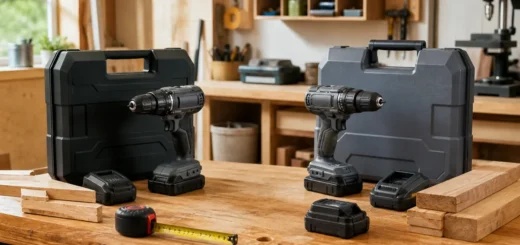
Compare kits with the same basics: tool, battery capacity, charger, and warranty. A bare tool can be a bargain if you already own batteries on that platform; it is a poor deal if starting from scratch means buying a charger and battery at full price. For occasional household jobs, a cordless drill kit with one battery may be enough. For frequent work, price the extra battery you’ll need instead of relying on a temporary bundle.
Account for rebate and credit risk
Before counting a rebate, check the start and end dates, eligible sellers, qualifying product numbers, submission deadline, and required proof of purchase. Save the receipt and confirmation email. Photograph any packaging label or serial number before recycling the box. A claim can be rejected if the purchase falls outside the promotion window or the submitted product code doesn’t match.
If a rebate is substantial, calculate a conservative case in which it fails. For a $40 rebate on a $250 tool, the difference between the promised price and the amount you pay is 16% of the purchase price. Decide whether you’d still be comfortable paying the full checkout amount. If not, choose an instant discount or wait for a sale that lowers the price without paperwork.
Time your purchase
Seasonal promotions can make a real difference, but compare the same kit and don’t rush just because a countdown timer is running. Tool discounts often appear around major retail holidays and during seasonal project periods. If you can wait, note today’s checkout price and set a target based on competing offers. A $15 saving may not justify buying six months early, especially if the tool’s battery warranty starts at purchase.
For tools you use often, a modest discount on the right platform can beat a deeper discount on an incompatible kit. If you need a compact, occasional-use option, compare a cordless impact driver kit with the drill you already own before paying for overlapping equipment. For cutting jobs, a cordless circular saw kit may offer better value if its battery system matches your other tools.
Use a simple buying rule
Write down four figures: checkout total after instant discounts, expected rebate, realistic store-credit value, and worst-case cost if later benefits fail. Compare warranty coverage and kit contents alongside those numbers. Buy when the worst-case cost is acceptable and the likely savings are meaningful for your budget—not merely because the advertised offer has the biggest rebate.