How to Choose a Tool Set That Does Not Include Unnecessary Pieces
What's inside
As an Amazon Associate I earn from qualifying purchases. This post may contain affiliate links at no extra cost to you.
A tool set is often priced by its piece count, but piece count is a poor measure of value. A 100-piece kit may include 40 sockets, several duplicate screwdrivers, and bits too short for practical use. A smaller 50-piece set can be more useful if it covers the fasteners and jobs you actually encounter.
The goal is not to buy the largest kit. It is to buy a useful starting selection without paying for pieces that will sit untouched in a drawer.
Start With the Jobs You Actually Do
Make a list of the next five jobs you expect to handle. Common examples include assembling furniture, tightening loose hardware, maintaining a bicycle, changing car batteries, repairing appliances, or doing basic household fixes. Then list the fasteners involved: Phillips screws, slotted screws, hex bolts, nuts, Torx screws, or specialty fasteners.
This quickly exposes unnecessary pieces. Someone assembling furniture may need Phillips drivers, a small hex-key set, and a tape measure. A homeowner working on plumbing may need adjustable pliers, a basin wrench, and an adjustable wrench instead. Neither person needs a large collection of deep impact sockets.
Also consider the material you work on. A basic set is fine for furniture and light household repairs. Frequent work on vehicles, outdoor equipment, or construction materials requires stronger handles, better chrome finish, and more accurate socket sizes.
Separate Core Tools From Filler
Useful tools are those you can identify by job and size. Filler pieces are often included to inflate the package count. Typical examples include several nearly identical precision screwdrivers, tiny combination wrenches, duplicate bit holders, and sockets in sizes rarely used by the intended buyer.
Before buying, check the product contents rather than relying on the headline number. A “120-piece” set might contain 60 screwdriver bits, 20 sockets, and 15 hex keys. That may be reasonable if you need bits, but it is not equivalent to 120 full-size hand tools.
| Tool set type | Good for | Common excess | Typical sensible budget |
|---|---|---|---|
| Basic household set | Furniture, wall hardware, minor repairs | Duplicate bits and tiny wrenches | $25–$60 |
| Mechanic socket set | Cars, lawn equipment, machinery | Rare metric or SAE sizes, oversized drive adapters | $60–$180 |
| Bit and driver set | Cabinet hardware, electronics, light assembly | Repeated Phillips and slotted bits | $15–$50 |
| Plier and wrench set | Gripping, turning, and holding parts | Several low-quality pliers with similar jaws | $35–$100 |
Choose Sizes Before Brands
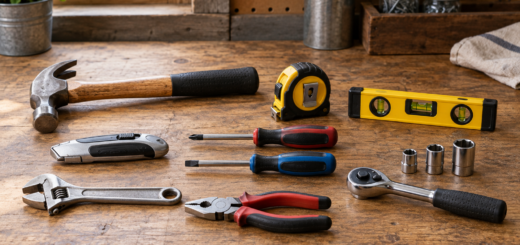
For a general household kit, prioritize a medium Phillips screwdriver, a small Phillips screwdriver, two slotted screwdrivers, a 6- or 8-inch adjustable wrench, slip-joint pliers, needle-nose pliers, diagonal cutters, a tape measure, a utility knife, and a small level. Add a hammer and hex keys if your furniture or fixtures use them.
For a socket set, decide whether your work is primarily metric, SAE, or both. Modern cars and imported equipment commonly use metric fasteners, while older American equipment may use SAE sizes. A compact metric set covering roughly 8 mm through 19 mm is more useful than a mixed set that skips common sizes. Missing one size in the middle can force you to use pliers, which damages the fastener and increases the chance of slipping.
Choose drive size based on the work. A 1/4-inch drive set is compact and suitable for small fasteners. A 3/8-inch drive set is the best general-purpose choice for many automotive and household jobs. A 1/2-inch drive set is built for larger fasteners but adds weight and encourages over-tightening on small bolts.
Judge Quality Where It Matters
Do not pay premium prices for features that do not affect your work. A basic screwdriver with a comfortable handle can last for years in occasional household use. The same inexpensive tool may fail quickly if used to pry, strike, or loosen seized screws every day.
Look for six-point sockets when loosening tight hex bolts. They contact the flat sides of the fastener and are less likely to round the corners than twelve-point sockets. Twelve-point sockets are more convenient when access is limited, but they need a reasonably clean and undamaged fastener.
For ratchets, check the direction switch, handle grip, and how smoothly the mechanism engages. A very fine-tooth ratchet can work in tight spaces, but its smaller internal teeth may not tolerate abuse as well as a coarser, sturdier mechanism. Avoid using a ratchet as a breaker bar; the mechanism can fail under high torque.
Chrome hand-tool sets are not automatically suitable for impact drivers or impact wrenches. Impact tools require impact-rated sockets and accessories. Using ordinary chrome sockets with an impact wrench can crack the socket, especially on high-torque settings.
Buy Individual Tools Strategically
A small starter kit plus individual replacements is often cheaper than a large set. If you already own screwdrivers and pliers, buying a 3/8-inch metric socket set may fill the actual gap without duplicating tools.
Likewise, a person doing furniture assembly may get better value from a hex key and screwdriver set than from a general-purpose kit containing wrenches that will rarely be used.
There is a limit to this approach. Buying five separate tools at full retail price can cost more than a bundled kit, and storage cases are often cheaper when included. Compare the cost of the needed tools, not just the advertised set price. A $40 kit with eight useful pieces beats a $25 kit with three useful pieces, but a $90 kit is poor value if you would have bought only four $8 tools.
Time the Purchase and Check the Warranty
Tool sets are commonly discounted during Black Friday, holiday promotions, Father’s Day sales, and spring home-improvement events. Compare the sale price with the normal price over several weeks; a “40% off” label does not prove the deal is good. For occasional DIY use, buying a cheaper set during a genuine sale is usually sensible.
Pay closer attention to warranty terms when buying ratchets, pliers, or combination wrench sets. A lifetime replacement warranty has value only if the seller explains the claim process and the brand remains available. For bits and small accessories, replacement cost is often low enough that warranty coverage should not justify a major price increase.
Avoid the Wrong Set, Not Just the Cheap Set
The cheapest option is fine when the tools will see light use, the fasteners are accessible, and failure would be inconvenient rather than dangerous. Spend more when a rounded bolt could stop a repair, when you work in tight spaces, or when the tools will be used weekly.
Before checkout, count the useful pieces, verify the sizes, confirm whether the sockets are six- or twelve-point, and check that the case holds the tools securely. If you cannot name a likely job for at least 70 percent of the pieces, choose a smaller set and add specialized tools later.