How to Evaluate Tool Deals That Include Free Accessories You Do Not Need
What's inside
As an Amazon Associate I earn from qualifying purchases. This post may contain affiliate links at no extra cost to you.
A tool deal with “free” accessories can look better than a lower-priced bare tool, but the bundle is only a bargain if you will use enough of it. A $179 kit with a free light, bit set, and bag is not automatically better than a $129 tool-only package. The right comparison is the cost of the tool you need, plus the accessories you would otherwise buy—not the advertised retail value of every item in the box.
As an Amazon Associate we earn from qualifying purchases at no extra cost to you.


Start With the Tool You Actually Need
Before comparing bundles, identify the main tool and the work it must handle. For occasional shelf assembly, light drilling, and furniture repairs, a compact cordless drill may be enough. For deck construction or repeated work in hardwood, you may need more battery capacity, a stronger clutch, or a hammer-drill function.
Compare the bare-tool price first. Check the same voltage class, tool generation, battery compatibility, and included warranty. A kit that includes a low-capacity battery may be cheaper but less useful than a bare tool you pair with a larger battery you already own.
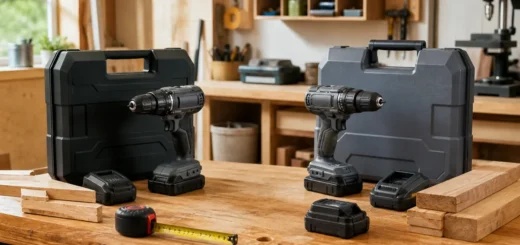
If you are starting a battery platform, compare complete starter kits rather than isolated tool prices. These cordless drill kits with a battery and charger are often the most practical entry point, especially when the battery can power several future tools.
Assign Realistic Values to Free Items
Manufacturers and retailers often calculate bundle value using the highest standalone price for each accessory. That is not the same as what the accessory is worth to you. A flashlight listed at $39 may have a useful value of $0 if you already own several lights. A branded tool bag may be worth $10 to you, even if the package claims it is worth $30.
Use three value categories:
- Needed: You would buy it within the next year.
- Useful: It could save time, but you would not pay much for it.
- Unwanted: It duplicates something you own or does not fit your work.
Give needed items their likely street price, useful items 25% to 50% of that price, and unwanted items zero. If you can sell an unwanted accessory easily, use the likely resale amount after shipping and fees—not its advertised retail price.
Compare the Real Cost
Here is a simple example. Suppose a tool-only package costs $129. A bundle costs $169 and includes a bit set advertised at $40, a light advertised at $35, and a bag advertised at $25. You need the bits, value the bag at $8, and do not need the light. If a comparable bit set costs $25, the bundle’s useful value is $33. That makes the bundle effectively $136, only $7 more than the tool-only option.
| Bundle item | Advertised value | Realistic value in this purchase | Reason |
|---|---|---|---|
| Tool bag | $25 | $8 | Useful, but common and inexpensive |
| Bit set | $40 | $25 | Comparable sets sell for less |
| Work light | $35 | $0 | Already have one |
| Total accessory value | $100 | $33 | Based on actual need and prices |
Do not subtract the full advertised accessory value from the bundle price. Use this formula instead: effective tool cost = bundle price minus realistic value of accessories you will use or resell. Then compare that result with the tool-only price.
Watch for Low-Value Accessories
Some included items are useful but deliberately cheap. A bit set may contain many sizes you will never use, soft driver bits that round out quickly, or masonry bits unsuitable for hard concrete. A small battery may run a drill for light work but become frustrating in a saw or grinder. A thin tool bag may tear under the weight of batteries and chargers.
Inspect the specifications, not just the piece count. For bits, look for the actual materials and sizes. For batteries, compare amp-hours and whether the package includes a rapid charger. For lights, check whether it uses the same battery platform and whether its output is useful for the job. “Free” accessories can also consume storage space and create replacement costs when poor-quality parts fail.
When the accessory is a consumable, estimate its useful life. A $20 abrasive wheel pack that lasts half as long as a $15 competing pack is not a saving. The same applies to saw blades, sanding discs, driver bits, and staples.
Account for Battery Platform Costs
The biggest hidden cost in cordless tools is usually the battery system. A free accessory is less important than whether the included battery is large enough for your work and whether future tools are reasonably priced.
For occasional drilling, a 1.5Ah or 2.0Ah battery can be perfectly adequate. For a circular saw, blower, reciprocating saw, or grinder, a larger battery often reduces interruptions and voltage sag. Buying a cheap kit with a small battery can lead to spending $70 or more later on a larger replacement, depending on the brand and sales cycle.
If you already own compatible batteries, a bare tool is often the best deal. Search for bare cordless drill drivers or the matching tool in your platform. The free charger in a new kit has no value if you already have two, while the extra battery may still justify the price.
Check Timing and Return Rules
Seasonal sales can change the calculation. Cordless tool bundles commonly become more attractive around major holiday promotions, Father’s Day, spring project season, and end-of-year clearance. However, compare the deal against the brand’s normal sale price, not the crossed-out list price.
Check whether the accessory promotion requires a rebate, online registration, or a separate redemption. Confirm the return policy, especially when a free item is packed as a separate product. Some retailers require the entire bundle to be returned, while others reduce the refund by the value assigned to the free accessory.
Buy the bundle when the main tool is priced competitively and at least one accessory solves a real near-term need. Choose the cheaper tool-only option when the extras duplicate what you own, have questionable quality, or lock you into a battery platform you do not plan to expand. A free accessory is a bonus; it should never be the reason you accept a worse tool or a more expensive long-term system.