How to Estimate Resale Value Before Buying an Expensive Tool
What's inside
As an Amazon Associate I earn from qualifying purchases. This post may contain affiliate links at no extra cost to you.
Resale value is part of the purchase price of an expensive tool. A $900 tool that sells for $600 after three years may cost less to own than a $600 tool that is worth only $200 when you replace it. The challenge is estimating that future value before you buy, when the seller’s marketing and the current sale price can distort your judgment.
As an Amazon Associate we earn from qualifying purchases at no extra cost to you.


Start With Real Selling Prices
Do not base your estimate on the manufacturer’s suggested retail price or on optimistic completed listings. Check what the exact model, kit, and condition have actually sold for. eBay’s sold listings, local marketplace search results, tool forums, and used-tool dealers are useful sources. Ignore active listings that have been sitting unsold for weeks.
Record at least 10 comparable sales if possible. Match the important details: bare tool versus kit, battery size, charger included, brushless versus brushed motor, age, and warranty status. A tool sold with two batteries may bring much more than the same bare tool, but the batteries also lose value and can be expensive to replace.
For a new purchase, use the real price you will pay after discounts and rebates. If a tool normally sells for $800 but you can buy it for $650 during a holiday sale, the $650 figure is your cost basis. Resale value is measured against what you paid, not against the price printed on the box.
Use a Simple Depreciation Model
Most expensive tools lose value quickly at first, then decline more slowly. A reasonable starting estimate is 20% to 35% depreciation in the first year, followed by 10% to 20% per year. Professional-grade tools with strong parts support may do better. Specialized tools with a small buyer pool may do worse.
For example, suppose you buy a $700 cordless saw kit at a sale price. If comparable one-year-old kits sell for $450 to $500, estimate its current resale value at about $475. After another two years, a realistic range might be $300 to $375, assuming the model remains supported and the batteries are healthy.
Use ranges rather than a single number. A useful ownership-cost calculation is:
Ownership cost = purchase price + accessories and repairs − likely resale proceeds − rebates.
If you pay $700, spend $80 on a specialty blade, receive a $50 rebate, and later sell the package for $350, your estimated ownership cost is $380. That is more useful than saying the tool “holds 50% of its value.”
What Protects Resale Value
Brand reputation matters, but it is not enough by itself. Buyers pay more for tools that are easy to identify, easy to service, and compatible with a current battery platform. A popular cordless platform can support resale because another user may already own its batteries and charger.
Keep the receipt, registration information, manuals, case, charger, and original accessories. These items can add $25 to $150 to the package, depending on the tool. Labeling a tool with a company asset number, removing the case, or mixing batteries from several kits makes it harder to sell.
Condition also has a practical hierarchy. A dirty exterior is usually tolerable; a cracked housing, bent shaft, damaged cord, swollen battery, or noisy gearbox is not. Battery capacity is a major issue for cordless tools. A battery that runs for half as long as new can reduce the package price more than cosmetic wear does.
Compare Tool Types Before Buying
| Tool type | Typical resale outlook | Main value risk | Best buying approach |
|---|---|---|---|
| Popular cordless platform tool | Good, often 45%–70% after two to three years | Battery condition and platform changes | Buy a kit only if you need the included batteries |
| Premium corded power tool | Moderate to good, about 35%–60% | Wear, discontinued parts, heavy shipping cost | Favor proven professional models with service parts |
| Specialty trade tool | Variable, about 25%–65% | Small buyer pool and rapid technology changes | Check recent sold listings before purchase |
| Large stationary machine | Moderate locally, poor if shipped | Freight, lifting, rust, and electrical requirements | Buy used locally or choose a respected serviceable brand |
Account for Selling Costs
The resale price is not the amount you keep. Online marketplaces may take roughly 10% to 15% in fees, and shipping can consume another $20 to $100 for a heavy tool. A $500 online sale may leave only $400 to $430 after fees and shipping. Local sales avoid those costs but usually require a lower asking price and more time dealing with messages, no-shows, and payment risk.
Include the cost of making the tool saleable. Replacement batteries, missing blades, cleaning, and a new case can erase much of the apparent profit. If a tool has a known fault, disclose it. Hiding a gearbox noise may produce a higher initial price but increases returns, disputes, and reputational damage.
Choose the Cheaper Option When It Makes Sense
Resale value should not justify overbuying. If you need a drill for six small home projects, a less expensive model may be the better choice even if it loses a larger percentage of its value. Paying $180 for a tool that later sells for $70 costs $110. Paying $350 for a premium tool that later sells for $180 costs $170, despite the better percentage retention.
The cheaper choice is also sensible when the job does not stress the tool. Occasional drilling in wood and light assembly rarely requires the highest torque, impact resistance, or duty cycle. For these jobs, compare budget cordless drill drivers by warranty, battery replacement cost, and included accessories rather than resale alone.
Spend more when failure is costly, downtime affects paid work, or the tool has a demanding duty cycle. In those cases, service support and dependable parts may be worth more than a slightly higher resale percentage.
Time the Purchase Around Demand
Buyers often pay more for outdoor tools in spring and early summer, for snow equipment before winter, and for renovation tools during peak remodeling season. Selling just before that demand can improve proceeds by 10% to 20%. Conversely, buying off-season can reduce your initial price, though clearance models may be discontinued and harder to resell.
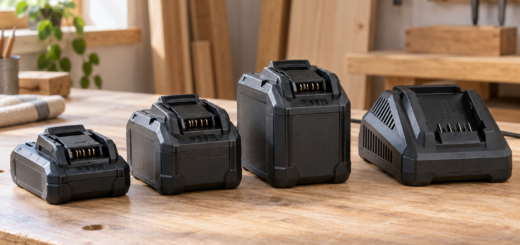
Watch battery platforms and product generations. A discounted older kit can be excellent value if batteries remain compatible across the brand’s current range. It is a poor resale bet if the charger, battery format, or replacement parts have been abandoned. Before committing to a high-dollar purchase, search professional cordless tool kits and compare the current kit price with recent used sales.
Make a Resale Checklist
Before buying, record the exact model number, current new price, 10 recent used-sale prices, expected selling fees, and the likely condition after your planned use. Check whether replacement batteries, blades, filters, and service parts are still available. Then calculate a low, middle, and high resale estimate.
If the low estimate still gives acceptable ownership cost, the purchase is reasonably safe. If the deal only works under the high estimate, treat the tool as a consumption purchase rather than an investment. That distinction prevents resale optimism from turning an expensive tool into an expensive mistake.