DeWalt 4-Inch Grinder Price: What Each Model Costs
What's inside
As an Amazon Associate I earn from qualifying purchases. This post may contain affiliate links at no extra cost to you.
A DeWalt grinder in the “4-inch” class costs roughly $59–$99 corded or $119–$249 as a cordless bare tool in 2026, with full battery kits running $199–$399. One clarification before the numbers: in the US, DeWalt’s small angle grinders are actually 4-1/2-inch (115mm) tools — that’s what “4 inch” searches almost always land on. True 4-inch (100mm) DeWalt grinders like the DW810 and DW802 exist but are sold mainly in Asia and the Middle East, where they run about $40–$70. Below is what every current small-grinder model costs, split by bare tool versus kit, plus which price tier actually makes sense for your situation.
As an Amazon Associate we earn from qualifying purchases at no extra cost to you.


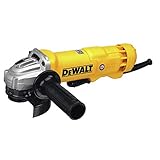
DeWalt 4-inch grinder prices at a glance
These are typical street-price ranges — expect swings of $10–$30 depending on promotions and whether the tool is sold as a bare unit or bundled.
| Model | Type | Bare tool price | Kit price (batteries + charger) |
|---|---|---|---|
| DWE4011 | Corded 4-1/2″, slide switch, 7.5A | $59–$69 | — |
| DWE4012 | Corded 4-1/2″, paddle switch, 7A | $69–$79 | — |
| DWE402 | Corded 4-1/2″, paddle switch, 11A | $85–$99 | — |
| DCG412B | 20V MAX 4-1/2″, brushed motor | $99–$119 | $169–$199 |
| DCG413B | 20V MAX XR 4-1/2″, brushless, kickback brake | $129–$159 | $229–$279 |
| DCG416B | 20V MAX FlexVolt Advantage 4-1/2″–5″ | $169–$199 | $269–$329 |
| DCG410VSB | 20V MAX XR PowerDetect 4-1/2″–5″, variable speed | $219–$249 | $329–$389 |
| DCG418B | 60V MAX FlexVolt 4-1/2″–6″ | $199–$229 | $349–$399 |
Corded models: $59 to $99 and you’re done paying
If you work near an outlet, corded is where DeWalt’s pricing is most aggressive — there’s no battery or charger subsidizing the sticker.
DWE4011 — the $59 entry point
The cheapest DeWalt grinder you can buy. Slide switch, 11,000 RPM, and a lighter-duty 7.5-amp motor. It’s the right call for a homeowner who cuts a few bolts or sharpen a mower blade a couple of times a year. The trade-off: the slide switch stays on until you push it off, which some users dislike, and the motor bogs sooner on heavy grinding.
DWE402 — the $89 sweet spot
An 11-amp motor at 11,000 RPM, a paddle switch with a lock-off, and DeWalt’s dust-ejection system that blows debris away from the intake vents. For maybe $20–$30 over the DWE4011, you get meaningfully more stall resistance and a switch most pros prefer. This is the volume seller for a reason — if you grind or cut weekly but stay near power, it’s the default answer.
Cordless: the bare-tool price is only half the story
Cordless pricing on DeWalt grinders is deliberately confusing because the tool-only price assumes you already own batteries. If you don’t, add roughly $100–$160 for a 5Ah-class pack and charger bought separately.
The math on the most popular model, the DCG413B:
- Bare tool: ~$139
- 20V MAX 5Ah battery alone: ~$99–$129
- Fast charger alone: ~$49–$79
- Separate purchase total: ~$287–$347
- Equivalent kit (tool + battery + charger): ~$229–$279
Buying the kit typically saves $40–$70 versus assembling the same setup piecemeal, and some kits include a second battery — which effectively halves your per-battery cost. Rule of thumb: if you own two or more 20V MAX packs, buy bare; if you own zero, buy the kit.
Which cordless tier
DCG412B (~$119): The older brushed 20V grinder. Fine performance, but it’s frequently discounted because the brushless DCG413 replaced it — worth buying only if it drops under $100.
DCG413B (~$139–$159): Brushless, 9,000 RPM, kickback brake, and DeWalt’s E-Clutch that shuts the motor down in a bind. This is the model most 20V owners should get.
DCG416B (~$169–$199): FlexVolt Advantage — runs on any 20V pack but unlocks extra power when you clip on a FlexVolt battery. Pays off only if you already own FlexVolt packs.
DCG410VSB (~$219–$249): Variable speed (roughly 3,000–9,000 RPM) for polishing, flap-disc finishing, and stainless work where full speed burns the surface. A fab-shop tool, not a general-purpose one.
What about a DeWalt 5-inch grinder?
If you searched “4 inch” because you want a small grinder, 5-inch models deserve a look — they typically cost only $20–$40 more at the same performance tier and give you deeper cuts and longer wheel life (a 5″ disc keeps grinding well after a 4-1/2″ disc is worn to the guard). The corded DWE43214 brushless variable-speed 5″ runs about $139–$169, and the DCG418B FlexVolt covers 4-1/2″ through 6″ wheels on one tool for $199–$229 bare. For occasional concrete scoring, pavers, or thick steel, that flexibility beats buying a second tool later.
Pick your price tier by situation
| Your situation | Buy | Expect to pay |
|---|---|---|
| Strict budget, light occasional use | DWE4011 | $59–$69 |
| Homeowner/garage use, near outlets | DWE402 | $85–$99 |
| Already own 2+ DeWalt 20V batteries | DCG413B bare | $129–$159 |
| No batteries, want cordless | DCG413 kit | $229–$279 |
| Daily fab/welding work | DWE402 (bench) + DCG413 (field) | $220–$260 combined |
| Stainless, polishing, finish work | DCG410VSB | $219–$249 bare |
| Cutting pavers, thick steel, want 6″ option | DCG418B | $199–$229 bare |
Costs after checkout: what the sticker hides
The grinder is often the cheap part of owning a grinder. Realistic ongoing costs:
- Consumables dominate: A 10-pack of 4-1/2″ cutoff wheels runs $12–$18, flap discs $3–$6 each, wire cup brushes $8–$15. A regular weekend user burns through $40–$80 a year in discs — potentially more than the DWE4011 costs.
- Brushes wear first on corded models. The DWE4011 and DWE402 use carbon brushes (~$8–$12 a pair) that need replacing after heavy use — often the first and only repair these tools ever need. Brushless cordless models skip this entirely.
- Batteries are a depreciating asset. A 5Ah lithium pack loses noticeable capacity after 3–5 years of regular cycling; a replacement is ~$100+. Amortized over that span, a cordless grinder costs roughly $20–$35 a year in battery wear alone.
- Common expensive mistakes: buying a bare tool during a sale without owning batteries (the “savings” vanish at the charger aisle), running undersized or non-rated wheels, and removing the guard for a cut — which is when kickback injuries happen.
- Maintenance that actually matters: blow the intake vents out with compressed air every few uses (grinding dust kills motors faster than grinding does), and let brushless models’ electronic brake do its job instead of jamming the disc to stop it.
FAQ
Does DeWalt make an actual 4-inch grinder?
Yes — the DW810 and DW802 are true 100mm (4″) grinders, but they’re built for overseas markets with 220V power and different switch standards. In North America, “4 inch” almost always means the 4-1/2″ class covered above.
Will 4-inch wheels fit a 4-1/2-inch DeWalt?
Physically, smaller wheels with a 7/8″ or 5/8″ arbor mount on the standard 5/8″-11 spindle — but only if the wheel’s RPM rating exceeds the tool’s 9,000–11,000 RPM and the guard still covers the disc adequately. In practice, 4-1/2″ discs are cheaper and more available in the US anyway.
Is a kit worth it over a bare tool?
If you own no 20V MAX batteries, yes — kits bundle batteries at 40–60% of their solo price. If you already have two healthy packs, the bare tool saves $90–$130.
What warranty comes with these prices?
DeWalt’s standard coverage is a 3-year limited warranty, 1 year of free service, and a 90-day return window — identical whether you pay $59 or $249, which is one more argument for buying the tool that fits the job rather than the cheapest box on the shelf.