
Key takeaways
- New to angle grinders? This beginner guide explains disc sizes, guards, grip, and the support gear that helps you cut, grind, and sharpen with confidence.
What's inside
- Quick Answer
- 1. 3 Pair Motorcycle Riding Glasses Padding Goggles
- 2. Jeanerlor Cotton Tool Denim Work Apron with Convenient Pockets
- 3. GOOACC Car Push Retainer Clips and Auto Fasteners Assortment Popular Sizes Nylon
- 4. POWERTEC 71358 Track Saw Guide Rail Connector Set for Festool, Makita, DeWalt
- 5. Bionso 25-Piece Multimeter Leads Kit
- How to Choose
- Who Should Skip
- FAQ
- Final Verdict
As an Amazon Associate I earn from qualifying purchases. This post may contain affiliate links at no extra cost to you.
An angle grinder is one of the most useful tools a beginner can add to a home workshop. With the right disc, the same tool can cut metal rod, smooth a rough weld, sharpen a mower blade, remove rust from a gate, and trim tile or masonry. Few other handheld tools cover that much ground.
The catch is that a grinder spins a disc at very high speed, so a beginner needs to think about control before cutting anything. Disc size, guard position, grip, and a clear work area matter more than raw power. The five picks below build a sensible first kit around that idea: eye protection, a work apron, a fastener assortment for equipment upkeep, a guide rail connector for straight workshop cuts, and a leads kit for checking workshop power. None of them is a grinder on its own, and each one is framed honestly below.
As an Amazon Associate, we earn from qualifying purchases.
Quick Answer
Choose a compact 4.5-inch grinder with a solid guard, a side handle, and a paddle or lock-off switch. Add eye protection, a denim work apron, and a fastener assortment for keeping workshop equipment in good order. Keep the work area clear, clamp the workpiece, match the disc to the material, and let the disc do the work without forcing it.
1. 3 Pair Motorcycle Riding Glasses Padding Goggles

Eye protection is the single most important item in a beginner grinder kit, because a grinder throws sparks and small chips in every direction. These padded goggles come as a set of three pairs, so a beginner can keep one pair at the bench, one in the toolbox, and one spare for a helper. The padding around the frame helps seal out dust and fine particles that open safety glasses can let through from the sides.
The goggles are built for riding, which means they are designed to stay in place during movement and wind, and that same snug fit helps in the workshop. When a grinder bites into metal, the spray of sparks heads outward and upward, and a close-fitting pair of goggles keeps that spray away from the eyes.
A three-pair set is practical because goggles get scratched, fogged, and dusty in a workshop. Having spares means a beginner is never tempted to grind without protection because the only pair is dirty or damaged. Adjust the strap so the goggles sit firm without pressing hard on the bridge of the nose.
2. Jeanerlor Cotton Tool Denim Work Apron with Convenient Pockets

A denim work apron does two jobs for a beginner grinder user: it shields clothing from sparks and hot chips, and it keeps small accessories within easy reach. Cotton denim is a sturdy fabric that holds up to workshop use, and the pockets hold a marker, a tape measure, spare discs, and the grinder wrench so a beginner does not have to walk across the shop mid-job.
Sparks from a grinder are hot enough to scorch thin clothing and melt synthetic fabrics, so a layer of denim across the chest and lap is a real layer of protection. The apron covers the front of the body where sparks land most often, and it can be brushed off after a session. A beginner should still wear long sleeves and sturdy shoes, but the apron adds a useful shield on top.
The pockets change how a beginner works. A disc change needs the wrench, the new disc, and a flat surface, and fumbling for those items wastes time and patience. Keeping them in apron pockets means the swap happens at the bench, with the grinder unplugged and the disc facing away.
3. GOOACC Car Push Retainer Clips and Auto Fasteners Assortment Popular Sizes Nylon

Workshop equipment takes a beating, and small fasteners are often the first thing to fail. The GOOACC Car Push Retainer Clips and Auto Fasteners Assortment Popular Sizes Nylon covers the push-type clips that hold panels, covers, guards, and trim in place on tools, toolboxes, and carts around the workshop. The assortment spans the popular sizes, so a beginner can find a clip that matches the hole instead of forcing a wrong size.
The clips are nylon push-type fasteners: press the pin, seat the clip, and the panel stays put. They are handy when a guard cover loses a clip or a cart panel works loose. Keep the assortment in a drawer near the bench so a broken clip is a two-minute fix.
This pick suits a beginner building a first workshop kit, since a small fastener assortment saves repeated trips for single clips. Check the size against the hole before pressing a clip in.
4. POWERTEC 71358 Track Saw Guide Rail Connector Set for Festool, Makita, DeWalt

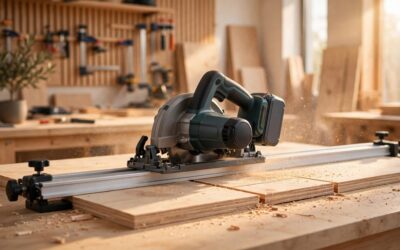
Straight cuts are the hardest part of beginner grinding and cutting work, and this guide rail connector set helps keep long straight cuts aligned in the workshop. The set joins two guide rails into one longer rail, so a beginner can lay out a full-length straight edge across a sheet or a long piece of stock instead of guessing a line freehand.
The connector set is made for track saw guide rails from Festool, Makita, and DeWalt, and it is honest to say it is not a grinder accessory. Its role in a beginner grinder kit is as workshop support gear: the same straight edge that guides a saw can serve as a layout reference for marking a long cut line before the grinder ever switches on.
Alignment is the whole point: a rail that shifts mid-cut ruins the line. Check the joint by sighting down the rail before marking. If the joint feels flush and the rail looks straight, the layout will be straight too.
5. Bionso 25-Piece Multimeter Leads Kit
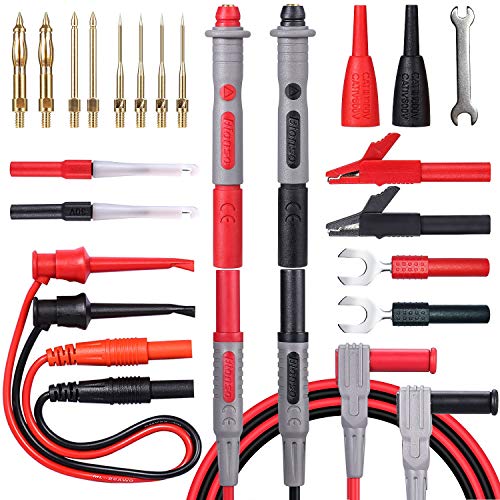
A grinder needs reliable power, and this 25-piece multimeter leads kit helps a beginner check workshop outlets, cords, and connections before plugging a tool in. The kit includes leads and probes in a range of styles, so a beginner can connect a multimeter to an outlet, a cord, or a terminal and confirm that power is present and behaving as expected.
Electrical checks are a sensible habit for anyone setting up a first workshop. Older garages often have outlets wired long ago, extension cords get damaged, and a grinder that loses power mid-cut can grab and kick. A quick check with a multimeter and a proper set of leads can spot a dead outlet or a damaged cord before it becomes a problem during a cut.
How to Choose
Disc size comes first. A 4.5-inch grinder is the usual beginner size because it is light enough to control with one hand on the body and one on the side handle, and discs for it are easy to find. Larger grinders cut deeper and remove material faster, but they are heavier and harder to hold steady, which is the wrong trade for a first tool.
Corded or cordless is the next choice. A corded grinder runs as long as it is plugged in and suits bench work and long sessions in the garage. A cordless grinder is easier to carry to a fence or a driveway job, but it needs charged batteries. A beginner who works mostly at a bench should begin corded and add cordless later if jobs move outdoors.
The guard is not optional. It should cover the half of the disc facing the user, sit tight without wobbling, and adjust without tools or with the included wrench. A guard that is missing or loose is a reason to stop and fix the tool before cutting anything.
Grip and switch style matter more than beginners expect. A side handle that screws into either side lets left- and right-handed users hold the tool comfortably. A paddle switch that stops when released is a good beginner choice, because the tool stops the moment grip loosens. One more rule: never wear loose gloves while the grinder is running, since a spinning disc can catch a cuff.
Match the disc to the material and the job. Cutting discs are thin and made for slicing through metal, grinding discs are thicker and made for smoothing and shaping, and flap discs blend grinding and finishing in one step. Never use a cutting disc for grinding sideways, and never use a disc rated below the speed of the tool. Check the label every time a disc is fitted.
Dust and noise deserve a plan too. Grinding metal and masonry makes fine dust and a loud whine, so a beginner should work with the garage door open or outdoors when possible and wear ear protection for long sessions.
Who Should Skip
An angle grinder is the wrong first tool for someone who only needs to hang a picture or assemble flat-pack furniture. A drill and a hand saw cover those jobs with less noise, less dust, and less risk, and a grinder bought for a single small job will sit unused.
Anyone who cannot commit to eye protection, a guard, and a clear work area should skip the grinder until those habits are in place. The tool is unforgiving of shortcuts, and a beginner who plans to grind without goggles or with a loose workpiece is better off asking a neighbor or a local shop for help with the cut.
People with limited hand strength or balance should also think carefully. A grinder kicks when a disc binds, and holding it steady through that kick needs a firm grip and solid footing. A smaller tool, a different cutting method, or a helping hand may be the better answer. Renters in apartments should check building rules before buying, since grinding is loud, throws sparks, and many buildings ban it outright.
FAQ
What size angle grinder should a beginner buy?
A 4.5-inch grinder is the usual beginner choice. It is light enough to control with both hands, discs are easy to find, and it handles most home jobs such as cutting rod, smoothing welds, and sharpening blades. Larger grinders suit deeper cuts, but they are harder to hold steady.
Can a beginner use a cutting disc to grind?
No. Cutting discs are thin and built to slice in a straight line, and side pressure can crack them. Use a thicker grinding disc or a flap disc for smoothing and shaping, and keep cutting discs for straight cuts only. Always match the disc to the job and check its speed label before fitting it.
Why does the grinder kick back?
Kickback usually happens when the disc binds in the cut, often because the workpiece shifted or the cut line closed up on the disc. Clamp the workpiece firmly, keep the cut straight, let the disc reach full speed before touching the material, and never force the tool. A steady feed and a firm two-handed grip keep most kickback from happening.
Do I need ear protection with an angle grinder?
Yes, for anything beyond a very short cut. A grinder is loud enough to leave ears ringing after a long session, and that ringing is a warning. Earplugs or earmuffs are light, simple to wear, and easy to keep in the toolbox next to the goggles.
Final Verdict
A beginner angle grinder setup is about control, not power. A compact 4.5-inch tool with a solid guard, a side handle, and a switch the user can release in an instant covers most home jobs, and the support gear in this guide fills the gaps around it. Eye protection keeps sparks out of the eyes, an apron shields clothing, a fastener assortment keeps workshop equipment in good order, a guide rail connector keeps long layout lines straight, and a leads kit checks the power before the tool plugs in.
Related guides
More from Amazon
Programs that pair well with the guide above. Offers and eligibility are set by Amazon and may change.
A free business account with business pricing and bulk-buying tools for work, shop or home office.
Create a business accountFree shipping on eligible items, Prime Video and more. Eligible new members can start with a free trial.
Start a Prime free trialAudiobooks and podcasts to listen to on the go. Eligible new members can start with a free trial.
Try Audible freeAd-free music streaming. Eligible new subscribers can start with a free trial.
Try Music Unlimited freeAs an Amazon Associate we earn from qualifying purchases.
Write Your Review
No reviews yet. Be the first to share your experience!