Power Tool Starter Kit For Beginners
Our Top Picks
 DEWALT 20V MAX Cordless Drill and Impact DriverOne Size15.06 x 6.4 x 9.88 inches3.6 PoundsCheck on Amazon
 KingTool 276-Piece Tool Set Kit with 12V Cordless276 Count (Pack of 1)16.4 x 13.1 x 6.57 Inches1.76 PoundsCheck on Amazon

What's inside
As an Amazon Associate I earn from qualifying purchases. This post may contain affiliate links at no extra cost to you.
The first power tool purchase usually goes the same way. A box promises five tools, eight tools, twelve tools, and that number does most of the selling. It is the least useful thing on the package. A power tool starter kit for beginners is worth buying or skipping on three other numbers: the amp-hours of the batteries inside, the discount measured against the real street price instead of the printed list price, and the number of tools you will actually use in year one, which for most people is two or three.
Holiday combo kits get built down to a price. Two compact batteries in a promo box can hold less total energy than one mid-size pack sold on its own, and the crossed-out was-price may be a figure nobody has paid in a year. Real deals do exist in this category. You just have to price the kit by its parts.
| Starter path | What you get | Typical all-in band | Who it suits |
|---|---|---|---|
| Two-tool combo | Drill, impact driver, 2 packs, charger, bag | Roughly $100 to $180 | Almost every beginner |
| Four or five-tool combo | Adds circular saw, light, sometimes recip saw | Roughly $200 to $350 | Renovations, decks, fences |
| Bare tools plus battery kit | You pick each tool, one or two 4Ah-plus packs | Roughly $250 to $400 over time | Buyers who know their next projects |
| Corded saw plus one drill kit | Corded circular saw or sander, one drill | Roughly $120 to $220 | Garage work near an outlet |
Bands are rough street ranges for mainstream brands, not quotes. All of them move during the promo windows below.
What a Power Tool Starter Kit for Beginners Actually Needs
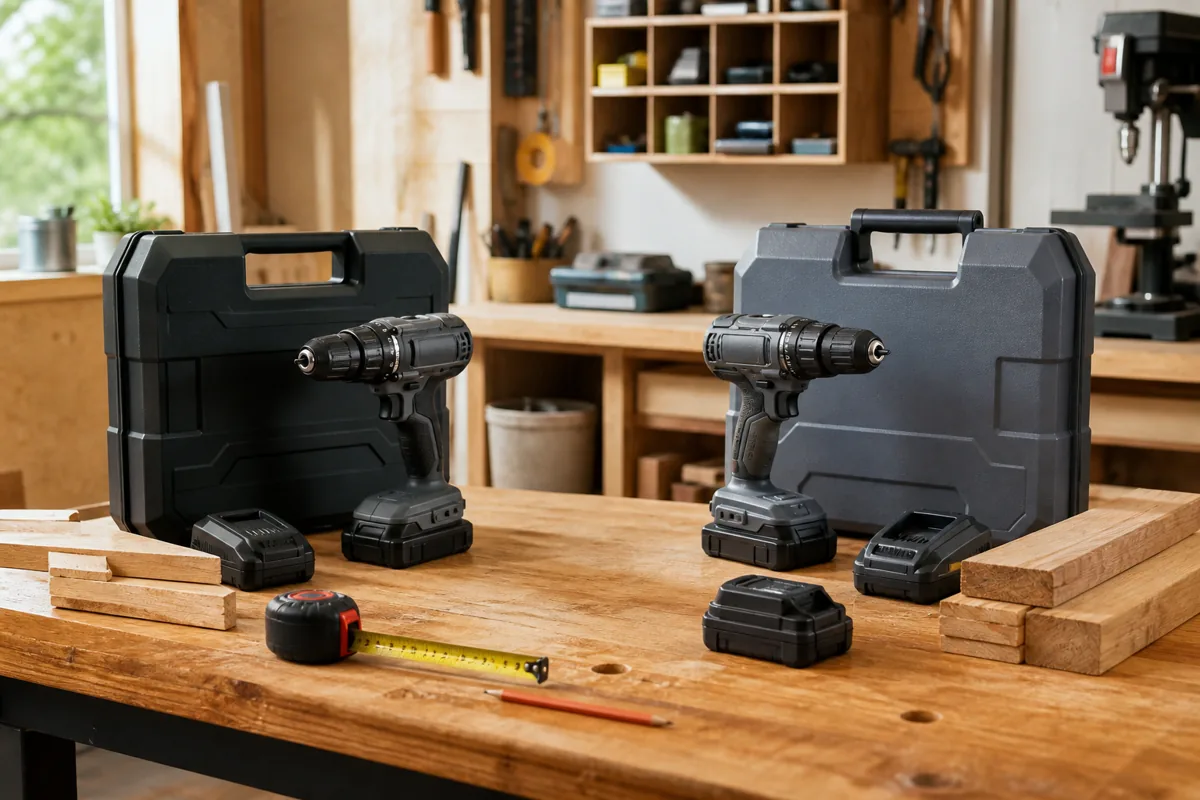
Four tools cover most first-year work: a 1/2-inch drill/driver, an impact driver, one saw, and a sander. The rest of a big combo box is filler, and filler is where the cost cuts hide.
The drill and impact driver pair is the only near non-negotiable. The drill makes holes and handles delicate fastening with a clutch; the impact driver sinks long deck screws and lags without wrecking the screw head or your wrist. Using one drill for both jobs is the classic beginner mistake and it ends in stripped fasteners.
Which saw depends on the work. Sheet goods and deck boards point to a circular saw. Remodeling and tight spots point to an oscillating multi-tool, the most forgiving power tool a beginner can own. Demolition points to a reciprocating saw. Pick one, not all three.
Brushless motors add roughly 20 to 35 percent to the price and return longer runtime, more torque in a smaller body, and no brushes to wear out. A few weekends a year, and brushed is defensible. Building a deck or working every weekend, and brushless pays for itself in batteries.
Two-Tool Drill and Impact Driver Combo Kits
Buy this first, from whichever major platform you want to live on: DeWalt 20V MAX XR, Milwaukee M18 FUEL, Makita LXT, or Ryobi ONE+ if budget rules. Ignore the tool count and read the battery line. A two-tool kit with two 4.0Ah packs beats a five-tool kit with two 1.5Ah packs at the same price, every time.
The Two Tricks That Quietly Ruin Starter Kit Deals
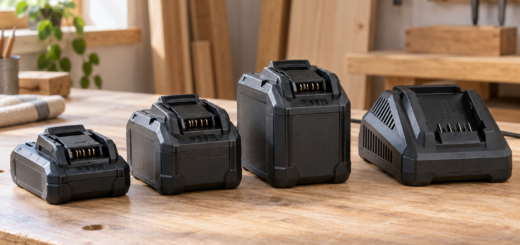
Trick one: the battery downgrade. Promo kits are often the same tools packaged with the cheapest possible power. Watch for 1.5Ah or 2.0Ah packs where the standard kit ships 4.0Ah or 5.0Ah, a slow trickle charger instead of the rapid unit, and sometimes a brushed version of a tool sold elsewhere as brushless. Runtime scales close to linearly with capacity, so two 2.0Ah packs give you 4.0Ah of work total, about 20 percent less than one 5.0Ah pack, with a swap in the middle. Replacing those compact packs later often costs 30 to 50 percent of the entire kit price, which eats the discount you thought you won.
Trick two: the inflated was-price. List price is a marketing number. Judge a tool deal against the lowest price it has actually sold at in the last 90 days, which a browser price-history extension will show you in seconds. Rough guide for this category: 10 to 20 percent off is background noise that runs most of the year, 25 to 35 percent is a real sale, and 40 percent or better on a current-generation kit is a buy signal. Bundles count too, since a free full-size battery is usually worth more than another 15 percent off the sticker.
When to Buy and When to Wait
Cordless pricing is seasonal and predictable. March through May brings outdoor and yard promos. June runs Father’s Day bundles that lean on free-battery offers. The mid-July Prime event and Labor Day weekend are both solid. The deepest cuts land from Black Friday through Cyber Monday, with a clearance wave in late December as retailers dump last year’s kit configurations.
The other lever is the product cycle. When a brand refreshes a line, the outgoing generation drops 20 to 40 percent while it clears, and for a beginner that clearance kit is often the smartest money in the category. Proven tool, same battery platform, lower price.
Wait when the discount is under 20 percent and nothing is urgent, when the kit ships compact batteries only, or when a platform refresh has just been announced. Buy when you have a job this weekend, when a mainstream two-tool kit hits 30 percent off, or when the promo includes a full-size pack. Waiting three months to save 8 percent on a tool you need Saturday is not frugal.
High-Capacity Battery Two-Packs
If your kit came with compact packs, one 4.0Ah to 5.0Ah pair fixes it permanently, and it is the highest-value upgrade in cordless tools. Buy on promo only. First-party batteries go on sale several times a year, and full retail on batteries is where most of the profit in this industry lives.
Combo Kit or Piece by Piece
Combo kits win on cost per tool and lose on control. Bare tools plus one good battery kit costs more up front and less in total if you only ever need three tools.
- ✔ Lowest cost per tool, often 30 to 50 percent under buying separately
- ✔ One charger, one platform, no compatibility guesswork
- ✔ Easiest way to get two batteries at once
- ✔ Usually the discount leader in promo windows
- ✘ Tool count inflates perceived value with items you will not use
- ✘ Batteries and chargers are the usual place costs get cut
- ✘ Kit tools are often the entry-level version, not the brushless one
- ✘ Mismatched configurations make deals hard to compare
Three Budget Bands, Three Shopping Lists
Under about $150
One two-tool combo from a value platform plus a decent bit set. Accept compact batteries here. The goal is to start working.
Roughly $200 to $350
Brushless two-tool combo from a pro platform with 4.0Ah packs, plus one saw chosen for your real projects. This is the sweet spot, and it is a promo-window purchase.
$400 and up
Brushless combo, two full-size packs, rapid charger, circular saw, multi-tool. Build it across two or three sale events instead of one giant kit.
Cordless Circular Saw Kits
Buy the saw after the drill and impact driver, and buy it bare if you already own batteries, since bare-tool promo pricing is where the savings sit. A 6-1/2-inch cordless saw and a straightedge get more done than a bigger saw a beginner is nervous about. Budget for a good blade; a cheap blade makes a good saw feel broken.
Power Tool Starter Kit FAQ
How much should a beginner spend on a first kit? Most people land well in the $200 to $350 band for a brushless two-tool combo bought on promo, and under $150 on a value platform is fair if the tools get used a handful of times a year. Spending more before you know which saw you need mostly buys tools that sit in the bag.
Is a kit with two small batteries better than one big one? Usually not. Two 2.0Ah packs hold less energy than one 5.0Ah pack and you spend the day swapping. Two batteries earn their keep when at least one is full-size.
Are house-brand and no-name kits worth the savings? Sometimes, for a drill used a few times a year. The risk is the platform, because obscure brands orphan battery lines and a pack you cannot replace makes the kit disposable. Compare against a previous-generation major-brand kit on clearance, which is often within 15 to 20 percent.
Price the batteries, not the tool count. Check the 90-day low before you trust a percent-off badge. Then buy the smallest kit that covers the job in front of you, because two good tools with real batteries beat a twelve-piece box.
Check prices on Amazon →