Ridgid vs Craftsman Combo Kits: Comparing Included Tools and Replacement Battery Prices
What's inside
As an Amazon Associate I earn from qualifying purchases. This post may contain affiliate links at no extra cost to you.
Ridgid and Craftsman both sell cordless combo kits aimed at homeowners, remodelers, and occasional DIY work. The cheaper kit is not always the cheaper system, though. Battery prices, warranty terms, tool selection, and the cost of adding bare tools can change the value after the initial purchase.
Ridgid’s main DIY platform is its 18V battery system. Craftsman’s comparable platform is V20. Both offer drills, impact drivers, saws, lights, inflators, sanders, and outdoor tools. The practical difference is that Ridgid generally targets heavier use, while Craftsman often wins on the initial kit price and frequent retail promotions.
As an Amazon Associate we earn from qualifying purchases at no extra cost to you.


What you get in the box
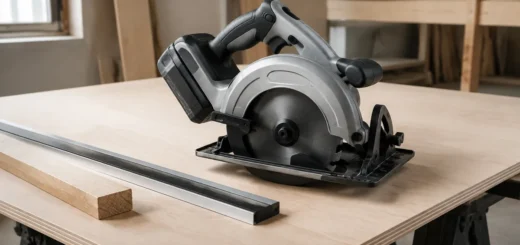
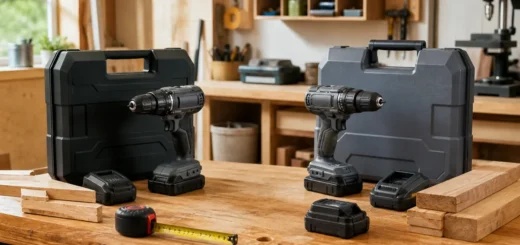
A typical Ridgid kit in this comparison includes a drill/driver, impact driver, reciprocating saw, circular saw, light, charger, and two batteries. Depending on the sale, the batteries may be compact 1.5Ah or 2.0Ah packs, or larger 4.0Ah and 5.0Ah packs. Some kits add an oscillating multi-tool or a vacuum instead of the light.
A typical Craftsman V20 kit often includes the same basic four-tool core: drill/driver, impact driver, circular saw, and reciprocating saw. Larger sets may add a compact work light, oscillating tool, or cordless inflator. Craftsman commonly packages one small battery and one larger battery, but the exact capacities vary enough that the box contents deserve close inspection.
| Factor | Ridgid 18V kits | Craftsman V20 kits |
|---|---|---|
| Common kit size | 4 to 6 tools | 4 to 6 tools |
| Typical sale price | About $250 to $500 | About $150 to $350 |
| Typical battery capacity | 2.0Ah to 5.0Ah | 1.5Ah to 4.0Ah |
| Replacement battery range | About $70 to $160 | About $45 to $100 |
| Best fit | Frequent DIY and renovation work | Light and moderate home use |
| Main value advantage | Durability, stronger tool range, warranty program | Lower entry price and cheaper batteries |
Do not compare tool counts alone. A five-tool kit with a light and a small battery may be less useful than a four-tool kit with two high-capacity batteries. Also check whether the circular saw is a full-size model, whether the reciprocating saw has orbital action, and whether the impact driver includes speed settings. Those details affect how well the kit handles deck repairs, framing, plumbing cuts, and sheet goods.
Replacement battery prices
Battery cost is where Craftsman usually has the advantage. A genuine Craftsman V20 compact battery commonly sells for roughly $45 to $60, while a 4.0Ah pack is often $70 to $100. Holiday promotions can reduce those prices, especially when a battery is bundled with a free bare tool.
Ridgid 18V batteries commonly cost about $70 to $100 for compact or mid-size packs and approximately $100 to $160 for higher-capacity packs. Brushless tools and high-draw saws benefit from the larger packs, but the added cost is noticeable if you need three or four batteries.
Battery capacity is measured in amp-hours, or Ah. A 2.0Ah battery can theoretically deliver twice the runtime of a 1.0Ah battery under similar conditions. In real use, a compact pack may run a drill for a day of intermittent fastening, but a circular saw or reciprocating saw can drain it quickly. Cutting treated lumber, demolition work, and long screws are particularly hard on small packs.
For occasional work, buying one spare battery is usually more economical than buying the biggest pack available. For heavy use, two 4.0Ah or larger batteries reduce downtime. Avoid basing a system on unbranded replacement packs: poor cells, inaccurate charge indicators, and weak thermal protection can cause premature failure or tool shutdown.
Browse current prices for Ridgid 18V replacement batteries and Craftsman V20 replacement batteries before choosing a kit. A low-priced starter kit can lose its advantage if the battery platform is expensive to expand.
Performance and common failure points
For drilling pilot holes, assembling furniture, hanging cabinets, and driving ordinary construction screws, either brand’s drill and impact driver can be adequate. The gap becomes clearer with repeated heavy loads. Ridgid’s higher-end brushless tools generally offer better runtime, stronger gearboxes, and more robust housings, although not every Ridgid kit contains the premium version.
Craftsman is fine for light framing, shelving, drywall, and periodic repairs. The common failure mode is not that the tool immediately breaks; it is overheating or stopping under sustained load. Small batteries make this worse. A reciprocating saw used for demolition can empty a compact pack in minutes, while the same job may require multiple batteries and cooling pauses.
In either system, batteries are often the first expensive component to age. Heat, leaving a pack fully discharged, and storing it in a hot vehicle accelerate capacity loss. Chargers may also stop accepting a deeply discharged battery. Store packs indoors, remove them from tools after use, and do not leave them on a charger for weeks at a time.
Warranty and long-term value
Ridgid’s standout feature is its Lifetime Service Agreement on qualifying tools and batteries after the required registration. The terms and eligibility rules matter: registration deadlines, proof of purchase, and qualifying product lists apply. When properly covered, the agreement can make Ridgid more attractive for someone who expects years of renovation work.
Craftsman generally offers a three-year limited warranty on many power tools, but coverage varies by product. That is a reasonable term for homeowner use, though it does not provide the same long-term safety net as a successfully registered Ridgid kit. Keep receipts and register either brand promptly.
Ridgid is the better value when you will use the saws, impact driver, and batteries regularly, or when warranty support is a major concern. Craftsman is the sensible cheaper choice for a homeowner who uses cordless tools a few times a month and can buy a replacement battery during a sale. Start with a Craftsman V20 combo kit if the included tools match your projects and the kit is at least $75 to $100 cheaper than a comparable Ridgid package.
When to buy
Major sale periods are usually the best time to enter either platform. Watch for November promotions, spring home-improvement sales, and retailer-specific battery promotions. Compare the final package price, not just the advertised discount. A kit with an extra battery or a free bare tool can be worth more than a modest price reduction.
Before buying, list the next three tools you expect to need. If they are available on the same battery platform at reasonable prices, the kit is a better investment. If you only need a drill and impact driver for a single project, a smaller two-tool kit may cost less overall and leave fewer batteries to replace later.