Flex vs DeWalt Batteries: Comparing Capacity, Pricing, and Platform Value
What's inside
As an Amazon Associate I earn from qualifying purchases. This post may contain affiliate links at no extra cost to you.
Flex and DeWalt both sell capable cordless-tool platforms, but a battery’s voltage or amp-hour label doesn’t tell you what it will cost to build a useful kit. The better value depends on the tools you need, how many batteries you’ll use, and whether you already own chargers and packs. Here’s how to compare capacity, pricing, and platform fit without assuming one brand is automatically better.
As an Amazon Associate we earn from qualifying purchases at no extra cost to you.


Capacity and runtime: compare watt-hours, not just amp-hours
Amp-hours measure charge, not energy by themselves. To compare packs at different voltages, multiply volts by amp-hours: a nominal 20V, 5Ah pack is about 100 watt-hours, while an 18V, 5Ah pack is about 90 watt-hours. Brand voltage labels can also reflect different conventions, so treat the watt-hour figure as a rough comparison, not a promise of identical runtime.
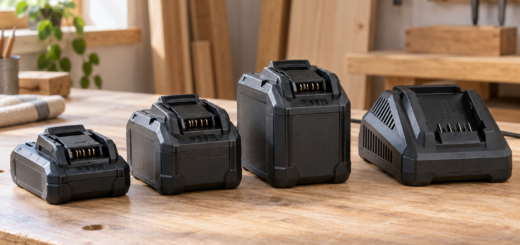
Neither brand’s batteries have one fixed capacity. Both offer smaller packs for lighter work and larger ones aimed at longer runtime or higher-demand tools. A compact pack can keep a drill or impact driver lighter and easier to handle overhead. A larger pack may make more sense for a saw, grinder, or repeated heavy fastening, but it adds weight and may make a tool less comfortable.
Runtime varies with the job. Driving short screws into softwood uses far less energy than cutting thick material, drilling large holes, or running a grinder under load. Battery age, temperature, and the tool’s electronics also matter. If a pack cuts out on a demanding tool, it may be too small, too cold, or worn—not necessarily defective. Conversely, buying the largest pack for every tool can mean carrying weight you don’t need.
Pricing: compare complete kits and usable packs
Street prices change with sales, bundles, and retailer inventory, so there isn’t a reliable permanent winner on price. Compare the actual checkout cost for the same type of purchase: tool-only, starter kit, or extra battery. A low-priced bare tool is poor value if you still need a charger and two batteries. A bundle can be a bargain if it includes packs you’ll use, but not if it leaves you with several small batteries and no suitable pack for your high-draw tools.
| What to compare | Flex | DeWalt | What it means for value |
|---|---|---|---|
| Battery range | Multiple capacities for its cordless platform | Multiple capacities across its 20V MAX platform | Match pack size to the tool and workload, rather than comparing amp-hours alone. |
| Kit availability | Check current tool-and-battery bundles | Check current tool-and-battery bundles | Compare the contents and total price; promotions can change which kit is cheaper. |
| Existing batteries | Useful if you already own compatible Flex tools and packs | Useful if you already own compatible DeWalt 20V MAX tools and packs | Existing batteries and chargers often outweigh a small difference in bare-tool price. |
| Platform choice | Worth considering if its tools fit your planned lineup | Worth considering if its broad retail availability and tool selection fit your needs | Price the next few tools you expect to buy, not just today’s purchase. |
For a first purchase, price a starter kit that includes a charger and at least one practical battery. For an existing owner, a bare tool can be sensible, but confirm compatibility: batteries are platform-specific, and packs from one brand do not ordinarily fit another brand’s tools. Avoid treating adapters as a guaranteed fix; they can introduce fit, protection, or warranty issues.
Platform value: the cost of staying compatible
Battery value is partly the number of useful tools you can run from the same packs. DeWalt’s 20V MAX platform has a large, widely sold tool lineup, which can make it easier to find replacement batteries and tools at local retailers. Flex’s platform may be attractive if its particular tools and bundles match your work, but check local stock and the specific tools you expect to add. Availability can vary by region and retailer.
That difference matters more when you plan to buy several cordless tools. If you need only a drill and impact driver, a good two-tool kit may be the better deal regardless of brand. If you expect to add a saw, light, or specialty tool later, check that those exact tools are available in the platform before buying in. A discounted starter kit can become an expensive dead end if the next tool you need is difficult to source.
For a new platform, compare a Flex cordless tool starter kit against a DeWalt 20V MAX starter kit with similar tools and battery capacities. Check whether the listed pack is included, how many packs are in the box, and whether the price is for a bare tool. Search listings can mix configurations, so read the contents rather than relying on the product image.
Choosing battery size for the job
For occasional household drilling, assembly, and light repairs, a smaller pack is usually fine. It costs less, weighs less, and may be enough for several short tasks between charges. If you regularly cut framing lumber, bore large holes, or work away from a charger, budget for a higher-capacity pack and a spare. Rotating two batteries is more useful than owning one large pack that leaves you waiting when it runs flat.
For repeated high-load work, a compatible high-capacity battery may help reduce pauses and voltage sag, but don’t expect it to turn an undersized tool into a more powerful one. Heavy cutting can still trigger protection shutoffs, and running batteries hot or leaving them in freezing conditions can shorten their useful life. Let a hot pack cool before charging, and store batteries away from extreme heat.
A practical buying decision
Choose DeWalt if you value its broad availability, already own compatible 20V MAX batteries, or have identified several tools in its lineup that suit your work. Choose Flex if its specific tools, kit pricing, and battery options offer the better fit for your jobs—and you can confirm that the platform covers what you plan to buy next. Don’t pay extra for capacity you won’t use, but don’t build a demanding setup around only the smallest pack.
Before checking out, compare the tool, battery count, battery watt-hours, charger, and return terms. For a small number of light-duty jobs, the cheaper kit is often enough. For daily or high-draw work, the pack you’ll use most and the ability to buy compatible replacements matter more than a modest upfront discount.