Hilti vs Milwaukee Rotary Hammers: Comparing Purchase Price and Jobsite Value
What's inside
As an Amazon Associate I earn from qualifying purchases. This post may contain affiliate links at no extra cost to you.
Rotary hammers are expensive enough that brand choice matters, but the highest-priced tool is not automatically the best value. Hilti and Milwaukee both make capable SDS-Plus and SDS-Max machines. The better purchase depends on how many holes you drill, whether the tool earns money every day, and how much downtime costs when something fails.
For occasional anchor holes, plumbing penetrations, or small demolition work, Milwaukee usually offers the lower entry price and easier retail availability. Hilti becomes more compelling for contractors who need fleet management, fast service, dust-control options, and predictable performance over years of heavy use.
As an Amazon Associate we earn from qualifying purchases at no extra cost to you.
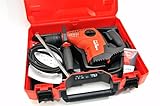

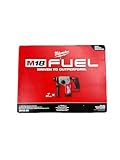
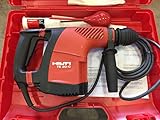
Purchase price: Milwaukee usually costs less up front
A bare or corded Milwaukee SDS-Plus rotary hammer commonly lands in the roughly $150 to $350 range, depending on drilling capacity and included features. Cordless models can cost $250 to $500 as a bare tool, while a battery-and-charger kit may push the total to $450 or more. SDS-Max Milwaukee tools generally start around $500 and can exceed $1,000 once batteries and accessories are included.
Hilti’s comparable rotary hammers often carry a higher initial price. A smaller corded Hilti SDS-Plus tool may cost several hundred dollars, while cordless kits and SDS-Max systems can reach well above $1,000. Pricing changes frequently through dealer promotions, fleet agreements, and package offers, so compare the complete kit rather than the bare tool.
Battery platform cost is easy to overlook. If you already own Milwaukee M18 batteries and chargers, a bare rotary hammer may be the economical choice. Starting a Hilti battery platform for one occasional tool can add several hundred dollars. Conversely, a contractor already using Hilti Nuron tools may find the cordless Hilti purchase more reasonable than the shelf price suggests.
| Factor | Milwaukee | Hilti |
|---|---|---|
| Typical entry cost | Lower, especially for corded and bare-tool purchases | Higher, with more dealer and fleet pricing |
| Best buying channel | Retailers, online sales, and seasonal promotions | Hilti direct sales, dealers, fleet contracts, and promotions |
| Battery value | Strong if you already own M18 batteries | Most attractive for existing Nuron users or managed fleets |
| Service experience | Good warranty and retail support, but repair logistics vary | Strong service infrastructure and jobsite-focused support |
| Best fit | Mixed trades, remodelers, and value-focused buyers | Heavy daily use and companies where downtime is costly |
Jobsite value is more than impact force
Both brands offer rotary hammers that can drill concrete, brick, and block, and both have models with hammer-only, rotation-only, and combination modes. In real use, bit quality and operator technique often affect production more than small differences in advertised impact energy.
For drilling holes up to about 5/8 inch for anchors, a compact SDS-Plus tool is usually enough. A 1-inch class SDS-Plus hammer gives more margin for repeated holes and larger bits. If you routinely drill holes above 1 inch, use core bits, or break concrete for long periods, an SDS-Max tool is the more appropriate category. Buying a large SDS-Max hammer for occasional 3/8-inch anchors adds weight, cost, and fatigue without improving the job.
Milwaukee is often the practical choice for crews that need one tool to handle anchors, chipping, tile removal, and occasional masonry work. Its broad cordless ecosystem also reduces the number of chargers and batteries on a mixed-trade truck. The trade-off is that heavy demolition can drain batteries quickly, and high-output batteries are expensive to replace.
Hilti’s value shows up in sustained use. The tools are designed around professional concrete work, and the company offers accessories, dust extraction, service, and fleet programs that fit that workflow. If a failed hammer stops a two-person crew for half a day, a higher purchase price can be justified quickly. If the tool is used twice a month, that same premium may never pay back.
Common failure modes and operating costs
The most common rotary-hammer problems are not always motor failures. Worn SDS chucks, damaged retainers, overheated motors, broken switches, and dust entering the tool can all shorten service life. Running a hammer with a dull bit increases heat and vibration. Drilling without clearing dust can slow the bit and overload the motor.
Concrete dust is especially hard on tools and workers. For indoor anchor work, pair the hammer with a compatible dust-extraction attachment and a vacuum rated for fine dust. A small accessory cost can prevent cleanup time, reduce airborne dust, and help protect the tool’s intake and moving parts. You can compare current options through a rotary hammer dust-extraction search.
Bits are another part of the ownership calculation. A cheap hammer fitted with worn bits is not a bargain if each hole takes twice as long. Budget for quality SDS-Plus or SDS-Max bits, grease where the manufacturer specifies it, and replacement chucks or retainers if the tool sees daily use. Keep the tool out of standing dust and inspect the cord or battery connection before each shift.
When Milwaukee is the better value
Choose Milwaukee when you already own M18 batteries, need a capable hammer for general remodeling, or want a tool that can be purchased during frequent retail sales. It is also a sensible choice for homeowners, handymen, and small crews whose rotary hammer use is measured in a few hours per month rather than full shifts.
A corded model can be the cheapest long-term option for stationary indoor work because it avoids battery replacement and charging delays. For general residential repairs, compare a corded Milwaukee SDS-Plus rotary hammer with a cordless kit only after including the battery cost.
When Hilti earns its premium
Hilti makes more financial sense when the tool drills hundreds of holes each week, supports a concrete-focused crew, or must be backed by dependable service. A fleet account may include tracking, scheduled service, theft management, or replacement arrangements that are difficult to replicate by buying individual retail tools.
Before paying the premium, ask a Hilti representative for the total cost over three years: tool, batteries, service, wear parts, and any fleet fee. Then compare that number with the Milwaukee purchase price plus likely battery and repair costs. The right answer is often different for a solo remodeler than for a commercial concrete contractor.
Best times to buy
Milwaukee discounts are most common around spring tool events, Father’s Day, summer promotions, Black Friday, and holiday clearance. Watch for free-battery bundles rather than small percentage discounts; a useful high-output battery can be worth more than $50 off the tool.
Hilti pricing is less dependent on public retail sales. Ask about contractor promotions, package pricing, refurbished equipment, and fleet terms near the end of a quarter or during major construction-equipment campaigns. For either brand, buy the size that matches your typical holes, include dust control and bits in the budget, and do not pay for SDS-Max capacity unless your work actually requires it.
