Budget Sander For DIY Projects
Our Top Picks
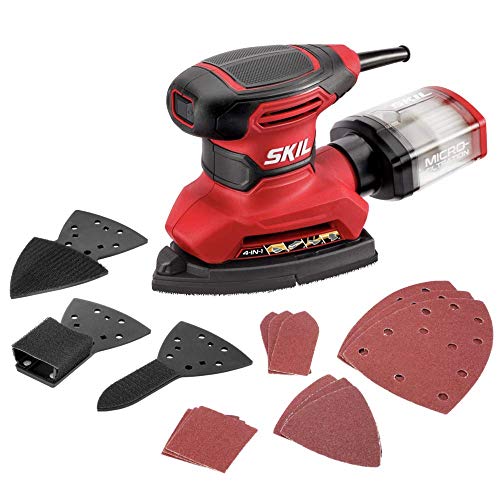 SKIL Corded Multi-Function Detail Sander with Micro-Filter DustOne Size9.84 x 5.7 x 6.69 inches2.6 poundsCheck on Amazon



What's inside
As an Amazon Associate I earn from qualifying purchases. This post may contain affiliate links at no extra cost to you.
Sanding is one of the few jobs where the cheap tool is genuinely the right tool, which is exactly why the marketing around it is so bad. A budget sander for DIY projects only has to spin a 5 in. pad, hold the paper without spitting it off, and not leave your hands buzzing. That is a $40 to $70 problem, not a $150 problem. Every spring the same corded orbit sanders reappear with a struck-through list price nobody has paid in years, and every fall a few cordless kits quietly lose half their battery capacity while the sticker stays put.
Short version before the detail: buy corded unless you already own a battery platform, shop the $40 to $70 band, treat anything advertised at more than 40% off list as an anchoring trick, and put the savings into sandpaper.
As an Amazon Associate we earn from qualifying purchases at no extra cost to you.


| Sander type | Street price band | Best DIY use | Deal note |
|---|---|---|---|
| Corded 5 in. random orbit | $40-$70 | Furniture, doors, decks, paint prep | The default buy. Over $80 corded is for daily use. |
| 1/4 sheet palm sander | $30-$50 | Trim, small flats, touch-ups | Handy but slow. Never worth waiting for a sale. |
| Detail or mouse sander | $25-$45 | Corners, spindles, lattice | Buy for access, not speed. |
| Cordless random orbit, bare tool | $70-$110 | Fences, ladders, outdoor work | Only if the batteries are already in your garage. |
| Belt sander 3 x 18 | $70-$120 | Fast stock removal, flattening | Skip unless a flattening job is waiting. |
What a budget sander for DIY projects actually needs
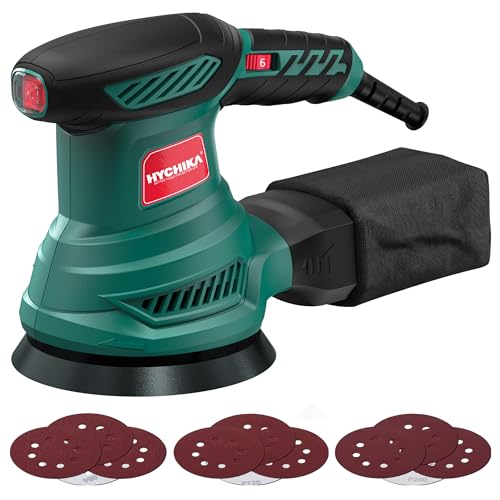
Five things matter and the rest is packaging copy. A 5 in. hook-and-loop pad in the standard eight-hole pattern, because that is the paper sold in bulk everywhere. Variable speed in the 7,000 to 12,000 OPM range for veneer and finish coats. Two to three amps, which is plenty for a random orbit. A dust port that fits a 1-1/4 in. shop vac hose, since the onboard bag is close to decorative. And a replaceable pad you can still buy in two years for $10 to $20. Ignore claimed horsepower, and be skeptical below $35, where pad hooks quit early and the orbit is not random enough to keep swirl marks out of the finish.
Price bands: what your money actually buys
Under $35: one-project tools. Fine to scuff a single dresser, not a habit.
$40 to $70: the sweet spot, where nearly every DIY buyer should land. Real bearings, variable speed at the top of the band, tolerable vibration, and parts you can still find later.
$80 to $120: better balance, less vibration, longer duty cycle. Worth it only if you sand most weekends or are refinishing a house of trim.
$130 and up: brushless cordless and premium imports. Good tools, not budget tools.
Percentages beat stickers. Paying $55 when the 90-day average is $59 is not a deal. A real markdown runs 20% to 35% under the 90-day average, which for a known brand usually lands in the mid-$30s to low-$50s.
Corded 5 in. variable-speed random orbit sander
Shop this category first. Filter to the $40 to $70 band and pick a brand whose replacement pads and dust adapters are listed on the same page. Check price history before believing any percentage.
Corded versus cordless, and the battery-downgrade trap
Cordless orbit sanders are good now, but sanding is a sustained load, not a burst. Budget roughly 15 to 25 minutes of continuous work from a 2.0Ah pack and about double from a 5.0Ah, so one battery is not a system. Bare tools sit at $70 to $110, and a kit with battery and charger often costs close to double the bare tool.
Watch the kit contents, not the photo. A combo that shipped two 4.0Ah packs last year reappears with a single 2.0Ah, or a “starter kit” sits beside a “kit” with near-identical images and a $15 gap. Divide price by total amp-hours: if cost per amp-hour rose while the headline price fell, the discount came out of the battery. Platform choice should follow your garage. Ryobi ONE+ is the cheapest entry, DeWalt 20V MAX and Makita LXT sit mid-pack, Milwaukee M18 FUEL costs the most per battery, and buying into a new platform for a sander alone is the most expensive way to save money.
Cordless random orbit sander, bare tool
Worth it if two mid-size packs are already on your shelf. If not, add a battery and charger to the price before comparing, and the math usually swings back to the cord.
How to spot a fake sander discount
The struck-through number is usually MSRP, not street price, so “58% off” on a tool that never sold at list means nothing. Check price history first, and look at both the 12-month low and the 90-day average. A “lowest price in 30 days” badge describes one month, not value.
Seasonality is predictable. Prices firm up from February through May as deck and fence season pulls demand forward, then soften in July, again in the October sales event, and from Black Friday into mid-December.
Two more traps. When the main listing goes out of stock, third-party sellers fill in at 15% to 40% over normal while the page looks unchanged. And factory reconditioned units from the brand, with a one or two year warranty, can be a real 25% to 40% saving, while a “used, like new” sander from an unknown seller is somebody else’s worn pad.
- ✔ A $40-$70 corded random orbit covers most DIY sanding
- ✔ No battery tax, charger or platform lock-in
- ✔ Standard 5 in. eight-hole discs stay cheap
- ✔ Cheap enough that a two-year life still pencils out
- ✘ Weak dust collection without a shop vac attached
- ✘ Pad brakes wear and swirl marks follow
- ✘ Vibration gets tiring past 30 to 45 minutes
- ✘ Switches, bearings and pad hooks fail before the motor
Sandpaper is the line item people forget
For most buyers the discs outspend the tool in year one. Ten-packs of a single grit off the rack are the most expensive way to sand anything, while bulk assortments of 50 to 100 discs per grit often cut cost per disc by half. A workable plan is 80 for stripping, 120 for general work, then 180 and 220 before finish. Aluminum oxide is fine on softwood, ceramic lasts longer on hardwood, and stearated no-load paper keeps paint from gumming the disc. Most complaints about a weak sander are really clogged paper.
5 in. eight-hole hook-and-loop disc variety pack
The cheapest real saving on this page. Buy a multi-grit box of 100 or more instead of refilling 10-packs mid-project, and confirm the hole pattern matches your pad.
Buy now or wait?
Buy now if a project is on the bench and a known-brand corded sander in the $40 to $70 band is at or under its 90-day average, with replacement pads listed.
Wait if the only discount is a percentage off list with no history behind it, if a cordless kit’s battery contents changed, or if it is April and nothing is moving. July and late November beat spring pricing.
Frequently asked questions
Is a cheap random orbit sander good enough for furniture? Yes, up to the final pass. Swirl marks come from skipping grits, worn paper and leaning on the tool, not from the price tag. Hand sand the last pass at 220 along the grain.
Random orbit or sheet sander if I can only buy one? Random orbit, every time. It cuts faster, leaves a better surface and takes bulk discs. A detail sander is a $30 addition later for corners.
Are brushless motors worth paying for? On corded, no, the motor is rarely what fails. On cordless, brushless buys real runtime, but if it pushes you past roughly $120 with a battery you have left the budget conversation.
Sanders reward patience with the price tag and punish it with the paper. Hold the tool in the $40 to $70 band, verify the markdown against real price history, and spend the difference on discs.
Check prices on Amazon →