Worx vs Greenworks Yard Tools: Comparing Affordable Battery Ecosystems
What's inside
As an Amazon Associate I earn from qualifying purchases. This post may contain affiliate links at no extra cost to you.
Worx and Greenworks both sell affordable cordless yard tools, but they take different approaches to battery ownership. Worx centers its lineup around PowerShare batteries, while Greenworks splits its tools among several voltage families, including 24V, 40V, 60V, and 80V systems. The right choice depends less on the color of the tool and more on the size of your yard, the number of tools you expect to buy, and whether you are willing to keep more than one battery platform.
As an Amazon Associate we earn from qualifying purchases at no extra cost to you.

Battery platforms: simpler versus broader
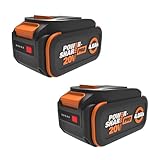
Worx PowerShare is straightforward. Its 20V batteries can be used in many 20V tools, and two batteries can power tools marketed as 40V. Some higher-output equipment uses four batteries. That gives the system a simple buying logic: a battery bought for a drill, trimmer, or blower may also work in other PowerShare tools.
Greenworks offers more range, but its battery families are separate. A Greenworks 40V battery generally does not work in a 60V tool, and a 24V battery is a different system again. This matters when a homeowner buys a cheap starter kit and later wants a larger mower or snow thrower. You may need an entirely new charger and battery set.
The benefit is that Greenworks can better match battery size to the job. A 40V platform is sensible for many small and medium lawns, while 60V and 80V tools provide more power for larger cutting decks, wet grass, and demanding seasonal work.
| Consideration | Worx PowerShare | Greenworks |
|---|---|---|
| Battery strategy | Primarily one shared 20V-based family, with multiple batteries used for higher voltage tools | Separate 24V, 40V, 60V, and 80V families |
| Best fit | Small yards and buyers building a mixed home-and-yard tool collection | Buyers who want to scale from light-duty tools to more powerful lawn equipment |
| Battery replacement cost | Usually easier to standardize, though high-output tools can require two or four packs | Potentially higher if you own multiple voltage families |
| Tool selection | Good for routine homeowner work, with fewer heavy-duty choices | Broader selection in mowers, blowers, chainsaws, and snow tools |
Mowers and cutting performance
For a small, flat lawn under roughly 5,000 square feet, either brand can be adequate. A cordless mower with a 16- to 19-inch deck is easier to store and usually costs less than a larger self-propelled machine. The cheaper option is fine if you mow weekly, keep the grass dry, and do not let it grow excessively tall.
Battery runtime claims need careful interpretation. “Up to” figures are commonly measured with the mower running without heavy cutting, often in controlled conditions. Thick spring grass, damp clippings, hills, and a low cutting height can cut usable runtime substantially. A mower advertised for 45 minutes may deliver closer to 25 to 35 minutes under difficult conditions.
For small lawns, a mower kit with one battery can be good value. For larger yards, look for a kit with two batteries or a design that accepts multiple packs. Buying a second battery later can cost a large portion of the original mower price. Before choosing a cordless battery lawn mower, measure the lawn and consider whether you can finish before the battery needs charging.
Greenworks has the advantage when you need a genuinely stronger mower. Its larger-voltage families offer more options for wide decks and self-propelled models. Worx is often more attractive for compact yards where low weight and shared batteries matter more than maximum cutting speed.
Trimmers and blowers
String trimmers are where Worx often makes the most financial sense. Light-duty trimming around sidewalks, garden beds, and fences does not require a large battery. A small PowerShare kit can handle routine edging without adding much weight to the tool.
Greenworks 24V or 40V tools are similarly suitable for light work. The 40V system is the safer choice if you have thick weeds, a large lot, or long sessions between charging. More voltage does not automatically mean longer runtime; it mainly allows the tool to draw more power. Battery watt-hours, cutting load, and battery condition matter just as much.
Blowers expose the trade-off more clearly. Compact Worx and lower-voltage Greenworks blowers are useful for dry leaves on patios and driveways, but they can struggle with wet leaves or gravel-covered areas. Higher-voltage Greenworks blowers are more capable, though the tool and battery are heavier and the kit price rises. For occasional cleanup, the budget model is fine. For a tree-filled property, buy a 40V cordless leaf blower or stronger system rather than expecting a small blower to do commercial-style work.
Where the real value appears
Tool-only prices can make one brand look cheaper, but starter kits are the more useful comparison. Include the battery, charger, and the cost of a replacement pack. A $150 tool kit that needs a $100 battery soon after purchase may be a worse deal than a $220 kit with two batteries.
Battery age is another failure point. Packs lose capacity over time, especially when stored fully discharged, left in hot garages, or used immediately after heavy charging. Store batteries indoors when practical, let hot packs cool before charging, and avoid buying more voltage families than you need.
Worx is usually the better value for a homeowner who wants one compact ecosystem covering trimming, blowing, light mowing, and occasional DIY tools. Its main limitation is that demanding yard equipment may require multiple batteries, which reduces the apparent savings.
Greenworks is the better long-term choice for buyers planning a larger outdoor collection. You can start with 40V equipment and move to 60V or 80V when your lawn or seasonal chores demand more power. The catch is platform fragmentation: choose the voltage family first, then buy within it.
Seasonal buying advice
Spring is the best time to compare mower bundles, while late summer and fall often bring discounts on trimmers, blowers, and replacement batteries. Battery-powered snow tools are commonly discounted after winter, but availability becomes poor when the next storm arrives. Watch the complete kit price rather than the percentage-off claim.
If your needs are limited to a small lawn and light cleanup, buy the less expensive ecosystem and keep the battery count modest. If you maintain a large property, deal with wet leaves, or expect to add a chainsaw, snow thrower, or wide mower, Greenworks’ higher-voltage choices justify the extra planning. For most buyers, the best value is not the cheapest tool today; it is the platform that prevents a second set of batteries next year.