Makita vs Bosch Cordless Vacuums: Which Offers Better Value for Workshop Cleanup?
What's inside
As an Amazon Associate I earn from qualifying purchases. This post may contain affiliate links at no extra cost to you.
For workshop cleanup, the better-value cordless vacuum is usually the one that fits batteries you already own. Makita and Bosch both sell compact, jobsite-ready vacuums, but their lineups differ by region and product generation, and bare-tool prices can be misleading. Compare the complete setup: vacuum, battery, charger, filters and any hose or floor nozzle you need.
As an Amazon Associate we earn from qualifying purchases at no extra cost to you.


The short answer
Choose Makita if you already have compatible Makita batteries and want to keep one battery platform in the shop. Choose Bosch if you already own batteries compatible with the specific Bosch vacuum you’re considering. If you own neither brand, compare the exact vacuum kits available locally rather than assuming one brand is consistently cheaper or more powerful.
For occasional bench dust, either brand’s compact vacuum can be enough. For repeated cleanup of larger messes, a small cordless vacuum is a convenience tool, not a substitute for a dust extractor. Neither should be your first choice for sustained collection from a sander, planer or saw unless its manual explicitly approves that use and the filtration and capacity suit the material.
Compare the whole setup
| Factor | Makita | Bosch | What it means for value |
|---|---|---|---|
| Battery compatibility | Varies by vacuum and battery platform | Varies by vacuum and battery platform | Confirm the exact battery family; batteries are not automatically interchangeable across a brand’s tools. |
| Up-front cost | Often attractive as a bare tool for existing owners | Can be competitive as a bare tool or kit, depending on local stock | Compare the kit price if you need a battery and charger. |
| Shop suitability | Useful for small, frequent pickups | Useful for small, frequent pickups | Check capacity, hose, nozzle and filter details for the mess you make. |
| Long cleanup sessions | Battery runtime limits uninterrupted use | Battery runtime limits uninterrupted use | A spare battery adds cost; a corded extractor may be better value for routine heavy work. |
Brand names alone do not tell you which unit has better suction, runtime or filtration. Those depend on the particular model, battery, filter condition and accessories. Before buying, check the manual and product listing for container capacity, filter type, compatible batteries, included nozzles and whether the vacuum is rated for the dust you plan to collect.
Price the battery and runtime
A bare tool is a good deal only if you already have a compatible battery and charger. If you do not, add both to the vacuum’s price. A kit may cost more upfront but be cheaper than buying each piece separately, particularly during a promotion. Search current Makita cordless vacuums and Bosch cordless vacuums, then compare the exact package contents and battery compatibility.
Runtime claims are not a reliable promise of how long a vacuum will run in your shop. Higher suction settings, a clogged filter, fine dust and a worn battery can all shorten useful time. If you expect a 20-minute cleanup, a vacuum that runs for 20 minutes under ideal conditions may leave no margin. Budget for a spare compatible battery if stopping to recharge would interrupt work; otherwise, clean in short bursts and recharge between tasks.
What makes a workshop vacuum useful
Capacity affects how often you stop to empty the bin. A compact unit is easy to carry and store, but a few handfuls of sawdust can fill it quickly. Fine dust can also load a filter before the bin looks full, reducing airflow. Empty the container before it is packed, clean or replace the filter as directed, and avoid vacuuming hot debris, liquids or hazardous dust unless the manual specifically permits it.
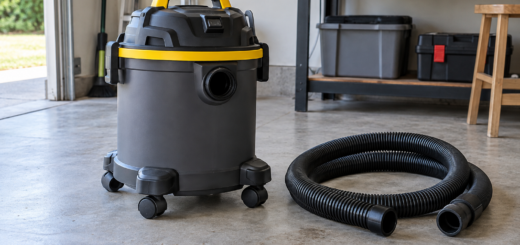
Look closely at the hose and nozzle. A short or narrow hose may make cleanup awkward around a bench, while a floor nozzle can be more useful than high advertised suction for sweeping up chips. Check whether the needed accessories are included or sold separately. A missing crevice tool or floor head can erase the savings on a discounted bare tool.
When a cheaper option is fine
If you need a vacuum mainly for occasional wood chips, fastener pickups and cleaning the inside of a vehicle, buy the less expensive compatible unit if it has a usable hose, replaceable filter and enough capacity for your typical mess. Paying extra for a larger system is hard to justify when it will be used for a few minutes at a time.
But don’t choose the cheapest compact vacuum for continuous sanding cleanup. Fine dust can clog a small filter, and the combination of limited bin capacity and battery runtime means frequent stops. For repeated tool-connected collection, consider a purpose-built cordless dust extractor or a corded extractor with suitable filtration. Confirm the extractor is approved for the dust involved; ordinary shop dust and hazardous materials do not have the same requirements.
When to buy
Seasonal promotions often make kits more appealing than bare tools, especially around major holiday sales and spring tool events. Compare the discounted kit against the bare-tool price plus a battery and charger—not against the manufacturer’s suggested price alone. If you already own the right battery, a bare-tool deal may still be the better buy. If you need a battery, check whether the kit includes one with enough capacity for useful cleanup rather than treating any included battery as equal.
A practical buying rule
First, list the compatible batteries you already own. Next, decide whether the vacuum is for light spot-cleaning or regular dust collection. Then compare the complete cost, capacity, filter availability and included accessories of specific Makita and Bosch options sold in your area. For light workshop cleanup, the platform you already own will usually offer the best value. If you own neither, buy the model with the more suitable kit and easier-to-source filters—not the brand name that sounds better on paper.