Best Value Cordless Circular Saw for Breaking Down Cabinet Panels
What's inside
As an Amazon Associate I earn from qualifying purchases. This post may contain affiliate links at no extra cost to you.
Breaking down cabinet panels is one of the jobs where a cordless circular saw earns its keep. It is faster than setting up a table saw, safer than wrestling a full sheet through a small saw, and easier to use in an occupied kitchen or garage. The best value is not necessarily the cheapest saw on the shelf. You want enough power to cut 3/4-inch plywood cleanly, a shoe that stays square, and batteries that do not make every cut expensive.
As an Amazon Associate we earn from qualifying purchases at no extra cost to you.


What matters for cabinet panels
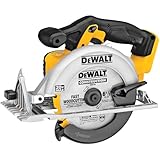
For most cabinet work, a 6-1/2-inch cordless circular saw is the sensible size. It normally has enough capacity to cut 3/4-inch plywood, melamine, MDF, and particleboard in one pass. A 7-1/4-inch saw offers more depth and often more power, but it is heavier and usually costs more. That extra capacity is useful for thick lumber, not essential for breaking down standard cabinet sheets.
Look for a maximum cut depth of at least 2-1/8 inches at 90 degrees, a brushless motor if the price is reasonable, and a rigid aluminum or magnesium shoe. A stamped steel shoe can work, but it is more likely to bend if the saw is dropped or dragged against a guide. A clear blade guard and a readable bevel scale matter more than a high no-load speed figure.
A saw with a left-side blade can give a right-handed user a better view of the cut line. A right-side blade is not automatically worse; it often keeps the motor and battery away from the panel edge. Choose the layout that gives you the clearest view and feels balanced in your hand.
Best-value buying options
| Type of saw | Typical street price | Best use | Main compromise |
|---|---|---|---|
| Brushed 6-1/2-inch kit | $70-$130 | Occasional cabinet cuts and small repairs | Shorter runtime and more heat under load |
| Brushless 6-1/2-inch kit | $120-$220 | Regular DIY cabinetry and remodeling | Higher upfront cost |
| Brushless 7-1/4-inch kit | $180-$350 | Cabinet work plus framing and thick stock | Heavier, bulkier, and unnecessary for many panels |
| Tool-only saw | $60-$220 | Buyers already invested in a battery platform | Battery and charger can erase the apparent savings |
The cheapest brushed saw is fine if you are cutting a few sheets of plywood once or twice a year. Use a sharp, fine-tooth blade and let the motor cool between long cuts. It becomes a poor value when you are cutting a kitchen’s worth of panels, because slower cutting and battery drain can turn a low purchase price into a frustrating afternoon.
For most homeowners starting from scratch, a brushless 6-1/2-inch cordless circular saw kit is the value sweet spot. It costs more than a basic brushed kit but generally runs cooler, has better low-speed control, and is more likely to remain useful for future flooring, shelving, and framing projects.
Battery platform is part of the price
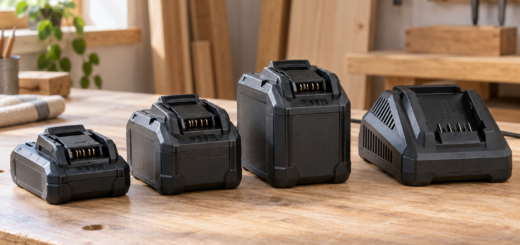
Do not compare a bare tool with a kit without adding the battery and charger. A tool-only saw may look $80 cheaper, but a separate battery and charger can add $60 to $150. If you already own compatible batteries, the tool-only route is usually the best deal. If not, the kit often provides the lower total cost.
Battery voltage labels are not a complete performance ranking. Compact batteries reduce weight but may run out quickly in dense MDF. A 4.0Ah or 5.0Ah battery is a practical size for panel work, while a small 2.0Ah pack is easier to handle for short cuts. High-output packs can improve performance, but they are expensive and add weight. For occasional use, buying into a broad platform with affordable batteries is usually smarter than paying a premium for maximum power.
Compare the price of the saw, a replacement battery, and the other tools you may buy later. A slightly more expensive platform can be better value if it has affordable drills, sanders, lights, and impact drivers. Conversely, do not switch platforms for a small motor advantage if you already own several good batteries.
Blade choice determines cut quality
The blade supplied with a saw is often a general-purpose blade, not the best choice for visible cabinet edges. For plywood and melamine, use a 40-tooth or finer blade designed for finish cuts. A 24-tooth framing blade cuts faster but can leave chipped veneer and a rough edge. Keep a separate coarse blade for construction lumber so the finish blade does not get ruined by nails or dirty wood.
Even a good saw will chip a laminated panel if the workpiece vibrates. Support the sheet on sacrificial foam insulation or several evenly spaced scraps, and keep the offcut supported until the blade exits. Put the finished face down when using a conventional saw, because the teeth enter the underside and tend to chip the top surface less. Check the blade’s tooth direction and the manufacturer’s instructions before relying on this rule.
A circular saw guide rail or straight-edge guide is often a better upgrade than buying a more powerful saw. It helps keep long cuts straight and reduces the chance of wandering into a finished cabinet part. For repeated cabinet breakdown, a simple clamped guide made from a straight board can work, though a purpose-built rail is faster to position.
How to avoid common failures
Mark the waste side of the cut and allow for the blade kerf, usually about 1/8 inch. Clamp the guide so the shoe cannot drift, set the blade just 1/8 to 1/4 inch deeper than the panel, and start the saw with the blade clear of the material. Do not force the tool when the motor slows; forcing it increases heat, drains the battery, and can make the cut wander.
Typical failures include a shoe that is not square, a blade guard that catches on the panel edge, and a battery that shuts down halfway through a cut. Test the saw on scrap before cutting a finished side panel. If the cut is consistently off square, check the shoe and bevel adjustment rather than compensating with a crooked guide.
When to buy for the lowest price
Tool prices commonly fall during spring remodeling sales, Father’s Day promotions, summer holiday events, and the November holiday period. Kit discounts are especially valuable because manufacturers often bundle a battery or charger at little extra cost. Watch for a bare tool bundled with a free battery, but verify that the battery is a useful capacity rather than a tiny starter pack.
If you already own a compatible system, search for a tool-only brushless 6-1/2-inch cordless circular saw during these sales. If you are cutting only one or two panels, a budget cordless circular saw kit is sufficient, provided you pair it with the right blade and a stable guide. Spend more on brushless performance or a larger saw only when the tool will see regular, demanding use.