Best Affordable MIG Welder for Small Automotive Repairs
What's inside
As an Amazon Associate I earn from qualifying purchases. This post may contain affiliate links at no extra cost to you.
For small automotive repairs, an affordable MIG welder should handle thin sheet metal without constantly burning holes through it. That usually means a 120-amp to 180-amp machine with adjustable voltage, wire speed control, and a stable low-power setting. You do not need a large industrial welder to repair a floor patch, rocker panel, exhaust bracket, battery tray, or trailer-light mount. You do need the right process, wire, and duty cycle.
As an Amazon Associate we earn from qualifying purchases at no extra cost to you.

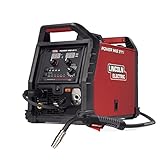
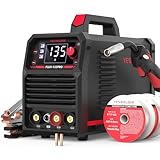

What to Look For in a Small-Repair MIG Welder
For automotive sheet metal, prioritize low-amp control over maximum output. A welder that claims 200 amps but has a harsh, poorly controlled minimum setting can be harder to use than a good 140-amp machine. Look for a minimum output around 30 amps or lower, especially if you will weld 18- to 22-gauge steel.
A continuously adjustable voltage control is preferable to a few fixed tap settings. It lets you fine-tune the arc when material thickness, joint fit, or power-cord length changes. Wire speed should also be adjustable independently. The combination makes it easier to use short stitch welds instead of long, heat-distorting beads.
A standard 120-volt welder is convenient in a home garage and normally runs from a 15-amp circuit. A 240-volt unit gives you more output for thicker brackets and structural repairs, but it may require a dedicated circuit. For occasional bodywork, 120 volts is usually the better value.
For a first purchase, compare 120V MIG welders with gas and flux-core capability. Dual-process flexibility is useful, but do not assume every inexpensive machine performs equally well with both methods.
Best Affordable Categories
| Welder type | Typical price | Best use | Main drawback |
|---|---|---|---|
| Basic 120V flux-core | $120-$220 | Outdoor brackets, rusty steel, occasional repairs | More spatter and smoke; less suitable for clean body panels |
| 120V gas MIG | $180-$350 | Sheet metal, body patches, general garage work | Requires regulator, cylinder, and a protected work area |
| 120V multi-process | $250-$450 | MIG plus occasional stick or DC TIG work | More controls and accessories; budget models can have rough arc starts |
| Compact 180A-200A unit | $300-$600 | Heavier brackets and mixed repair work | Extra capacity costs more and may need 240 volts |
The best value for clean automotive repairs is usually a gas-capable 120-volt MIG welder. Use solid ER70S-6 wire with 75/25 argon-carbon dioxide shielding gas. The arc is cleaner than flux-core, and the reduced spatter means less grinding near painted or finished surfaces.
A basic flux-core machine is fine when the work is hidden, the steel is dirty, or you need to weld outdoors. It is also the cheapest way to get started. However, self-shielded wire makes more smoke, leaves slag, and tends to produce more spatter. A low-cost flux-core welder can be the right choice for a trailer tab or exhaust hanger, but it is a poor bargain if you mainly plan to patch visible bodywork.
Where Budget Models Make Sense
Entry-level welders from established tool brands generally offer more predictable wire feeding, better replacement-part availability, and clearer settings. They may not produce a dramatically stronger weld, but they are less frustrating to operate. A bargain machine with a slipping drive roller or unstable arc can waste more wire and grinding discs than its lower purchase price saves.
Generic inverter welders can be worthwhile when the budget is tight. Choose one with a real copper or brass MIG connection, a standard Tweco-style gun if possible, a replaceable liner, and a published duty cycle. Avoid machines that provide only vague “maximum current” claims and no useful information about minimum amperage or wire sizes.
For a straightforward repair setup, consider a compact 120V gas MIG welder with a spool capacity of at least 2 pounds. Small 1-pound spools are convenient for testing, but they cost more per pound and run out quickly during repeated practice.
Multi-process welders are worth considering only if you will actually use the extra functions. Stick mode can help with thicker outdoor steel, but it does not improve thin automotive sheet metal. Low-cost DC TIG capability is useful for learning, though it typically lacks the foot pedal control and refined arc response of a dedicated TIG machine.
Wire, Gas, and Starting Settings
For automotive steel, .023-inch solid wire is the safest starting point for thin material. It allows lower current and smaller welds than .030-inch wire. Use .030-inch wire when joining thicker brackets or when your welder feeds it more reliably. With solid wire, set shielding gas near 20 cubic feet per hour indoors, then adjust for drafts and nozzle distance.
Start with clean, tightly fitted metal. Remove paint, rust, undercoating, and galvanizing at least 1 inch around the joint. Poor preparation is a common cause of porous welds and weak fusion. Keep the gun close, usually about 3/8 inch from the work, and use short 1/2-inch to 1-inch tacks spaced around the panel before filling the gaps.
If the wire burns back into the contact tip, wire speed is too low, the tip is worn, or the gun is being held too far away. If the wire stubs into the work, wire speed is too high or voltage is too low. Excessive spatter often indicates incorrect settings, poor gas coverage, contaminated steel, or a loose ground clamp.
What These Welders Can and Cannot Do
A good 120-volt welder can join clean 18-gauge steel and make sound repairs on many 14-gauge brackets with proper preparation. It is not the right tool for critical suspension components, steering parts, frame repairs, or heavily loaded tow points unless the welder, joint design, and operator experience are appropriate for that structural work.
Duty cycle matters more than peak amperage during repairs. A machine rated at 20 percent duty cycle at 90 amps can weld for about 2 minutes in a 10-minute period at that output before it needs to cool. Automotive patch work usually involves short tacks, so this may be adequate. Repeated long welds on thick steel will expose the limits of a small unit quickly.
When to Buy
Prices commonly improve around major holiday sales, spring garage-tool promotions, and November shopping events. Watch the total package rather than the advertised welder price. A $180 machine that needs a $90 regulator, $35 gas hose, $25 contact tips, and a $50 spool of wire may cost more than a $240 kit with useful accessories.
Check return policies and replacement consumables before buying. A cheap welder is acceptable when the job is occasional and noncritical, especially if it includes a usable warranty. Spend more for a better wire-feed system if you expect to practice regularly, repair body panels, or keep the machine for several years.