Flex vs Milwaukee: Is a Premium Cordless Tool Platform Worth the Extra Cost?
What's inside
As an Amazon Associate I earn from qualifying purchases. This post may contain affiliate links at no extra cost to you.
Flex and Milwaukee both make serious cordless tools, but they sell value in different ways. Flex often costs less for comparable high-performance tools, while Milwaukee offers a broader lineup, more places to buy and a larger installed base. The right choice depends less on which brand wins a spec-sheet contest and more on how many tools you’ll buy, what jobs you do and whether you need the platform’s less glamorous extras.
As an Amazon Associate we earn from qualifying purchases at no extra cost to you.


Flex vs Milwaukee at a glance
| Factor | Flex | Milwaukee |
|---|---|---|
| Typical value proposition | High performance, often attractive kit pricing | Broad selection, frequent promotions and extensive availability |
| Tool selection | Strong core lineup, smaller overall range | Large range across trade and specialty categories |
| Battery platform | 24V system | M12 and M18 systems, plus specialty platforms |
| Best fit | Buyers starting fresh who want strong core tools for the money | Buyers who need specific tools, accessories or local support |
| Main trade-off | Fewer options and less retail coverage | Some kits and bare tools carry a brand premium |
Prices vary by retailer and promotion, so compare the actual kit contents rather than relying on a brand’s usual price. A kit with two batteries and a charger can be a better deal than a lower-priced bare tool—unless you already own compatible batteries.
The cost is bigger than the first tool
Buying into a cordless platform means paying for batteries and a charger as well as the tool. A starter kit can make the first purchase economical, but adding bare tools is usually cheaper once you have enough batteries. Before choosing, price out your likely first three purchases: perhaps a drill, impact driver and saw. Include at least two batteries if you’ll work away from an outlet; one battery can leave you waiting during charging or swapping tools between jobs.
Flex’s 24V system and Milwaukee’s M18 system serve many of the same full-size-tool needs, but the batteries are not interchangeable. Milwaukee also has M12 for smaller, lighter tools. That matters if you want compact tools for cabinet work, electrical jobs or overhead fastening: an M18 tool may be more power and weight than the task calls for, while Flex does not offer the same two-platform choice.
For a homeowner who needs a drill and driver a few weekends a year, either brand may be more tool than necessary. A lower-cost kit from another reputable maker can be entirely adequate. Spending extra makes more sense if you’ll use the tools often, need a specific performance feature or plan to build out a larger set.
Performance: look beyond peak claims
Both brands offer capable drills, impact drivers and saws. In real work, the useful questions are whether a drill can finish the hole without overheating, whether a saw holds speed through the cut and whether the tool remains manageable after several hours. Maximum torque figures alone won’t tell you how a tool feels in your hand or how quickly it drains a battery.
Battery capacity affects runtime and weight. A compact battery is easier to carry for overhead fastening, but a larger pack generally lasts longer in demanding cuts. On a circular saw, repeated cuts through thick lumber can expose the limits of a small battery: expect more stops to swap packs and potentially slower cutting as the pack runs low. For occasional trim cuts, that trade-off may be fine.
Before buying, check the exact tool’s reviews and specifications—not just brand reputation. A platform can have a strong flagship drill and still lack the particular specialty tool you need. Check warranty terms and registration requirements as well; coverage and service processes can change, and a retailer’s return window is often the simplest remedy for a defective new tool.
Selection and support can decide the value
Milwaukee’s larger catalog is a practical advantage when your work calls for specialty tools, compact M12 options or a particular accessory. It is also easier to find Milwaukee products at many retailers. That can mean more chances to compare kits in person, locate a replacement battery or take advantage of a sale.
Flex makes a compelling case when its tool lineup covers your needs and the kit price is lower. The risk is not that a Flex tool is automatically poor; it’s that a future tool you want may not be available in the same platform, or may be harder to find locally. If you already own several Milwaukee batteries, replacing the platform to save on one Flex tool rarely makes financial sense.
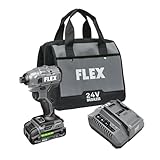
For a new buyer focused on common cordless tools, compare a Flex 24V drill and impact-driver kit with a similar Milwaukee kit. Match the number and capacity of batteries, charger, case and included tools. A lower sticker price is not a real saving if you must immediately buy another battery.
Who should choose each brand?
Choose Flex if you’re starting without batteries, want full-size cordless tools and find a well-equipped kit at a meaningful discount. It is particularly attractive when the core lineup—drill, impact driver, circular saw, reciprocating saw and work light—covers your projects. Compare a Flex 24V bare-tool selection before buying a large kit; you may save money by getting only the tools you’ll use.
Choose Milwaukee if you need a broader catalog, want access to M12 and M18 tools, or already own compatible batteries. The higher price is easier to justify when a specific tool saves time or avoids buying a second battery system. Look at Milwaukee M18 drill and impact-driver kits during major sales, when the price gap can shrink.
Choose neither by default if your use is light and occasional. For assembling furniture, hanging shelves and small repairs, a budget cordless drill kit is often sufficient. Pay for a premium platform when the tools will earn their keep through frequent use, dependable performance or a lineup you genuinely need—not simply because a tool has a familiar logo.