Harbor Freight vs Big-Brand Tools: When Does the Lower Price Make Sense?
What's inside
As an Amazon Associate I earn from qualifying purchases. This post may contain affiliate links at no extra cost to you.
Harbor Freight can be the sensible buy when a tool gets occasional, low-consequence use. A lower price is harder to justify when the tool must stay accurate, run for hours, or protect an expensive workpiece. The right comparison is not just the shelf price: include batteries, replacement parts, downtime, and the cost of a bad cut or failed fastener.
As an Amazon Associate we earn from qualifying purchases at no extra cost to you.



Start with the job, not the logo
Ask three questions: How often will you use it? What happens if it fails mid-job? Does the result depend on precision? A drill used to assemble shelves twice a year has different demands from one drilling holes all day. A slightly wobbly sander may be tolerable on rough framing; it is a problem on a tabletop you plan to stain.
For occasional repairs, a budget tool can pay for itself quickly. If a $30 tool handles a job that would otherwise require a $100 purchase, and you use it a handful of times, spending extra for professional durability may not be worthwhile. For daily use, the calculation changes: downtime, fatigue, and inconsistent results can cost more than the initial savings.
Where budget tools often make sense
Harbor Freight is worth considering for tools that see light use, have few precision requirements, or are easy to replace. Think basic clamps, hand tools for a home kit, simple tool storage, and occasional-use accessories. A homeowner may also get good value from a corded tool used for a short project, since there is no battery platform commitment.
For a first cordless setup, compare the price of the tool alone with the cost of a battery and charger. A bare tool can look inexpensive while the complete kit costs much more. If you only need a drill for occasional assembly, a budget cordless drill kit may be enough. Check what is included, the battery capacity, and whether replacement batteries are readily available before choosing a platform.
Where price can cost more
Pay more attention to quality when the tool runs for long stretches, needs repeatable accuracy, or can damage material if it slips. A circular saw with poor blade alignment can leave a rough or wandering cut. A drill with a weak chuck may loosen under load. A grinder that overheats during repeated cuts can slow the work and wear out sooner.
Safety matters too. Look for a stable base, predictable controls, guards that stay in place, and a secure grip. A low price is not a bargain if the tool feels difficult to control. Inspect it before use, follow the manual, and stop if a guard, switch, cord, or battery is damaged. Do not assume a higher price guarantees safety, either; check the specific tool and its service support.
How the trade-offs usually stack up
| Factor | Budget tool | Established brand tool |
|---|---|---|
| Upfront cost | Often lower, especially for occasional-use corded tools | Usually higher; kits may include useful batteries and chargers |
| Frequent use | May wear faster or feel less comfortable over long sessions | Often offers more consistent performance and broader platform choices |
| Accuracy | Can be adequate for rough work; check alignment and adjustment range | Often a safer bet for repeatable cuts or fine finishing, but verify reviews and specs |
| Repair and replacement | May be cheaper to replace than repair; parts and service can be limited | Parts, batteries, and service may be easier to find, depending on the model |
| Best fit | Occasional home repairs, backups, and low-consequence tasks | Regular work, longer run time, and jobs where failure wastes material or time |
Check the tool before buying
Compare specifications that affect your job, not just wattage or advertised power. For a saw, check blade size, bevel range, depth of cut, and whether the fence or shoe feels square. For a drill, look for a secure chuck, a clutch with usable settings, and a comfortable grip. For a sander, consider dust collection and whether standard sheets or discs fit.
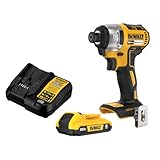
If possible, handle the tool in the store. Check for excessive play in adjustable parts, awkward switches, and poor balance. For a cordless tool, confirm that batteries, chargers, and compatible tools are available at a price you can accept. A cordless impact driver kit is useful for repeated screw-driving, but may be unnecessary if you already own a capable drill and only drive a few screws each month.
Buy around the job—and the sales calendar
Seasonal promotions can change the math, but compare the full kit and the final price rather than trusting a discount percentage. Spring and early summer often bring deals on outdoor equipment and project tools; holiday sales can be a good time to compare cordless kits. Harbor Freight also runs frequent promotions, so check the current price and any coupon terms before making a special trip. Avoid buying a battery platform just because one tool is discounted if you do not expect to use the other tools.
For a one-time task, renting is another comparison worth making. If you need a specialty tool for two hours, a rental may cost less than buying even the cheapest version, and you avoid storing it afterward. For repeated work, ownership makes more sense once rental fees and travel time approach the purchase price.
A practical rule for the final decision
Choose the cheaper tool when the work is occasional, the result is forgiving, and replacement would not derail the project. Choose a better-supported tool when you will use it often, need consistent accuracy, or cannot afford a failure halfway through the job. For finish work, a random-orbit sander with dust collection can be worth paying for if it saves cleanup and produces a more even surface; for rough sanding in a garage, a budget option may do the job.
Set a limit before shopping: how many hours will you use it, what materials will it cut or fasten, and what would a failure cost? If the answer is “a few hours on scrap lumber,” Harbor Freight may be the value choice. If it is “every weekend on paid jobs,” judge the tool by its comfort, consistency, service options, and total ownership cost—not by the lowest sticker price.