Milwaukee vs Ridgid: Which Cordless Tools Are the Better Buy for Frequent Repairs?
What's inside
As an Amazon Associate I earn from qualifying purchases. This post may contain affiliate links at no extra cost to you.
For frequent repairs, Milwaukee and Ridgid are both sensible cordless-tool systems, but they are aimed at different buyers. Milwaukee usually offers the larger tool selection, better compact options, and more refined ergonomics. Ridgid often delivers more tool for the money, especially when its kits go on sale and the lifetime service agreement is available.
The better buy depends less on which brand makes the strongest drill and more on how often you will use the tools, how many specialty tools you expect to add, and whether downtime costs you money. A homeowner repairing appliances, furniture, fixtures, and vehicles has different needs from a contractor using the same batteries every day.
As an Amazon Associate we earn from qualifying purchases at no extra cost to you.


Milwaukee vs Ridgid at a glance
| Category | Milwaukee | Ridgid |
|---|---|---|
| Typical purchase price | Usually higher, especially for premium compact tools | Often lower in kits and holiday promotions |
| Tool selection | Extremely broad, including many repair and specialty tools | Broad core lineup, with fewer niche choices |
| Ergonomics | Generally more compact and polished | Often larger or heavier at similar power levels |
| Battery ecosystem | Strong 12-volt and 18-volt options | Strong 18-volt lineup, with fewer low-voltage choices |
| Warranty and support | Good standard coverage; terms vary by product | Good coverage, plus a lifetime service program on eligible purchases |
| Best fit | Frequent users who value selection, size, and long-term expansion | Value-focused users who want a capable core kit at a lower price |
Drills and impact drivers
For routine repairs, a drill/driver and an impact driver cover most fastening jobs. Milwaukee has the advantage when working in cabinets, tight utility spaces, and overhead locations. Its compact tools tend to have better balance and more usable speed control. That matters when driving small screws into soft wood, installing hinges, or drilling through thin sheet metal.
Ridgid is usually the better value if your work is less cramped. Its 18-volt drill and impact-driver kits commonly include two batteries and a charger for considerably less than a comparable premium kit. The trade-off is weight. An extra half-pound does not sound significant, but it becomes noticeable after several dozen screws or when holding the tool at shoulder height.
For occasional household repairs, the cheaper Ridgid kit is fine. A homeowner is unlikely to notice a major durability difference while hanging shelves or assembling cabinets. For daily service work, Milwaukee’s smoother trigger, smaller head, and wider range of compact batteries can justify the premium.
Compare current kit pricing rather than bare-tool prices. A bare tool is only a bargain if you already own compatible batteries. If you are starting from zero, look at a Milwaukee M18 drill and impact-driver kit and a comparable Ridgid package with the same battery count and capacity.
Tools that matter for frequent repairs
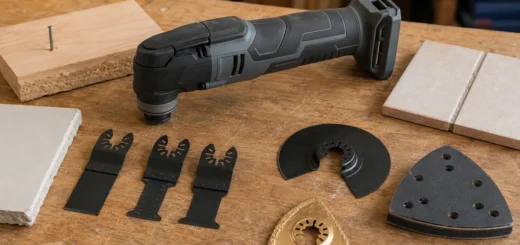
Milwaukee pulls ahead when repairs involve more than drilling and driving. Its cordless lineup includes compact ratchets, installation drivers, oscillating multi-tools, inspection tools, heated gear, and several plumbing and automotive options. These tools can reduce awkward manual work. A cordless ratchet, for example, is useful for removing access panels and fasteners in engine bays, but it is not a substitute for a breaker bar when bolts are seized.
Ridgid covers the common repair categories well: drills, impact drivers, saws, lights, inflators, wet/dry vacuums, and plumbing equipment. It becomes less attractive when you need a very specific tool or want several sizes within one niche. You may end up buying an adapter, a corded tool, or a second battery platform.
For a repair-focused starter system, a Milwaukee compact repair-tool combination makes sense when access and portability matter. If your jobs are mostly drilling, fastening, cutting trim, and inflating tires, spending extra on specialty tools may not provide enough benefit.
Batteries, runtime, and failure points
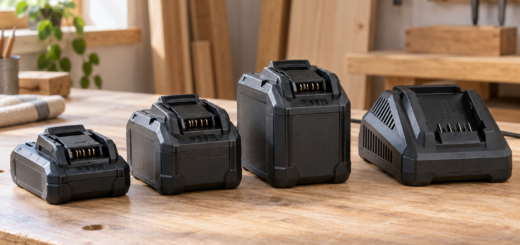
Battery size changes both runtime and handling. A compact 2.0Ah battery is convenient for cabinet work and light repairs, while a 4.0Ah or larger pack runs longer but adds noticeable weight. For frequent use, two batteries are more useful than one oversized battery: one can charge while the other is working.
Expect roughly 150 to 300 medium-duty screws from a healthy compact pack, depending on material, screw size, and tool settings. Continuous sawing, drilling large holes, or using a vacuum can drain a battery far faster. Cold storage also reduces runtime temporarily. Do not leave packs in a freezing vehicle and assume they will perform normally the next morning.
The common failure modes are not dramatic motor failures. Batteries age, chargers get misplaced, chucks loosen, and switches collect dust. A battery that suddenly cuts out under load may be worn out rather than defective. Buying into an ecosystem means budgeting for replacement packs, which can cost $50 to $150 or more depending on capacity and promotions.
Warranty value and the fine print
Ridgid’s lifetime service agreement can be a major value advantage, but it is not automatic just because the tool says Ridgid. Eligible purchases generally must be registered within the required period, and the program applies only to qualifying tools and batteries under its terms. Keep the receipt, register promptly, and confirm eligibility before treating the benefit as part of the price.
Milwaukee’s warranty support is more straightforward for many buyers, but coverage varies by product and does not make batteries immune to normal wear. A warranty also does not prevent downtime. If you rely on one tool for paid repairs, owning a backup or a manual alternative may be more valuable than an extra year of coverage.
When to buy
The best discounts usually arrive around major holiday promotions, especially late November, Father’s Day, and the weeks around holiday weekends. Watch for bundles that include a free bare tool. A free tool is useful only if you would otherwise buy it; otherwise, the bundle can push you into a more expensive battery system.
Ridgid is often the stronger seasonal bargain because its kits can fall sharply below regular pricing. Milwaukee discounts are also worthwhile, particularly when a kit includes a high-capacity battery or a genuinely useful free tool. Compare the final kit price against the cost of buying each component separately, and check whether the package includes compact or heavy batteries.
Which one should you buy?
Choose Ridgid if you want the lowest sensible entry cost, mainly need 18-volt core tools, and will register eligible purchases for the service agreement. It is the practical choice for homeowners, landlords, and occasional repair users who do not need every specialty tool.
Choose Milwaukee if you repair things weekly, work in confined spaces, need compact tools, or expect to add specialty equipment over several years. The higher initial cost is easier to justify when better access, lower tool weight, and a deeper lineup save time repeatedly.
Before buying either system, list the next five tools you are likely to need. If both brands cover that list, buy the cheaper kit with two batteries. If Milwaukee is the only brand covering several of your likely repairs, paying more now may be cheaper than maintaining two battery platforms later. For a value-oriented second system, compare a Ridgid 18V cordless tool kit during a seasonal sale rather than buying individual bare tools.