Milwaukee M12 vs Ryobi 18V: Comparing Cost for Compact Home Repair Tools
What's inside
As an Amazon Associate I earn from qualifying purchases. This post may contain affiliate links at no extra cost to you.
For compact home repairs, Milwaukee M12 and Ryobi 18V solve many of the same problems: driving screws, drilling pilot holes, cutting small pieces of wood, and making quick repairs without dragging out a cord. The important difference is not simply power. It is what you pay for the first tool, how much batteries and chargers add, and whether the platform still makes sense after your second or third purchase.
As an Amazon Associate we earn from qualifying purchases at no extra cost to you.
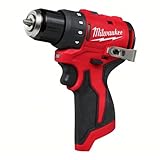


Milwaukee M12 vs. Ryobi 18V at a glance
| Factor | Milwaukee M12 | Ryobi 18V ONE+ |
|---|---|---|
| Typical size | Very compact and light | Larger, with more full-size tools |
| Best use | Cabinet work, fixtures, small repairs | General home maintenance and DIY projects |
| Starter-kit pricing | Often higher per tool | Usually lower, especially during sales |
| Battery capacity | Enough for light work, but limited for long jobs | More runtime options and generally better endurance |
| Platform breadth | Strong specialty compact tools | Very broad consumer and home-project selection |
Upfront cost and what the kit really includes
A bare tool price can make M12 look reasonable, but the battery and charger are essential. A first-time M12 buyer normally needs a kit or a separate starter battery and charger. Compact M12 kits frequently cost more than basic Ryobi 18V kits, particularly when Milwaukee includes a brushless tool or a higher-capacity battery.
Ryobi’s advantage is aggressive bundle pricing. During major sales, a starter kit may include two batteries and a charger at a price close to what one premium bare tool costs. The cheapest bundles usually contain a drill/driver or impact driver and may use smaller batteries. That is still a good fit for hanging shelves, assembling furniture, replacing hardware, and drilling into wood.
For a first purchase, compare the complete checkout price: tool, battery, charger, and any required accessories. A kit with two batteries is more useful than a cheaper bare tool if you do not already own the platform. Search current deals on Milwaukee M12 kits with a battery and charger and compare them with the equivalent Ryobi package rather than comparing bare tools.
Where M12 earns its premium
M12 tools are genuinely easier to use in cramped spaces. An M12 drill or impact driver is useful inside cabinets, between floor joists, under sinks, and around electrical boxes. The smaller battery also reduces wrist strain during overhead work. For a homeowner who mostly installs blinds, adjusts doors, assembles cabinets, or repairs appliances, that physical convenience can matter more than maximum voltage.
M12 also has compact tools that are less common in budget lines, including small ratchets, inspection tools, and specialty drivers. These can save time when a full-size 18V tool will not fit. The trade-off is runtime. A small M12 battery can run down quickly when driving long structural screws, drilling many holes, or cutting continuously. You may need two or three batteries for uninterrupted work.
A common failure mode is using an M12 drill for a job that has quietly become too large. Drilling dozens of holes in framing or mixing thick compound can overheat a compact tool and consume batteries quickly. M12 is not automatically weak, but its compact format rewards shorter duty cycles and the right accessory.
Where Ryobi 18V provides better value
Ryobi 18V is usually the better financial choice for a homeowner building a general-purpose collection. The 18V platform handles larger drill bits, longer screws, hole saws, small sanders, lights, inflators, and outdoor tools with fewer compromises. Its batteries are physically larger, but that extra size generally brings longer working time.
Ryobi is also a strong choice when the tool will be used only a few times each year. Paying less for a drill, compact saw, or handheld vacuum is sensible if the job is assembling a desk, repairing a fence gate, or cutting a few shelves. The cheaper option is fine when the workload is light and the tool is not being pushed continuously.
Look for Ryobi 18V ONE+ starter kits during holiday promotions and seasonal clearance periods. The best deals often appear around spring outdoor-project sales, Father’s Day, Black Friday, and the weeks after Christmas. Check whether the promotion gives you a free tool with a battery purchase; that can be worth more than a small discount on a single drill.
Which platform fits common repairs?
Choose M12 when space, weight, and control are the main concerns. It is especially well suited to cabinet installation, light plumbing repairs, electronics-adjacent work, furniture assembly, and driving short screws in finished surfaces. An M12 installation-style driver or compact drill can be easier to control, reducing stripped screw heads and accidental damage.
Choose Ryobi 18V for deck repairs, shelving, framing repairs, larger pilot holes, repeated drilling, and mixed indoor-outdoor work. Its extra capacity gives you more margin when a project takes longer than expected. If you plan to add a circular saw, reciprocating saw, inflator, or yard tool, Ryobi’s broad lineup can reduce the cost of staying within one battery system. Browse Ryobi 18V drill and impact-driver combinations when comparing a two-tool starting point.
Battery costs and long-term value
The platform decision becomes more important after the first tool. Buying three separate battery systems is expensive, even if each tool looked cheap. A second M12 battery may be necessary because compact packs have limited runtime. With Ryobi, a larger battery can add weight but may let one pack cover several tasks.
Do not assume every sale is a bargain. A kit with a very small battery may be cheap but frustrating with a saw or vacuum. Conversely, paying extra for a high-capacity battery makes little sense if your work consists of ten-minute repairs. For most occasional homeowners, one starter kit, one spare battery, and a basic bit set are enough. Keep batteries indoors, avoid storing them fully depleted, and replace packs that become unusually hot, swell, or lose charge immediately.
The practical buying decision
Pick Milwaukee M12 if compact size will prevent awkward work or if you expect to buy specialty tools for tight spaces. The higher initial cost can be justified when comfort and access save time on every repair.
Pick Ryobi 18V if price, runtime, and platform breadth matter more than minimum size. For most budget-conscious homeowners, it delivers more capability per dollar, especially when bought in a seasonal kit. The least expensive tool is not always the cheapest ownership choice, but Ryobi is often the cheaper complete system for ordinary home maintenance.