Best Value Tile Saw for Occasional Ceramic and Porcelain Projects
What's inside
As an Amazon Associate I earn from qualifying purchases. This post may contain affiliate links at no extra cost to you.
For occasional tile work, the best-value tile saw is usually a compact wet saw in the $100–$250 range—not the cheapest dry-cut tool and not a professional bridge saw costing several hundred dollars. That middle category is adequate for bathroom repairs, kitchen backsplashes, laundry rooms, and small flooring projects, provided you buy for the tile you actually plan to cut.
The right choice depends on three things: whether you are cutting ceramic or porcelain, how many cuts the project requires, and whether you need clean diagonal or long rip cuts. A homeowner making 30 cuts in standard ceramic tile has very different needs from someone installing 200 square feet of dense porcelain.
As an Amazon Associate we earn from qualifying purchases at no extra cost to you.

The best-value choice for most occasional projects
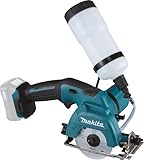
A compact tabletop wet tile saw with a diamond blade, sliding table, and roughly 14- to 16-inch diagonal capacity is the practical sweet spot. These saws typically cost less than professional models but offer enough control for common 12-inch tile and many 24-inch formats when using a plunge or repositioning technique.
Look for a water reservoir or pump-fed cooling system, a reasonably rigid cutting table, a rip guide that locks securely, and a blade guard that does not obstruct the cut. A saw that flexes when you press the tile against the blade will produce wandering cuts, chipped edges, and frustration regardless of its advertised motor wattage.
For browsing, start with compact wet tile saws with diamond blades. Avoid choosing solely by the lowest listed price. A $90 saw that needs a replacement blade, improved guide, and extra water-management supplies can quickly cost as much as a better $140–$180 unit.
Ceramic versus porcelain: where budget saws differ
Ceramic wall and floor tile is relatively forgiving. A modest wet saw can cut it cleanly if the blade is sharp and the tile is supported on both sides of the cut. Porcelain is denser and usually more demanding. Cheap blades may cut slowly, overheat, or chip the glazed face, especially on long cuts.
For a few porcelain cuts, a compact saw is still fine. Use a continuous-rim porcelain-rated diamond blade, feed the tile steadily, and do not force it through the blade. For a larger porcelain installation, paying $30–$60 for a better blade is often more valuable than buying a saw with a slightly larger motor.
| Project type | Good-value tool | Likely limitation |
|---|---|---|
| Small ceramic backsplash | Manual cutter plus angle grinder or compact wet saw | Manual cutters can chip textured or very hard tile |
| Small bathroom with ceramic tile | Compact wet saw, approximately $100–$180 | Limited diagonal capacity and messy water handling |
| Occasional porcelain floor project | Compact wet saw with upgraded porcelain blade | Slower cuts and more edge cleanup |
| Large-format or repeated flooring work | Sliding-table or bridge-style wet saw | Higher price, more storage space, heavier setup |
When the cheaper option is genuinely fine
The cheapest wet saw is acceptable when the tile is inexpensive, the cuts will be hidden under trim, and the total workload is small. It can also make sense if you are cutting soft ceramic mosaics or a handful of straight pieces. In those cases, spending $200 on a saw may not improve the finished job enough to justify the difference.
A manual tile cutter can be an even better value for straight cuts in ordinary ceramic tile. It is faster, quieter, cleaner, and does not require water. A basic cutter often handles a backsplash efficiently, but it becomes less dependable with porcelain, narrow strips, heavily textured surfaces, and cuts near the edge. Consider manual tile cutters for ceramic and porcelain when most cuts are straight and the tile is compatible.
Do not rely on a manual cutter for every job just because it is cheaper. A poor score-and-snap cut can waste a $6 tile, and repeated failed cuts erase the initial savings quickly.
Features worth paying for
A stable table is more important than a high no-load speed. The table should stay flat when you press down near the blade, and the fence should remain square after tightening. Even a small error compounds on long cuts: a fence that is off by 1/16 inch can leave a visible gap across a tile.
Pay extra for a sliding table or adjustable cutting guide if you expect repeated cuts. A sliding table keeps your hands farther from the blade and makes it easier to maintain a straight feed. For diagonal cuts, check the actual diagonal capacity rather than assuming that a saw marketed for “large tile” will handle a 24-inch square.
Water containment also affects value. Low-cost saws commonly spray water onto the floor, clog their pump, or leave a shallow reservoir that needs frequent refilling. Set the saw on a folding workbench, use a plastic sheet underneath, and keep a sponge nearby. Never let the pump run dry; a replacement pump can cost enough to undermine the bargain.
Seasonal buying advice
Tile saw prices are often strongest during spring and early summer, when remodeling demand rises. That is also when rental shops and local tool sellers may have more used inventory. If your project is scheduled for winter, compare prices in late fall and around major holiday promotions, but verify the return policy before buying.
Buying a used professional saw can be excellent value if the table is square, the pump works, and the blade arbor has no noticeable wobble. Avoid units with a cracked water tray, missing fence, damaged power cord, or a motor that sounds rough under load. Replacement parts for discontinued budget saws can be difficult to find.
For a porcelain-heavy project, budget for a porcelain-rated wet saw blade and a few spare tiles. Make several test cuts before beginning visible work. If the saw chips the glaze badly, cuts out of square, or struggles to maintain water flow, returning it or renting a better saw is cheaper than repairing an installation full of bad cuts.
How to make the final decision
Choose a compact wet saw around $100–$250 for occasional ceramic and moderate porcelain projects. Choose the lower end when cuts are few and hidden; choose the upper end when you need better guides, a sliding table, or more reliable water circulation. Rent a larger saw when handling thick porcelain, large-format tile, or several hundred square feet.
The most economical setup is often a modest saw, a quality blade, and careful layout—not the lowest-priced saw with its included blade. Measure twice, support the tile fully, feed slowly, and keep the blade cool. Those habits prevent more waste than an extra few hundred watts of motor power.