How to Compare Tool Combo Kits by Value, Not Just Tool Count
What's inside
As an Amazon Associate I earn from qualifying purchases. This post may contain affiliate links at no extra cost to you.
A 10-tool kit is not automatically a better deal than a 5-tool kit. The extra tools may be useful, or they may be low-demand add-ons bundled to make the box look generous. Compare what you’ll actually pay to get a capable set of tools, batteries and chargers—not the number printed on the package.
Start with the jobs you need to do
List the work you expect to tackle over the next year: drilling and driving, cutting trim, sanding, fastening deck boards, or trimming branches. Then identify the tools needed for those jobs. A homeowner assembling furniture and hanging shelves may get most of the value from a drill/driver and impact driver. A remodeler might use a circular saw, oscillating tool and work light every week.
Separate must-haves from “might use someday” tools. A tool that saves ten minutes once a year is not worth much if it pushes the kit price up by $150. On the other hand, if buying a bare tool later would cost $100 and the kit adds it for $40, that add-on may be a real bargain.
Calculate the real cost, not the bundle price
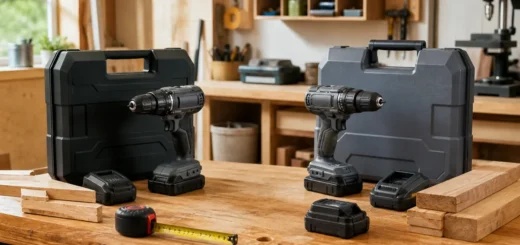
Count the batteries, their capacity and the charger—not just the tools. A kit with four tools, one 1.5Ah battery and a basic charger can be less useful than a three-tool kit with two 4Ah batteries. Small batteries keep weight down for overhead work, but they may run out quickly in a circular saw or grinder. For demanding cutting, check whether the platform offers larger batteries and include their cost if you’ll need them.
Estimate the cost of filling gaps. Add the price of the extra battery, charger, blade, sanding pad or other accessory you need to use the kit for your work. A “bare tool” means the tool is sold without a battery or charger, so check carefully before comparing its price with a complete kit.
For a simple comparison, divide the kit price by the number of tools you’ll use regularly—not the total count. If a $400 kit has six tools but you’ll use only three, the useful-tool cost is about $133 per tool. That is not a precise valuation, but it exposes bundles that look cheap only because rarely used items inflate the count.
Compare the bundle by what it includes
| Kit | What matters | When it may be better value |
|---|---|---|
| Drill/driver and impact driver, two batteries | Battery capacity, charger speed, and whether the batteries suit other tools you own | Frequent drilling and driving; a useful starter set |
| Four-tool kit with small batteries | Whether the saw or grinder will be underpowered or run down quickly in real use | Light, occasional tasks when the added tools replace separate purchases |
| Three-tool kit with larger batteries | Higher upfront price, but fewer interruptions during demanding work | Regular cutting, sanding or fastening where runtime matters |
| Bare tool added to an existing platform | No battery or charger; check compatibility with your current packs | Often best when you already own enough batteries and a charger |
Use the table to narrow the choice, then compare the exact contents and current prices. Kit names and bundles change by retailer and season, so confirm the included battery sizes, charger and accessories on the product page.
Price the battery platform you’re buying into
A cordless kit is an entry point to a battery system. If you later need a nailer, blower or second saw, compatibility can save money and clutter. Before choosing a brand, check the prices of two or three tools you might realistically add, plus a spare battery. A cheap starter kit can become expensive if the batteries you need cost more than expected.
That does not mean you should pay extra for a large platform you won’t use. If you need a drill for occasional household repairs, a modest kit from a reputable line may be enough. Compare cordless drill kits with two batteries against the price of one bare drill plus a battery and charger you already own. A low purchase price is useful when it doesn’t leave you short on runtime or basic accessories.
Check the likely weak links
Look at each tool you expect to use, not only the headline tool. An inexpensive kit may pair a capable drill with a small circular saw that struggles in thick lumber. A compact reciprocating saw may be fine for pruning and occasional demolition, but slow on repeated cuts. Read the tool specifications and independent reviews for runtime, cutting speed, vibration and overheating—not just voltage or maximum torque figures.
Also check what is missing. Many kits include few or no blades, drill bits, sanding sheets or impact-rated driver bits. A saw is not ready for a job if the included blade is unsuitable or dull. Budget for consumables, and avoid assuming that every accessory shown in a listing photo comes in the box.
Warranty terms and repair support matter most if you use tools often. Check the warranty period, registration requirements and whether local service is available. For light use, a slightly shorter warranty may be an acceptable trade-off if the savings are substantial. For daily use, downtime can cost more than the initial discount.
Time purchases around actual discounts
Tool kits are often discounted around major holiday sales, Father’s Day, Black Friday and spring project season. Bundles can offer strong value, but a “sale” label does not prove the price is low. Compare the kit’s current price with its recent price history when available, and check whether the same battery configuration is being sold elsewhere. A bundle with a free bare tool may be worthwhile only if you need that tool.
If your current tools still handle the work, waiting for a sale can help. If a job is scheduled now, don’t buy a larger bundle just to save a small amount on a tool you’ll store unused. Compare cordless combo kits with two batteries against the cost of buying only the tools and packs you need. The cheapest useful setup is often a focused kit today, with additional bare tools purchased later as real needs arise.