How to Compare Tool Prices When Accessories Are Sold Separately
What's inside
As an Amazon Associate I earn from qualifying purchases. This post may contain affiliate links at no extra cost to you.
A bare tool can look like a bargain until you add the battery, charger, blades, case, or other parts needed to use it. The fair comparison is not the shelf price; it is the cost of getting the same job done with each option. That total depends on what you already own, what comes in the box, and which accessories you will actually use.
Compare the ready-to-work cost
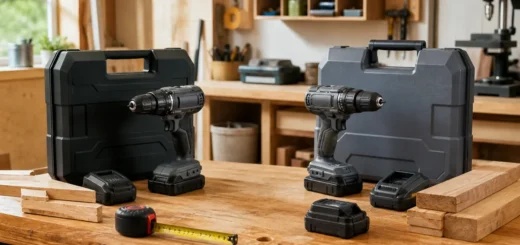
Start by listing everything required for your first job. For a cordless drill, that might be the tool, one battery, a charger, and a driver-bit set. For a circular saw, it may include a blade suited to your material and a battery with enough capacity for the cut. A “tool-only” price is useful only if you already have compatible power and can use the tool safely.
Make a simple comparison using the same practical setup for each brand: one tool, one battery, one charger if needed, and only the accessories required for the job. Include tax and shipping when they differ. Don’t add a large accessory kit to one option and compare it with the other’s bare tool.
| Cost item | Option A | Option B |
|---|---|---|
| Tool | $99 | $139 |
| Battery and charger, if needed | $79 | Already owned |
| Required blade or bit set | $18 | $18 |
| Ready-to-work total | $196 | $157 |
In this example, Option A’s lower tool price does not make it the cheaper purchase for someone who already has Option B batteries. For a first-time buyer without either platform, the result could reverse if Option B’s battery kit is costly. Run both cases if you might buy into the battery system later.
Check what is in the box
Retailer listings use similar-looking product titles for different packages. One may include a battery and charger; another may include only the tool. Read the “included components” list, not just the product photo. Check the package quantity too: a listing may show two batteries while the price is for a single-battery kit, or offer a tool bundled with an accessory you don’t need.
Watch for common omissions. Saws often include a basic blade, but it may not be the right type for clean finish cuts, metal, or masonry. A drill may include a small set of bits that wears quickly in hard materials. A sander may require discs in a particular size and hole pattern. Confirm the accessory’s fit before pricing it; similar-looking parts are not always interchangeable.
Also check whether the charger is included and whether a battery is part of a bundle or a separate line item. If you need two batteries to keep working while one charges, price both. Don’t count a promotional battery as free until you have checked the redemption steps, eligible dates, and stock limitations.
Value batteries and platforms
If you already own cordless tools, compatible batteries can change the arithmetic substantially. A bare tool may be the best value if your existing battery fits the same voltage and platform. Confirm compatibility in the manufacturer’s documentation: brands sometimes use different battery families, and an adapter does not necessarily preserve all safety features or performance.
Battery capacity matters, but a larger number is not automatically better value. A compact battery may be lighter and comfortable for overhead work, while a larger one can run longer in a high-draw saw or grinder. If your work is occasional and short, buying a large battery kit may tie up money without helping much. If you are setting up a platform from scratch, compare the price of the tool-and-battery bundle against separate purchases and consider what other tools you realistically expect to add.
For a basic cordless setup, compare cordless drill kits with a battery and charger against bare tools only after accounting for batteries you already own. The kit can cost more upfront but be cheaper than buying the power source separately.
Price accessories by expected use
Separate accessories into “needed now” and “maybe later.” Buy the correct blade or bit for your first task; defer the assortment that adds pieces you may never use. A 20-piece kit is not a saving if you need only one blade, and the cheapest accessory can cost more in wasted material, poor finish, or early replacement.
For consumables, compare cost per usable item rather than package price. A pack of 10 sanding discs at $12 costs $1.20 each; a pack of 25 at $22 costs $0.88 each. But if the larger pack contains the wrong grit or hole pattern, the lower unit price is irrelevant. For blades, check material compatibility, tooth count, and the cut quality required. A coarse blade can cut faster but leave a rougher edge; a fine-tooth blade may be worth the extra cost on visible trim.
Use the same approach for replacement circular-saw blades for your material. Verify the saw’s blade diameter and arbor size before ordering, and don’t assume a blade included with a saw is suitable for every job.
Compare value, not just price
Two tools at different prices may not be equivalent. Compare capacity, adjustment range, included safety features, warranty terms, and whether replacement parts are easy to find. A lower-priced tool can be the sensible pick for a few repairs a year. Paying more may make sense for frequent work if the tool is more comfortable, holds settings better, or saves time. Avoid treating a brand name alone as proof that the premium will pay off.
Think about failure modes as well as purchase cost. A weak battery can interrupt a long cut; a poorly matched blade can burn wood or chip a finished edge; an awkward grip can make repeated overhead work tiring. These problems have costs, but they don’t justify buying professional-grade equipment for a one-time task. Rent a specialized tool or use a corded version if that is cheaper and practical.
Time the purchase
Prices often shift around major sale periods, but a discount matters only if the package has the parts you need. Compare the exact kit and its recent typical price where possible; a large percentage off an inflated list price is not a useful benchmark. Check whether the sale is for a bare tool, a bundle, or a limited-time battery promotion.
Set a target for the ready-to-work total before shopping. If the current package is above it, wait or compare another platform rather than buying extra accessories to qualify for a bundle. If the price is below target and the kit includes parts you will use, buying now may be reasonable. For occasional jobs, the cheapest complete setup that fits the task is often better value than the most expandable system.