How to Shop for a Tool Kit During Spring Garage-Cleanup Sales
What's inside
As an Amazon Associate I earn from qualifying purchases. This post may contain affiliate links at no extra cost to you.
Shop With a Job in Mind
Spring garage-cleanup sales are full of tool kits, but the biggest box is rarely the best value. Before comparing prices, list the jobs you expect to handle over the next year: furniture assembly, bicycle maintenance, lawn equipment, automotive repairs, shelving, or basic plumbing. A kit for apartment repairs needs a different mix from one intended for a detached garage.
Start with the tools you use most often. For general household work, that usually means a ratchet and socket set, screwdrivers, pliers, a tape measure, a utility knife, hex keys, and a hammer. If you already own a drill, do not pay extra for a kit that includes another low-end drill unless the battery platform is useful to you.
A practical starting point is a household tool kit with sockets and hand tools. Look at the contents, not just the piece count. A “200-piece” kit may count every bit, adapter, and duplicate socket, while a 100-piece kit can contain more useful full-size tools.
Compare the Real Value, Not the Piece Count
Tool-kit pricing changes sharply during spring promotions. A basic household kit may sell for $30 to $70, a better hand-tool set for $80 to $180, and a cordless kit with a drill and battery for $100 to $250. Automotive-focused sets can run from $70 to more than $300 depending on socket coverage and tool quality.
| Kit type | Typical sale price | Best use | Common compromise |
|---|---|---|---|
| Basic household set | $30–$70 | Assembly, hanging hardware, small repairs | Thin pliers, limited socket sizes, weak case |
| Midrange hand-tool set | $80–$180 | Frequent home and garage maintenance | Fewer specialty tools; some filler pieces |
| Automotive socket set | $70–$300 | Cars, lawn equipment, machinery | May omit screwdrivers, cutters, and general tools |
| Cordless drill kit | $100–$250 | Driving screws and drilling common materials | Battery and charger add cost; included bits may be poor |
Calculate the price of the tools you would actually buy separately. If a $60 kit contains 40 useful pieces and 60 duplicates or tiny bits, it is effectively a $1.50-per-useful-tool purchase, not a 60-cent-per-piece bargain. Also check whether the case holds tools securely. A broken latch or loose socket tray becomes annoying every time you open the box.
Choose the Right Drive Sizes
For general household work, a 1/4-inch drive ratchet with metric sockets is often enough, particularly for furniture, appliances, and light hardware. A 3/8-inch drive adds useful range for bicycles, outdoor equipment, and many automotive fasteners. A 1/2-inch drive is intended for high-torque work, such as lug nuts, but a cheap 1/2-inch ratchet does not automatically make a kit suitable for vehicle repairs.
Metric sockets should be the priority for most newer cars and equipment, though a mixed metric-and-inch set is useful if you work on older machinery. Check the actual range. A kit that stops at 13 mm may leave you reaching for another set, while a set covering roughly 8 to 19 mm handles many routine jobs. Deep sockets are valuable for long bolts and recessed nuts, but they do not replace shallow sockets.
If automotive work is the main reason for shopping, compare 3/8-inch metric deep socket sets separately from household kits. A dedicated set can be cheaper than buying a large general kit filled with tools you will not use.
Judge Brand Value by the Parts That Fail
Brand matters most in ratchets, pliers, cutters, screwdrivers, and cordless batteries. A ratchet with a coarse, gritty mechanism can slip in tight spaces; a poor plier may develop jaw misalignment; inexpensive cutters can leave a crushed edge instead of a clean cut. These failures are more costly than a missing bit because they make the tool unusable.
For occasional picture hanging or furniture assembly, a store-brand or budget kit is usually fine. The cheaper option is also reasonable when the tools will see only a few uses per year and the kit has a straightforward return policy. Spend more when you apply high force regularly, work in a vehicle, or need replacement parts and warranty support.
Inspect the warranty terms before treating a brand premium as value. A lifetime hand-tool warranty is useful only if claims are simple and replacement tools are available. Cordless-tool warranties vary by brand and may require registration within a limited period. Batteries often have shorter coverage than the tool itself.
Be Careful With Cordless Kits
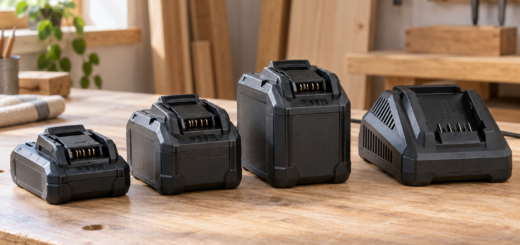
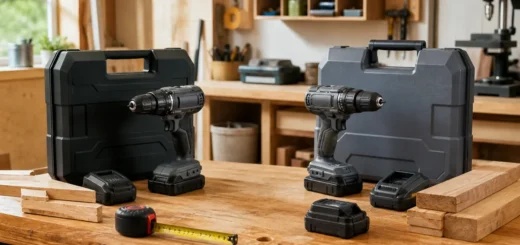
Spring sales often bundle a drill, battery, charger, and several accessories. This can be a good entry point, but the battery platform is the real purchase. Once you own two or three batteries, switching brands becomes expensive. Compare the cost of a replacement battery, typically a major portion of the original kit price, before choosing a platform.
For light household work, a compact 12-volt drill is easier to handle and usually sufficient for pilot holes and screws. An 18- or 20-volt drill provides more power for larger holes and long screws but is heavier. If you need impact driving, buy an cordless impact driver kit with a battery and charger only when you regularly drive long fasteners or work with structural hardware. It is overkill for assembling shelves and can easily strip small screws.
Check the Sale Before Buying
Do not assume a spring tag means a record-low price. Search the exact kit number and compare the current price with its recent history. Retailers may raise a list price before applying a discount, or bundle a low-value accessory set to make the offer look larger.
Check what is missing: batteries, chargers, deep sockets, extension bars, a magnetic bit holder, or a case. Budget at least $10 to $30 for a useful bit set, replacement tape measure, or better storage if the kit needs upgrades. Avoid buying a second kit just to obtain one missing tool.
Finally, test the case, ratchet direction switch, plier action, screwdriver fit, and socket markings as soon as the kit arrives. Return it if the tools are rusty, the sockets do not fit the ratchet securely, or the case cannot retain its contents. A spring sale is a good time to buy tools you will use, not a reason to store 150 pieces that duplicate what you already own.