Ryobi vs Skil Cordless Sanders: Which Budget Platform Costs Less to Own?
What's inside
As an Amazon Associate I earn from qualifying purchases. This post may contain affiliate links at no extra cost to you.
Ryobi and Skil both sell approachable cordless sanders, but the sander’s sticker price rarely decides which platform costs less. The real comparison is what you must buy to run it, how many batteries you already own, and whether you expect to use the tool for an occasional repair or hours of sanding. Prices and kits change often, so compare current listings rather than treating any one sale price as permanent.
As an Amazon Associate we earn from qualifying purchases at no extra cost to you.


Count the battery before comparing sanders
Ryobi’s ONE+ and Skil’s PWRCORE 20 are separate 18-volt-class battery platforms. Their batteries are not interchangeable. If you already own a compatible battery and charger, that platform usually has the cheaper entry cost—even if its bare tool costs more.
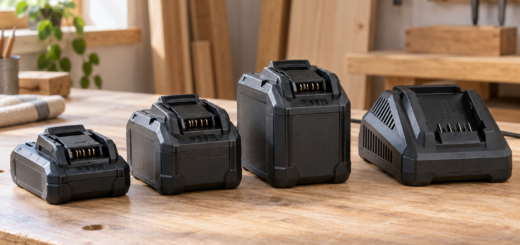
For a fair comparison, add up the sander, one battery, and a charger if you need them. A bare tool is not a complete purchase. A small battery may be enough for light touch-ups, but sanding can drain it quickly; a larger pack adds cost and weight. If you are starting from scratch, compare bundles that include both battery and charger, then check whether the included pack is suitable for sustained sanding.
| What you’re comparing | Ryobi ONE+ | Skil PWRCORE 20 |
|---|---|---|
| Battery compatibility | Works with Ryobi ONE+ tools and batteries | Works with compatible Skil PWRCORE 20 tools and batteries |
| Best cost advantage | You already own ONE+ batteries and a charger | You already own PWRCORE 20 batteries and a charger |
| Starting from zero | Compare bare-tool and battery-kit prices together | Compare bare-tool and battery-kit prices together |
| Long sanding sessions | Budget for a spare battery or a larger pack | Budget for a spare battery or a larger pack |
| Platform value | Improves if you’ll buy other ONE+ tools | Improves if you’ll buy other PWRCORE 20 tools |
Match the sander to the job
For smoothing filler, easing edges, and preparing furniture for paint, a cordless random-orbit sander is the more versatile choice. It uses round hook-and-loop discs and leaves fewer obvious scratch patterns than a conventional finishing sander when used properly. Look for a cordless random-orbit sander if that describes your work. A square-pad finishing sander is useful in corners and for light, controlled work, but it is not a substitute for a belt sander when you need to remove material quickly.
Neither battery platform makes poor technique harmless. Pressing hard slows the pad, makes the motor work harder, and can leave gouges or swirl marks. Keep the pad flat, let the abrasive do the cutting, and move steadily. Start around 80 grit for substantial shaping, then step through 120 and 180 for many paint or finish-preparation jobs. The right sequence depends on the wood and coating; jumping straight from coarse paper to fine paper can leave scratches that show through a finish.
When Ryobi is the better value
Ryobi makes the clearest financial sense if you already have ONE+ batteries and a charger. In that case, the cost of adding a sander can be close to the bare-tool price. It can also be a sensible platform if you expect to add other household and DIY tools, provided you verify that the particular tools you want use the same battery family.
The catch is that a battery you already own may be undersized, old, or shared with another tool. If your only pack is a small one and you plan to sand several cabinet doors in one sitting, include a spare or larger battery in your budget. Otherwise, stops to recharge can turn a seemingly cheap tool into an irritating one. Check the listed kit contents carefully: batteries and chargers are not included with every offer.
When Skil is the better value
Skil can win when a useful battery-and-charger bundle makes the complete purchase cheaper than assembling a Ryobi setup from separate parts. That advantage matters most if you are starting from zero and expect to use the sander only occasionally. Compare the kit’s total price with the Ryobi tool plus the battery and charger you would actually need—not with Ryobi’s bare-tool price alone.
The trade-off is ecosystem size and future flexibility. Before choosing Skil on the strength of a sale, list the other cordless tools you might buy and confirm that they are available on PWRCORE 20. A low-cost sander bundle is less compelling if your next tool forces you to buy a second battery platform. Conversely, if the sander is likely to be your only cordless tool, paying extra for a broader platform may not return anything useful.
Discs, dust, and common failure modes
Sandpaper is a continuing expense, and the wrong disc can waste more money than a small difference in tool price. Check pad diameter and hole pattern before buying refills. A disc that does not line up with the dust holes may still attach, but dust collection can suffer. A clogged disc cuts poorly, heats the work, and encourages the user to push harder. Replace it when it stops cutting efficiently rather than treating a worn sheet as a bargain.
Dust bags are convenient for short jobs but do not capture everything. Fine wood dust can escape, and sanding paint or unknown coatings raises additional safety concerns. Wear suitable respiratory protection and use a shop vacuum with compatible extraction when the job warrants it. Do not assume that either budget sander will keep a room clean by itself.
Other common problems are premature hook-and-loop wear from heat, a pad that picks up grit and scratches the work, and battery interruptions during larger projects. Keep the pad clean, avoid bearing down, and test on scrap. For a long session, a second battery often improves the workday more than chasing a small difference in sanding speed.
A practical buying rule
Already own ONE+ batteries? Price a compatible Ryobi bare tool first. Already own PWRCORE 20 batteries? Do the same with Skil. Starting fresh? Compare complete kits, including a battery and charger, and consider whether you will buy more tools on that platform. If a kit is only a little cheaper but includes a battery too small for your planned work, the savings may disappear in downtime or an early battery upgrade.
For occasional trim repairs or a few pieces of furniture, the cheaper complete kit is usually fine. For repeated furniture refinishing, choose the platform with affordable compatible spare batteries and readily available discs for the sander you select. Check current Ryobi ONE+ random-orbit sander and Skil PWRCORE 20 random-orbit sander listings for the exact package contents. Buy on total usable setup cost, not the biggest discount badge.