How to Plan Tool Purchases Around Home Improvement Project Seasons
What's inside
- How to Plan Tool Purchases Around Home Improvement Project Seasons
- A practical seasonal buying calendar
- Spring: buy for exterior repairs without overbuying
- Summer: match saws and nailers to project volume
- Fall: evaluate cordless platforms, not just tool prices
- Winter: buy indoor-project tools and inspect clearance items
- How to tell whether a seasonal deal is real
- Spend first on tools that prevent project failure
- How to Plan Tool Purchases Around Home Improvement Project Seasons
- A practical seasonal buying calendar
- Spring: buy for exterior repairs without overbuying
- Summer: match saws and nailers to project volume
- Fall: evaluate cordless platforms, not just tool prices
- Winter: buy indoor-project tools and inspect clearance items
- How to tell whether a seasonal deal is real
- Spend first on tools that prevent project failure
As an Amazon Associate I earn from qualifying purchases. This post may contain affiliate links at no extra cost to you.
How to Plan Tool Purchases Around Home Improvement Project Seasons
Tool prices follow a predictable yearly pattern, but the best time to buy is not always the month with the biggest advertised discount. The right timing depends on the work you are actually ready to do, how often you will use the tool, and whether a failure would stop the project.
Spring brings lawn, garden, painting, and outdoor repair demand. Summer is strong for construction tools, pressure washers, and outdoor power equipment. Fall is a good time to buy some cordless tools and prepare for indoor projects. Winter usually offers better prices on outdoor equipment, storage, and selected hand tools, although selection can be thin.
Plan purchases around the work calendar, then use seasonal pricing to improve the deal. Do not buy a tool six months early just because it is discounted. Batteries age, warranties begin at purchase, and an untested tool may sit until the return period has expired.
A practical seasonal buying calendar
| Season | Good categories to shop | What to watch for |
|---|---|---|
| Late winter | Hand tools, storage, shop vacuums, indoor renovation tools | Clearance on outdoor equipment; limited colors, sizes, and battery bundles |
| Spring | Drills, outdoor extension cords, pressure washers, lawn tools, paint equipment | Demand raises prices on popular cordless outdoor platforms |
| Summer | Circular saws, miter saws, compressors, nailers, ladders | Bundle promotions and holiday sales, but check whether the “free” battery is useful |
| Fall | Cordless tool kits, sanders, oscillating tools, heaters, lighting | Tool platforms often go on sale; avoid buying obsolete battery systems |
| Holiday and year-end | Tool sets, storage cabinets, shop vacuums, generators | Inflated list prices, filler tools, and bundles with small batteries |
Spring: buy for exterior repairs without overbuying
Spring projects commonly include deck repairs, fence work, gutter cleaning, raised beds, and exterior painting. A drill-driver, impact driver, circular saw, and a basic outdoor-rated extension cord cover much of this work. If you already own a drill, the impact driver is often the more useful second purchase for driving long screws and lag bolts. It reduces wrist strain, but it is louder and can strip small fasteners if you use too much force.
For occasional fence or deck repairs, a corded circular saw is often the budget winner. It can cost less than a bare cordless saw and will not stop when a battery runs flat. The trade-off is managing a cord around lumber and ladders. A cordless saw makes sense when you are making many cuts away from outlets or already own several batteries on that platform. Look for a 5.0-Ah battery rather than a tiny 1.5- or 2.0-Ah pack if you expect repeated cutting; small packs may overheat or require frequent charging.
Buy corded circular saws before the outdoor rush if you can. The cheaper option is fine for a few projects, provided it has a rigid base, a usable bevel adjustment, and a blade guard that returns smoothly. A bargain saw with a loose shoe can make accurate cuts difficult and is not worth saving $20.
Summer: match saws and nailers to project volume
Summer is when larger building projects expose the difference between homeowner and professional tools. For one shed, porch, or room addition, a mid-priced saw can be adequate. For weeks of daily framing, a professional model may justify its higher cost through better dust control, smoother adjustments, and less downtime.
Do not choose a miter saw only by blade diameter. A 10-inch saw is lighter and usually cheaper to operate, while a 12-inch model handles wider stock but costs more for blades and takes up more space. Check the crosscut capacity at 90 degrees, the fence alignment, and whether replacement blades are easy to find. A laser is convenient, but it does not replace measuring and marking.
For trim, a 15-gauge finish nailer leaves a larger hole but holds heavier molding. An 18-gauge brad nailer is better for thin trim and small repairs. A pneumatic nailer plus a small compressor is often the best value for occasional use; cordless nailers are faster to set up but cost substantially more. If you buy a compressor, choose one rated for the tool’s required CFM at 90 PSI, with at least 20 percent headroom. A compressor that barely meets the rating will run constantly and may produce inconsistent firing.
Fall: evaluate cordless platforms, not just tool prices
Fall sales frequently make cordless kits attractive. Compare the complete ownership cost: tool, batteries, charger, replacement batteries, and the number of compatible tools you might realistically buy. A kit that saves $80 today is a poor value if its batteries cost $150 each or the platform lacks the tools you need.
For light home maintenance, a 12-volt drill and impact driver platform is usually enough for cabinet hardware, shelving, small repairs, and pilot holes. An 18- or 20-volt platform is the better choice for deck screws, larger bits, hole saws, and saws. Voltage labels are not directly comparable between brands, so pay more attention to torque, battery capacity, tool weight, and warranty terms.
Consider cordless drill and impact driver kits during fall and holiday promotions. A two-tool kit with two batteries is more useful than a five-tool bundle containing a flashlight and low-capacity battery. The cheaper kit is fine when you need only drilling and screwdriving; avoid paying for a platform before confirming that its batteries and charger are still sold.
Winter: buy indoor-project tools and inspect clearance items
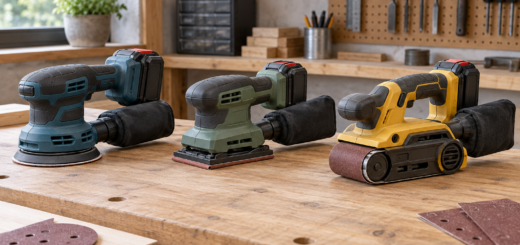
Winter is a practical time to buy sanders, oscillating multi-tools, shop vacuums, work lights, and storage. These categories are less tied to outdoor demand, so pricing is often steady rather than dramatically seasonal. A random-orbit sander with a 5-inch pad is the best general-purpose choice for furniture, doors, and small refinishing jobs. Budget models are fine for a few hours of work, but poor dust collection can clog the pad and leave swirl marks.
A shop vacuum is worth sizing by hose diameter and filter availability, not peak horsepower alone. A 1-1/4-inch hose is convenient for light cleanup but clogs more easily with chips. A 2-1/2-inch hose is better for sawdust and renovation debris. If you will collect drywall dust or concrete dust, use the correct fine-dust filter and a separator; otherwise the filter will load quickly and motor airflow will fall.
Storage is often discounted when retailers clear bulky inventory. Before buying a cabinet or rolling chest, measure the available space and check drawer load ratings. A cheap box is acceptable for hand tools, but thin drawers bend when loaded with sockets, cordless tools, and batteries. Spending more on full-extension drawers and a solid locking mechanism can prevent a replacement purchase.
How to tell whether a seasonal deal is real
Record the normal price of a tool for at least four weeks before a major sale. Compare the exact kit contents, not just the product title. Retailers may raise a list price, add a small battery, or substitute a lower-grade accessory while advertising a large percentage discount.
Use a target price based on your project. For a basic corded hand tool, a 10 to 20 percent sale is meaningful. For cordless kits, compare the bundle against the separate bare-tool and battery prices. Also check return rules, especially for clearance products. Test switches, battery fit, blade guards, and unusual noises immediately; a tool that sits until spring may outlast its easy-return window.
Spend first on tools that prevent project failure
Prioritize measuring, cutting, fastening, and safety equipment before convenience tools. A reliable tape measure, square, sharp blades, eye protection, hearing protection, and a stable work surface improve results more than a premium Bluetooth feature. Buy the cheaper option when the tool will see only a few hours of use and has no safety-critical weakness. Pay for better construction when the tool controls a blade, runs for long periods, depends on dust collection, or would delay an expensive project if it failed.
For cleanup-heavy renovations, compare shop vacuums with fine-dust filters. For repeated sanding, painting, or cutting, buy the tool that reduces setup and cleanup time, not simply the one with the lowest shelf price. That is where seasonal planning produces real savings: fewer emergency purchases, fewer duplicate batteries, and fewer tools that cannot handle the job.