Makita vs Milwaukee: Comparing Premium Tool Value for Frequent Home Repairs
What's inside
As an Amazon Associate I earn from qualifying purchases. This post may contain affiliate links at no extra cost to you.
For frequent home repairs, Makita and Milwaukee are both premium choices, but they are not identical values. Each offers dependable cordless drills, impact drivers, saws, and outdoor tools, yet the best buy depends on how often you work, what materials you cut, and whether you plan to build a battery collection. A homeowner who makes a few repairs each month may not recover the premium. Someone maintaining an older house, remodeling rooms, or working every weekend usually will.
As an Amazon Associate we earn from qualifying purchases at no extra cost to you.


Where the money goes
Tool-only prices for premium cordless tools commonly land between $100 and $250, while a drill-and-impact-driver kit with two batteries and a charger often costs roughly $250 to $450. Larger kits and high-output batteries push well beyond $500. The expensive part is not always the tool itself; batteries, chargers, and duplicate tools determine the long-term cost.
Makita generally competes with a broad 18-volt system and a strong reputation for smooth-running motors, compact designs, and good ergonomics. Milwaukee’s main homeowner and professional platform is also 18 volts, with a particularly deep selection of specialty tools. Both brands offer higher-performance battery lines, but mixing battery families is not always possible. Check compatibility before buying a bare tool because a discounted tool can become expensive if it requires a new battery system.
| Factor | Makita | Milwaukee |
|---|---|---|
| Typical strength | Balanced ergonomics, smooth operation, broad general-purpose lineup | Strong specialty-tool range, high performance, extensive trade-focused lineup |
| Best value for | Frequent repairs, woodworking, cabinetry, general maintenance | Remodeling, plumbing, electrical work, automotive and heavier-duty use |
| Battery investment | Reasonable when buying kits and staying within one platform | Can become costly, especially with larger high-output batteries |
| Common drawback | Some specialty tools cost more or are less available locally | Premium pricing and many overlapping battery/tool choices |
Drills and impact drivers for household work
For assembling furniture, installing cabinets, drilling wood, and driving screws, either brand’s compact brushless drill is enough. A homeowner does not need the highest torque rating. Excess power can make stripped screw heads, broken trim, and damaged drywall more likely. A two-speed drill with a clutch and a compact battery is usually more useful than a large hammer drill.
An impact driver helps with long structural screws, deck repairs, and stubborn fasteners, but it is not automatically better for delicate work. The hammering action can overdrive screws and leave ugly marks in soft pine. If most of your jobs involve hinges, shelves, outlets, and light fixtures, buy a drill first and add an impact driver later.
When comparing kits, look at battery capacity rather than just the number of batteries. A kit with two small batteries may be cheaper and lighter, while a kit with one larger battery may run longer but make a drill tiring overhead. For indoor repairs, two compact batteries in the roughly 2.0Ah to 4.0Ah range are usually a sensible compromise.
Shop current Makita brushless drill kits when the platform’s ergonomics suit you, or compare them with Milwaukee brushless drill kits during major sales.
Saws, sanders, and specialty tools
Milwaukee often makes the stronger value case when your repairs involve specialized work. Its lineup is especially useful for plumbing, electrical installation, metal cutting, and compact reciprocating saws. A small reciprocating saw can cut a copper pipe or remove damaged framing quickly, but it is also easy to hit hidden wiring or plumbing. Use a stud finder, shut off utilities when appropriate, and avoid cutting blindly into walls.
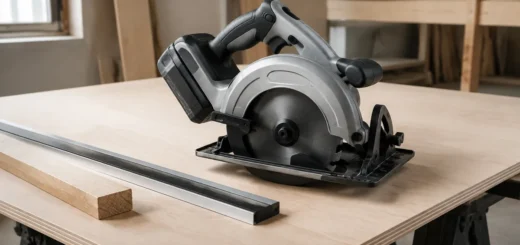
Makita is a strong choice for homeowners doing finish carpentry, shelving, trim, and furniture repairs. Its sanders, circular saws, routers, and other woodworking tools are generally comfortable for longer sessions. For repeated cutting, battery runtime matters more than a headline speed figure. A circular saw can drain a small battery quickly through plywood or dimensional lumber, so budget for at least one larger pack if you regularly make multiple cuts.
Neither platform eliminates maintenance. Keep sawdust out of battery contacts, inspect cords and blades, and replace dull accessories. A dull blade causes slow cuts, overheating, wandering, and kickback risk; upgrading the blade often improves results more than replacing the tool.
When a cheaper option is fine
A budget cordless drill is perfectly reasonable for hanging pictures, assembling occasional flat-pack furniture, and drilling a few holes each year. If the tool sees fewer than a dozen short jobs annually, the battery may age out before the motor does. In that situation, a $60 to $120 kit can be better value than a premium platform.
The trade-off is usually less refined clutch control, shorter battery life, slower charging, and weaker warranty or parts support. Cheap tools also tend to fail at the battery, trigger, chuck, or charger rather than through dramatic motor failure. If a repair requires removing dozens of screws or drilling masonry, the time saved by a premium tool can justify the cost.
Seasonal buying strategy
Do not buy a premium tool platform one piece at a time at full retail unless you need it immediately. The best discounts commonly appear around spring project season, Father’s Day, major holiday sales, and end-of-year promotions. Watch for “buy a bare tool, receive a battery” offers, but calculate the real value. A battery you will not use is not a free bonus.
Start with a drill kit, then add tools only when a job justifies them. Buying a bare tool saves money once you own compatible batteries, but it is a poor deal when the battery and charger still need to be purchased. Compare the total package price, warranty coverage, included battery sizes, and return policy.
For a mixed schedule of repairs, Makita is often the calmer, better-balanced investment. For heavier remodeling or specialty trades, Milwaukee’s broader tool selection can save time and justify its higher prices. Choose the platform that matches your next five tools, not just the first drill on sale. That decision matters more than a $20 difference on today’s kit.