How to Compare Retailer Price Matches With Manufacturer Promotions
What's inside
As an Amazon Associate I earn from qualifying purchases. This post may contain affiliate links at no extra cost to you.
Comparing a retailer price match with a manufacturer promotion sounds simple: find the lower price and buy from the cheaper source. In practice, the final cost can change after exclusions, rebate deadlines, shipping fees, required accessories, and the value of a store’s return policy are included. This matters most with power tools, batteries, outdoor equipment, and seasonal products, where a “$50 discount” may depend on buying a kit or submitting paperwork.
Start With the Real Transaction Price
Write down the price you will actually pay today, not just the advertised price. Include shipping, sales tax if it differs by seller, required accessories, and any instant discount that appears in the cart. A retailer price match usually reduces the checkout price immediately. A manufacturer promotion may instead be a mail-in rebate, gift card, free battery, or redemption code received later.
For example, a $199 tool with a $30 retailer price match costs $169 before tax. A $199 tool with a $50 manufacturer rebate still requires $199 at checkout, and the rebate may take four to eight weeks. If you need the lowest immediate out-of-pocket cost, those offers are not equivalent even when the final value is similar.
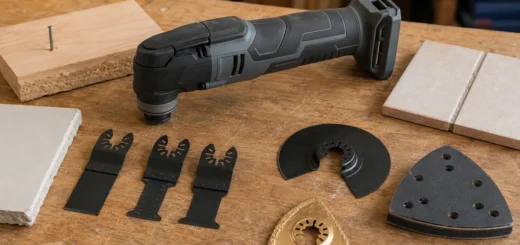
For cordless tools, compare the complete package. A bare tool priced at $129 may look cheaper than a $179 kit, but the kit could include a battery and charger worth more than the $50 difference. Conversely, if you already own compatible batteries, the bare tool is often the better budget choice. Browse cordless power tool bare tools only after checking whether your existing battery platform is compatible.
How Retailer Price Matching Works
Retailer policies vary, but most require the competing item to be identical, new, in stock, and sold by an approved retailer. Marketplace listings, limited-quantity deals, membership-only pricing, clearance items, coupon prices, and typographical errors are commonly excluded. Some retailers match before purchase; others require customer service or a post-purchase adjustment within a set period.
Check whether the policy matches the competitor’s delivered price or only its product price. A competitor listing at $150 with $15 shipping may not beat a local retailer’s $165 shelf price. Also check timing. A price match approved on Monday may be denied on Tuesday if the competitor’s inventory sells out or the promotion ends.
Save a screenshot showing the item number, seller, stock status, price, and promotion end date. Retailer websites can change quickly, and a customer-service representative may not be able to verify an expired page. Confirm the result on your receipt before leaving or completing the order.
How Manufacturer Promotions Differ
Manufacturer promotions are often broader than price matches but more complicated. Common offers include instant discounts, mail-in rebates, prepaid cards, free tools with a qualifying purchase, and bundle promotions. Read the terms for eligible model numbers, purchase dates, authorized retailers, quantity limits, and redemption deadlines.
A “free battery” promotion may require a specific starter kit, while a rebate may exclude refurbished products or third-party sellers. Some promotions also require the original receipt, serial number, product barcode, and a photograph of the package label. Missing one item can turn an attractive deal into no discount at all.
Do not assume a manufacturer promotion can be combined with a retailer price match. Many price-match policies exclude rebates, coupons, gift cards, and special bundles. Ask a direct question: “Will you match this current price if the manufacturer promotion is still available?” Get the answer in writing when possible.
Compare Offers Side by Side
| Factor | Retailer price match | Manufacturer promotion |
|---|---|---|
| Money at checkout | Usually reduced immediately | May require full payment first |
| Typical proof | Competitor listing and stock status | Receipt, model number, barcode, and form |
| Main failure | Excluded seller, bundle, or expired price | Missed deadline or incomplete submission |
| Return complexity | Usually handled by the retailer | Promotion may need to be repaid or adjusted |
| Best advantage | Immediate, predictable savings | Potentially larger total value |
Use a simple calculation: effective cost = purchase price + required extras + shipping − immediate discount − realistic promotion value. Treat a promotion as “realistic” only if you meet every condition and are willing to complete the claim. If a $40 rebate requires 15 minutes of paperwork and a trip to find a missing receipt, it may still be worthwhile, but it is not the same as $40 off at checkout.
Account for Accessories and Platform Value
Promotions often make a brand look cheaper by including accessories you would otherwise buy. That is useful only when the extras fit your work. A second charger has limited value if you rarely use the tool; a high-capacity battery can be valuable for a saw or blower but excessive for a compact drill.
Compare battery capacity, not only battery count. A kit with two 2.0Ah batteries is not automatically better than one 5.0Ah battery. Smaller packs reduce weight, while larger packs usually run demanding tools longer. For occasional household repairs, a basic cordless drill driver kit is often enough, even if a promotion on a premium line appears more impressive.
Platform value also changes the calculation. If you already own three batteries and a charger from a brand, a bare tool promotion may beat a cheaper-looking kit from another brand. Starting a new platform can add $80 to $150 for batteries and a charger, wiping out the apparent tool savings.
Check Returns, Warranty, and Seasonal Timing
Price is not the only risk. A retailer may offer a 30- or 90-day return period, while a manufacturer promotion can complicate returns because the free item or rebate value may be deducted. Check whether opened tools can be returned and who handles warranty service.
Seasonal timing matters. Lawn equipment often sees promotions in spring, while drills, saws, and tool storage commonly get discounts around major holiday sales. A price match is preferable when you need the tool now and the competing price is documented. Waiting for a manufacturer promotion makes more sense when the product is seasonal, the offer is clearly active, and you can accept delayed savings.
Before buying, verify the exact model number, seller, stock status, promotion dates, and return terms. If the price-match discount is immediate and within $10 to $20 of the manufacturer’s theoretical savings, take the simpler deal. Choose the promotion only when its extra value is clear, the included items are useful, and you are prepared to document and redeem it correctly. For seasonal outdoor work, compare complete cordless leaf blower kits rather than comparing bare-tool prices alone.