How to Shop for Workshop Equipment During January Clearance Sales
What's inside
As an Amazon Associate I earn from qualifying purchases. This post may contain affiliate links at no extra cost to you.
Why January Clearance Sales Matter
January is one of the better months to shop for workshop equipment, but not because every tool suddenly becomes cheap. Retailers are clearing holiday inventory, seasonal hardware, discontinued packaging, and products that did not sell during November and December. That can produce genuine bargains on benches, storage, compressors, heaters, lighting, and power tools.
It also creates a predictable set of traps. A discount from an inflated list price is not a bargain, and clearance stock may have missing accessories, short return windows, damaged packaging, or an older battery platform. Shop by the job you need to complete, then compare the final usable cost—not the percentage printed on the sale tag.
Set a Realistic Buying Plan
Before browsing, write down the workbench space, available electrical circuits, and the largest jobs you expect to handle this year. Measure doorways and storage areas. A low-priced cabinet that cannot pass through the workshop door is not a deal, while a compressor that trips a 15-amp circuit may be unusable even if its specifications look impressive.
Separate purchases into three groups:
- Must have: equipment needed for a current project, such as a saw, vise, or dust extractor.
- Capacity upgrades: tools that save time but are not essential.
- Convenience items: lighting, organizers, stands, and accessories.
Spend the largest portion on equipment that affects accuracy, safety, or repeated work. It is usually smarter to buy a solid $150–$250 tool that you will use weekly than a $40 specialty gadget that duplicates something already in the shop.
Compare Total Cost, Not the Sticker Price
Clearance pricing often excludes the parts that make equipment useful. Add blades, hoses, batteries, chargers, stands, filters, dust bags, and delivery fees before comparing offers. A bare cordless tool may cost less than a kit, but adding a battery and charger later can erase the saving.
| Equipment | Clearance price to consider | Costs to check | Common failure mode |
|---|---|---|---|
| Cordless power tool | About 20%–35% below a normal street price | Battery, charger, extra blades or bits | Buying into a discontinued battery platform |
| Benchtop machine | About 15%–25% below comparable models | Stand, fence, dust collection, shipping | Small capacity or poor adjustment controls |
| Air compressor | About 20%–30% below typical pricing | Hose, regulator, fittings, oil, circuit capacity | Insufficient airflow for the intended tool |
| Storage cabinet | About 15%–30% below normal pricing | Freight, assembly, drawer liners, locks | Thin steel, bent drawers, difficult returns |
Check the current price at at least two other retailers and look at recent—not manufacturer suggested—prices. Some stores show a “was” price that reflects a short-lived launch price rather than what the product normally costs.
Choose Tools by Workload
For occasional drilling, sanding, and assembly, a budget corded tool can be perfectly adequate. Corded drills and sanders avoid battery replacement costs and usually deliver steady power. The trade-off is cable management and less convenience. If you work in one fixed shop, that trade-off is often worthwhile.
For cordless tools, buy into a platform rather than collecting isolated bargains. Compare battery prices, warranty length, brushless versus brushed motors, and the number of compatible tools. A cheaper brushed drill is fine for a few shelves each year. A brushless drill is easier to justify for daily construction, repetitive fastening, or dusty work where motor wear matters.
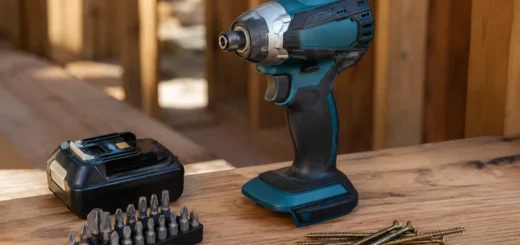
When shopping for a cordless power tool kit, check whether the included battery is a small 1.5- or 2.0-Ah pack. It may run a drill acceptably but become frustrating in a saw or grinder. A kit with one 4.0- or 5.0-Ah battery can have better value even when its sale percentage is smaller.
Buying Machines and Compressors
For benchtop saws, drill presses, and planers, examine adjustment mechanisms before motor wattage. A rigid table, square fence, usable depth stop, and replacement parts matter more than a large power number. A machine with 1/32-inch of fence movement can waste more material than it saves in purchase price.
For compressors, use the tool’s required CFM at 90 PSI, not the tank size alone. A small 2–3 CFM compressor may handle inflation, brad nailers, and short bursts with a blow gun. It will struggle with a die grinder, impact wrench, or spray gun that needs 5–10 CFM continuously. A larger tank only delays the pressure drop; it does not create more airflow. Also verify that the running amperage suits your circuit and that the unit has a drain that is easy to reach.
If January discounts make a portable air compressor attractive, confirm the noise rating and oil-free maintenance requirements. An inexpensive oil-free model can be the right choice for intermittent use, while a belt-drive unit is usually quieter and more serviceable for frequent shop work.
Inspect Clearance Condition
“Clearance” can mean unopened overstock, a returned item, a display unit, or a box with cosmetic damage. Ask which one you are buying. Inspect cast tables for rust or dents, cabinet frames for twisted corners, and power cords for cuts. Open accessory compartments and confirm every listed part is present.
Do not accept a missing guard, cracked battery housing, bent arbor, or damaged insulation because the price is low. Those are safety and reliability problems, not cosmetic defects. For used or open-box equipment, operate adjustment knobs and switches before paying. A stiff height wheel or loose miter gauge can indicate damage that is expensive to correct.
Time the Purchase and Protect the Budget
January inventory changes quickly. If the discount is real and the product fits your plan, buy rather than waiting for a further reduction that may never come. On the other hand, avoid panic-buying large equipment that has no clear use. Clearance sales often push shoppers toward bulky tools simply because the markdown looks dramatic.
For frequently used work surfaces, January can be a good time to compare a steel workbench with drawers against a simpler wooden bench. Steel offers easier cleanup and built-in storage, but thin-gauge cabinets can flex and dent. A sturdy wood top with a separate budget cabinet may provide more usable bench space for less money.
Finally, confirm the return policy, manufacturer warranty, and parts availability before checkout. Keep the receipt, photograph the package if it arrives damaged, and test electrical tools during the return period. The best January purchase is not the item with the deepest markdown; it is equipment that matches your workload, fits your shop, and remains supportable after the sale ends.