How to Avoid Overspending on Professional-Grade Tools for Light DIY
What's inside
As an Amazon Associate I earn from qualifying purchases. This post may contain affiliate links at no extra cost to you.
Professional-grade tools are built for people who use them all day, every day. For light DIY, that can mean paying for durability, speed, battery systems, and service support you may never use. A homeowner hanging shelves, assembling furniture, trimming a few boards, or repairing drywall usually needs reliable performance—not the most powerful tool on the rack.
The goal is to spend enough to avoid frustration and early failure, while recognizing where a budget tool is perfectly adequate.
Match the Tool to the Work
Start with the job rather than the brand. A drill used for six small projects a year has different requirements from one used to build a deck. Light DIY generally means short run times, modest materials, and long periods between uses. That favors lower-cost corded tools, compact cordless tools, and basic hand tools.
For example, a 12-volt drill is usually enough for pilot holes, cabinet hardware, curtain rods, and furniture assembly. An 18- or 20-volt drill is more useful for long screws, larger bits, occasional masonry drilling, and repeated work. The higher-voltage option costs more and is often heavier, but it gives you more reserve when a bit binds or a screw needs to pass through dense wood.
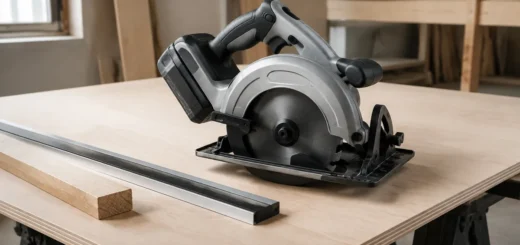
Do not buy a professional framing saw to cut a few shelves. A basic circular saw with a sharp blade will handle those cuts, though it may be slower and less refined. Similarly, a homeowner does not need an expensive oscillating tool for one drywall cutout if a utility knife and jab saw will do the job.
Where Budget Tools Are Good Enough
Cheaper tools are often a sensible choice for low-load tasks. Basic screwdrivers, pliers, tape measures, levels, clamps, utility knives, stud finders, and non-powered saws rarely benefit enough from premium construction to justify a large price increase.
A $15 to $30 hand-tool set may have less comfortable grips and looser tolerances than a $70 professional set, but it can still handle picture hanging and furniture repairs. The main failure mode is not usually immediate breakage; it is poor fit. A soft screwdriver tip can round a screw head, and a weak tape measure may develop a bent hook or unreadable markings.
Budget power tools are more variable. They may have weaker chucks, less effective cooling, shorter battery life, or rougher speed control. Those shortcomings matter when drilling dozens of holes, driving long structural screws, or cutting thick hardwood. They matter much less when installing ten cabinet pulls or assembling a bookcase.
If you only need occasional drilling and driving, compare cordless drill-driver kits by included battery size, charger, warranty, and accessory quality—not just the advertised voltage.
Compare Total Cost, Not Sticker Price
Cordless tools are commonly sold as bare tools, kits, or bundles. A $60 bare drill is not a bargain if you still need a $50 battery and $30 charger. On the other hand, a $120 kit with two batteries can be good value if you later add a saw or sander from the same battery platform.
| Purchase type | Typical cost | Best for | Main trade-off |
|---|---|---|---|
| Basic corded tool | $25–$70 | Occasional work near an outlet | Cord management and limited portability |
| Budget cordless kit | $60–$150 | Light repairs and furniture projects | Battery ecosystem may have fewer useful tools |
| Midrange cordless kit | $150–$300 | Frequent DIY and multiple tool types | Higher upfront cost |
| Professional cordless kit | $300 and up | Heavy use, job sites, daily production | Usually unnecessary for occasional homeowners |
For a tool you use twice a year, a corded version can be the better value. It avoids battery replacement and remains ready after long storage. A cordless tool is worth paying for when cords would make the job awkward, such as ladder work, outdoor repairs, or installing hardware in a finished room.
Spend More on These Features
Some upgrades prevent real problems. A metal chuck on a drill generally survives more abuse than a cheap plastic-heavy chuck. Variable speed is useful for starting screws and drilling metal. A clutch prevents stripped screws and is more important than an extreme top speed for cabinet and furniture work.
On saws, spend money on a rigid base, a working blade guard, and a reliable bevel adjustment. Laser guides are convenient but do not replace marking the cut. On sanders, dust collection and comfortable vibration levels matter more than a small increase in advertised motor power.
Safety features are not optional savings targets. Avoid tools with a sticking trigger, damaged cord, weak blade guard, swollen battery, or charger that becomes excessively hot. A bargain tool that creates kickback, overheats, or loses control is not a bargain.
For cutting tasks, buy the right blade before buying a stronger tool. A sharp general-purpose blade can improve a basic saw more than a premium saw using a dull, inappropriate blade. You can browse replacement circular saw blades for wood by tooth count and material. A 24-tooth blade cuts quickly; a 40- to 60-tooth blade leaves a cleaner edge but cuts more slowly.
Choose a Battery Platform Carefully
Battery platforms are where light DIY buyers most often overspend. Once you own two batteries and a charger, switching brands becomes expensive. Before buying, list the next three tools you might realistically need. If that list only includes a drill and a light, there is little reason to pay for a premium professional platform.
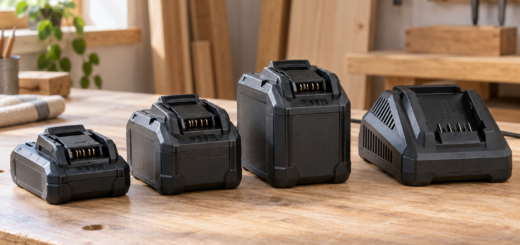
Battery capacity also affects weight. A 2.0Ah battery is lighter and usually enough for short indoor jobs. A 5.0Ah battery can run a saw or vacuum longer, but it may add a pound or more to a drill. For overhead work, the lighter battery is often the more practical choice.
Do not assume every tool in a platform has the same quality. Some brands use the same batteries for basic homeowner tools and expensive brushless tools, with major differences in motors, gearing, and warranties. Read the warranty terms and check the cost of replacement batteries before committing.
Use Sales Timing and Used Tools
Tool prices commonly drop around major holiday sales, Father’s Day promotions, Black Friday, and end-of-season clearance events. Compare the current price with the tool’s normal selling price; a crossed-out list price is not proof of a deal. Kits are often discounted more aggressively than bare tools, especially when a brand is promoting a battery platform.
Clearance tools can be worthwhile if the packaging is intact and the retailer accepts returns. For used corded tools, check the cord, trigger, bearings, and safety guards. For used cordless tools, battery age is the major risk. A battery that runs for only a few minutes can cost nearly as much to replace as the used tool itself.
When the job is a one-time repair, renting or borrowing may beat buying. A rental costing $40 is cheaper than a $180 tool that spends the next five years in a closet. For recurring small jobs, choose a modest tool with a good return policy, then upgrade only after you can identify the specific limitation you encountered.
For occasional home repairs, a compact 12-volt cordless drill kit, quality bits, a basic hand-tool set, and a few job-specific accessories will cover most needs without professional-grade spending.