Best Affordable Tools for Spring Yard Cleanup
What's inside
As an Amazon Associate I earn from qualifying purchases. This post may contain affiliate links at no extra cost to you.
Spring cleanup is where cheap tools either pay for themselves or fall apart. You’re dealing with wet, matted leaves, compacted thatch, overgrown edges, and winter debris — all of which punish underpowered motors and flimsy build quality. The good news is you don’t need pro-grade gear for a typical quarter to half-acre suburban yard. You need the right budget tier for each job, and to avoid paying for features you won’t use more than twice a year.
As an Amazon Associate we earn from qualifying purchases at no extra cost to you.
What Spring Cleanup Actually Requires
Most yards need the same five jobs done in March through May: clear leaves and sticks, scalp and dethatch the lawn, edge and trim, prune winter damage, and clean hardscape. If you try to do all of that with one tool, you’ll overpay and underperform. A $99 combo kit that claims to blow, vacuum, and mulch usually does none of them well. It’s cheaper in the long run to buy separate, proven budget tools for the jobs you do every year and rent or borrow the one-use items.
For pricing context, expect to spend $250 to $400 total if you’re starting from scratch with budget corded and battery tools. That same capability in contractor-grade battery platforms runs $700 to $1,100. The difference is mostly runtime, warranty length, and availability of replacement parts — not raw cleaning power for a single spring weekend.
Blowers, Rakes, and Vacuums: Where Cheap Is Often Fine
For leaves, you have three budget paths: a traditional rake ($25-$40), a corded electric blower ($35-$65), or a battery blower ($60-$130 bare tool, $150-$220 with battery).
A corded blower is the best value if your yard is under 5,000 sq ft and you have an outdoor outlet within 100 feet. Look for 350+ CFM and 150+ MPH. Anything under 300 CFM struggles with wet, matted leaves — you’ll end up raking anyway. Corded models fail most often at the strain relief where the cord enters the housing and at the switch. Keep the cord behind you and avoid yanking it tight around corners.
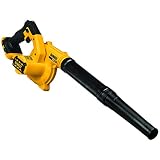
Battery blowers make sense if you already own a battery platform (Ryobi 18V, Craftsman V20, Greenworks 40V, etc.). Don’t buy into a new battery system just for a blower. A 2.0Ah battery will give you 12-15 minutes on high; you want 4.0Ah or larger for spring cleanup. If you’re buying your first battery tool, a budget cordless leaf blower in the 40V class often hits the sweet spot — more airflow per dollar than 18V/20V max tools without jumping to $250+ pro models.
Leaf vacuums/mulchers sound useful but are the first place to save money. The impellers clog on damp leaves and twigs, bags tear on sticks, and the mulching ratio (often advertised as 16:1) is closer to 6:1 in real wet spring conditions. A blower plus a $35 tarp to drag leaves to the curb is faster and more reliable.
Mowers, Dethatchers, and Aerators
You probably don’t need a new mower for spring. A $35 tune-up does more: fresh spark plug ($6), air filter ($10-$15), sharp blade ($20 sharpened or $25 new), and oil change. If your mower is more than 8-10 years old, hard to start, or the deck is rusted through, then a budget push mower at $280-$380 is reasonable. Self-propelled adds $80-$120 and is only worth it on hills.
Dethatching is where people overspend. Power dethatchers/verticutters do a better job than a manual rake, but you only use them once a year. A corded 13-15 inch corded electric dethatcher scarifier at $99-$149 is the value pick. It will pull up surprising amounts of thatch, but it has two failure modes to know about: the belt slips if you push too fast through thick thatch, and the tines bend if you hit roots or landscaping edging. Go slow, set the height one notch higher than you think you need on the first pass, and do two passes at 90 degrees if thatch is thicker than 1/2 inch.
Core aerators are not worth buying for most homeowners. A manual step aerator ($30-$40) is exhausting and slow. A powered aerator rents for $75-$90 for a half day and covers a lawn in an hour. If your soil is heavily compacted (clay, new construction), rent it. Otherwise, dethatching plus overseeding gives you 80% of the result for less money.
| Tool Category | Budget Pick Price | Mid-Range Price | When Budget Is Enough |
|---|---|---|---|
| Leaf Blower (corded) | $35 – $65 | $120 – $180 (battery) | Small lot, outlet access, 1-2 uses per month |
| Leaf Blower (battery, kit) | $99 – $149 (3.0-4.0Ah) | $200 – $280 (5.0Ah+) | You already own batteries from same brand |
| Electric Dethatcher | $99 – $149 | $180 – $250 | Yard < 1/4 acre, thatch < 3/4 in |
| String Trimmer (corded) | $35 – $55 | $90 – $160 (battery) | Edges < 200 linear feet, no heavy weeds |
| Loppers / Pruners | $25 – $45 | $60 – $90 | Branches < 1.5 in, occasional use |
| Pressure Washer (electric) | $120 – $180 (1600-2000 PSI) | $280 – $400 | Decks, siding, driveway spot cleaning |
Trimmers, Edgers, and Loppers
For edging and trimming after winter, a corded string trimmer ($35-$55) is painfully effective for the price. The downsides are real: you manage a cord, and bump-feed heads on cheap models jam if you use thick line. Stick with 0.065-inch round line and keep a second spool handy. If you have more than 200 feet of edging or a ditch line to clear, battery is worth the premium.
The cheapest battery trimmers ($60-$80 bare) often include a single-line auto-feed head that wastes line and a motor that bogs in thick dead grass. Spend the extra $20-$30 to get a dual-line head and a brushless motor if you can. Carbon shafts and pivoting heads are marketing at this tier — they don’t change cutting performance.
For pruning winter damage, skip the cheap folding saw and $20 pole saw combos. A solid bypass lopper ($30-$45) and a pair of bypass pruners ($15-$25) will handle 90% of spring cuts up to 1.5 inches. Look for hardened steel blades and replaceable blades if possible. The common failure on budget pruners is the spring and anvil dulling after one season of cutting dry, dirty branches. Wipe blades with alcohol and oil the pivot — it doubles their life. If you need to cut anything over 2 inches or above head height, rent a pole saw for $40 rather than buying a $90 electric pole saw you’ll use once.
Pressure Washers and Hardscape Cleanup
A budget electric pressure washer (1600-2000 PSI, 1.1-1.3 GPM) for $120-$180 is enough to clean a patio, siding, and salt-stained driveway. You don’t need 3000 PSI for spring cleanup; that just etches soft wood and forces water behind vinyl siding. What matters more is the nozzle set and hose quality. Cheap units fail at the plastic hose connections and the GFCI plug. Store it indoors after draining, and never run it without water supply — you’ll burn the pump in under a minute.
For sweeping leftover grit and leaves off driveways, a good push broom ($25) and that blower you already bought are more useful than a dedicated power sweeper. Power sweepers in the $130-$180 range are niche — useful if you have a long paver driveway, but otherwise a blower does the same job.
When to Buy for Best Price
Spring is the worst time to pay full price. Retailers know you need tools now, so discounts are thin in March and April. If you can buy off-season, the lowest prices on corded and battery yard tools are typically late February and again in late August through October. Open-box and certified refurbished units from major brands often drop 25-35% and still include a one-year warranty — that’s where the real value is.
If you must buy in season, check bare-tool pricing if you already own batteries. A bare tool plus a third-party 4.0Ah battery can be $40 cheaper than a kit, but third-party batteries have higher failure rates and often overstate capacity. For a tool you’ll run hard for hours during cleanup, OEM batteries are worth it; for light trimming, generics are acceptable.
For hardscape and deck cleaning, watch for package deals where an electric pressure washer 2000 PSI is bundled with a patio cleaner attachment. The attachment alone is $40-$60, so a bundle at $159-$179 is often cheaper than buying separately later.
Finally, factor in cord and battery costs you already have. A $39 corded trimmer plus a $35 100-foot 12-gauge extension cord is still cheaper than a $149 battery trimmer kit if you only trim 10 minutes a week. Buy for your actual yard size and how often you’ll use it, not the size you wish you had.