Best Budget Cordless Drill: What $100 Actually Buys
Our Top Picks
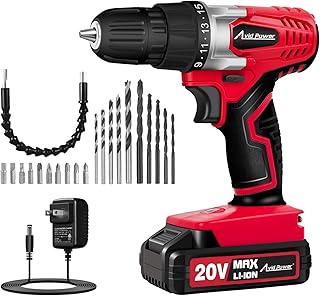
 Power Drill Cordless: DEKOPRO Cordless Drill 20V Electric20v drill2 x 2 x 2 inches2.5 poundsCheck on Amazon
 COMOWARE 20V Cordless Drill & Bits Set w/Charger10L x 7W x 6H inches11 x 3 x 9 inches5.2 poundsCheck on Amazon
 BLACK+DECKER 20V MAX* POWERCONNECT Cordless Drill Driver KitDrill Project Kit15.5 x 5.6 x 14.4 inches6.1 poundsCheck on Amazon


What's inside
As an Amazon Associate I earn from qualifying purchases. This post may contain affiliate links at no extra cost to you.
Budget drills are not all the same. At this price manufacturers cut costs somewhere, and the trick is knowing which corners you can live with. Two kits can hang on the same shelf hook, quote similar torque figures, and behave nothing alike the first time you drive a long screw into a stud.
So the real question is not which drill under a hundred dollars is best. It is which compromises you are buying, and whether they match how you will actually use the tool. Someone hanging four shelves a year should make a different trade than someone about to build a fence. What follows is where the money gets removed from these kits, what each cut costs you in practice, and the one strategy that beats the category outright.
As an Amazon Associate we earn from qualifying purchases at no extra cost to you.





Where they cut costs
Every kit at this price has been value-engineered. That is not an insult, it is the business model. Five places take the hit, roughly in order of how much they matter.
Battery capacity. The most common cut. Two 1.3Ah packs instead of 2Ah or 4Ah. This is where a $99 kit and a $139 kit really differ. The drill inside is often the same tool; the runtime is not. Compare amp-hours before you compare price, and if a listing does not state the capacity of the included packs, assume it ships with the smallest in the lineup.
Motor type. Brushed instead of brushless. Acceptable for occasional use, less efficient and shorter-lived under load. A brushed motor sheds more of its energy as heat, so you get less work per charge and noticeable slowdown when you lean on it. Hanging blinds, you will never know. Driving deck screws for an afternoon, you will.
Chuck. Plastic-bodied chucks with less grip. Bits slip under torque and small bits wander. A metal collar is the quickest tell of a decent one. A slipping chuck also rounds off hex shanks and chews driver bits, so the cheap chuck keeps charging you in consumables long after the sale price is forgotten.
Clutch resolution. Fewer settings, coarser steps. A clutch with only a handful of positions jumps straight from not seating the screw to sinking it through the face of the workpiece, with nothing usable in between. This is the cut that ruins visible work.
Charger speed. Slow chargers turn one battery into an hour of waiting. Buyers notice this last and complain about it most. Paired with two packs it is a non-issue. Paired with one, the charger sets the pace of your entire afternoon.
| Corner cut | Acceptable? | Notes |
|---|---|---|
| Brushed motor | Yes, for light use | Fine under 10 uses a year |
| Small battery | Only if cheap | Check price of a bigger pack |
| Plastic chuck | Marginal | Causes slipping under load |
| Slow charger | Yes | Buy a second battery instead |
| Few clutch settings | Yes | 15 is enough |
The useful split in that table is between cuts you can fix later with money and cuts you cannot fix at all. Batteries and chargers are fixable: buy a bigger pack, buy a second one, and the kit improves. The motor and the chuck are permanent. That is why they deserve most of your attention at the moment of purchase.
What each price band actually buys
The bottom of the range
The cheapest kits pair a single compact battery with a plastic chuck, a coarse clutch and a case padded out with bits you will throw away. They drill pilot holes, assemble flat-pack furniture and hang curtain rods, and they do it for years if that is all you ask. Suits renters who need one drill in a closet. Skip it if you own a home, because the first real job will find its limits and you will buy twice.
The honest sub-$100 kit
The middle of this band is where the sensible buys live: brushed motor, two batteries, at least fifteen clutch settings, two speed ranges, and a brand with a platform behind it. Nothing here is impressive on paper, and that is the point. You are buying a tool that will not embarrass itself on household work, plus the option to grow into the same battery later. This is the right pick for most occasional users.
If you already own batteries
Anyone already on a platform should stop looking at kits entirely. The cells and the charger are the expensive part of cordless ownership, so a bare tool puts your whole budget into the drill itself, which usually means a better chuck, a better clutch and often a brushless motor for the same outlay. Buying a second kit on a third platform is how garages fill with orphan chargers.
Weighing the trade-offs against each other
Something has to give at this price. Give it up in this order.
- Charger speed first. The cheapest problem to solve, and a second battery solves it better than a fast charger does.
- Clutch settings beyond fifteen next. Extra positions past that are marketing, not resolution.
- Motor type third, and only if your use is genuinely occasional. Frequent work reverses this instantly.
- Battery capacity fourth, and only after you have checked what a larger pack costs on that platform.
- Never the chuck, and never the second battery. One ruins your work, the other ruins your day.
What to insist on even at this price
- ✔ Two batteries, not one
- ✔ A keyless chuck with a metal collar if possible
- ✔ At least 15 clutch settings
- ✔ Two speed ranges
- ✔ A platform with tools you might want later
Two speed ranges matter more than most buyers expect. Low range gives you torque and control for driving, high range gives you the speed that actually cuts with a spade bit or a hole saw. A single-speed drill does both jobs badly. And the platform point is a long game: the battery you buy today decides how much your next three tools cost, so a lineup that includes an impact driver, a sander and a work light is worth more than a slightly better drill on a dead-end mount.
Kits that clear that bar do exist under a hundred dollars. They are simply not the ones stacked by the register with a hundred bits in the case.
Budget cordless drill kits
Two batteries, 15+ clutch settings, two speeds. Ryobi and Craftsman both do this well at this price point.
The better strategy: wait for a sale
Brushless combo kits normally around $180 regularly drop toward $120–140 during sale windows. If the purchase can wait, patience buys you brushless and a bigger battery for close to budget-drill money.
Tool pricing is seasonal, not random. The windows cluster around Father’s Day, the July holiday weekends, October, and Black Friday through mid-December. Outside those stretches, most discounts are noise. Judge any deal against what that kit has actually sold for over recent months rather than the crossed-out price on the listing, and ignore bundles whose apparent value comes from accessories.
Waiting is the right call for anyone buying ahead of a project. It is the wrong call when something is already broken, and there is no shame in paying full price for a modest kit on a Saturday morning instead of driving to the store twice.
Discounted brushless kits
The upgrade path most people should take: a brushless combo on sale instead of a brushed drill at full price.
Common mistakes at this price
Shopping on torque figures. Peak inch-pound claims at the bottom of the market are measured however the seller likes. Battery capacity, chuck quality and clutch behaviour predict real performance far better.
Counting bits instead of batteries. A case with a hundred accessories is cheaper to fill than a second pack. Count the packs, check their amp-hours, then look at the bits.
Solving runtime with a charger. A faster charger still leaves you standing still. A second battery keeps you working, and on most platforms it costs about the same.
Buying a drill when the job wants an impact driver. Long fasteners and lag screws punish a budget drill and your wrist. If that is the work ahead, a two-tool combo on sale is the smarter target.
Committing to a platform with nothing on it. A proprietary battery from a brand with a handful of tools is a dead end, and replacement packs for it are rarely cheap or available for long.
What to avoid entirely
- ✘ No-name brands with implausible torque claims
- ✘ Kits with a single 1.3Ah battery
- ✘ Anything with a proprietary battery from a brand with five tools
- ✘ Sets padded with 100 low-quality bits
The thread running through all four is the same: value moved out of the tool and into the parts of the listing that photograph well. Spot that pattern and you can skip most of the category in seconds.
FAQ
Is brushed acceptable? For under ten uses a year, yes. Beyond that, brushless pays back.
Which budget brand? Ryobi for range, Craftsman for hand tool compatibility, Skil for occasional use.
Should I buy a second battery instead of a faster charger? Yes, almost always.
Is a bare tool a better use of a hundred dollars than a kit? Only if you already own compatible batteries and a charger. If you do, it is usually the best value on this page. If you do not, buy the kit.
Spend the money on the parts you cannot upgrade later, treat the charger and the small batteries as problems you can fix, and let the discount cycle do the rest of the work for you.
See budget drills →