Best Concrete Nailers for Masonry and Concrete Fastening
What's inside
- How Concrete Nailers Work and When You Need One
- Types of Concrete Nailers Compared
- Spec and Feature Comparison
- Decision Matrix: Which Concrete Nailer Fits Your Situation
- Choosing Pins and Loads for Wood Furring Strips
- Cost Per Fastener: Worked Calculation
- Durability and Ownership Realities
- Best Picks by Application
- Setup Steps for a Secure Furring Strip
- FAQ
- How Concrete Nailers Work and When You Need One
- Types of Concrete Nailers Compared
- Spec and Feature Comparison
- Decision Matrix: Which Concrete Nailer Fits Your Situation
- Choosing Pins and Loads for Wood Furring Strips
- Cost Per Fastener: Worked Calculation
- Durability and Ownership Realities
- Best Picks by Application
- Setup Steps for a Secure Furring Strip
- FAQ
As an Amazon Associate I earn from qualifying purchases. This post may contain affiliate links at no extra cost to you.
The best concrete nailer for most users attaching wood furring strips to masonry is a .27-caliber powder-actuated tool like the Ramset Cobra+ or Hilti DX 460 for heavy concrete, and a battery-powered concrete nailer like the DeWalt DCN890 or Hilti BX 3 for block, brick, and lighter concrete where you want no powder loads, less noise, and faster repositioning.
As an Amazon Associate we earn from qualifying purchases at no extra cost to you.

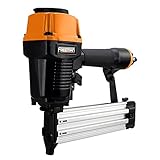


How Concrete Nailers Work and When You Need One
A concrete nailer drives hardened steel pins directly into concrete, CMU block, brick, or structural steel without drilling. Unlike a standard framing nailer or drill-and-anchor method, it uses either a powder charge, compressed gas, or battery-driven flywheel to generate the force needed to overcome compressive strength of masonry. You need one when you are fastening wood sleepers, furring strips, plywood, drywall track, sill plates, or metal channel to masonry and want to eliminate layout, drilling, and anchor setting.
For wood-to-concrete applications like furring strips, the pin must penetrate the wood fully and embed 3/4″ to 1″ into the base material. If the concrete is old, hard, or over 4,000 PSI, many battery tools will not set pins consistently and a powder-actuated tool (PAT) is required. If the substrate is hollow block, soft brick, or green concrete, a low-velocity PAT or battery tool gives you better control and prevents blowout.
Types of Concrete Nailers Compared
1. Powder-Actuated Tools (PAT) – Single Shot and Semi-Automatic
PATs use .22 or .27 caliber powder loads graded by power level (color-coded from brown at weakest to purple/red at strongest). Single-shot tools like the Ramset Cobra+ and Hilti DX 460 require manual loading of each pin and load. Semi-automatic strip-fed PATs like the Hilti DX 5 and Powers Trak-It C4 advance pins on a collated strip and accept 10-load discs.
Pros: Highest power for hard concrete and steel, lowest tool cost, compact nose for tight spaces. Cons: Requires load selection, ventilation, licensing in some jurisdictions, and produces noise and fumes. You must manage powder load inventory.
2. Battery-Powered Concrete Nailers
Tools like the DeWalt DCN890 (20V MAX) and Hilti BX 3 use a battery and flywheel or linear motor to drive pins. No powder loads, fuel cells, or permits. They are treated as standard power tools on most jobsites.
Pros: Consistent drive with no load tuning, quieter, no powder odor, fast follow-up shots, easier for beginners. Cons: Heavier, higher upfront cost, limited on hard concrete over 3,500-4,000 PSI, and pins are often proprietary.
3. Gas-Powered Tools
Gas-actuated tools combine a fuel cell and battery for ignition. Once common, they have largely been replaced by battery models due to fuel cell shelf life and temperature sensitivity. They are still offered by some brands for trim and light masonry pins but are rarely the best choice for furring strips.
Spec and Feature Comparison
Specifications matter more for concrete nailers than for wood nailers because substrate hardness and pin length dictate success. This table compares common models available in 2026 for wood-to-masonry work.
| Model | Power Source | Pin Length Range | Magazine Capacity | Tool Weight (bare) | Max Concrete Hardness |
|---|---|---|---|---|---|
| DeWalt DCN890B (20V MAX) | 20V Battery, flywheel | 1/2″ to 2-1/4″ (13-57mm) | 42 pins (collated) | 10.3 lbs (4.7 kg) | Approx. 3,800 PSI |
| Hilti BX 3-ME (18V) | 18V Battery, electromechanical | 1/2″ to 1-9/16″ (14-40mm) | 40 pins (collated) | 8.2 lbs (3.7 kg) | Approx. 4,000 PSI |
| Hilti DX 5 (Semi-auto PAT) | .27 Caliber strip (10-load disc) | 1/2″ to 2-1/2″ (12-62mm) | 40 pins (collated strip) | 7.5 lbs (3.4 kg) | 6,000+ PSI, also steel to 1/2″ |
| Ramset Cobra+ (Single-shot PAT) | .27 Caliber single load | 1/2″ to 3″ (12-76mm) | 1 pin (manual) | 4.8 lbs (2.2 kg) | 6,000+ PSI, also steel to 3/8″ |
| Powers Trak-It C4 (Semi-auto PAT) | .25 Caliber strip (10-load disc) | 1/2″ to 1-1/4″ (12-32mm) for concrete | 42 pins (collated strip) | 7.1 lbs (3.2 kg) | Approx. 4,500 PSI |
Weight differences affect overhead work. A 10.3 lb battery tool with a 5.0Ah battery approaches 12 lbs in hand, while a single-shot PAT stays under 5 lbs and fits between joists. For furring strips on ceilings, weight and balance often matter more than magazine capacity.
Decision Matrix: Which Concrete Nailer Fits Your Situation
| Your Situation | Best Choice | Why |
|---|---|---|
| Homeowner or remodeler attaching 3/4″ furring to block or soft brick, occasional use | Battery-powered (DeWalt DCN890 or Hilti BX 3) | No load chart to learn, less risk of cracking block, no powder storage rules |
| Contractor fastening sill plates and track to poured concrete daily | Semi-auto PAT (Hilti DX 5, Powers Trak-It C4) | Higher power range, faster than single-shot, lower cost per pin |
| Tight crawlspace, overhead, or steel deck work | Single-shot PAT (Ramset Cobra+) | Lightest tool, shortest overall length, handles hard concrete and steel |
| Rental properties, occupied buildings, noise-sensitive sites | Battery-powered | Significantly lower dB, no combustion gases, no powder licensing questions |
| Budget under $400 and you already own a suitable rotary hammer as backup | Single-shot PAT + powder load kit | Tool cost typically $150-$300 vs $500-$700 for battery bare tool; pins and loads are widely available |
Choosing Pins and Loads for Wood Furring Strips
For a standard 3/4″ (19mm) furring strip, you need a pin that provides 3/4″ to 1″ embedment plus the wood thickness. That means a 1-1/2″ to 1-3/4″ pin is the starting point for most block and concrete. Add 1/4″ if you are shimming the strip.
- Knurled shank vs. smooth: Knurled pins increase pullout resistance in block and are preferred for wood-to-masonry. Smooth pins are for steel.
- Collated pins with washers: Many battery tools require proprietary collated pins. PAT pins often use a 3/4″ or 7/8″ washer to prevent pull-through in soft wood like spruce or fir furring.
- Powder load level: Start two levels lower than you think you need. On a Ramset or Hilti color scale (Brown > Green > Yellow > Red > Purple from low to high), most 1-1/2″ pins into block set correctly with Green or Yellow, while poured walls need Yellow or Red. If the pin bends or the washer embeds deeply, reduce the load; if the pin stands proud by more than 1/8″, increase one level.
- Substrate limits: Never shoot into hard stone, glazed brick, or concrete closer than 3″ from an unsupported edge or 1/2″ from a mortar joint. Pins will spall the edge and lose holding power. Pre-drill and use a concrete screw anchor there instead.
Cost Per Fastener: Worked Calculation
List price hides the consumable cost. For a 400-linear-foot basement with furring strips 16″ on center (approx. 300 pins):
- Battery system: Pins for DeWalt DCN890 or Hilti BX 3 typically run $0.14 to $0.28 each when bought in 1,000-count boxes. No fuel or loads. Cost for 300 pins: $42 to $84. Battery recharges are negligible.
- PAT system: Single pins $0.05 to $0.12 each, plus 10-count powder disc or single loads at $0.12 to $0.22 per shot. Combined cost per fastening: $0.17 to $0.34. Cost for 300 pins: $51 to $102.
The battery tool costs more upfront – bare tools generally range from $450 to $750, plus batteries if you are not on the platform. PAT tools range from $120 to $550 – but cost per pin is similar over time. Where PAT saves money is versatility: the same tool with different loads can handle both soft block and 5,000 PSI walls without buying a second nailer.
Durability and Ownership Realities
What wears first is not the motor or firing mechanism but the nose, piston, and return system. Battery tools collect concrete dust in the nosepiece and driver channel; PAT tools collect carbon and lead styphnate residue on the piston and barrel.
- Battery tools: Clean the nosepiece and driver after every 500 shots with compressed air and a dry brush. Avoid solvent in the flywheel housing. The bumper and driver blade are wear items – expect replacement after 15,000 to 30,000 shots depending on hardness. Using pins longer than rated length accelerates driver wear and causes misfires.
- PAT tools: Clean the piston and barrel every 300-500 shots or when driving depth becomes inconsistent. A stuck piston is the most common cause of weak drives. Never use steel wool on the piston; use the wire brush supplied with the tool. Replace the piston if it shows mushrooming or loses its chamfer.
- Common mistakes: Holding the tool at an angle to avoid recoil (always keep it perpendicular), shooting into cracked concrete, re-shooting a pin that did not set, and using non-hardened pins from a framing nailer. All four cause ricochets.
- Storage and safety: Store PAT loads in a locked, dry container away from heat. Battery tools should be stored with the battery removed and the nosepiece locked. Both types require ANSI Z87.1 eye protection and hearing protection; PAT also requires checking local regulations – several states require operator certification cards for .25/.27 caliber tools.
Best Picks by Application
Best for DIY Furring Strips on Block and Brick: Battery-Powered
If you are attaching 1×3 or 1×4 furring to CMU or brick for foam board and drywall, a battery tool eliminates load testing and reduces the chance of cracking hollow block. The Hilti BX 3 is lighter for overhead, the DeWalt DCN890 offers longer pin capacity if you need 2″ pins for shimming uneven walls.
Best for Poured Concrete Walls and Floors: Semi-Automatic PAT
For sill plates, bottom track, and furring on poured foundations, the Hilti DX 5 and Powers Trak-It C4 give you the widest power band. You can tune loads to the concrete instead of hoping the battery tool has enough energy, and the strip magazines keep production speed high.
Best for Tight Spaces and One-Off Jobs: Single-Shot PAT
The Ramset Cobra+ and Hilti DX 460 remain the standard for remodelers who need a compact, inexpensive tool that will set a pin in almost any solid concrete. Slower than magazine-fed tools, but easiest to control on short runs and around obstacles.
Setup Steps for a Secure Furring Strip
This sequence reduces blowouts and improves holding power regardless of tool type:
- Test the substrate in an inconspicuous area. Drive one pin with your intended load or battery setting. The head should sit 0 to 1/16″ proud with the washer flat, not countersunk.
- Mark furring layout and pre-position the strip with a single pin at one end; check for level before adding remaining pins.
- Space pins 12″ to 16″ on center for 3/4″ furring, 24″ for 1-1/2″ sleepers. Keep pins at least 3″ from the end of the strip and 3″ from concrete edges.
- Apply firm, perpendicular pressure and hold for a half-second after firing to allow full set. Do not fire if the tool is not fully depressed against the work.
- If a pin does not set fully, do not re-drive it. Remove the strip, cut the pin with nippers, and shoot a new pin at least 2″ away.
FAQ
Can a concrete nailer be used on old, very hard concrete?
Yes, but only PAT tools reliably handle concrete above 4,500 PSI. Battery tools may leave pins proud or cause the driver to stall. If you do not know the PSI, assume an older poured wall is hard and start with a PAT at mid-level load.
Will concrete pins hold as well as concrete screws?
Pins provide high shear strength and fast installation but lower pullout strength than a 3/16″ Tapcon-style screw in cracked or hollow block. For structural sill plates subject to uplift or seismic loads, local code may require anchors rather than pins. For furring strips that mainly resist shear and hold drywall, pins are sufficient when spaced correctly.
Do I need a license to use a powder-actuated tool?
In many U.S. jurisdictions, operation of high-velocity PATs requires manufacturer training or a certification card, and low-velocity tools require reading the manual and following safety warnings. Check the tool manual and local regulations before renting or buying.
