Bosch Dual-Bevel Glide Miter Saw: Is It Worth Buying?
What's inside
- What makes the Bosch Dual-Bevel Glide different?
- Bosch GCM12SD specifications versus competing dual-bevel saws
- 10-inch or 12-inch Bosch: which size makes sense?
- Head-to-head: Bosch axial glide versus conventional sliding rails
- Bevel range and real-world cutting convenience
- Durability and ownership realities
- Decision matrix: who should buy it?
- Verdict
- Related Guides
- What makes the Bosch Dual-Bevel Glide different?
- Bosch GCM12SD specifications versus competing dual-bevel saws
- 10-inch or 12-inch Bosch: which size makes sense?
- Head-to-head: Bosch axial glide versus conventional sliding rails
- Bevel range and real-world cutting convenience
- Durability and ownership realities
- Decision matrix: who should buy it?
- Verdict
- Related Guides
As an Amazon Associate I earn from qualifying purchases. This post may contain affiliate links at no extra cost to you.
Yes—the Bosch Dual-Bevel Glide Miter Saw is worth buying if you prioritize a compact front-to-back footprint, smooth operation, and long-term shop use over the lowest price or maximum cutting capacity. The 12-inch Bosch GCM12SD is particularly attractive for trim carpenters, remodelers, and small workshops, while a conventional rail saw may be a better value for occasional DIY projects.
As an Amazon Associate we earn from qualifying purchases at no extra cost to you.


What makes the Bosch Dual-Bevel Glide different?
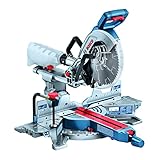
The defining feature is Bosch’s axial-glide mechanism. Instead of extending long steel slide rails behind the saw, the head moves forward on enclosed articulated arms. That design keeps the saw’s rear clearance requirement unusually small and avoids the exposed rails that can collect dust, get bumped out of alignment, or require frequent cleaning.
The mechanism is not merely a marketing distinction. A conventional 12-inch sliding miter saw may need roughly 30 to 35 inches of depth once its rails are fully considered. The Bosch GCM12SD can usually operate with about 18 to 20 inches of rear clearance, depending on the stand and workpiece arrangement. That difference matters when the saw sits against a shop wall or on a narrow remodeling-site bench.
The trade-off is weight and purchase price. The axial-glide assembly is substantial, and the 12-inch saw weighs approximately 65 pounds. It is portable in the sense that one person can move it carefully, but it is not a pleasant tool to carry up stairs every day.
Bosch GCM12SD specifications versus competing dual-bevel saws
| Model | Blade | 90-degree crosscut | Bevel range | Approx. weight | Slide design |
|---|---|---|---|---|---|
| Bosch GCM12SD | 12 inches | About 14 inches | 47° left and right | About 65 lb | Axial-glide arms |
| Bosch GCM10SD | 10 inches | About 12 inches | 47° left and right | About 64 lb | Axial-glide arms |
| DeWalt DWS780 | 12 inches | About 16 inches | 49° left and right | About 56 lb | Rear sliding rails |
| Makita LS1219L | 12 inches | About 15 inches | 48° left and right | About 65 lb | Front-mounted rail system |
| Metabo HPT C12RSH2 | 12 inches | About 15 inches | 45° left and right | About 60 lb | Compact rear-rail design |
Published capacities can vary slightly by blade, fence position, and the exact regional version of a model. Treat these figures as practical comparisons rather than permission to cut every listed dimension without checking the manual and securing the material.
10-inch or 12-inch Bosch: which size makes sense?
The Bosch GCM12SD dual-bevel glide miter saw is the more versatile choice for larger trim, framing lumber, wide shelving, and occasional four-by material. Its approximately 14-inch crosscut capacity at 90 degrees is useful, but it does not automatically make the saw a substitute for a table saw or track saw. Wide boards still need proper support on both sides.
The 10-inch Bosch GCM10SD offers roughly 12 inches of 90-degree crosscut capacity, enough for most standard casing, baseboard, deck boards, and common dimensional lumber. A 10-inch blade is also usually less expensive to replace, and many 10-inch blades are easy to find in fine-tooth trim configurations.
However, the 10-inch model does not provide the dramatic weight reduction that shoppers may expect. Bosch’s glide mechanism makes both saws relatively heavy. Choose the GCM10SD for smaller blade costs and ordinary trim work—not because it is an ultralight jobsite saw.
Head-to-head: Bosch axial glide versus conventional sliding rails
Where Bosch wins
- Small workshops: The reduced rear clearance can save valuable floor and bench space.
- Repeatability: The enclosed arm mechanism feels controlled during crosscuts and compound cuts.
- Dust and storage: There are no long exposed rails extending behind the saw.
- Dual-bevel operation: Tilting the head left or right reduces the need to flip crown molding or reposition workpieces.
- Long-term alignment potential: The protected glide assembly is less exposed to dents and rail contamination than conventional systems.
Where DeWalt, Makita, or Metabo HPT may be better
- Maximum capacity: The DeWalt DWS780 and Makita LS1219L generally offer wider published crosscut capacities than the Bosch GCM12SD.
- Carrying weight: The DeWalt is roughly 9 pounds lighter than the Bosch.
- Initial cost: Competing 12-inch dual-bevel models frequently sell in a broad general market range of about $450 to $800, while the Bosch often sits toward the upper end depending on promotions and whether it is new or factory reconditioned.
- Jobsite mobility: A lighter conventional slider can make sense for installers who load and unload the saw repeatedly.
A compact rail design, such as the Makita’s front-oriented system or Metabo HPT’s compact slider, can narrow the footprint gap. The Bosch remains distinctive because its head travels through articulated axial arms rather than sliding along conventional rails.
Bevel range and real-world cutting convenience
The Bosch provides approximately 47 degrees of bevel adjustment in both directions. That is enough for common compound cuts, roof trim, crown molding, and most furniture work. Dual bevel is more important in daily use than a one- or two-degree difference in maximum range: you can tilt toward either side without turning the workpiece around.
For crown molding, the saw’s capacity depends on the molding’s profile, spring angle, and whether it is nested against the fence. A large blade does not guarantee that every large crown profile will fit. Make a test cut from scrap, keep hands outside the marked danger zone, and support long molding at the same height as the saw table.
Durability and ownership realities
The Bosch is built like a stationary shop tool, but durability still depends on setup and maintenance. The parts most likely to need attention are the blade, throat plate, brushes or motor components over many years, detents and stops, and the glide mechanism’s adjustment or service points.
- Use a sharp, properly sized blade. A dull blade increases heat, vibration, and load on the motor.
- Vacuum dust from the table, fence area, and arm joints rather than allowing buildup to affect movement.
- Do not use the glide arms as a handle or lift the saw by moving parts.
- Check the fence, miter scale, bevel indicator, and blade-to-table alignment after transport.
- Support long stock so its weight does not pull the cut out of square.
- Replace a damaged or distorted throat insert; a loose insert can affect small offcuts and safety.
One common mistake is treating the axial-glide system as maintenance-free. It avoids exposed rails, but it still contains moving joints and adjustment hardware. Keep those areas clean and follow Bosch’s lubrication and service instructions rather than applying random grease or penetrating oil.
Decision matrix: who should buy it?
| Your situation | Best choice | Reason |
|---|---|---|
| Small shop with the saw against a wall | Bosch GCM12SD | Axial glide minimizes rear clearance. |
| Frequent trim or remodeling work | Bosch GCM12SD or GCM10SD | Dual bevel and controlled movement suit repeat compound cuts. |
| Maximum crosscut capacity per dollar | DeWalt DWS780 or Makita LS1219L | Typically wider published capacities. |
| Frequent carrying between jobs | DeWalt DWS780 or another lighter slider | The Bosch’s roughly 65-pound weight is a real drawback. |
| Occasional DIY projects on a tight budget | Basic 10- or 12-inch dual-bevel slider | The Bosch’s compact mechanism may not justify its premium. |
Verdict
The Bosch GCM12SD is worth buying when compact storage, dual-bevel convenience, smooth axial movement, and durable shop-oriented construction matter more than low weight or the largest possible crosscut. It is a particularly strong fit for a permanent workshop and professional trim work.
Choose the Bosch GCM10SD if your material is usually trim and standard boards and you prefer 10-inch blade availability. Choose a competing 12-inch dual-bevel model if you need maximum capacity, carry the saw frequently, or can obtain substantially better value. For everyone else, the Bosch premium is easiest to justify when its reduced footprint solves a real space problem rather than simply adding another feature to a rarely used tool.