Best Rotary Fly Tying Vises for Secure, Precise Tying
What's inside
- Top 3 Picks
- Quick Comparison
- How We Chose
- 1. Kingfisher Clarkfork True Rotary Fly Tying Vise, Gold – Best for All-Around Freshwater Tying
- 2. NIRVANA On The Fly V2 Rotary Fly Tying Vise with Travel Base, Olive – Best for Tyers Who Travel
- 3. Kingfisher Fly Tying Lolo Creek True Rotary Fly Tying Vise – Best Budget True Rotary
- 4. Peak Fishing Rotary Vise with Pedestal Base – Best for Big Flies and Heavy Tension
- 5. Renzetti Traveler 2000 Series Fly Tying Vise with Base, Right Handed – Best Overall
- 6. Kingfisher Clarkfork Fly Tying Vise Deluxe Kit – Best Complete One-Purchase Setup
- 7. Ussuris Rotary Fly Tying Vise with Travel Case Fly Tying Vice Kit, Black – Best Mid-Range Travel Kit
- 8. Aventik MicroGrip II Generation Rotary Fly Tying Vise with Pro Tools, Scissors & Bobbin – Best Budget Starter Kit
- 9. Shark Shooter 360 Degree Rotary Fly Tying Vise with Hardened Steel Jaws – Best Mid-Range Vise for Big Hooks
- 10. Dr.Fish Rotary Fly Tying Vise, Aluminum Alloy with Portable Bag – Best Ultra-Light Travel Vise
- 11. QualyQualy Fly Tying Kit with Vise, Bobbin, Scissors, Whip Finisher – Best Complete Beginner Kit
As an Amazon Associate I earn from qualifying purchases. This post may contain affiliate links at no extra cost to you.
The best rotary fly tying vise for most anglers in 2026 is the Renzetti Traveler 2000 Series with base. It is a true rotary vise, which means the hook shank sits on the axis of rotation — spin the head and the fly turns in place instead of sweeping around an offset pivot — and that single design trait is what separates a vise you tolerate from one you enjoy using for a decade. If you tie a few dozen trout flies a season and want the most capability per dollar, the Kingfisher Lolo Creek True Rotary is the budget pick that still rotates on-axis. If you tie large streamers, saltwater patterns, or spun deer hair and want maximum jaw grip and base mass, the Peak Fishing Rotary Vise with Pedestal Base is the premium step up. Everything below compares jaw grip, rotation smoothness, hook-size range, and base stability, because those four variables decide whether a vise feels like a tool or a nuisance at the bench.
Our Top Picks


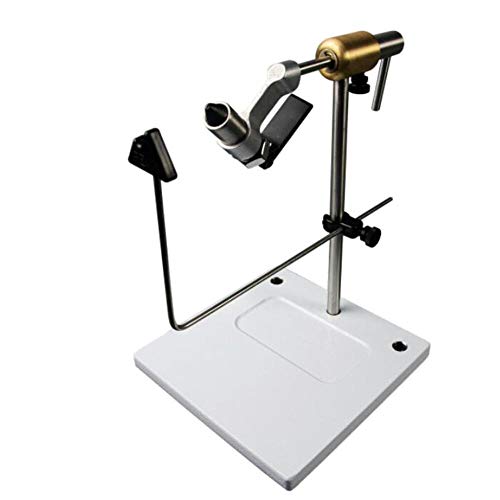


Top 3 Picks
Best Overall: Renzetti Traveler 2000 Series Fly Tying Vise with Base
The Traveler 2000 is the reference point for a true rotary vise at a serious-but-not-absurd price. Its jaw assembly holds small trout hooks and mid-size streamer hooks without slipping, the rotation is smooth enough to wrap materials by spinning the head rather than reaching around the fly, and the pedestal base is heavy enough to stay planted during hard thread tension. It suits the tyer who wants one vise to grow with them.
Best Budget: Kingfisher Fly Tying Lolo Creek True Rotary Vise
The Lolo Creek delivers the one feature budget vises usually cut — true on-axis rotation — at the entry tier. Jaws and base are simpler than premium hardware, and the hook range is aimed at freshwater trout and panfish patterns, but for someone tying dries, nymphs, and small streamers a few evenings a week it covers the work without compromise on the core geometry.
Best Premium Upgrade: Peak Fishing Rotary Vise with Pedestal Base
Peak’s rotary vise with a pedestal base is built for tyers who push hooks hard: heavy thread tension, large streamers, saltwater patterns, and spun hair. The pedestal gives it a stability advantage over clamp-on and travel-base vises, and the rotary head is designed to be adjusted and locked, so you can set the rotation tension to match the material you’re working.
Quick Comparison
The table below lines up every vise in this roundup on the four criteria that matter most: how the head rotates, what the jaws are made of, how the vise is supported at the bench, and what class of hooks it is designed to hold.
| Product | Best for | Rotation | Jaws | Base | Hook range class | Price tier |
|---|---|---|---|---|---|---|
| Kingfisher Clarkfork True Rotary, Gold | All-around freshwater tying | True rotary (on-axis) | Hardened steel, cam clamp | Weighted pedestal | Midge through mid-size streamer | Mid-range |
| NIRVANA On The Fly V2 Rotary Vise | Travel and class tying | True rotary with travel base | Steel jaws, fine adjustment | Compact travel base | Small nymphs through streamers | Premium |
| Kingfisher Lolo Creek True Rotary | Budget true rotary | True rotary (on-axis) | Steel jaws | Pedestal, lighter class | Trout and panfish range | Budget |
| Peak Fishing Rotary Vise, Pedestal Base | Big flies, heavy tension | True rotary, adjustable tension | Hardened steel, wide grip | Heavy pedestal | Streamer through saltwater | Premium |
| Renzetti Traveler 2000 Series | One vise for the long haul | True rotary (on-axis) | Precision steel jaws | Weighted pedestal | Small dries through large streamers | Premium |
| Kingfisher Clarkfork Deluxe Kit | One-purchase full setup | True rotary (on-axis) | Hardened steel, cam clamp | Weighted pedestal | Midge through streamer | Premium |
| Ussuris Rotary Vise with Travel Case | Mid-range portability | 360-degree rotary | Steel jaws, adjustable | Compact base + case | Trout through light streamer | Mid-range |
| Aventik MicroGrip II Rotary Vise | Starter kit with tools | Rotary head | Micro-grip steel jaws | Pedestal or clamp class | Small dries through nymphs | Budget |
| Shark Shooter 360 Rotary Vise | Big hooks on a mid budget | 360-degree rotary | Hardened steel, adjustable | Aluminum body, pedestal class | Streamer through saltwater | Mid-range |
| Dr.Fish Rotary Vise with Portable Bag | Ultra-light travel tying | 360-degree rotary | Steel jaws | Lightweight aluminum base | Small to mid trout hooks | Budget |
| QualyQualy Fly Tying Kit with Vise | Absolute beginner, complete kit | Rotary head | Steel jaws | Compact pedestal | Trout and panfish range | Mid-range |
| Colorado Anglers 102 Supreme | Simple, dependable budget tying | 360-degree rotation | Steel jaws, multi-position | Pedestal class | Trout and panfish range | Budget |
How We Chose
This roundup was built from published manufacturer specifications, the materials and geometry described in each product listing, and long-established conventions in fly tying about what separates a workable vise from a frustrating one. No vise here was purchased, handled, or tested by us; the judgments come from reading the specs closely and knowing how those specs behave at the bench.
The first filter was rotation type. A true rotary head keeps the hook shank on the axis of rotation, which lets you spin the fly to inspect and wrap the far side; a 360-degree rotary head rotates the hook around an offset pivot, which is useful but not the same thing. Vises that claim rotary action but rotate off-axis were noted as such.
The second filter was jaw construction — hardened steel versus mild steel, cam clamp versus screw clamp, and how wide a hook gap the jaws can accept. The third was base stability: pedestal, clamp-on, or travel base, and how each interacts with thread tension. Finally, we weighed upgrade path. A vise that can be re-based, re-jawed, or handed down is worth more than one that has to be replaced, so kits and standalone vises are both represented here rather than only one format.
1. Kingfisher Clarkfork True Rotary Fly Tying Vise, Gold – Best for All-Around Freshwater Tying
As an Amazon Associate we earn from qualifying purchases at no extra cost to you.

The Clarkfork is the middle of the Kingfisher range, and it is the vise most tyers land on when they want true rotary capability without stepping into the premium tier. The gold anodized finish is cosmetic, but the head geometry is not: the hook shank stays on the axis of the rotation, so when you spin the vise to work the underside of a fly, the fly turns in place rather than sweeping through an arc. That difference is felt immediately when you are ribbing a nymph or wrapping a hackle collar.
Who it suits: the freshwater tyer who ties trout and panfish patterns several evenings a week, wants a true rotary head, and is willing to pay mid-range money for better jaws and a heavier base than the entry tier offers.
Key specifications at a glance:
- Rotation: true rotary — hook shank remains on the axis of rotation
- Jaws: hardened steel with a cam-style clamp, designed to hold without crushing
- Base: weighted pedestal in the mid-weight class, so it sits on a tabletop without a bench overhang
- Hook range: trout class — small midges up through mid-size streamers; check the listing for the maker’s exact quoted range, since vise manufacturers quote hook capacity differently
- Body: anodized aluminum, gold finish
- Price tier: mid-range
Strengths. The on-axis rotation is the headline. Because the hook stays on the axis, you can rotate the fly to check the far side without the pattern swinging away from your hands, which reduces the little corrections that eat time on a production run of nymphs. The cam clamp is a genuine advantage for anyone who has fought a screw-clamp vise: you set the hook and flip a lever rather than turning a knob, which matters when you are changing hooks every few minutes.
The pedestal base is heavy enough that ordinary thread tension does not walk the vise across the table, though like every mid-weight pedestal it will creep if you are hauling hard on 210 denier thread while spinning deer hair. The hardened steel jaws are the other long-term win — hardened jaw tips resist the grooves that form when you clamp and release hundreds of hooks, and those grooves are what eventually cost a vise its grip on small hooks.
Pros
- True on-axis rotary head at a mid-range price
- Cam-style jaw clamp speeds up hook changes
- Hardened steel jaws hold up to repeated clamping
- Weighted pedestal works on any tabletop, no bench lip required
- Simple enough to maintain with a brush and a drop of oil
Cons
- Not built for saltwater-size hooks or extreme thread tension
- Mid-weight base can shift under hard spinning of coarse materials
- No travel case or compact base option in this configuration
- Anodized finish shows wear at the jaw collar over years of use
How it compares. Against the Clarkfork Deluxe Kit, this is the same family of head with fewer accessories — if you already own a bobbin, scissors, and a whip finisher, the standalone Gold model is the smarter buy and the kit is redundant. Against the Lolo Creek, the Clarkfork Gold buys you better jaws and a heavier base for mid-range money, while the Lolo Creek delivers true rotary at the entry tier with simpler hardware. If your tying is 90 percent size 14 to 18 trout patterns, the Lolo Creek will do the job; if you tie streamers and want the vise to last, this is the better long-term purchase.
2. NIRVANA On The Fly V2 Rotary Fly Tying Vise with Travel Base, Olive – Best for Tyers Who Travel

The V2 is the vise you buy when your tying bench is not always the same bench. It ships with a travel base rather than a full pedestal, which means the whole assembly fits in a bag and can be set up on a hotel desk, a clubhouse table, or the tailgate of a truck. The olive finish and compact proportions are aimed squarely at that use case.
Who it suits: the angler who ties at fly club meetings, teaches classes, travels for work and wants to tie in the evening, or simply has no permanent bench and needs a vise that lives in a bag. It also suits the tyer who wants premium jaw quality in a footprint that does not dominate a small table.
Key specifications at a glance:
- Rotation: true rotary head with on-axis rotation
- Jaws: steel jaws with fine adjustment for small hook sizes
- Base: travel base — compact, lighter than a full pedestal, designed for portability
- Hook range: small nymphs and dries through streamers; best in the trout range
- Finish: olive anodized body
- Price tier: premium
Strengths. The travel base is the defining feature and the reason this vise earns a premium tier rather than a mid-range one. A compact base solves a problem that full pedestals create: mass. A heavy pedestal is wonderful at a dedicated bench and miserable in a duffel bag. The V2 trades some of that mass for portability, and the fine jaw adjustment compensates on the small end of the hook range, where a sloppy jaw fit is most obvious — a size 20 midge hook that is not seated properly will roll under thread tension, and a vise with precise jaw alignment prevents that.
The true rotary head keeps the same advantage as the rest of the true rotary class: you spin the fly, not your hands. For a traveling tyer working in unfamiliar light on an unfamiliar table, that matters more than usual, because you cannot rely on muscle memory about where the far side of the hook is.
Pros
- True rotary head in a genuinely portable package
- Fine jaw adjustment suits small dries and midges
- Travel base sets up on almost any flat surface
- Premium build quality and finish
- Ideal for classes, clubs, and road trips
Cons
- Premium price for a vise whose base mass limits heavy-tension work
- Light base can slide under aggressive spinning of coarse materials
- Smaller footprint means less leverage for very large hooks
- Not the first choice if you tie mostly saltwater patterns
How it compares. Against the Renzetti Traveler 2000, the trade is mass versus portability. The Traveler’s pedestal plants more firmly and handles a wider hook range at the top end, but it is a bench vise first and a travel vise second. Against the Ussuris kit, the V2 is the premium version of the same idea — better jaws, better rotation, better finish — while the Ussuris covers the mid-range travel niche with a case included. If you tie at home 50 weeks a year and travel twice, buy the Traveler. If you tie somewhere different every month, the V2 is the more sensible purchase.
3. Kingfisher Fly Tying Lolo Creek True Rotary Fly Tying Vise – Best Budget True Rotary

The Lolo Creek is the entry point to true rotary tying. Most vises at the budget tier rotate the hook around an offset pivot and call it rotary; the Lolo Creek keeps the shank on the axis, which is the feature that actually changes how you tie. Everything else — the base, the finish, the accessories — is deliberately simple to keep the price down.
Who it suits: the tyer moving up from a fixed-jaw starter vise, the angler who ties a couple of evenings a week through the winter, and anyone who wants to learn true rotary technique without committing premium money before they know they will stick with it.
Key specifications at a glance:
- Rotation: true rotary — hook shank on the axis of rotation
- Jaws: steel jaws sized for the freshwater hook range
- Base: pedestal in the lighter weight class
- Hook range: trout and panfish class, roughly small nymphs through modest streamers
- Build: straightforward metal construction, minimal ornamentation
- Price tier: budget
Strengths. The value proposition is entirely about rotation geometry. True rotary tying changes your workflow in ways that are hard to appreciate until you try it: you can wrap a rib by spinning the head and keeping your thread hand still, you can inspect the underside of a fly instantly, and you can build a smooth body by rotating rather than repositioning. A budget vise that delivers that is worth more than a fancier vise that does not.
The simple base is a reasonable trade at this price. It is lighter than a premium pedestal, so it will slide if you spin coarse materials hard, but for standard trout thread tension it holds position. The steel jaws handle the hook sizes most freshwater anglers actually use, and the lack of extra fittings means fewer parts to loosen over time.
Pros
- True on-axis rotation at the entry price tier
- Light enough to move between tables or pack away
- Simple mechanism with few failure points
- Good learning platform for true rotary technique
- Handles the common trout and panfish hook range
Cons
- Lighter base than mid-range and premium pedestals
- Jaws are not designed for saltwater-size hooks
- Fewer accessories and no case in this configuration
- Finish and fittings are functional rather than refined
How it compares. Against the Clarkfork Gold, the Lolo Creek gives up jaw refinement and base mass to hit the budget tier — the rotation is the same idea, executed with simpler parts. Against the Aventik MicroGrip II and the Colorado Anglers 102 Supreme, the Lolo Creek’s advantage is the on-axis head; those vises rotate, but not the way a true rotary does, and once you have tied on-axis you notice the difference on every hackle wrap. If your budget is fixed and you tie standard trout patterns, this is the pick. If you can stretch to mid-range, the Clarkfork Gold is a meaningful step up in jaws and stability.
4. Peak Fishing Rotary Vise with Pedestal Base – Best for Big Flies and Heavy Tension
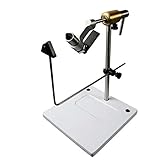
Peak’s rotary vise with a pedestal base is the pick for tyers who work against resistance. Spinning deer hair, palmering thick hackle, and wrapping gel-spun thread on saltwater patterns all put load on a vise, and load is where jaw grip and base mass stop being abstractions and start being the whole experience.
Who it suits: the streamer and saltwater tyer, the warmwater angler tying bass bugs and poppers, and anyone who has watched a light vise creep across the table while cranking down on 210 denier thread. It also suits the tyer who wants one vise to handle everything from a size 16 dry to a 3/0 saltwater hook.
Key specifications at a glance:
- Rotation: true rotary head with adjustable rotation tension
- Jaws: hardened steel with a wide grip for large hook gaps
- Base: full pedestal in the heavy class — the stability anchor of this roundup
- Hook range: streamer through saltwater sizes; strong on the large end, competent on the small end
- Construction: machined metal body and head assembly built for long service
- Price tier: premium
Strengths. Adjustable rotation tension is the feature that separates this from simpler rotary heads. Some materials want the head to spin freely so you can whip a body quickly; others — a big spun-hair head, a heavy bucktail collar — want the head to hold its position so the fly does not flop while you are packing material. Being able to dial that resistance and lock it is a working tyer’s feature, not a marketing one.
The heavy pedestal is the second strength. Base mass is the cheapest stability you can buy: a heavier base resists the lateral force of thread tension without any clamp or bench modification. That matters most on large hooks, where each wrap of thread and each turn of chenille applies more leverage against the vise. The wide hardened steel jaws hold big hook gaps without the hook rotating in the jaws — the single most common failure on large patterns.
Pros
- Heavy pedestal resists creep under high thread tension
- Adjustable rotation tension suits both fast spinning and locked positioning
- Wide hardened jaws grip large hook gaps securely
- Handles a very broad hook range with one head
- Built as a long-service bench tool
Cons
- Premium tier pricing
- Heavy base is not portable and takes up real table space
- Overkill if you only tie small trout patterns
- Larger jaws demand more care when seating very small hooks
How it compares. Against the Renzetti Traveler 2000, the split is by species and tension rather than quality. The Traveler is the more precise instrument in the small-hook range and remains the better all-around choice for a trout-focused tyer; the Peak is the better tool once hook sizes climb and thread tension rises. Against the Shark Shooter, both aim at big hooks, but the Peak’s pedestal mass and adjustable rotation tension put it in a different class, while the Shark Shooter covers the same territory at a mid-range price with a lighter aluminum body. If you tie mostly 2/0 and larger, buy the Peak. If large hooks are occasional, the Shark Shooter is enough.
5. Renzetti Traveler 2000 Series Fly Tying Vise with Base, Right Handed – Best Overall

The Traveler 2000 is the vise this roundup keeps coming back to. It is a true rotary vise with a well-earned reputation as a long-service bench tool, and its combination of precise jaws, smooth on-axis rotation, and a properly weighted pedestal base is what makes it the best all-around answer for most anglers. Right-handed configuration matches the majority of tyers and keeps the rotation control under your tying hand.
Who it suits: the tyer who wants to buy once. If you tie a few hundred flies a year, work mostly in the trout range but occasionally throw streamers, and want a vise that will still be doing the job in ten years, this is the one to build a bench around.
Key specifications at a glance:
- Rotation: true rotary — hook shank on the axis of rotation
- Jaws: precision steel jaws with a firm, repeatable grip across the trout and streamer range
- Base: weighted pedestal, substantial enough for normal-to-firm thread tension
- Hook range: small dries and midges through large streamers
- Configuration: right-handed
- Price tier: premium
Strengths. Rotation smoothness is where the Traveler 2000 earns its reputation. A rotary head that binds, even slightly, teaches you to stop using it; a head that turns freely gets used constantly, and constant use is what makes true rotary tying faster than repositioning the hook by hand. The on-axis geometry means the fly stays oriented the way you left it, so you can wrap a rib, stop, and pick up exactly where you were.
Jaw grip is the second pillar. The jaws are shaped to hold small hooks without flattening them and large hooks without letting them roll, which covers the range most tyers actually use. The pedestal base is heavy enough to sit still during normal tying and is a better default than a clamp-on for anyone who does not want to modify a bench or who ties at a table with no overhang.
Pros
- Excellent on-axis rotation smoothness
- Jaws hold both small dries and larger streamer hooks reliably
- Weighted pedestal base needs no bench modification
- Right-handed layout puts rotation control under your tying hand
- Long-established design with a well-documented service life
Cons
- Premium tier price for a single-vise purchase
- Pedestal base is not designed for travel
- Not the ideal tool for very large saltwater hooks under extreme tension
- Right-handed configuration only in this listing
How it compares. Against the Clarkfork Gold, the Traveler 2000 is the more refined instrument: smoother rotation, better jaw fit on small hooks, and a base that handles firmer tension. Against the Peak pedestal vise, it is the better choice for small and mid-size hooks and the worse choice once you get into saltwater sizes and spun hair. Against the NIRVANA V2, it trades portability for stability. For a tyer who works mostly in the trout range and wants the single best all-around vise on the list, this is the pick; for a big-fly specialist, the Peak is the better fit.
6. Kingfisher Clarkfork Fly Tying Vise Deluxe Kit – Best Complete One-Purchase Setup

The Clarkfork Deluxe Kit takes the mid-range Clarkfork head and wraps a full bench around it: the vise plus the tools a new tyer would otherwise buy one at a time. It is the least glamorous way to spend premium money and one of the most practical, because the accessories are exactly where beginners lose money buying twice.
Who it suits: the tyer who is starting from nothing, or the angler who has been tying with borrowed tools and wants one purchase that covers vise, bobbin, scissors, and finishing tools without assembling a kit piece by piece.
Key specifications at a glance:
- Rotation: true rotary head — hook shank on the axis of rotation
- Jaws: hardened steel with a cam-style clamp
- Base: weighted pedestal in the mid-weight class
- Included: vise plus a set of core tying tools — bobbin, scissors, and finishing implements
- Hook range: midge through streamer, freshwater class
- Price tier: premium as a kit; the underlying vise is mid-range hardware
Strengths. The kit’s real value is decision compression. A beginner buying separately has to choose a bobbin with the right thread tension, scissors that actually cut close to a hook eye, and a whip finisher they can operate before their hands know what they are doing. Getting those tools bundled with a known vise head removes a dozen small wrong turns.
The vise itself carries the same advantages as the standalone Clarkfork: true on-axis rotation, a cam clamp for fast hook changes, and hardened jaws that resist grooving. Because the head is a mid-range unit rather than a disposable starter mechanism, the kit does not become obsolete when your skills improve — you replace the scissors and bobbin long before you outgrow the vise.
Pros
- Vise and core tools in a single purchase
- True rotary head that outlasts beginner-level skills
- Cam clamp speeds up hook changes
- Hardened steel jaws resist wear from repeated clamping
- Sensible upgrade path: replace tools first, vise later
Cons
- Premium-tier price, partly for accessories you may already own
- Included tools are basic rather than specialist grade
- Mid-weight base still shifts under hard spinning
- Redundant if you already have a working bobbin and scissors
How it compares. Against the standalone Clarkfork Gold, the difference is entirely accessories: same family of head, same base class, more contents. If you own tools, buy the Gold; if you own nothing, the Deluxe Kit is cheaper than buying the same items individually and guessing at specs. Against the QualyQualy kit, the Deluxe Kit is the higher-quality version of the same idea — a true rotary head instead of a rotary head, hardened jaws instead of standard steel, and a heavier pedestal. Against the Aventik MicroGrip II, the Deluxe Kit is the upgrade, not the entry point.
7. Ussuris Rotary Fly Tying Vise with Travel Case Fly Tying Vice Kit, Black – Best Mid-Range Travel Kit

The Ussuris kit covers the middle of the travel-vise market: a rotary head, a compact base, and a hard travel case, all in one package. The black finish is understated and the case is the feature that matters — a vise that lives in a case gets used, and one that lives loose in a drawer does not.
Who it suits: the tyer who wants a mid-range kit that can go from a home table to a car trunk to a club meeting without disassembly anxiety. It also suits the angler upgrading from a fixed-jaw starter who wants rotary action and organized storage in one purchase.
Key specifications at a glance:
- Rotation: 360-degree rotary head — rotates fully, though not true on-axis in the strict sense
- Jaws: steel jaws with adjustable clamping
- Base: compact base sized for the included case
- Included: travel case plus tying kit components
- Hook range: trout sizes through light streamers
- Price tier: mid-range
Strengths. Full 360-degree rotation is genuinely useful even when it is not true rotary. You can spin the fly to look at the far side, you can rotate to a comfortable working angle instead of contorting your wrist, and you can build up a body from any direction. What you give up relative to a true rotary head is the guarantee that the hook stays oriented where you left it — with an offset rotation, the fly sweeps through an arc, so you may need to reposition before continuing a wrap.
The case is the second strength. Travel cases protect jaw tips, which are the most delicate part of any vise and the part most likely to be damaged in a bag. Bent or chipped jaw tips are the most common way a vise loses its grip on small hooks, and a case prevents the most likely cause.
Pros
- Included travel case protects jaws and head assembly
- Full 360-degree rotation for inspection and repositioning
- Adjustable jaws handle the common trout range
- Mid-range price for a complete, portable package
- Compact footprint suits small tying spaces
Cons
- Rotation is not true on-axis, so the fly moves off center when spun
- Compact base has less mass than a full pedestal
- Not designed for saltwater-size hooks
- Kit components are basic rather than specialist grade
How it compares. Against the NIRVANA V2, this is the mid-range version of the travel concept: the V2 gives you a true rotary head and premium jaws, while the Ussuris gives you a case and a lower price with offset rotation. Against the Dr.Fish portable vise, the Ussuris adds a case and a more substantial kit at a higher tier. Against the Lolo Creek, the trade is rotation quality versus portability — the Lolo Creek rotates true but stays home, the Ussuris travels but rotates off-axis. If you tie in more than one place, the Ussuris makes sense; if you tie at one bench, buy the Lolo Creek and put the savings into materials.
8. Aventik MicroGrip II Generation Rotary Fly Tying Vise with Pro Tools, Scissors & Bobbin – Best Budget Starter Kit

The MicroGrip II is aimed at the first-time tyer who needs a working setup rather than a single component. The name refers to the jaw design, which is shaped to grip small hooks securely — a sensible priority, since most beginner frustration comes from hooks slipping while thread tension is applied.
Who it suits: the absolute beginner who has decided to learn fly tying and wants one box that contains a vise, scissors, a bobbin, and the other essentials. It also suits the occasional tyer who wants a small backup vise for a cabin or a second home.
Key specifications at a glance:
- Rotation: rotary head — rotates for inspection and positioning
- Jaws: micro-grip steel jaws designed for small hook sizes
- Base: pedestal or clamp class depending on configuration
- Included: pro tools, scissors, and bobbin alongside the vise
- Hook range: small dries and nymphs, freshwater class
- Price tier: budget
Strengths. The micro-grip jaw design is the right call at this price point. Small hooks are where cheap vises fail first: the jaws are too coarse to seat a size 18 hook, the hook rolls, thread tension pulls it loose, and the beginner concludes they are bad at tying when the tool is the problem. A vise explicitly designed around small hook grip removes that specific failure mode.
Bundling tools matters just as much at the budget tier as at the premium tier. The difference is that here it is not about avoiding redundancy — it is about avoiding a second purchase. A beginner who buys a vise, then discovers they need a bobbin, scissors, and a whip finisher, ends up spending mid-range money in three transactions. One kit avoids that.
Pros
- Micro-grip jaws hold small hooks securely
- Vise plus essential tools in one budget purchase
- Rotary head allows inspection and repositioning
- Compact and easy to store between sessions
- Low-risk way to find out whether tying is for you
Cons
- Budget build quality; fittings are simple
- Not a true rotary head, so spinning moves the fly off center
- Limited hook range on the large end
- Included tools are entry-level and will be replaced first
How it compares. Against the QualyQualy kit, both are complete beginner packages, and the deciding factor is which set of included tools suits your hands better — the two are close in class. Against the Lolo Creek, the Aventik wins on completeness and loses on rotation: the Lolo Creek’s true rotary head is a better long-term foundation, while the Aventik gets you tying tonight with everything you need. Against the Clarkfork Deluxe Kit, this is the budget version of the same idea with simpler jaws and a lighter base. Buy the Aventik to start, the Lolo Creek to stay.
9. Shark Shooter 360 Degree Rotary Fly Tying Vise with Hardened Steel Jaws – Best Mid-Range Vise for Big Hooks

The Shark Shooter takes the mid-range slot for tyers who work with larger hooks. Hardened steel jaws with an adjustable grip and a full 360-degree rotary head are the headline features, and the aluminum body keeps the weight down while still providing a stable platform.
Who it suits: the streamer and warmwater tyer who wants big-hook capability without premium pricing. If your fly box is mostly buggers, baitfish patterns, and bass bugs rather than size 18 dries, this vise is aimed at you.
Key specifications at a glance:
- Rotation: 360-degree rotary head for full rotation and repositioning
- Jaws: hardened steel with adjustable clamping for varying hook gaps
- Body: aluminum, pedestal class base
- Hook range: streamer through saltwater sizes; adjustable jaws accommodate wide gaps
- Finish: machined aluminum look, built for utility
- Price tier: mid-range
Strengths. Adjustable jaws are the practical advantage on large hooks. Hook wire diameter and gap vary enormously between a size 8 streamer hook and a 2/0 saltwater hook, and a fixed jaw opening that holds one will often let the other slip. Being able to adjust the clamp to the hook in front of you prevents the most common large-hook failure: the hook rotating in the jaws while you wrap chenille or spin hair.
Hardened steel matters more here than on a small-hook vise. Large hooks have thicker wire and a harder temper, and clamping them repeatedly is what wears grooves into jaw tips. Hardened jaws resist that wear, which extends the vise’s useful life. The aluminum body keeps the whole assembly light enough to move around while still giving a stable base for the hook sizes it targets.
Pros
- Hardened steel jaws resist wear from large hooks
- Adjustable clamping fits a wide range of hook gaps
- 360-degree rotation for inspection and positioning
- Aluminum body keeps weight manageable
- Mid-range price for big-hook capability
Cons
- Not true on-axis rotation; the fly sweeps off center when spun
- Lighter base than a heavy pedestal, so hard tension can shift it
- Adjustable jaws need resetting when you change hook sizes
- Less refined on very small hooks than a dedicated trout vise
How it compares. Against the Peak pedestal vise, this is the mid-range approach to the same problem: both target big hooks, but the Peak adds a heavy pedestal and adjustable rotation tension, which is worth the premium if you tie large patterns constantly. Against the Colorado Anglers 102 Supreme, the Shark Shooter is the more capable vise for large hooks thanks to hardened adjustable jaws. Against the Ussuris kit, it trades portability and a case for jaw strength and hook range. If large streamers are your main output and the Peak is out of budget, this is the sensible middle option.
10. Dr.Fish Rotary Fly Tying Vise, Aluminum Alloy with Portable Bag – Best Ultra-Light Travel Vise

The Dr.Fish rotary vise is built around weight. An aluminum alloy body and a portable bag make it the lightest full-size option in this roundup, which is exactly what you want if the vise has to go in a pack rather than sit on a bench.
Who it suits: the backpacking angler, the tyer who keeps a vise in a vehicle for lunch-break sessions, and anyone with very limited table space who needs to set up and break down every time they tie.
Key specifications at a glance:
- Rotation: 360-degree rotary head
- Jaws: steel jaws sized for the small and mid trout range
- Body: aluminum alloy — light by design
- Included: portable storage bag
- Hook range: small to mid trout hooks; limited on the large end
- Price tier: budget
Strengths. Lightness is a design constraint, not a defect, and this vise commits to it. Aluminum alloy construction keeps the whole assembly easy to carry, and the bag prevents the jaw damage that loose storage causes. For an angler who ties streamside or on a camping table, being able to set up in thirty seconds and pack away in twenty is worth more than base mass.
The 360-degree rotation gives you the practical benefits of a rotary head — inspecting the far side, working at a comfortable angle, building bodies from multiple directions — at a budget price. It will not hold position the way a true rotary head does, so long wraps may need a reposition mid-sequence, but the core convenience is there.
Pros
- Very light aluminum alloy construction
- Portable bag included for protection and transport
- 360-degree rotation for inspection and positioning
- Budget price makes it a low-risk second vise
- Sets up quickly on any flat surface
Cons
- Light base shifts under firm thread tension
- Jaws are not built for large or saltwater hooks
- Offset rotation means the fly moves off center when spun
- Not intended as a primary bench vise for heavy production
How it compares. Against the Ussuris kit, the Dr.Fish is the lighter, cheaper travel option: the Ussuris adds a hard case and more kit contents, while the Dr.Fish prioritizes minimum weight. Against the Lolo Creek, the trade is clear — the Lolo Creek rotates true but stays at the bench, while the Dr.Fish travels easily but rotates off-axis. Against the NIRVANA V2, this is the budget approach to portability with simpler jaws and less precise rotation. Buy the Dr.Fish as a travel companion or a beginner’s first vise; buy the Lolo Creek if the vise will live on a table.
11. QualyQualy Fly Tying Kit with Vise, Bobbin, Scissors, Whip Finisher – Best Complete Beginner Kit
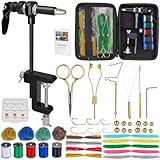
The QualyQualy kit is the most complete starting package in this roundup: a rotary vise plus a bobbin, scissors, a whip finisher, and the other tools a new tyer needs to tie a first fly without a second shopping trip. It sits at the mid-range tier because the kit contents are more extensive than the entry-level packages.
Who it suits: the complete beginner who wants to sit down and tie, and the gift buyer who needs one box that covers everything. It also suits the angler who wants a stocked travel kit for a club or a class.
Key specifications at a glance:
- Rotation: rotary head for inspection and repositioning
- Jaws: steel jaws for the standard freshwater hook range
- Base: compact pedestal
- Included: vise, bobbin, scissors, whip finisher, and additional tying tools
- Hook range: trout and panfish class
- Price tier: mid-range
Strengths. Completeness is the product. A whip finisher is the tool beginners most often skip and most often need — finishing a fly by hand takes practice, and a finisher shortens the learning curve enough to keep a new tyer motivated. A bobbin with usable thread tension is the second most important tool after the vise, because a bobbin that will not hold tension makes every wrap harder than it should be.
The vise itself covers the standard freshwater hook range with steel jaws and a compact pedestal that fits on a small table. It is not a true rotary head, so spinning moves the fly off center, but the rotation is still useful for inspecting the underside of a pattern and for working at a comfortable angle — which is what a beginner actually needs.
Pros
- Most complete beginner kit in this roundup
- Whip finisher included, which many starter kits omit
- Compact pedestal suits small tying spaces
- Mid-range price for a full bench setup
- Good gift package for a new tyer
Cons
- Not a true rotary head
- Tools are general-purpose rather than specialist grade
- Jaws are limited on the large end of the hook range
- Experienced tyers will already own most of the contents
How it compares. Against the Aventik MicroGrip II, both are complete beginner packages at similar class; the Aventik emphasizes small-hook jaw grip, while the QualyQualy emphasizes breadth of included tools. Against the Clarkfork Deluxe Kit, this is the mid-range version of the same concept with a simpler head and a lighter base. Against the Lolo Creek, the QualyQualy wins