How to Choose Between a Cheap Tool and a Better Midrange Model
What's inside
As an Amazon Associate I earn from qualifying purchases. This post may contain affiliate links at no extra cost to you.
Price alone is a poor way to choose a tool. A $40 drill can be the right buy for hanging shelves twice a year; a $120 drill may be cheaper in the long run if you use it every week. The useful comparison is what each tool can do, how often you’ll use it, and what happens when it struggles or breaks.
As an Amazon Associate we earn from qualifying purchases at no extra cost to you.


Start with the job, not the price tag
Write down the hardest task the tool needs to handle, not just the most common one. For a drill, that might mean boring a 1-inch hole through a stud rather than driving a few small screws. For a circular saw, it might be cutting 30 sheets of plywood rather than trimming one shelf.
Then estimate frequency and workload. A tool used for two short jobs a year has different requirements from one used for an hour every weekend. Repeated heavy work heats motors, drains batteries, wears gears, and exposes weaknesses in the chuck, base, switch, or bearings. Light, occasional work often never reaches those limits.
What the extra money usually buys
Midrange tools often improve control and endurance more than raw headline performance. Look for useful differences such as a brushless motor, a sturdier chuck, better speed control, less vibration, a metal gear case, a more accurate fence or base, and a longer warranty. These features matter when you work for long stretches or need consistent results.
They do not automatically make a tool right for you. A premium drill’s extra torque is wasted if you only assemble flat-pack furniture. And a cheap saw with a poor fence can produce frustrating cuts even if its motor has enough power. Check the feature that affects your job rather than paying for a longer specification list.
Compare the cost of ownership
Compare kits on equal terms. A bare tool can look like a bargain until you add a battery and charger; a bundle may be cheaper if you’re starting from scratch. If you already own batteries in a compatible system, a bare tool may be the better value. Budget for consumables, too: blades, bits, sanding discs, and replacement batteries can outweigh the initial price over several years.
| Factor | Cheaper tool | Better midrange tool |
|---|---|---|
| Best fit | Occasional, light-duty jobs | Frequent use or tougher materials |
| Upfront cost | Lower; check whether battery and charger are included | Higher; bundles or existing batteries can narrow the gap |
| Working pace | May need more pauses to cool or change batteries | Often better suited to sustained work |
| Control and finish | Can be adequate, but may need more care | Often offers steadier adjustment and fewer rough edges |
| Risk to the job | More costly if failure ruins material or delays work | More dependable, but still not immune to wear or misuse |
For example, if the cheaper tool costs $60 and the midrange one costs $110, the difference is $50. If you’ll use the tool for 10 small jobs, that is $5 per job; if you use it for 100 jobs, it is 50 cents per job. That simple calculation does not prove the expensive tool is better, but it makes frequent use easier to justify.
Know where budget tools tend to struggle
A low-cost drill may work fine in softwood but bog down on repeated large holes, leaving you with slower progress and a hot motor. A bargain circular saw may wander if its base flexes or its fence is flimsy. A cheap sander can leave swirl marks if its pad runs unevenly, costing time in later sanding. These are not guaranteed faults; they are reasons to test the tool on scrap before committing to a finished piece.
For a one-off project, a pause, a fresh sharp bit, or a second battery may be all the solution you need. Do not force a tool that is overheating, binding, or stalling. That can damage the tool, spoil the work, or create a safety hazard. If you expect these symptoms on routine tasks, choose a stronger category rather than hoping a low price will hold up.
When the cheaper option is the sensible buy
Choose budget when the work is occasional, the material is forgiving, precision requirements are modest, and a breakdown would not cause expensive damage or a missed deadline. It can also make sense for a tool you rarely need: buying a basic model is often more rational than paying for professional duty cycles that will sit unused.
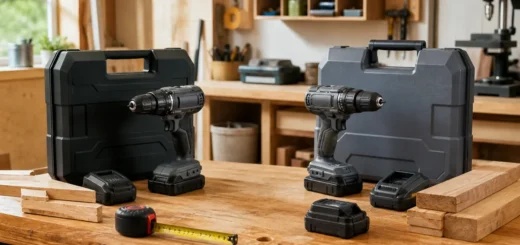
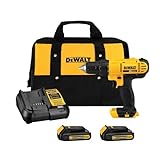
Consider a budget cordless drill kit for light household drilling and assembly, especially if it includes the battery and charger. Read the warranty terms and check whether replacement batteries are still sold. If the tool uses an isolated battery system with no other tools you want, a low entry price may lock you into more expensive replacements later.
When midrange earns its price
Pay more when the tool will see frequent use, must keep working through a long session, or affects the accuracy and cost of the finished job. The case is stronger for repetitive drilling, cutting sheet goods, building a deck, or work where a stalled tool means losing a full afternoon. Better ergonomics also count: a lighter, less vibration-prone tool is easier to control and less tiring over repeated tasks.
For regular site or workshop use, compare a midrange brushless drill kit with a basic brushed kit. Check the included battery capacity, charger, chuck range, warranty, and actual kit price; “brushless” alone does not guarantee better value. A midrange tool may still be the wrong choice if its battery platform is expensive or the size and weight are awkward for your tasks.
Time the purchase without waiting forever
Seasonal sales can improve value, but compare the sale price with the usual price and the exact kit contents. A discount on a bare tool is not comparable to a normal-price kit with two batteries. Spring and early summer can bring promotions on outdoor and construction tools; late-year sales often cover broad tool categories. If the job is urgent, buying a suitable tool now may cost less than delaying the work or hiring out one task.
Before checkout, confirm the tool’s return window, warranty, battery availability, and whether the seller is authorized. A short return period is useful because balance, trigger feel, and visibility are hard to judge from specifications. Choose the cheapest tool that handles your hardest expected job with a reasonable margin—not the cheapest one that can just barely do it once.