How to Compare Entry-Level and Midrange Tools for Occasional Use
What's inside
As an Amazon Associate I earn from qualifying purchases. This post may contain affiliate links at no extra cost to you.
For a homeowner who uses a drill, saw, or sander a few times a year, the choice is rarely between a tool that works and one that doesn’t. It is usually between spending less now and accepting limits in comfort, durability, or speed, or paying more for features that may sit unused. Compare the job, the tool’s weak points, and the full cost of ownership—not just the price on the box.
Start with the job, not the price tier
List what you expect to do over the next year. Driving screws into furniture, hanging shelves, and drilling a few holes in softwood are light-duty tasks. Building a deck, cutting sheets of plywood, or drilling repeated holes in masonry puts more strain on a tool and its batteries.
Frequency matters, but so does workload per session. A drill used twice a year to assemble flat-pack furniture has an easy life. A drill used twice a year to bore several dozen large holes may overheat or drain a small battery before the job is done. If the work is short and predictable, an entry-level tool may be sufficient. If it is demanding, consider renting or borrowing before buying a more capable tool you will rarely use.
What entry-level and midrange usually mean
These labels are not standardized. Entry-level tools generally cost less and cover basic jobs, often with fewer speed, power, or adjustment options. Midrange tools commonly add a larger battery, better ergonomics, more consistent performance under load, or a broader compatible-tool system. A higher price does not guarantee that every component is better, so compare the specific tool and kit.
| Factor | Entry-level | Midrange |
|---|---|---|
| Best fit | Short, occasional jobs in common materials | Longer sessions, tougher materials, or more varied work |
| Typical trade-off | Lower price; fewer refinements and less reserve under load | Higher upfront cost; more capability than a light user may need |
| Battery consideration | Starter kits may include a small battery or limited runtime | Kits may offer larger batteries, but check what is actually included |
| Ownership value | Strong if one tool handles one or two predictable jobs | Stronger if you will add compatible tools or use it more often |
Compare the real cost of the kit
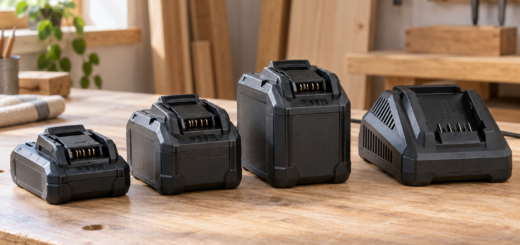
A bare tool can look like a bargain until you add a battery and charger. Compare complete, usable packages: tool, battery capacity, charger, case if needed, and any accessories required for your first job. Two kits with the same voltage may have very different runtimes because battery capacity, commonly stated in amp-hours (Ah), differs. A compact 2 Ah battery is easier to handle but may need a recharge sooner than a 4 Ah pack.
Do not treat voltage as a simple measure of quality. A higher-voltage platform can support more demanding tools, but that does not make every tool on it the right buy. For a handful of household repairs, a lighter tool and battery can be more comfortable than a heavier setup with power you will not use.
Price the battery platform, too. If you already own batteries and a charger from a compatible line, a bare tool may be the economical choice. If you are starting from scratch, compare the cost of a second battery and one likely future tool. A cheap starter kit loses some appeal if replacement batteries are costly or hard to find.
Look for the failure points that matter
For a drill, check whether it has a clutch with enough settings to avoid driving small screws too deep, a variable-speed trigger, and a chuck that grips bits securely. A basic drill can handle light assembly and pilot holes. On harder jobs, common frustrations include a slipping bit, a battery that runs down midway, or a motor that slows sharply when pressure is applied. For masonry, confirm that the tool is designed for the task; an ordinary drill may struggle where a hammer drill is appropriate.
For a circular saw, the practical checks include cutting depth, bevel adjustment, visibility of the cut line, and whether the blade is easy to change. A low-cost saw can make occasional straight cuts in sheet goods, but a dull blade, unsupported material, or forcing the cut can produce rough edges and bind the blade. For sanding, dust collection and grip may matter more than a small difference in advertised speed. Poor dust control means more cleanup and can make indoor work unpleasant.
Try the grip if possible, or check the tool’s weight with its battery installed. A tool that feels fine on a shelf can become tiring overhead or after 20 minutes of repeated cuts. Also read warranty terms and check whether repairs are practical in your area. For occasional use, a convenient warranty is useful; it does not compensate for a tool that is ill-suited to the job.
When paying more is worthwhile
Move up a tier when the entry-level tool’s limit is likely to interrupt the job: repeated heavy cuts, long drilling sessions, frequent work overhead, or a need for finer control. Midrange features earn their keep when they reduce wasted time, fatigue, or rework. Better control can prevent stripped screw heads; a larger battery can avoid a mid-task pause; a more stable saw can make repeat cuts easier.
If your needs are basic, start with a cordless drill kit with battery and charger that includes the essentials rather than buying a bare tool by mistake. For occasional straight cuts, compare cordless circular saw kits by included battery, cutting capacity, and blade size, not by price alone. These are categories, not guarantees that any one kit suits every material or workload.
Use timing and access to your advantage
Tool prices often move around major sale periods, but a discount is only useful if the kit matches your needs. Check the regular price and included batteries before treating a marked-down bundle as a saving. Bundles can be good value when they include a second battery or a tool you already planned to buy; they are poor value when the extras will collect dust.
For a one-off project, renting can beat both tiers. Compare the rental fee, travel, and return deadline with the cost of a suitable budget tool. For repeated but infrequent jobs, borrowing a midrange tool may help you learn which features matter before investing. If you buy entry-level and later outgrow it, the first purchase was not necessarily wasted—but spending twice is avoidable when you already know the work will be demanding.