Best Affordable Vise for General Garage and Bench Work
What's inside
As an Amazon Associate I earn from qualifying purchases. This post may contain affiliate links at no extra cost to you.
A general-purpose vise does not need to be expensive, but a bargain vise that shifts, slips or cracks under load is poor value. For routine garage and bench work—holding brackets for drilling, filing an edge, or gripping parts during light assembly—a sound 4- to 5-inch bench vise is usually the best balance of cost and usefulness. The right choice depends less on the biggest advertised clamping force than on how you will mount it and what you plan to hold.
As an Amazon Associate we earn from qualifying purchases at no extra cost to you.


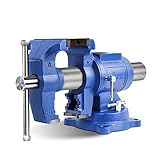
Choose a size for the work, not the price tag
Jaw width is the most useful first comparison. A 4-inch vise handles many household repairs and small metal parts; a 5-inch model gives you more room for wider stock without taking up as much bench space as a large mechanic’s vise. Check the maximum jaw opening too. A vise with 4-inch jaws may open less than 4 inches, and irregular parts can need more clearance than their width suggests.
For light bench work, a modest cast-iron vise with a fixed base is often enough. If you regularly need to angle a workpiece, a swivel base is useful, but it adds height and another joint that can move if not tightened firmly. Pipe jaws are handy for plumbing or round stock; they are not a substitute for proper soft jaws when protecting finished surfaces.
Browse 4-inch bench vises if your parts are generally small and your bench is tight. Consider 5-inch swivel-base vises if you need more jaw capacity and expect to reposition work often.
Compare the common budget options
| Type | Best for | Trade-off | Check before buying |
|---|---|---|---|
| Fixed-base bench vise | Drilling, filing and general repairs | Work can only be held at one angle | Jaw opening, mounting-hole pattern and overall weight |
| Swivel-base bench vise | Angled access without moving the vise | Extra joint can loosen or flex under force | Base locks and whether the swivel can be removed |
| Pipe vise | Holding pipe for cutting or threading | Awkward for flat parts and precision bench work | Pipe diameter range and replacement jaw availability |
| Clamp-on vise | Occasional light work or a bench with no mounting holes | Less stable; limited clamping and opening capacity | Clamp depth, bench thickness limit and jaw alignment |
What to inspect in a budget vise
Cast iron is common at lower prices and can work well when the vise is used within its limits. It is also brittle compared with forged steel: a sharp impact, excessive leverage or a vise mounted poorly can crack the body or base. Do not use the handle as a cheater bar, and do not hammer hard on a clamped workpiece expecting the vise to absorb the blow. If heavy pounding or repeated high-force work is normal, spend more on a sturdier forged or ductile-iron model.
Look for jaws that meet evenly across their width when closed. A small gap at one edge can mean the jaws are not parallel, which makes thin pieces more likely to tilt or slip. Turn the handle through its full travel and watch for binding, excessive side play or a screw that feels rough. A little clearance is normal on an inexpensive tool; a handle that rocks substantially or a moving jaw that visibly twists is a reason to pass.
Check whether the jaws are replaceable and whether the manufacturer sells replacements. Replaceable serrated jaws are practical for gripping rough stock, but they can mark soft metal, plastic and finished parts. Add purpose-made soft jaws, or use smooth sacrificial inserts made from aluminum, wood or plastic. They protect the work and can improve grip on delicate pieces.
Mounting matters more than extra clamping force
A vise is only as steady as the bench beneath it. Mount it near a bench corner so long stock can extend past the edge, but keep enough support under the mounting plate. Use all mounting holes and bolts suited to the vise and bench; through-bolts with washers are generally more secure than screws driven into a thin top. If the bench is hollow or made from a light sheet material, reinforce the underside with a plate or substantial timber before tightening the vise.
A loosely mounted vise can walk across the bench or lift at one corner when you file or pull on a part. That movement is both frustrating and a sign to stop and fix the mounting. Tighten the fasteners after the first few uses, especially if the bench top or wooden backing compresses.
Where to save—and where not to
A low-cost fixed-base vise is fine for occasional household repairs, hobby projects and light shaping, provided its jaws close reasonably square and it can be bolted securely. Paying extra for a swivel base makes sense when repositioning work is frequent; it is wasted money if the vise will stay pointed in one direction. Likewise, a larger jaw width is not automatically better if it crowds the bench or the parts you hold are small.
Compare the vise’s weight and mounting footprint alongside its price. A very light model may be easier to install, but can feel less planted during filing. A heavier body is not proof of quality, so inspect the jaw action and base locks rather than buying by weight alone. If you want a broader selection, compare cast-iron bench vises with forged-steel bench vises; the latter generally cost more, and the upgrade is most useful when work is frequent or forceful.
When to buy
Vise prices can shift around major sale periods and clearance events, but discounts vary by size and brand. Compare the delivered price, not just the sale label, and check that the listing includes the base or accessories shown in the photos. A replacement jaw set or missing mounting hardware can erase a small saving. If you need one now, prioritize a stable, correctly sized vise over waiting for a particular brand to go on sale.
For most garages, a securely mounted 4- or 5-inch bench vise with smooth screw travel and jaws that close evenly is the sensible value pick. Choose fixed or swivel based on how you work, protect finished parts with soft jaws, and reserve the cheapest clamp-on designs for light, occasional jobs.