Best Value Tool Set for a New Woodworking Hobby
What's inside
As an Amazon Associate I earn from qualifying purchases. This post may contain affiliate links at no extra cost to you.
A first woodworking setup does not need a matching chest of premium tools. It needs a reliable way to measure, cut, drill, clamp and sand—and enough money left for lumber. For a beginner making shelves, small tables or shop projects, a practical starter budget is about $250–$500 for hand tools and a few basic power tools, excluding a workbench and materials. Buying fewer tools, then adding them when a project calls for them, is usually better value than buying a large kit full of pieces you will rarely use.
As an Amazon Associate we earn from qualifying purchases at no extra cost to you.


What to buy first
Start with measuring and layout tools: a 16-foot tape measure, a combination square and a sharp pencil. Add a set of chisels, a block plane if you plan to do hand-tool work, a handsaw or circular saw, a drill/driver, clamps and a random-orbit sander. A combination square that is out of square can spoil every layout line, so check it against a straight edge before relying on it.
For a first powered saw, a circular saw is useful for breaking down sheet goods and cutting boards to rough length. It is less convenient than a table saw for repeatable narrow cuts, but a straightedge guide can improve accuracy without the cost or space demands of a table saw. A drill/driver handles pilot holes and screws; a separate impact driver is helpful for frequent assembly but is not essential at the start.
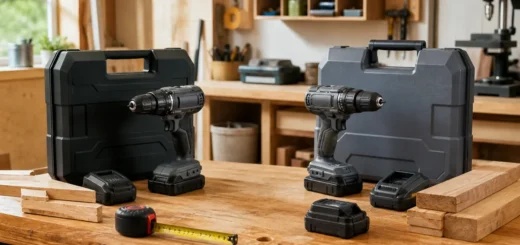
Compare cordless drill/driver kits by battery platform, included batteries and charger, not just the advertised tool count. A kit with two batteries is often more useful than one bundled with several low-use accessories.
Starter kit: where the money goes
| Category | Useful starter choice | Typical budget | Value trade-off |
|---|---|---|---|
| Measuring | Tape, combination square, pencil | $20–$45 | Spend enough for a square you can verify; a cheap tape is fine if its hook is not loose. |
| Cutting | Circular saw and suitable blade, or handsaw | $50–$130 | A better blade can improve cut quality more than upgrading the saw body. |
| Drilling | Drill/driver kit with one or two batteries | $70–$160 | Entry-level tools are adequate for occasional home projects; check battery availability. |
| Clamping | Four to six clamps in useful lengths | $40–$100 | Cheap clamps are fine for light work, but weak bars or slipping pads can frustrate glue-ups. |
| Sanding | Random-orbit sander and paper | $35–$80 | Dust collection and comfortable handling matter more than extra speed settings. |
These are broad U.S. street-price ranges, not guaranteed sale prices. They vary by brand, kit contents and season. Keep a reserve of roughly $30–$60 for blades, drill bits, sandpaper, hearing protection and eye protection. Consumables are part of the tool budget, not an optional extra.
When brand matters—and when it does not
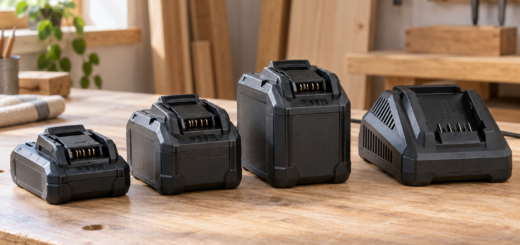
For cordless tools, choosing a battery platform is a bigger decision than choosing the exact drill. Batteries and chargers are often the costly part of expanding a system. If you expect to add a saw or sander, compare the price of a bare tool plus batteries against a starter kit. Do not buy a platform based only on the number of tools listed: check that the tools you are likely to use are sold in your market and that replacement batteries are easy to find.
Mid-priced lines from established brands can be good value for regular use, but a new hobbyist does not automatically need the highest-output professional range. For occasional drilling and assembly, an entry-level drill from a supported battery platform can be enough. A very cheap no-name cordless tool may cost less upfront, but a failed charger, unavailable battery or poor warranty can make it expensive to replace.
Hand tools are different. You can mix brands freely, and fit and accuracy matter more than a matching set. A basic set of woodworking chisels is acceptable if the backs can be flattened and the edges sharpened. Budget chisels often arrive dull; plan to hone them before use. Avoid buying a large set just to get one useful size.
Where to save, and common false economies
Save on tools used occasionally: a handsaw, a basic tape measure or a simple sanding block can do the job. Borrow or rent a table saw until you know you need one. A circular saw and guide are a less expensive, space-saving starting point, though repeated cabinet-style cuts are slower and demand careful setup.
Do not skimp on protection or cutting accessories. Wear safety glasses and hearing protection around powered tools; use dust collection or a suitable respirator when sanding, especially indoors. A dull or inappropriate blade can burn wood, tear out edges and tempt you to push harder. Check that the blade is intended for the material and cut, secure the workpiece, and keep hands out of the cutting path.
Clamps are another common surprise. Four short clamps may not reach across a tabletop, while long clamps can be awkward for small boxes. Buy a few sizes as projects dictate rather than a large assortment at once. For glue-ups, dry-fit the parts first; if the pieces do not align before glue is applied, more clamping pressure rarely fixes the problem.
Seasonal buying advice
Compare normal prices before a holiday sale. Tool bundles around major shopping periods can be worthwhile when they include batteries you will use, but a discount on a bare tool is poor value if you still need a charger and battery. Spring and early summer promotions often target outdoor and home-improvement tools; late-year sales can offer bundle pricing. The best deal is the one that fits your projects and battery plans, not the largest percentage off.
For hand tools, used can be excellent value if you can inspect the condition. Check a used plane for a cracked body, damaged adjustment parts and a sole that is badly uneven. For power tools, test the switch, guard and movement, and inspect batteries for cracks or swelling. Skip a bargain tool with missing guards, an unknown battery or no practical way to replace parts.
A sensible buying plan
Buy the measuring tools, drill/driver, a cutting option, clamps and safety gear first. Add a random-orbit sander when hand-sanding becomes a bottleneck, and choose the next major tool based on a real project rather than a hypothetical one. If your first few projects need repeated accurate rip cuts, then compare table saws; if they mostly need holes and simple assembly, invest in bits, clamps or better layout tools instead.
That approach keeps the initial kit useful without locking you into expensive upgrades. The best value set is not the one with the most pieces: it is the smallest dependable group of tools that lets you complete the work safely and accurately.